How Much Do Expert Witnesses Get Paid?

Ahem … what else is it like? On a more serious note, check out this insightful comment posted by RJD in response to the original posting on Cheap Talk:

<<These rates [for expert testimony in the NCAA litigation] are substantially higher than most expert witnesses get paid because the subject matter is a bit esoteric (limiting supply) and because the economic stakes are quite large (increasing demand for the best experts). They are also the billing rates of the top testifying expert, not the average rate of the entire team. If you look at the average billing rate data for the publicly-traded expert practices such as Navigant or Huron Consulting, you find that the rates are in the range of $300-400 per hour. For some litigation consulting practices they would be even lower (say for example, regarding the valuation of a private business in a divorce) as the economics of the situation would not support higher fees. That said, we earn a nice living, as evidenced by a presentation made at a NJ State Bar conference where the lawyer asked, “How did the experts fees get larger than ours?”>>

Sandeep Baliga's avatarCheap Talk

From a story about the NCAA trial:

Noll, like most of the expert witnesses here, was paid well for his testimony: $800 an hour. (James Heckman, an N.C.A.A. expert, received $2,300 per hour.)

“I think it’s like being a pro athlete,” Noll said. “Getting paid for something I love to do.”
View original post

Posted in Uncategorized | 2 Comments

A modest (political) proposal?

Embedded image permalink

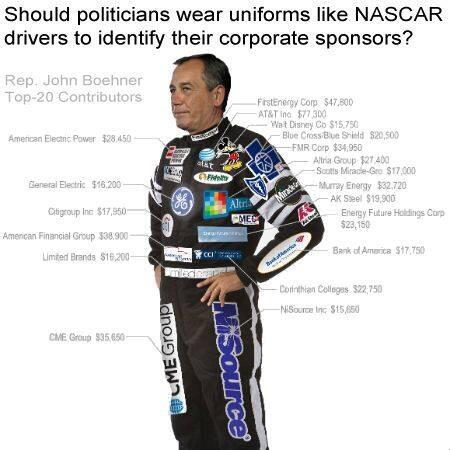
Finally, an honest politician …

Posted in Uncategorized | Tagged , | 1 Comment

How much cheating goes on (in football)?

Alan Burdick, a writer for The New Yorker (one of our favorite English-language weekly magazines), summarizes some recent research in this area conducted by Chris Stride, a psychologist at the University of Sheffield:

First, [Stride] had to define cheating. In soccer, all sorts of manhandling—jostling, obstruction, shirt pulling—goes on as a matter of course. Stride ignored that stuff, as well as offside violations, poorly timed tackles, and what he refers to in the study as “intentional rule violations due to a player losing his temper” …

Instead Stride focussed on the officially unfair schemes that players employ to win a strategic advantage for their team or to keep the opposing side from gaining one. He places these into two broad categories. First is what is known in soccer as the “professional foul”—a blatant attempt to stop or alter the opponent’s goal or attack. If their striker is making a beeline toward your goal, and you’re the last defender, you may find it necessary to collide with him at top speed or trip him from behind. If the ball is about to go into your net, maybe you use your hand to keep it out. If your team is ahead, there’s time to be wasted—by kicking the ball out of bounds, or by discovering that you need to stop and tie your laces. Such infractions can draw a yellow or even a red card. But players commit them regardless, for the larger good of the team.

Then there’s what Stride calls “classic cheating” or “simulation cheating”—flops, dives, players writhing with pains that magically evaporate the moment the referee looks away. In some respects, classic cheats are just the inverse of, and perhaps a natural response to, professional fouls: the former are typically committed by attackers, Stride found, to get the defenders in trouble, while the latter are largely committed by defenders against attackers.

Is “doping” or the use of performance-enhancing drugs another form of cheating? Also, is there an optimal (or unavoidable) amount of cheating in football–or in any other activity, for that matter? Read Alan Burdick’s entire essay on cheating in football here.

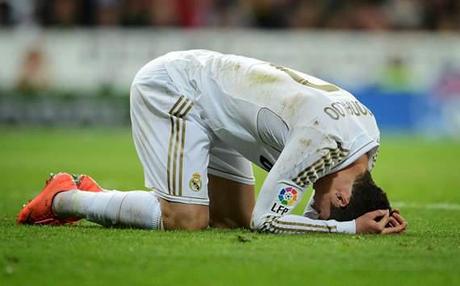
Was he just faking it?

Posted in Uncategorized | Tagged , , | Leave a comment

World Cup auctions?

Why not use auctions or some other market mechanism to allocate the right to host such sporting events as the World Cup, the Olympics, or the Super Bowl? Or do you think FIFA’s corrupt selection methods, or the IOC’s opaque multi-stage selection process, or the NFL’s secretive Dictator Commissioner approach, for example, are more fair?

Fair or foul?

Posted in Uncategorized | Tagged , , , | Leave a comment

“Beautiful Game Theory”

That is the title of this book which explores the relation between economics and football (or soccer, for sportifs in the US) and which we will be reading in the coming days … between first-stage matches, that is. “Beautiful Game Theory” was written by Ignacio Palacios-Huerta, a professor at the London School of Economics, who builds on some of his previous work, such as “Professionals Play Minimax“, and uses football to test various theories of economics. We are especially interested in Chapter 3 of his book “Lessons for Experimental Design.”

 The strategy of soccer

Posted in Uncategorized | Tagged , , | 3 Comments

When beautiful models go wrong

No, not those types of models! We mean abstract, mathematical models. Celebrity economist Paul Krugman writes:

Suppose you’re making a prediction — and every assertion about how the world works has to involve at least an implicit prediction of something, because otherwise it’s empty. This prediction comes from some kind of model — if you don’t think you have a model, you’re kidding yourself, and your model is all the worse because you imagine that you aren’t using it. For the sake of argument, let’s say that your model takes the form

y = a + b*x + u

where y is what you’re predicting, x is some kind of explanatory variable, a and b are parameters, and u represents random stuff (not necessarily really random, but stuff that isn’t part of your model). That last term is important: nobody, and nobody’s model, gets things totally right.

So, suppose your prediction about y ends up having been pretty far off. What does that tell you?

It could say simply that, as the bumper stickers don’t quite say, Stuff Happens. There could have been a random shock; or for that matter your explanatory variables may not have done what you expected them to. But it could also say that your underlying model was just all wrong, requiring a rethink.

And here’s the thing: over the course of your life, you’re going to make both kinds of mistakes. The question is whether to hold em or fold em — to stick with your basic story, or realize that the story is wrong.

What’s your favorite or most beautiful mistaken model? (Ours is the Coase theorem.) In the meantime, while you think about this, you can read Paul Krugman’s full post here. (Hat tip to Tyler Cowen.)

 Which model is least wrong?

Posted in Uncategorized | Tagged , , | Leave a comment

Open-source patents?

Elon Musk — co-founder and CEO of Tesla Motors — has this to say about Tesla’s proprietary patents:

When I started out with my first company, Zip2, I thought patents were a good thing and worked hard to obtain them. And maybe they were good long ago, but too often these days they serve merely to stifle progress, entrench the positions of giant corporations and enrich those in the legal profession, rather than the actual inventors. After Zip2, when I realized that receiving a patent really just meant that you bought a lottery ticket to a lawsuit, I avoided them whenever possible … We believe that Tesla, other companies making electric cars, and the world would all benefit from a common, rapidly-evolving technology platform. Technology leadership is not defined by patents, which history has repeatedly shown to be small protection indeed against a determined competitor, but rather by the ability of a company to attract and motivate the world’s most talented engineers. We believe that applying the open source philosophy to our patents will strengthen rather than diminish Tesla’s position in this regard.

Read Elon’s full statement “All Our Patent Are Belong to You” here. (Thanks to the amazing and multi-talented Alex Tabarrok over at marginal revolution for the pointer.)

Publicity stunt or paradigm shift?

Posted in Uncategorized | Tagged , , , , , | 3 Comments

“The Economics of the Undead”

That is the title of this fun collection of essays edited by Glen Whitman and Jim Dow, which you can pre-order here. To our loyal readers, click here, if you dare, for a tantalizing and sexy preview (the chapter titled “Buy or Bite?”) from yours truly.

Where’s the invisible hand fang?

Posted in Uncategorized | Tagged | Leave a comment

Will Baghdad fall next?

Solve for equilibrium …

Posted in Uncategorized | Tagged , | Leave a comment

Is Alice Goffman the new Margaret Mead?

Why are ethnographers so gullible and so easily fooled? For example, just as Margaret Mead was duped by several Samoan girls on the island of Ta’u when she wrote her classic book Coming of Age in Samoa, it appears that Alice Goffman (author of On the Run: Fugitive Life in an American City) was likewise duped by a small group of drug-dealing youths in Philadelphia, a group she romanticizes in her book. As one commentator has noted: “Spend time in the ghetto and you quickly learn that criminals are not victims. The corner boys in West Baltimore are not heading off to college once drugs are legal. They will find new scams. They like crime and the drug game is their version of the self-actualizing career. Take that away and they find a new way to terrorize their communities. There are good arguments against the drug war, but romanticizing these people is naive.”

Don’t be so gullible next time around!

Posted in Uncategorized | Tagged , | 9 Comments