A Coasian critique of Kurt Gray’s harm thesis: part 1 of 3

Yesterday, I read Elizabeth Kolbert’s review (see here) of Kurt Gray’s new book Outraged: Why We Fight about Morality and Politics and How to Find Common Ground on pp. 63-65 of the January 20th issue of The New Yorker. Among other things, Professor Gray claims that our ethical and political judgments boil down to one overriding emotion–the perception of harm–and that most moral and political disagreements are due to our different perceptions of who is harmed in any given scenario. According to Gray, “If you want to know what someone sees as wrong, your best bet is to figure out what they see as harmful.” Gray further claims that these moral and political divides can be overcome through narratives and “harm-based storytelling.”

Although Gray’s thesis is an intriguing one, it is radically incomplete in one important respect, for he fails to consider the possibility that harms are a reciprocal problem, i.e. that victims are oftentimes just as responsible as wrongdoers for their plight, a counter-intuitive proposition that can be traced back to Ronald Coase’s classic paper “The Problem of Social Cost.” Researching and writing in the late 1950s and early 1960s, Coase was an obscure middle-aged English economist at the time. Many years later, however, he would be awarded a Nobel for his contributions to the field of “law and economics,” and one of the most intriguing intellectual contributions Coase made is to challenge the standard victim-wrongdoer story in most law books.

Specifically, Coase conceptualizes harm as a “reciprocal” problem: whenever one party accuses another party of harming them, it is almost always the case that both parties are jointly responsible for the harm. And the most famous example Coase gives to illustrate the reciprocal nature of harm is his cattle trespass parable. In brief, the protagonists in Coase’s parable are next-door neighbors–one is a cattle rancher; the other, a crop farmer–and the conflict between them is a bucolic one: straying cattle who wander off the rancher’s land, invade the farmer’s neighboring land, and trample his crops.

But what makes Coase’s pastoral parable so original from a moral and legal perspective is that the victim and the wrongdoer are the same person! Both the rancher and the farmer are jointly responsible for the trampled crops because, as Coase correctly notes, either of them could have taken preventative measures ahead of time to avoid the harm. To the point, the rancher could have “fenced in” his cattle, while the farmer could have fenced the cattle out or planted cattle-resistant crops. For Coase, instead of asking which party is the wrongdoer here, we should ask, Who should pay for the fence … (To be continued)
Posted in Uncategorized | Tagged , , , , , | 1 Comment

Sunday song: *Bom Dia Rio*

Posted in Uncategorized | Leave a comment

Ronald Coase on *The Wealth of Nations*

I recently stumbled upon this thoughtful commentary on Adam Smith’s Wealth of Nations by the late great Ronald Coase. Considering that Coase is one of my intellectual heroes (see here, for example), how did I not discover his beautiful essay earlier? Below is an excerpt:

The Wealth of Nations is a masterpiece. With its interrelated themes, its careful observations on economic life, and its powerful ideas — clearly expressed and beautifully illustrated – it cannot fail to work its magic. But the very richness of the book means that each of us will see it in a somewhat different way. It is not like a multiplication table, or a modern textbook with a few simple messages which, once absorbed, makes a rereading unnecessary. The Wealth of Nations has many ideas from which to choose and many problems to ponder. Though the time may come when we will have nothing more to learn from the Wealth of Nations or, more accurately, when what we would learn would be irrelevant to our problems, that time has not yet been reached, nor will it, in my view, for a long time to come.

Bonus video: Below is Michael Sugrue’s talk on The Wealth of Nations from his 1992 lecture series on “Great Minds of the Western Intellectual Tradition”:

Posted in Uncategorized | 2 Comments

Friday funnies: *Kant on Evidence*

How well do you know Kant? - Zeitgeister - The Cultural Magazine of the  Goethe-Institut
Starkie on Evidence"

That is the title of my very brief “Hypothetical Reply to Professor Orin Kerr“, which I have also cut-and-pasted below:

“Some years ago my colleague Orin S. Kerr concluded in these pages that ‘it appears very likely that [Immanuel] Kant had no influence on evidentiary approaches in 18th-century Bulgaria,’ 18 Green Bag 2d 251, 253 (2015). This judgment has troubled me for years. Although I do not call into question Kerr’s meticulous historical research, I would propose the following Kantian thought experiment: What if Immanuel Kant had been an 18th- century Bulgarian law professor?

“Some readers might object that my Kantian thought experiment is capricious or contrived. Be that as it may, thought experiments, especially improbable or outrageous ones, can be useful devices for detecting hidden anomalies and producing new or surprising insights. In any case, the leap of imagination required to conjure up an 18th-century Bulgarian Kant is no more implausible than a cat that is simultaneously dead and alive or a mischievous demon who manipulates microscopic molecules or an imaginary ‘utility monster’ who gains an ungodly amount of pleasure from doing evil deeds.

“My point being, if Kant had been an 18th-century Bulgarian law professor, it is very likely indeed that he would have made lasting contributions to the theory of evidence. Perhaps he would have developed a novel moral approach to the law of evidence or shed light on the relation between truth and hearsay. One can only begin to imagine the infinite possibilities and intriguing new ideas our Kantian thought experiment might engender.”

Posted in Uncategorized | Tagged , , , | Leave a comment

Throwback Thursday: *The Most Senile Justice?*

That is the title of my four-page 2007 paper on “judicial decrepitude” — a term coined by historian David Garrow. In brief, building on Garrow’s work, my paper attempts to measure the true extent of the problem of judicial decrepitude among the members of the U.S. Supreme Court since the high court’s inception in 1789. After presenting the relevant data, I conclude (contra Garrow and others) that the incidence of judicial decrepitude is relatively infrequent and rare.

Posted in Uncategorized | Leave a comment

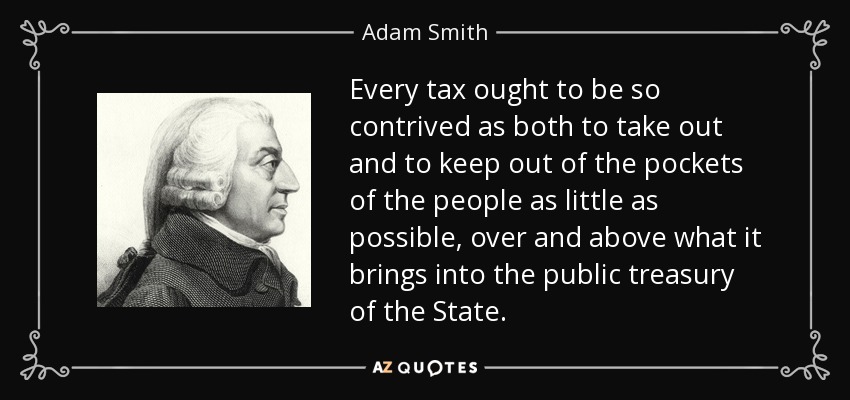
*Adam Smith’s blind spot?*

That is the title of my contribution (in press) to the next issue of the Journal of Public Finance and Public Choice. Among other things, my refereed research article extends Geoffrey Brennan and James Buchanan’s public-choice critique of the “optimal taxation” literature to Adam Smith’s maxims of taxation — see here or here, for example, or better yet, check out Book V, Chapter 2 of The Wealth of Nations! — and inspired by Brennan & Buchanan’s powerful critique, I identify two new “meta-maxims” of taxation:

  1. Meta-maxim #1: What is one’s baseline assumption about government power? That is, are benevolent patriarchs or wicked despots the norm?
  2. Meta-maxim #2: What are the constitutional rules or outer limits of government power? Put another way, how much authority does the government have, and what remedies exist (if any) if it exceeds those powers?
Adam Smith quote: Every tax ought to be so contrived as both to...
Posted in Uncategorized | Leave a comment

My sabbatical with Homer et al.

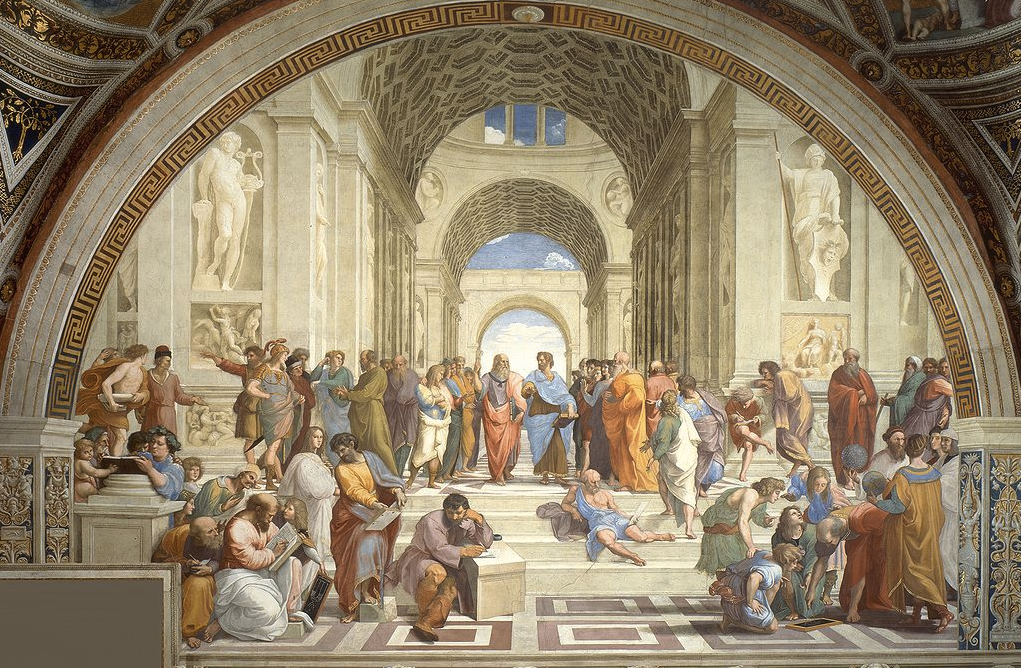
That is the title of my most recent work, which I have just posted to SSRN. In summary, to make the best use of my sabbatical, last summer I enrolled in a Classics seminar at Rollins College in Orlando, Florida. Among the many immortal works I read in this graduate-level, semester-long survey course, my favorites were Homer’s Iliad, Hesiod’s Works and Days, Plato’s Apology, and Ovid’s Metamorphoses. In my paper, I present some new interpretations of these four classics.

Picture of the painting _School of Athens_ by Raphael.
Raphael, “School of Athens”

Posted in Uncategorized | Leave a comment

Monday music: Areia Branca

Posted in Uncategorized | Leave a comment

Adam Smith in Switzerland

… there remain opportunities, even at this late date, for remedying the present meagre knowledge of Adam Smith’s life. [W. R. Scott, “Studies relating to Adam Smith in the last fifty years”, Proceedings of the British Academy (1940), Appendix II, p. 273]

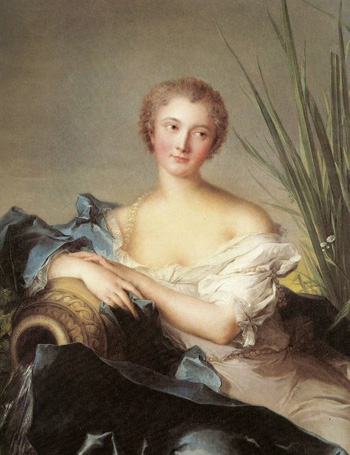
My colleague and friend Alain Alcouffe and I have been researching Adam Smith’s extended residency in the Republic of Geneva. Suffice it to say that this visit was no mere stopover but rather one of the highpoints of Smith’s grand tour years (1764-66), for it was during this time that Smith met the legendary literary figure Voltaire and befriended one of the most beautiful and influential salonnières of the Enlightenment era: Louise Elisabeth de La Rochefoucauld, the duchesse d’Enville (pictured below). For your reference, below is a compilation of our previous posts on “Adam Smith in Switzerland” (organized thematically):

I. Adam Smith’s Arrival and Departure

  1. Adam Smith in Geneva: arrival
  2. Adam Smith’s departure from Geneva
  3. Bonus: Six sols (Geneva, 1765)

II. Why Geneva? Reasons for Visiting the Swiss City-State

  1. Prologue: Adam Smith in Geneva
  2. Adam Smith in Geneva: Voltaire versus Rousseau
  3. Adam Smith and Rousseau the fugitive
  4. Adam Smith in Switzerland: the Smith-Tronchin Connection
  5. Adam Smith, J-J Rousseau, and the Geneva theater question
  6. The Voltaire conspiracy
  7. The Voltaire conspiracy: revealing Rousseau’s dark secret

III. Adam Smith and Voltaire

  1. Adam Smith and the Fracas at Ferney
  2. Fracas at Ferney, part 2: the case of Dillon’s dead dog
  3. Fracas at Ferney, part 3: the Adam Smith connection
  4. Adam Smith and the Voltaire-Needham Affair
  5. Preview: Voltaire’s vendetta
  6. Origins of Voltaire’s vendetta
  7. Voltaire-Adam Smith Postscript

IV. Adam Smith and the Syndics

  1. The Scottish moral philosopher and the Swiss statesman: Adam Smith and the Syndic Turretin
  2. The Scottish moral philosopher and the Swiss statesman, part 2
  3. Rousseau versus the Republic of Geneva
  4. Rousseau against the world
  5. Geneva, November 1765
  6. Geneva, December 1765: the political plot thickens
  7. January 1766: the Banana Republic of Geneva?

V. Adam Smith and the Duchesse d’Enville

  1. Bonnyman on Adam Smith and the Duchesse d’Enville
  2. Ross on Adam Smith and the Duchesse d’Enville
  3. John Rae and Dugald Stewart on Adam Smith and the Duchesse d’Enville
  4. Abbé Colbert on Adam Smith and the Duchesse d’Enville
  5. A conjecture re: Adam Smith and the duchesse d’Enville

VI. Switzerland in The Wealth of Nations

  1. Switzerland in *The Wealth of Nations*
  2. Switzerland in *The Wealth of Nations*, part 2
  3. Jean-Jacques Rousseau and Adam Smith on watchmaker apprenticeships
  4. Bonus: Some additional topics of discussion re: Adam Smith in Switzerland
File:Nattier - La duchesse Danville (1740).jpg
Posted in Uncategorized | 1 Comment

A conjecture re: Adam Smith and the duchesse d’Enville

James Currie (physician) - Wikipedia

Who was the duchesse d’Enville, and what was Adam Smith’s relation to her? Today, Alain Alcouffe and I wish to conclude our series by bringing to your attention an additional primary source that may — or may not — shed light on these enigmas: a piece of correspondence dated 14 July 1794 from Dr James Currie (1756–1805; pictured above), a Scottish physician best known for his biography and anthology of the works of the celebrated poet Robert Burns.

Curries’s letter is addressed to Smith’s first biographer Dugald Stewart (1753–1828), and among other things, it contains a second-hand report of “a French Marquise, a woman of talents and esprit, [who] was smitten, or thought herself smitten, with the Doctor [Smith], and made violent attempts to obtain his friendship” (Currie 1831, pp. 317-318, cited in Guerra-Pujol 2021, pp. 133-134). Currie’s letter further reports that the French Marquise “was just come from Paris … [and] was determined to obtain his [Smith’s] friendship; but after various attempts was obliged to give the matter up. Dr. Smith …. could not endure this French woman, and was, besides, dying for another” (ibid., emphasis added).

So, who is the “French Marquise” referred to in this passage? Could she, in fact, be the duchesse d’Enville? (And if so, why was she mistaken for a marquise?) Also, who is the other woman Smith was allegedly “dying” for?

In the bygone world of European nobility in pre-revolutionary France, a duchesse held a higher rank than a marquise, for a “duchesse” was a wife of a “duc” (duke), while a “marquise” refers to the wife of a “marquis”. [See generally Guy Chaussinand-Nogaret, The French Nobility in the Eighteenth Century, Cambridge University Press (1985).] For her part, the duchesse d’Enville had obtained her noble title of “duchesse” when she married her cousin Jean-Baptiste de La Rochefoucauld de Roye (1709–1746), Duke of Enville, on 28 February 1732 at the age of 15. [See generally Daniel Vaugelade, Tricentenaire de la naissance de la duchesse d’Enville, 1716-1797, Journée d’études organisée au château de La Roche-Guyon le 24 septembre 2016, Éditions de l’œil (2020).] But at the same time, it is possible that Currie, who is reporting at one remove what an old military man by the name of “Captain Lloyd” had told him (see Guerra-Pujol 2021, p. 132-133), may have confused or mixed up his noble titles.

Regardless whether the Scottish philosopher and the French salonnière were involved in romantic relationship or not, the duchesse d’Enville was one of the most accomplished women of the Age of Enlightenment who deserves recognition in her own right. As it happens, Alain Alcouffe are I are researching the life and influence of this remarkable woman of letters, and we hope to write up a scholarly paper in her honor later this year.

Posted in Uncategorized | 1 Comment