My work on “Outer Space Auctions” was recently featured on my university’s main website earlier this week! Check it out here.
I also presented my work at the annual Huber Hurst Research Seminar at the University of Florida (UF) last month (19-20 Jan.), where I received excellent feedback from my colleague and friend Justin Evans, who teaches business law and ethics at Georgia Southern University. (I will describe and discuss the main points raised by Professor Evans in a future post.)
Lastly (for now), I discovered on SSRN (where else?) an excellent survey article on “Matching, Auctions, and Market Design” by Matthew O. Jackson, who teaches economics at Stanford University. (I am writing up a new paper describing my proposed auction mechanism in greater detail than before, and my new draft will incorporate some of the insights in Jackson’s survey article as well as the points made by Professor Evans.)
Below I describe the development and evolution of my retrodiction market model, beginning in the spring of 2021 up to the present:
ACT I: CONSPIRACY THEORY COURTS
1. Spring 2021. In April 2021, I propose a “Conspiracy Theory Court” at a symposium on “Alternative Realities, Conspiracy Theory, and the Constitutional and Democratic Order” (April 16, 2021). The conspiracy theory court would try disputed conspiracy theories (conspiracy theory trials) and provide verdicts. People would be allowed to place bets on the outcomes of these trials.
2. Summer 2021. I read about a new prediction market called Kalshi on Tyler Cowen’s Marginal Revolution blog. (Kalshi is launched in July 2021.)
3. Fall 2021. In September 2021, I re-propose my “Conspiracy Theory Court” idea at the 12th annual meeting of the Association of Law Property & Society (ALPS) (September 25, 2021). During Q & A, a colleague proposes converting my proposed “Conspiracy Theory Court” into a popular game show or reality TV series in order to reach a wider audience. A few weeks later, sometime in October 2021, I receive an email from Professor Steven Brams, who makes an ingenious proposal to me: scrap the conspiracy theory courts and just keep the market.
ACT II: CONSPIRACY THEORY CONTRACTS
4. Spring 2022. I rework my original proposal: I replace my “conspiracy theory court” with “conspiracy theory contracts.” I include a sketch of my “conspiracy theory contracts” idea in my then work-in-progress “The GödelConspiracy”. In April 2022, “The GödelConspiracy” is published online in volume 15 of the Journal of Law and Public Policy.
5. Fall 2022. I present my revised proposal to economist Tyler Cowen; he objects on lack of liquidity grounds (email correspondence dated Nov. 2, 2022). Then, in November 2022, I present my revised idea (“conspiracy theory contracts”) at the 13th annual Constitutional Law Colloquium at Loyola Law School in Chicago (November 4-5, 2022). I meet David Schraub at the colloquium, and we begin corresponding; among other things; Schraub points out the beauty contest problem.
6. Winter 2023. In January 2023, I submit a new paper titled “Truth Markets” to the Journal of Free Speech Law. In doing a literature review for my new draft, I discover two previous speech market proposals — “Truth Bounties: A Market Solution to Fake News” by Yonathan Arbel and Michael Gilbert as well as “A Market for Truth to Address False Ads on Social Media” by Marshall Van Alstyne — but I reject these proposals because they would require external experts (Arbel & Gilbert) or fact-checkers (Van Alstyne) to determine the truth of disputed ads or claims. My submission is reviewed by two referees but is unjustly rejected because the contracts in my proposed market have no firm resolution date.
ACT III: BELIEF CONTRACTS
7. Spring 2023. I rework my original proposal by replacing my “conspiracy theory contracts” with all-purpose “belief contracts,” and in March 2022, I then present my modified “belief contracts” idea at the 16th annual International Conference on Contracts (KCON XVI) at Texas A&M University (March 17-18, 2023). I meet Yonathan Arbel (co-author of Arbel & Gilbert 2022) at KCON XVI, and we begin corresponding.
8. Summer 2023. A federal court enjoins the U.S. Commodity Futures Trading Commission (CFTC) from closing PredictIt’s event contract market. See Clarke et al. v. CFTC, No. 22-51124 (5th Cir., July 21, 2023), available here: https://perma.cc/NU48-AV3X.
9. Fall 2023. I explore the possibility of substituting “belief contracts” with “dominance assurance contracts.” (See, e.g., Alexander Tabarrok, The private provision of public goods via dominant assurance contracts, Public Choice, Vol. 96 (1998): 345-362.) However, I reject dominance assurance contracts as not feasible/unworkable because an expert is still required to determine if the conditions set forth in the contract have been met. Next, I present my “belief contracts” idea at the JLPP Fall Symposium on “Free Speech and the U.S. Constitution” (Nov. 17, 2021), where I receive detailed and helpful feedback from professors Michael Smith and Charles Reid.
RESOLUTION: A.I. TO THE RESCUE
10. Winter 2024. Vitalik Buterin posts “The promise and challenges of crypto + AI applications” to his website on January 30, 2024—just two days before my draft is due! I discover Buterin’s post via Tyler Cowen’s Marginal Revolution blog on January 31, 2024, and I request an extension of time to revise my paper and submit my draft to the JLPP on February 5, 2024.
Via tumblr, I am sharing the full video of Tracy Chapman and Luke Combs singing “Fast Car” at the Grammys before this clip gets taken down by our evil copyright overlords; see here and here, for example. Hat tip: Kottke
The update is that I have made three significant additions/revisions to my truth market proposal:
New subsections. I added to my paper a new subsection titled “A.I. to the Rescue?” (see Part IV of the paper, pp. 12-13) and streamlined the subsection titled “Objections to Retrodiction Markets” (Part III, pp. 10-11).
New addendum. I added an addendum to my paper describing how the design of my retrodiction market model has evolved since I first came up with this crazy idea in 2021.
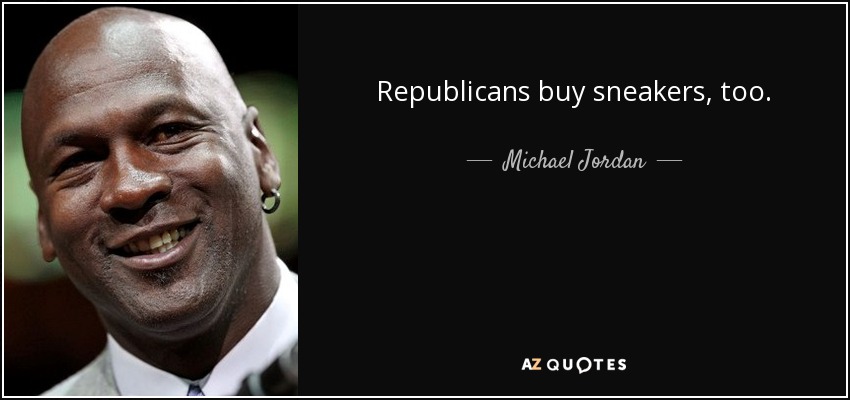
Via John Burn-Murdoch of Financial Times (see here): “An analysis by David Jackson, professor of political science at Bowling Green State University, found that an endorsement by a major celebrity could even have polarising impacts. Jackson discovered that while Democrats tended to say an endorsement of a presidential candidate by a liberal celebrity would increase their support for the candidate, that was more than offset by Republicans claiming it would put them off. And endorsements of all kinds tend to repel more moderates than they attract.” Or in the immortal words of Michael Jordan:
Can you correctly spell words like corduroy, kinsman, or wheedle? My youngest daughter Adys Ann won her school’s spelling bee on the word “tomahawk“! Below is a video of her during an earlier round spelling out the word “cumbersome“:
I have been participating in an Adam Smith reading group this winter and have thus been rereading various parts of Adam Smith’s first magnum opus, The Theory of Moral Sentiments (TMS), and I have also been sharing on this blog those passages from TMS that have caught my attention the most: see here and here (or below), for example. Here, I want to revisit the Scottish philosopher’s memorable three-part taxonomy of social groups (note: citations are to the Liberty Fund edition of TMS), which I sum up below as follow:
First, cut-throat and unpleasant “anti-social” social groups in which people “are at all times ready to hurt and injure one another” (TMS, p. 86, para. 3).
Secondly, amoral or mercenary utility-maximizingsocial groups in which people don’t have “any mutual love or affection” for each other (pp. 85-86, para. 2).
And thirdly, what I like to call lovely social groups where “assistance is reciprocally afforded from love, from gratitude, from friendship, and esteem” (p. 85, para. 1).
Now, I want to discuss a possible connection between Adam Smith’s three types of social groups and Thomas C. Schelling’s Strategy of Conflict (Harvard University Press, 1980). In brief, Schelling identifies three types of games or strategic interactions (see also here; citations are to the 1980 edition of The Strategy of Conflict):
Zero-sum games or games of pure conflict where one player’s win is always another player’s loss (pp. 83-84).
Games of pure coordination or positive-sum games where both players can win if they are able to coordinate their moves (pp. 89-99).
And what Schelling calls “mixed-motive games” with varying amounts of anti-social competition and pro-social cooperation (pp. 99-118).
I now want to propose a possible one-to-one correspondence between Adam Smith’s three types of social groups (cut-throat, mercenary, and lovely) and Schelling’s three types of games (pure conflict, pure coordination, and “mixed motive”) as follows:
People in cut-throat “anti-social” social groups are playing games of pure conflict; e.g. a mafia boss or drug lord ordering a hit against a rival.
People in utility-maximizing amoral mercenary social groups are playing games of pure coordination; e.g. the decision whether to drive on the right or left side of the road.
And lastly, people in lovely social groups are playing mixed-motive games; e.g. parent-child relationships, members of a trade or guild, etc.
What I love the most about this possible connection between Smith and Schelling is that it reveals a cool insight: people don’t live, play, and work in just one type of Smithian social group writ large; instead, people are simultaneously embedded in different types of social groups of various scales — i.e. playing different types of strategic games — depending on how the rules and payoffs of these games are structured.
Happy Candlemas! I was honored to attend an activity at last night at the Museo de Arte de Puerto Rico, where Taina Caragol, Kate Clarke Lemay, and Carolina Maestre presented their book 1898: Visual Culture and U.S. Imperialism in the Caribbean and the Pacific (Princeton University Press, 2023), a stunningly beautiful coffee table tome full of illustrations and maps that was published last year to commemorate their ground-breaking art exhibition on North American imperialism at the National Portrait Gallery in Washington, D.C. (The exhibition was curated by Caragol, Clarke Lemay, and Maestre and runs until the 25th of this month.) Shout out to my colleague and friend Gustavo Gelpi for providing me a copy of the book and to the curators of this excellent exhibition for signing my copy.













 prior probability