The South America and Scotland legs of my travels are now complete. Next, I will travel by rail to London. Among other places, I am planning to visit 85 Wigmore Street in London’s West End as well as Horace Walpole’s Strawberry Hill villa in Twickenham. (I will describe these visits and explain why I am visiting these places in the next day or two.)
In 1917, the artist Marcel Duchamp pulled off what has to be the greatest prank in art history when the Society of Independent Artists, a group of North American avant garde artists based in New York City (see here), announced a new art exhibition that would be open to anyone who wanted to display their work. After buying a mass-produced porcelain urinal from the J. L. Mott Iron Works company on Fifth Avenue and lugging it to his studio at 33 West 67th Street, Duchamp reoriented it 90 degrees, scrawled “R. Mutt 1917” on his upside-down urinal, and then submitted it to the aforementioned art exhibition.
Was the urinal really a work of art, and if not, who decides what constitutes “art” in the first place? Now, fast forward 100-plus years later. How many law review articles are published each year, and how many of those articles, if any, could be considered valuable works of art? As it happens, last year my colleague and friend Brian L. Frye had sent me a physical copy of his 2021 law review article “SEC No-Action Letter Request“, and I finally got around to reading Professor Frye’s remarkable paper during a road trip in Scotland this weekend. Suffice it to say I was blown away by Frye’s paper on three levels:
Level one: form. Professor Frye describes his 21-page academic paper as a work of “conceptual art”, but like a porcelain urinal, can a standard law review article really be a work of art? Why not? After all, it was Montaigne who elevated the lowly essay to the status of work of art, so why not law review articles?
Level two: substance. In addition to expanding the definition of art to include scholarly research articles, Professor Frye introduces a totally new and thought-provoking idea in his 2021 paper: the possibility of illegal art. What if, for example, Marcel Duchamp had stolen the urinal described in the first paragraph above, or what if he had photocopied a manual on how to make a pipe bomb and submitted it to the 1917 art exhibition?
Level three: self-reference. Last but not least, Frye’s beautiful paper also embodies the problem of self-reference. How? First off, he creates a work of art that arguably constitutes the sale of an unregistered security, i.e. an “illegal” work of art (step #1); next, he drafts and submits a real-life “no-action letter” requesting the relevant regulators to classify his article as “not illegal” (step #2); and then he writes up a formal law review article explaining why this request should be denied(!), which in turn would make his original work (see step #1 above) an even more valuable work of art!
To the point, Professor Frye’s “No-Action Letter” may or may not achieve legal immortality, but he has become the Marcel Duchamp of law reviews!
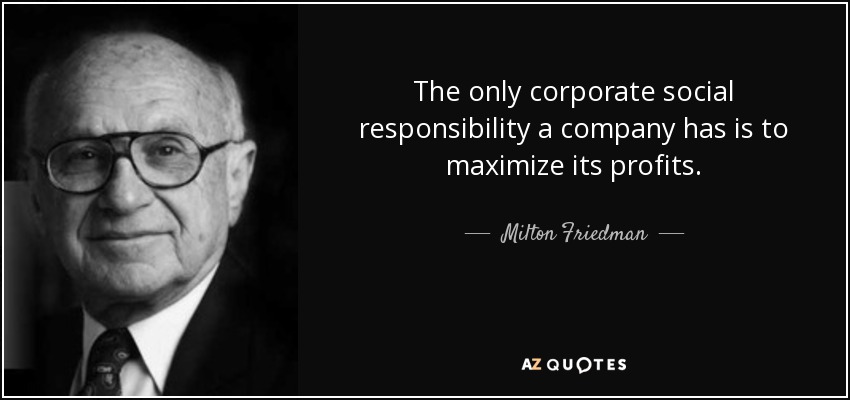
Did the late Milton Friedman betray the ideals of Adam Smith when he concluded in his now-famous 1970 New York Times Magazine essay that a business firm’s only ethical obligation to society is to maximize its profits as long as no laws are being broken, or is the great Professor Friedman Smith’s true intellectual heir? In honor of the upcoming ten-year anniversary of this blog (5 July 2023), I am reposting my epic 13-part series from 2018 on Friedman’s now-classic essay on corporate social responsibility:
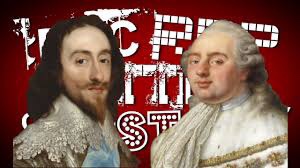
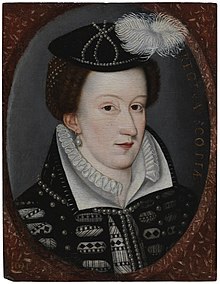
All three European monarchs were put on trial by their political enemies for supposed acts of treason: Mary, Queen of Scots in the Elizabethan Era (1586), Charles I in post-civil war England (1649), and Louis XVI during the height of the French Revolution (1792).
Now, let’s fast forward to the present (2023) and the current combo of federal and New York criminal cases against former president Donald J. Trump. Are there any possible historical parallels to these other great political show trials from the 16th, 17th, and 18th Centuries?
For my part, to the extent these Trump prosecutions are politically motivated–the Espionage Act of 1917, for example, has mostly been used by the Feds to punish journalists and dissidents; see here–perhaps the wisdom and fairness of using the legal system to go after a formidable political opponent like Trump should be reconsidered in light of the political show trials ofMary, Queen of Scots, Charles I, and Louis XVI.
Official portrait of President Donald J. Trump, Friday, October 6, 2017. (Official White House photo by Shealah Craighead)
In honor of the upcoming ten-year anniversary of this blog (5 July 2023), I am reposting two of my blog posts on the economics of popcorn prices at movie theaters–one from 2017 (link #1 below); the other from 2019 (link #2):
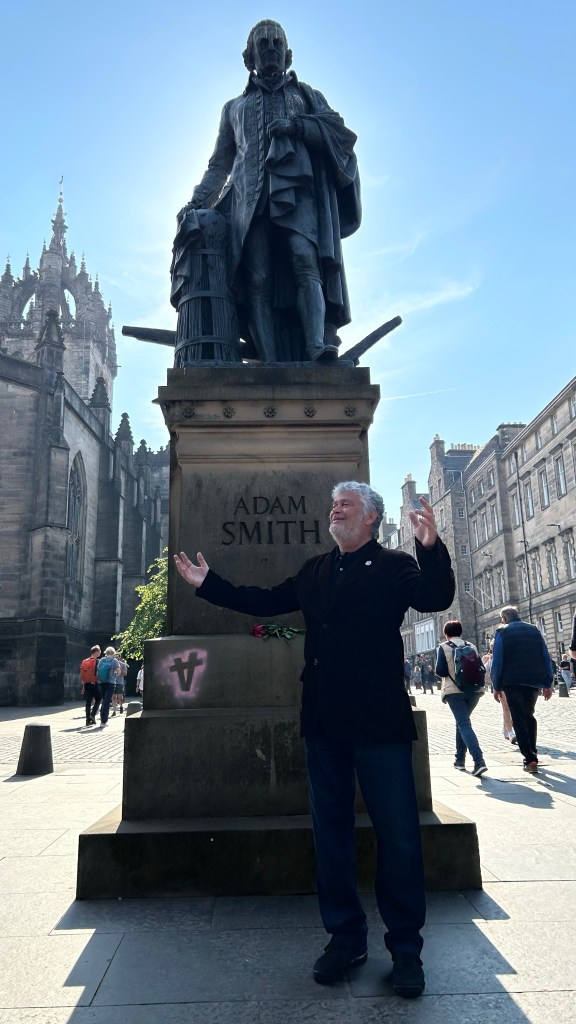
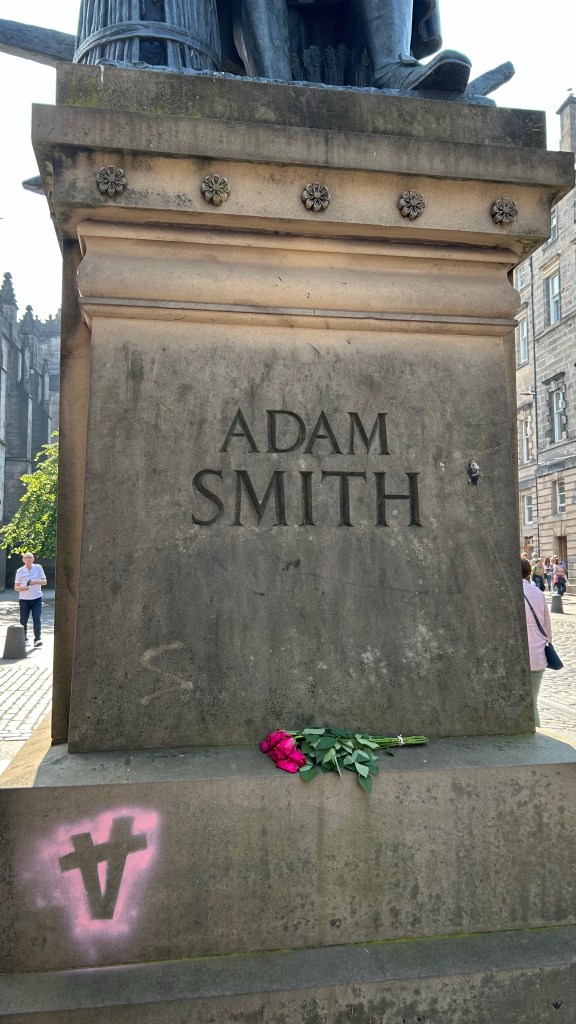
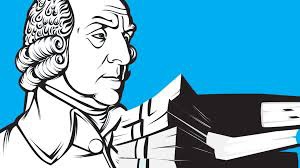
One of my favorite talks at Glasgow University’s “Adam Smith 300” conference was “Adam Smith–the first true liberal” by Professor Deirdre McCloskey. Among other things, three observations she made stood out for me: 1. for McCloskey, Adam Smith is something akin to a secular saint; 2. we know, however, very little about Smith the man; and 3. his name is invoked by people of all political persuasions–progressive and classical liberals alike.
















 prior probability