Milton Friedman Friday

Did the late Milton Friedman betray the ideals of Adam Smith when he concluded in his now-famous 1970 New York Times Magazine essay that a business firm’s only ethical obligation to society is to maximize its profits as long as no laws are being broken, or is the great Professor Friedman Smith’s true intellectual heir? In honor of the upcoming ten-year anniversary of this blog (5 July 2023), I am reposting my epic 13-part series from 2018 on Friedman’s now-classic essay on corporate social responsibility:

  1. Review of Milton Friedman (part 1)
  2. Friedman on business ethics (part 2)
  3. Friedman’s critique of CSR (part 3)
  4. Review of Friedman (part 4): corporate managers vs. sole proprietors
  5. Review of Friedman (part 5): interlude
  6. Review of Friedman (part 6): theory choice
  7. Milton Friedman’s fallacy (part 7)
  8. Friedman and the art of sophistry (part 8)
  9. Review of Friedman (part 9): ethics and epistemology
  10. Review of Friedman (part 10): markets versus politics
  11. Review of Friedman (part 11): do motives matter?
  12. Review of Friedman (penultimate post): politics versus markets redux
  13. Review of Friedman (last post)
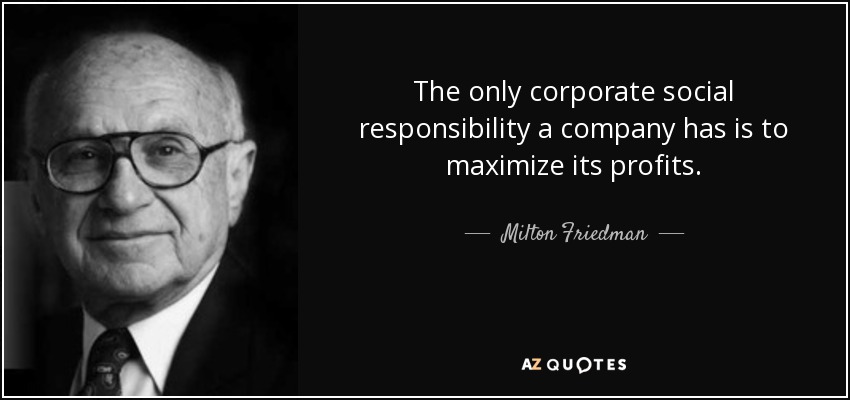
The only corporate social responsibility a company has is to maximize its profits. - Milton Friedman
Posted in Uncategorized | 2 Comments

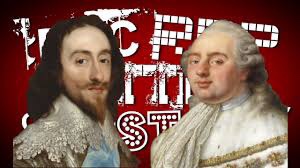
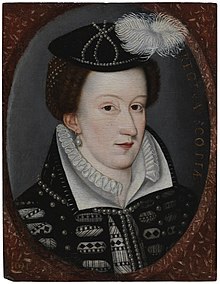
What do Mary, Queen of Scots, Charles I, and Louis XVI have in common?

All three European monarchs were put on trial by their political enemies for supposed acts of treason: Mary, Queen of Scots in the Elizabethan Era (1586), Charles I in post-civil war England (1649), and Louis XVI during the height of the French Revolution (1792).

Now, let’s fast forward to the present (2023) and the current combo of federal and New York criminal cases against former president Donald J. Trump. Are there any possible historical parallels to these other great political show trials from the 16th, 17th, and 18th Centuries?

For my part, to the extent these Trump prosecutions are politically motivated–the Espionage Act of 1917, for example, has mostly been used by the Feds to punish journalists and dissidents; see here–perhaps the wisdom and fairness of using the legal system to go after a formidable political opponent like Trump should be reconsidered in light of the political show trials of Mary, Queen of Scots, Charles I, and Louis XVI.

Posted in Uncategorized | 1 Comment

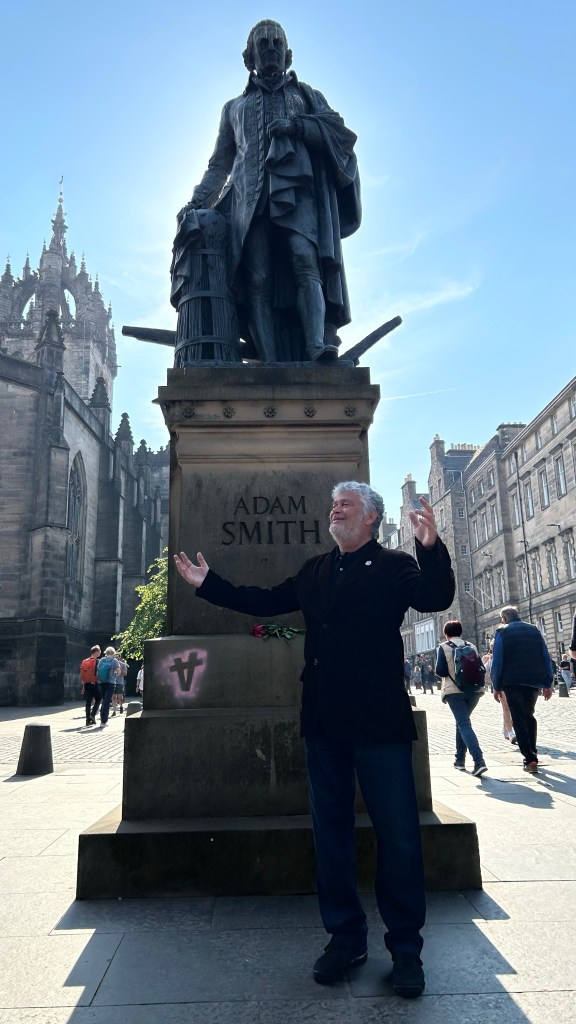
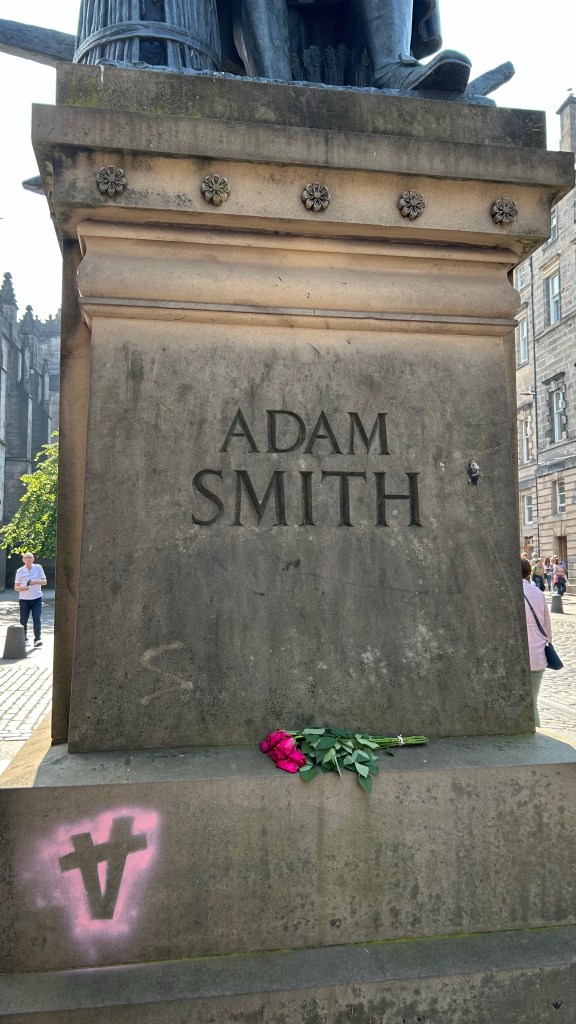
Adam Smith 2008

Wait, what?! This imposing statue of the great Adam Smith was first unveiled in Edinburgh, next to St Giles Cathedral, on 4 July 2008 (see here).

Posted in Uncategorized | Leave a comment

Popcorn economics

In honor of the upcoming ten-year anniversary of this blog (5 July 2023), I am reposting two of my blog posts on the economics of popcorn prices at movie theaters–one from 2017 (link #1 below); the other from 2019 (link #2):

  1. Popcorn puzzle (a brief survey of the literature)
  2. The economics of cinema concession stands

Enjoy!

Zachary Crockett / The Hustle
Posted in Uncategorized | Leave a comment

Music Monday: David Morris

Posted in Uncategorized | Leave a comment

McCloskey on Smith

One of my favorite talks at Glasgow University’s “Adam Smith 300” conference was “Adam Smith–the first true liberal” by Professor Deirdre McCloskey. Among other things, three observations she made stood out for me: 1. for McCloskey, Adam Smith is something akin to a secular saint; 2. we know, however, very little about Smith the man; and 3. his name is invoked by people of all political persuasions–progressive and classical liberals alike.

Posted in Uncategorized | 2 Comments

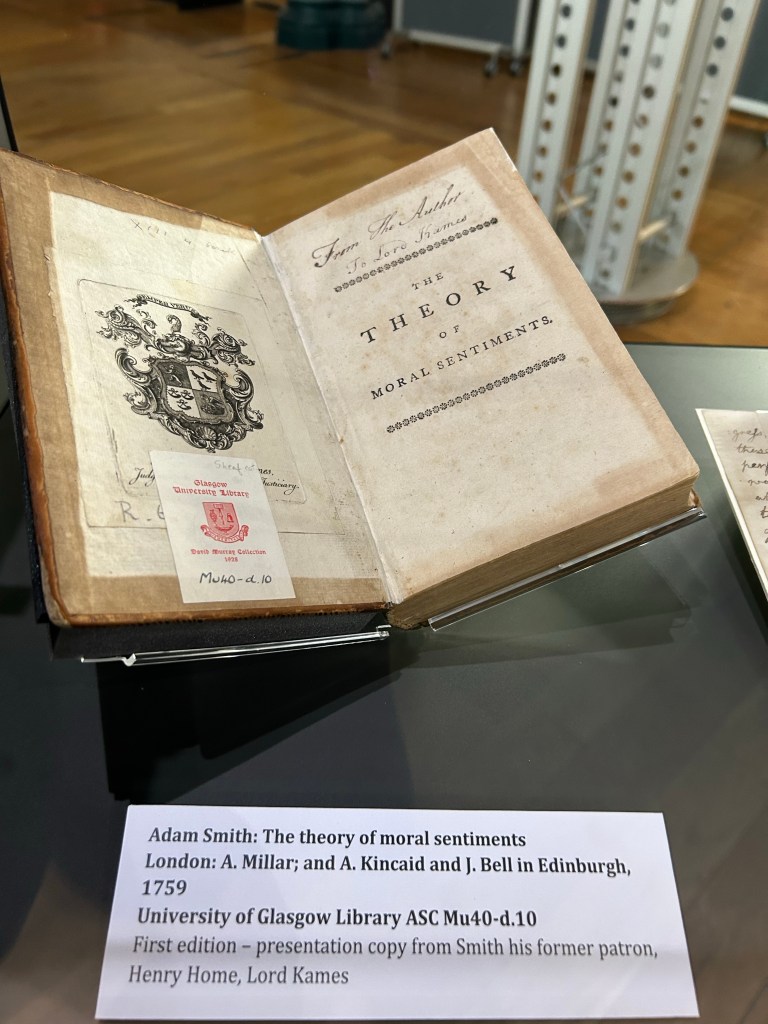
Smith 1759

Although 2023 is the 300th anniversary of the birth of Adam Smith, what really matters are his beautiful ideas and metaphors, such as the invisible hand and the impartial spectator. Pictured below is an original edition of Smith’s first book The Theory of Moral Sentiments; the Scottish philosopher was 36 years old when his treatise on ethics was first published in 1759.

Posted in Uncategorized | 1 Comment

What is *economics*?

Yesterday, Nobel laureate Sir Angus Deaton delivered a lecture on “Economic failure or failure of economics?” (see here) as part of the University of Glasgow’s Adam Smith Tercentenary Week. In brief, the first half of his lecture sounded a lot like one of Tucker Carlson’s monologues. Among other things, Professor Deaton described the despair and declining life expectancy of blue-collar workers in North America, but the second half of the lecture was just a hypocrital mishmash of progressive platitudes (I don’t need to be lectured about inequality by a tenured professor at Princeton) and debunked Keynesian ideas and barely made any mention of Adam Smith.

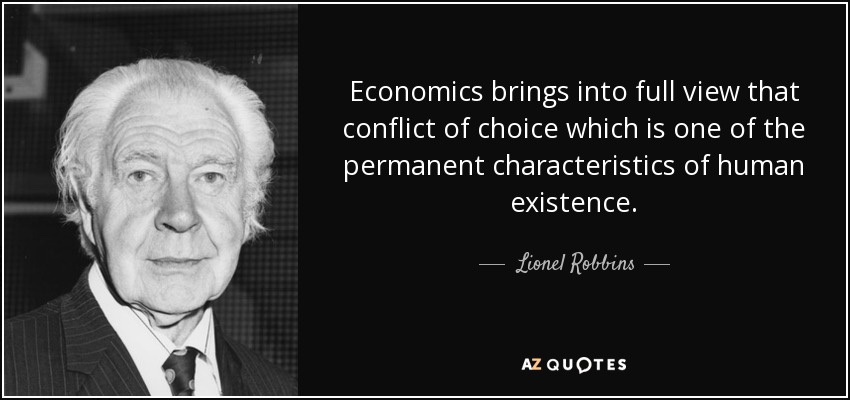
One aspect of the lecture, however, that caught my attention was Professor Deaton’s critique of Lionel Robbins’s “infamous” definition of economics as the allocation of scarce resources among competing ends (see below). But this critique begs the question, How else should we define economics? Although Deaton himself did not bother to provide an alternative definition of economics, I wonder, for example, what definition the great philosopher-economist Adam Smith would have preferred.

Posted in Uncategorized | Leave a comment

Glasgow update

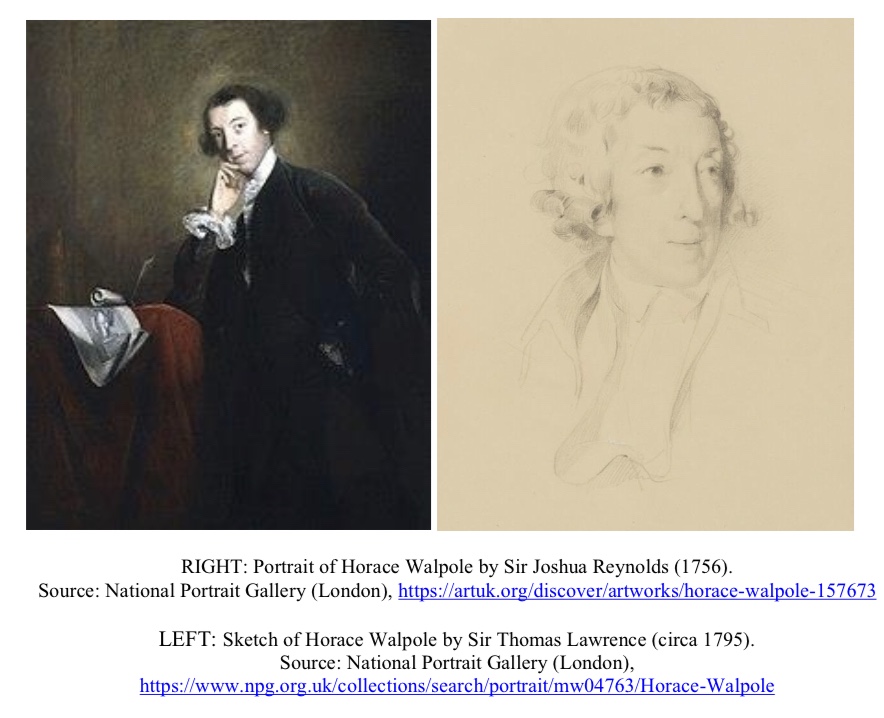
Today I will be presenting my work-in-progress “Adam Smith through the Eyes of Horace Walpole” at the University of Glasgow. (As an aside, in preparation for my talk I made significant revisions and corrections to my draft and posted the updated version here.) Suffice it to say that Smith and Walpole have to be one of the oddest of odd couples of all time, so what is the connection between them? Read my work to find out!

Posted in Uncategorized | Leave a comment

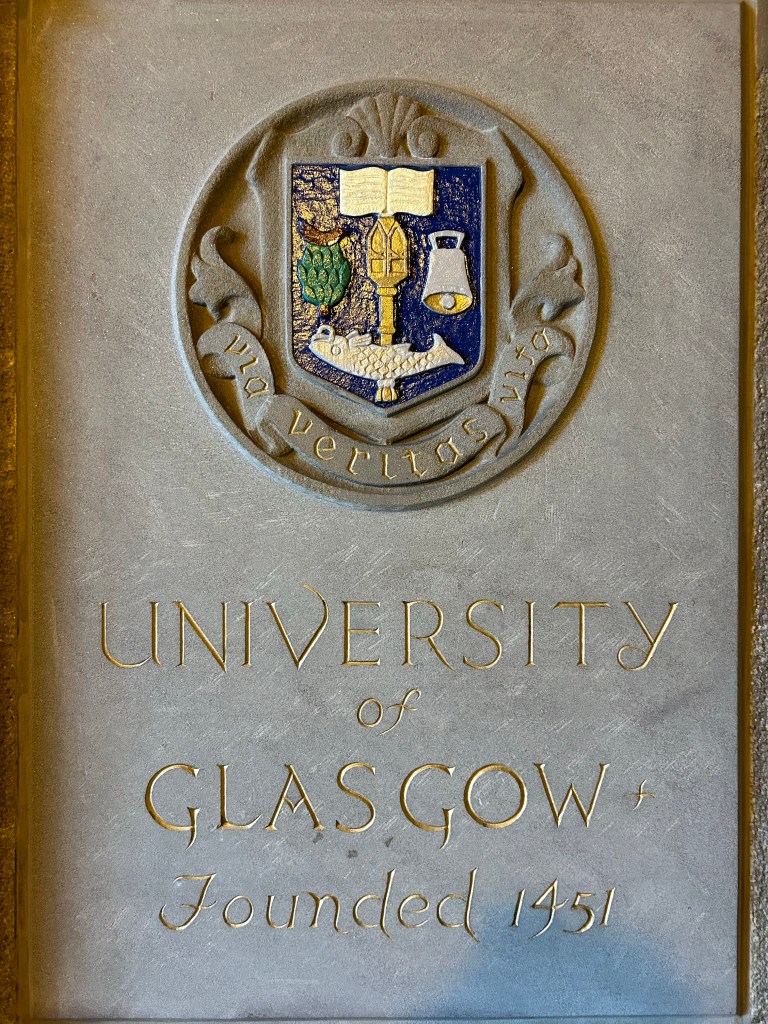
Postcards from the University of Glasgow

Posted in Uncategorized | Leave a comment