
Country artist Luke Combs, along with Ray Fulcher and James McNair (see here), somehow wrote and composed the most beautiful break-up song ever.

Creative Commons
Blogs I Follow









Country artist Luke Combs, along with Ray Fulcher and James McNair (see here), somehow wrote and composed the most beautiful break-up song ever.
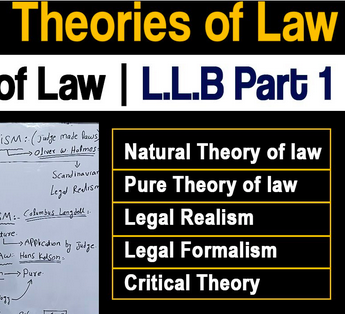
Via Brian Leiter (here), I discovered this strange blog post by Les Green, a philosophy of law professor at Oxford University. In summary, Professor Green offers a nuanced critique of the “pursuit of novelty” in fields like jurisprudence (philosophy of law): the pursuit of the new, which has now become a “fetish” (to quote Green), should take a back seat to the central goal of his field: the pursuit of truth. Professor Green’s diagnosis, however, has a fatal flaw: he fails to define truth. How do jurisprudes, for example, determine whether “the next general theory of law” — or even any of those listed in the picture below — is true or not? Alas, there is no way of testing, refuting, or “falsifying” (in the Popperian sense) such general legal theories; in a purely literary or linguistic field like jurisprudence, it’s all just a matter of opinion! As a result, although novelty is an imperfect proxy for truth (indeed, there might even be an inverse relation between novelty and truth), in a field like jurisprudence it is much easier to determine whether a theory is new than true.
That was the theme of this conference on advanced air mobility or AAM for short (or better yet, flying cars!) that I had the honor of attending yesterday. For reference, the Federal Aviation Administration has put together this AAM webpage; in brief, the term “advanced air mobility” refers to the new generation of battery-powered aircraft that take off and land vertically, such as Hyundai’s SA-1 Air Taxi or this Lilium Jet prototype manufactured in Munich, Germany. (Also, shout out to my colleagues Timothy Ravich, Sarah Bush, and Laurie Campbell, who were awarded a grant from the National Science Foundation to organize this excellent conference.) If a recording of the conference becomes available, I will post it here; in the meantime, below are three highlights:


As an added bonus, below is Aaron Koblin’s art video project “24 Hours of Flight Data”:
This installment of my “Taking Posner Seriously” series is devoted to Richard A. Posner’s excellent essay “A Political Court“, which was published in the fall of 2005 as the Foreward to the Harvard Law Review‘s special issue on the 2004 Supreme Court Term. In summary, as Posner explains in Part II of his polemical essay (pp. 39-60), because the Supreme Court gets to decide which cases to hear, and because constitutional cases are ultimately about power (i.e. the “who decides?” question), and because the text of the Constitution itself is so open-textured and full of glittering generalities and thus open to multiple interpretations, Posner concludes (p. 40): “The more the Supreme Court is seen, and perhaps sees itself, as preoccupied with polarizing “hot button” constitutional cases, the more urgent is the question whether when deciding constitutional cases the Court should be regarded as essentially a political body …, exercising discretion comparable in breadth to that of a legislature.”
Alas, prior to the publication of Posner’s 2005 essay, the idea that “law is politics” was already old hat. Old-school “critical legal scholars” (or Crits, for short) had already noted the political nature of different areas of law, including the common law, and the many different ways in which law, politics, and culture are intimately connected. But what Judge Posner does in his 2005 essay that is so original, surprising, and damning is that he inverts the Crits’ “law-as-politics” thesis. For Posner, the legal rulings of the Supreme Court are not just politics disguised as law (i.e. the Crits’ radical thesis that “law is politics”); instead, those rulings are unabashed political decisions made by an out-an-out political body. In a word, Posner out-crits the Crits!!!
Posner’s conclusion about the political nature of the Supreme Court became all but obvious when five justices used their judicial power to appoint the 43rd President of the United States in late 2000 and thus override the results of that year’s presidential election, yet Posner himself had defended the decision in Bush v. Gore in his book Breaking the Deadlock: The 2000 Election, the Constitution, and the Courts (Princeton University Press, 2001), which is available here for free, by the way. How is it possible to explain this inconsistency between the theoretical Posner and the applied Posner? As I will explain in my next Posner post next week, the source of this gross and glaring inconsistency is most likely Posner’s theory of judicial pragmatism, a theory that (to paraphrase Winston Churchill) is the worst form of legal theory–except for all the others that have been tried!

Correction: The University of Alabama (UA) has become a national disgrace. More information about the shooting timeline, and the role played by members of the UA baskeball team (including Brandon Miller, who is still on the team’s roster) in the murder of Jamea Harris, is available here, via ESPN.
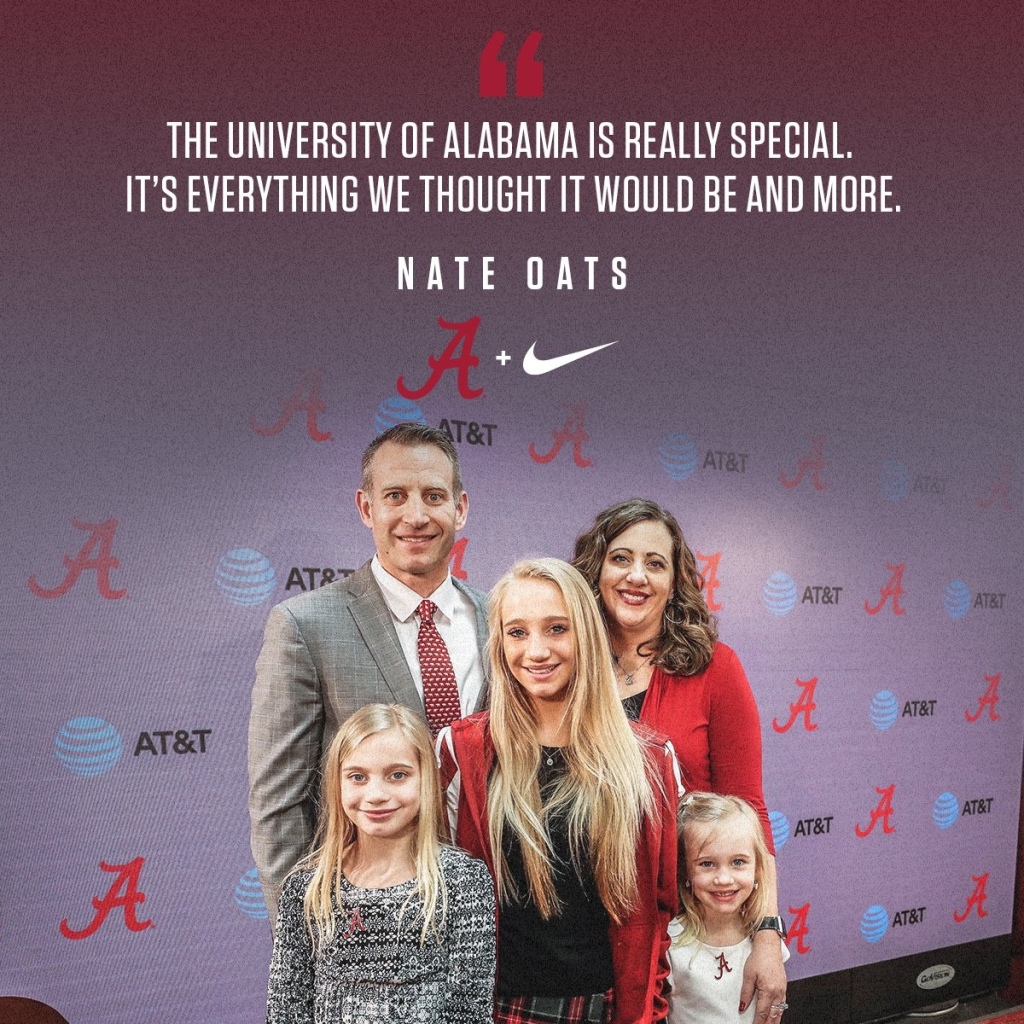
Greg Byrne is the Athletics Director at the University of Alabama, while Nate Oats is the head coach of the University of Alabama’s basketball team. Two of the “student-athletes” on their squad were involved in the murder of Jamea Jonae Harris, a 23-year old woman and mother, and one of them (Brandon Miller) is not only still on the team; Bryne and Oats (both of whom are pictured below) allowed Miller to play in last night’s away-game against the University of South Carolina. This state of affairs is absolutely disgraceful. Also, why hasn’t Dr. Stuart R. Bell, the president of the University of Alabama, asked both men to resign their positions?

That is the topic of this new paper by Alex Edmans, a finance professor and the managing editor of the prestigious Review of Finance, the official publication of the European Finance Association. In a nutshell, Professor Edmans explains why he had to reject “nearly 1,000 manuscripts” for publication during his tenure at the journal. Below are just a few of his reasons for rejecting so many papers for publication:
While I agree with items #4 and #5, which are common problems in my field (law), what Professor Edmans fails to mention is that the questions of novelty, significance, and generalizability are highly subjective and contested ones. (See here, for example.) Nor does he even begin to address the elephant in the ivory-tower room: why do we still need gatekeepers like Edmans; or more generally, why do we need obsolete print journals in the Internet Age? Why not follow the legal scholarship model instead in which almost everything gets published (there are over 1,500 law journals out there) and let the scholarly community as a whole decide what is worthy? (I guess these secondary questions would be the subject of another paper!)

Toward the end of my previous Posner post, which highlighted Oliver Wendell Holmes’s three-paragraph dissent in Lochner v. New York, I shouted out Sex and Reason (1992), perhaps Richard A. Posner’s most controversial work. In short, I was so impressed with Law and Literature that I decided to give some of Posner’s other scholarly tomes a try, including The Problems of Jurisprudence (1990), Overcoming Law (1995), and The Problematics of Moral and Legal Theory (1997). But my favorite Posner book by far was the aforementioned tome on sex, an intellectual tour de force in which Posner surveys the history of sexuality and sexual mores in Western civilization, explores the economics of erotic art and pornography, reviews the legal regulation of sex, and develops a general theory of sexuality. In short, I was won over by the breadth and depth of Posner’s foray into human sexuality–a descriptive diamond in the normative rough of feminist legal scholarship.
But what struck me the most about Sex and Reason was Judge Posner’s morally-neutral or “morally indifferent” analysis of sexuality and sex regulation. (See especially pp. 181-182 of Posner’s sex book.) For Posner, sex should be treated as the moral equivalent of eating: a morally-neutral act. Consider, for example, my decision to add a leaf or two of spinach to my ham-and-egg sandwich sandwich for breakfast. It might be morally wrong of me to consume meat, and bread-baking and the planting, harvesting, and distribution of wheat and other crops might generate negative environmental consequences, but the actual act of me eating a ham-and-egg sandwich for breakfast carries no moral significance whatsoever, like the act of combing my hair or brushing my teeth, or in the words of Posner: “Few people in modern society consider eating (as long as it is not cannibalistic) an activity charged with moral significance, but everyone recognizes that it is an activity to be conducted with due regard … of health, expense, time, and seemliness.”
Although I disagree with Posner about the moral-neutral status of eating, the possibility of a morally-neutral analysis of sex struck such a deep chord with me that it inspired me to research and write my first major paper: “Domestic Violence, Strategic Behavior, and Ideological Rent-Seeking” (2006). (By this time, I had published only two minor works: one on the history of Puerto Rico citizenship (see here), which was based on research I had done when I was a student at Yale; the other (here) describing a special conference on Bush v. Gore that my law school had hosted in February of 2001.) The seeds of my 2006 paper were planted during a panel on Caribbean legal trends that took place at the Caribe Hilton in San Juan, Puerto Rico in the summer of 2004. At this academic panel, a feminist law professor (the late María Dolores Fernós) denounced the increase in domestic violence incidents on the Island and urged the Puerto Rico Government to take more aggressive actions to reduce such violence. This plea for help resonated with me, for there was indeed a significant increase in domestic violence cases as measured in the amount of persons, mostly women, requesting protection orders.
But this steady and inexorable increase in domestic violence cases on the Island of Puerto Rico posed an important empirical puzzle, a puzzle that my moralistic feminist colleagues somehow overlooked. To the point, the Commonwealth of Puerto Rico had adopted a comprehensive domestic violence law in 1989, so why were domestic abuse cases still on the rise in 2004? Although one would have expected an initial increase in the number of domestic violence complaints when that new law began to take effect, at some point one would also expect the number of such complaints to peak and then level off as potential aggressors begin to internalize the costs of aggression, which I soon discovered was precisely what occurred in the mainland United States, where the overall rate of domestic violence incidents had declined since peaking in 1996. So, why was there no substantial decline or leveling off in Puerto Rico?
I decided tackle this puzzle by extending Posner’s morally-neutral approach to the arena of marital and domestic conflict. Among other things, I conjectured that the increase in domestic violence in Puerto Rico was most likely due to strategic behavior on the part of complainants, and I further conjectured that the passage of domestic violence legislation was the result of “ideological rent-seeking”–a form of rent-seeking behavior that occurs when an organized group or faction uses the political process to extract intangible ideological rents, i.e. the satisfaction of knowing that one’s moral views are reflected in public legislation. In 2005 or so, I submitted my resulting paper (see here) to the Journal of Empirical Legal Studies, a new journal at the time, but my work was rejected for not being empirical enough; in fact, I wasn’t even allowed to present my paper at the annual meeting of the Society for Empirical Legal Studies–no doubt for political and ideological reasons.
Despite this early-career setback, Posner’s morally-neutral approach would recharge my intellectual batteries and radically change the trajectory of my legal scholarship. To the point, I decided to steal Posner’s morally-neutral approach and extend it to other areas of the law, including dispute resolution (see my 2012 paper “The Turing Test and the Legal Process” in which I propose a fast and simple probabilistic method for resolving disputes), litigation (see my 2011 paper “Chance and Litigation” in which I model judicial outcomes as a random coin toss), and Puerto Rico’s colonial status (see my 2008 paper “Is a Post-Colonial Puerto Rico Possible?” in which I model the Puerto Rico status politics as a truel or three-person duel).
My next major contact with Richard Posner would occur in the fall of 2005, when his polemical essay on the 2004 Supreme Court Term was published in the august pages of the Harvard Law Review. Posner’s 71-page survey article “A Political Court” launches a devastating attack against judicial supremacy, a critique that still resonates with me to this day. Posner’s work, however, doesn’t just call out the Supreme Court for its “tendency to behave ‘legislatively'”; it also shows how the High Court has for all practical purposes become a lawless body. I will further describe Posner’s scathing indictment of the justices’ reckless and god-like behavior in my next Posner post.

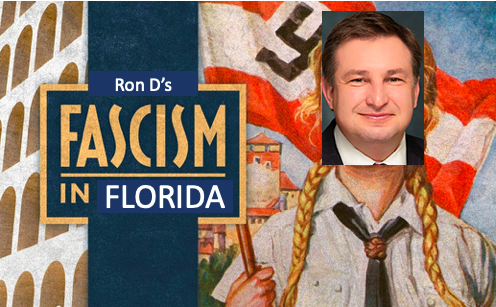
According to this report, a Republican State Senator by the name of Jason Brodeur (pictured below next to the swastica symbol), who represents Lake Mary in Central Florida, has drafted a draconian bill (see here) that would require bloggers who write about the Governor or other members of the Florida executive and legislative branches to register with the Florida Office of Legislative Services or the Commission on Ethics. (The bill was filed with the Florida Legislature on 28 February and referred to the several legislative committees on 6 March.) Alas, Brodeur’s neo-fascist proposal constitutes nothing less than an arbitrary and capricious abridgement of speech, but what is even crazier than this inane bill is that (as of the morning of 7 March) Governor DeSantis has yet to reject this illiberal measure! PSA: In place of the heavy hand of censorship, why not subsidize a “truth market” instead?
Update (9 March): Just a few hours after I put this blog post up, Governor DeSantis distanced himself from Brodeur’s blogger bill. Is it just a coincidence, or is my blog starting to have an impact on politics?


Welcome to the online home of the IASS
Hopefully It’s Interesting.
In Conversation with Legal and Moral Philosophers
Relitigating Our Favorite Disputes
PhD, Jagiellonian University
Inquiry and opinion
Life is all about being curious, asking questions, and discovering your passion. And it can be fun!
Books, papers, and other jurisprudential things
Ramblings of a retiree in France
BY GRACE THROUGH FAITH
Natalia's space
hoping we know we're living the dream
Lover of math. Bad at drawing.
We hike, bike, and discover Central Florida and beyond
Making it big in business after age 40
Reasoning about reasoning, mathematically.
I don't mean to sound critical, but I am; so that's how it comes across
remember the good old days...
"Let me live, love and say it well in good sentences." - Sylvia Plath
a personal view of the theory of computation
Submitted For Your Perusal is a weblog wherein Matt Thomas shares and writes about things he thinks are interesting.
Logic at Columbia University
Just like the Thesis Whisperer - but with more money
the sky is no longer the limit
Technology, Culture, and Ethics
Just like the horse whisperer - but with more pages
Poetry, Other Words, and Cats

 prior probability