
My wife and I are attending the 13th annual Constitutional Law Colloquium at the Loyola Law School in Chicago; below are some snapshots of our trip:









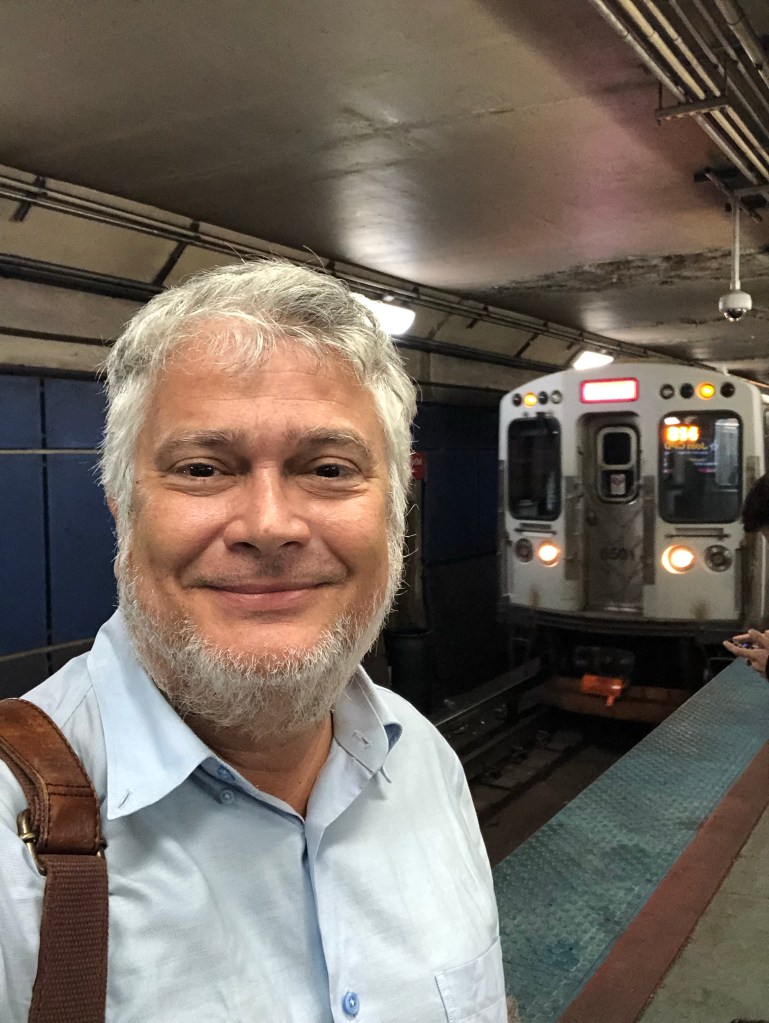
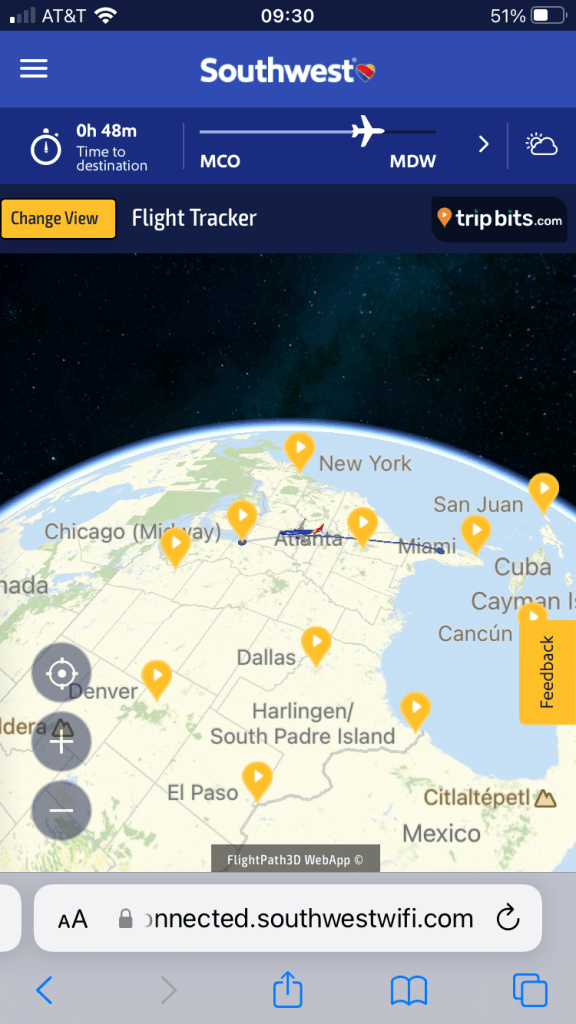
My wife and I are attending the 13th annual Constitutional Law Colloquium at the Loyola Law School in Chicago; below are some snapshots of our trip:
I outlined my proposal for a “truth market” in my previous post. A truth market would trade in belief contracts. Each belief contract would be structured as a simple “belief statement” with two discrete choices: True(T) or False(F). The belief statement could refer to a disputed news story (e.g. fake news) or to a popular or persistent conspiracy theory. Consider, for example, the many conspiracy theories regarding the assassination of President John F. Kennedy on November 22, 1963. Was there a conspiracy to assassinate President Kennedy, or did Lee Harvey Oswald act alone?
If there were a truth market, anyone could post a belief statement such as “Lee Harvey Oswald was part of a conspiracy to assassinate JFK.” In the alternative, the belief statement could be more specific: “The Secret Service was part of a conspiracy to assassinate JFK” or “Fidel Castro ordered the assassination of JFK.” The creative possibilities are endless (see here, for example), but to keep it simple, let’s stick with the first example: “Lee Harvey Oswald was part of a conspiracy to assassinate JFK.” People who believe that Oswald did not act alone–that he was, in fact, a member of an anti-Kennedy conspiracy–could buy T contracts. Conversely, people who believe the official version (e.g. the Warren Commission’s lone gunman theory) could buy F contracts.
In a well-functioning truth market, the price of each belief contract (T or F) should reflect the betting market’s aggregate answer to the belief or conspiracy theory being bet on–i.e., whether the belief in the JFK conspiracy will turn out to be more likely true or false. (See, e.g., Wolfers & Zitzewitz, Interpreting prediction market prices as probabilities, NBER Working Paper #12200 (April 2006) For a less technical explanation, see here.) If more bettors are convinced that Oswald was part of a conspiracy, the price of a T contract will rise; by contrast, if more bettors believe that Oswald acted alone, the price of an F contract will rise. Either way, anyone who disagrees with the current consensus about a disputed conspiracy theory or disputed news story would have a profit motive to participate in the market.
But what about liquidity? Would people want to bet on conspiracy theories or fake news? Alas, without a sufficient number of market participants, it is less likely that the prices of these belief contracts will reflect the true probabilities of the various beliefs being bet on. Also, even if my truth market were highly liquid, with lots of bettors, one could argue that the truth of X belief should not depend on the number of people who are willing to bet on that belief.
Accordingly, next week I will address this crucial objection and propose some ideas for making truth markets more appealing to actual bettors.
Thus far, I have blogged about the twin dangers of false information (fake news, conspiracy theories, etc.) and censorship (secret algorithms, arbitrary “content moderation” policies, DHS surveillance, etc.). But how can we combat false information without resorting to censorship? I hereby propose the creation of a new truth market. In summary, my proposed truth market, which is inspired by the work of F. A. Hayek, would operate like an ordinary betting market–but instead of placing bets on the outcome of future events (like an upcoming football match or basketball game), bettors would place wagers on their beliefs about past events. Or in the alternative, why can’t we extend an existing prediction market platform like Kalshi to cover conspiracy theories, fake news, and the like?
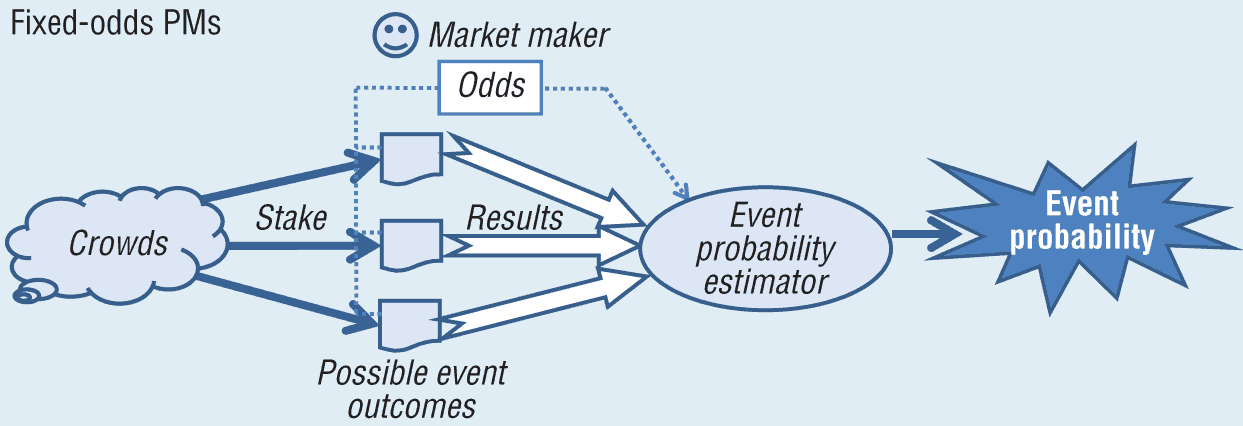
By way of background, here is how the Kalshi market works: users can post any question about a future event that others can bet on, so long as the question has a discrete outcome, like Yes or No. (By way of example: “Will Donald Trump be indicted before Thanksgiving?“) Once a question is posted on the Kalshi platform, people can then buy “event contracts”: Yes contracts or No contracts, depending on whether they believe the answer to the question will be Yes or No. Each event contract, in turn, is priced between $0 and $1 (as long as the sum of one Yes contract and one No contract equals $1), and the price of the contracts at any given time will fluctuate depending on the overall demand for Yes contracts and No contracts. The price for a Yes contract, for example, will be higher if more people are buying Yes contracts, and vice versa, lower if more people are buying No contracts. Buyers can also trade or sell their contracts like any other financial security, and when the market closes, the buyers who guessed the correct outcome get to collect $1 for each winning contract; the losers get nothing.
So, why can’t we replace Kalshi’s prospective event contracts with retrospective “belief contracts“? The main difference between the Kalshi model and my proposed truth market is that traditional betting markets must close by a specified date. But we don’t need a close date or final resolution in principle, especially about events that have already occurred, like a popular conspiracy theory or a disputed news report. Instead, we could leave the market for belief contracts open indefinitely in order to allow people to post questions about past events and to bet on their beliefs about such events. By keeping the betting market open indefinitely, the price of any given “belief contract” will track belief or non-belief in the conspiracy or in the disputed story. A bettor will stay in the market for belief X (where X is a conspiracy theory, disputed news report, etc.) if he thinks the price of belief in X will increase, or he will opt out if he thinks it will fall.
I will say more about the mechanics of these “beliefs contracts” in my next post. In the meantime, I will conclude with the following observation. By monetizing beliefs, bettors will have an incentive to seek new information that not only supports their wagers but is also likely to persuade other bettors, thereby advancing the search for truth. As long as there is yet-to-be-discovered evidence that may be convincing to some bettors, some conspiracy theories and fake news should move toward resolution without the need for an omniscient arbiter.
:max_bytes(150000):strip_icc()/friedrich-hayek.asp-ADD-v1-10476cbbf9874e038898e2a339501f01.jpg)
I am reblogging this post from earlier this week (see below) because, in the interim, two intrepid reporters at The Intercept broke this insane story: Truth Cops. To the point, the Department of Homeland Security is actively monitoring the social media accounts of U.S. citizens and is colluding with Big Tech firms to censor what the DHS deems to be false information. Crazy, right? By contrast, in place of the current system–censorship combined with secret surveillance–I have proposed an alternative approach: a “truth market” where people can openly place bets on the probable truth values of conspiracy theories and fake news. I will discuss the details of my truth market in my next post …
Is the proliferation of “fake news” and conspiracy theories a threat to democracy? If so, how should we deal with such dangerous ideas and falsehoods? Broadly speaking, there are two general approaches to this problem: one is the Mark Zuckerberg solution, i.e. some combination of censorship (content moderation) and secret computer algorithms; the other is the Elon Musk method, i.e. laissez faire principles and free speech absolutism (everyone is free to post whatever they want).
Which approach do you prefer? Zuckerberg’s or Musk’s? For my part, I won’t dwell on the pros and cons of either approach, except to make the following general observation: neither the Zuckerberg solution nor the Musk method is designed to help us distinguish truth from lies in a reliable manner. One big problem with the Zuckerberg/censorship approach, for example, is that we cannot always determine ahead of time which conspiracy theories are true…
View original post 140 more words
Today (1 November) is All Saints’ Day or “The Feast of All Hallows” in the Catholic calendar; I will therefore resume my series on gambling and democracy in the next day or two. More details about the history of this solemn feast day are available here.

Yesterday (10/30), the Amazing Tyler Cowen linked to this 10/27 report in the Financial Times (FT): Gambling on democracy: US regulators weigh election futures market — calling it “the best article I’ve seen on prediction market issues in DC.” (He also linked to this 10/28 ungated article in Politico.) Given my previous two blog posts on the overall theme of gambling and democracy (see here and here), and given Professor Cowen’s high praise of the FT article, I want to say a few words about that item before I press on.
In summary, both the FT report that Cowen liked so much as well as the ungated Politico article note that the Commodity Futures Trading Commission (CFTC) is scheduled to decide by this Friday, November 4, if the prediction market Kalshi can allow investors to place bets on U.S. election results. (Among other things, the CFTC regulates futures exchanges and prediction markets that operate inside the U.S.) This is (potentially) big news because real-money political prediction markets have thus far not been allowed to do business in the United States.
By way of background, although one special exchange–the Iowa Electronic Market, which somehow received a exemption from the CFTC in the early 1990s in the form of two no-action letters–allows users to place bets on specific election races, individuals and business firms are not allowed to bet on the overall results of nationwide elections, e.g. will Republicans win back control of the Senate in 2022? In 2012, for example, the CFTC rejected a proposal from a company called Nadex for “political event” futures (see here), arguing it was against the public interest. (Aside: I call bullshit! See below.)
For its part, the FT article mentioned above surveys two flimsy arguments against political prediction markets. One is that PACs (political action committees) and other large donors would be able to place bets on elections; the other is that such markets would lead to the “gamification” of politics. My reply to both concerns is, SO WHAT? Ultimately, the main argument against political prediction markets boils down to this two-part objection: (i) such markets are the same as legalized gambling, and (ii) gambling would be bad for democracy. While I readily concede part (i) of the argument, since all trades are gambles, I am skeptical about part (ii). Why exactly is gambling bad for democracy?

Is the proliferation of “fake news” and conspiracy theories a threat to democracy? If so, how should we deal with such dangerous ideas and falsehoods? Broadly speaking, there are two general approaches to this problem: one is the Mark Zuckerberg solution, i.e. some combination of censorship (content moderation) and secret computer algorithms; the other is the Elon Musk method, i.e. laissez faire principles and free speech absolutism (everyone is free to post whatever they want).
Which approach do you prefer? Zuckerberg’s or Musk’s? For my part, I won’t dwell on the pros and cons of either approach, except to make the following general observation: neither the Zuckerberg solution nor the Musk method is designed to help us distinguish truth from lies in a reliable manner. One big problem with the Zuckerberg/censorship approach, for example, is that we cannot always determine ahead of time which conspiracy theories are true and which are false, while the main problem the Musk/free speech approach is that most people on the Internet are ill-informed, ignorant, or just flat-out prejudiced. To the point, if anyone can post anything, will the truth eventually emerge from such a large cacophony of voices, or will the truth just get crowded out?
With this background in mind, here is where my proposed third-way solution comes into play. Simply put, instead of trusting our Big Tech overlords (the Zuckerberg approach) or resorting to “anything goes” as a magical panacea (the Musk method), why not allow people to place bets on conspiracy theories and fake news? That is, why not create an actual “truth market” for contested ideas? (See here, for example.) I will further describe the details of my proposed truth market in a future post.
/cdn.vox-cdn.com/uploads/chorus_image/image/56051901/1_1Wk3bDYX_9T4rT9ryG4GGA.0.jpeg)
Inspired by the work of polymath Robin Hanson (check out Hanson’s blog here), I first posed this question in August of 2021 (see here). Since then, I published “The Leibniz Conspiracy“, which surveys a wide variety of “conspiracy theory theories” and proposes a specialized betting market for conspiracy theories. In addition, many mass-market and scholarly books devoted to conspiracy theories and conspiracy thinking more generally–including Republic of Lies (2019), Conspiracy Theories: A Primer (2020), the Routledge Handbook of Conspiracy Theories (2020), and Stuff They Don’t Want You to Know (2022), just to name a few–have been published in recent years (see below for more titles), but none of these works proposes an effective or foolproof way of distinguishing real conspiracies (like the Wuhan lab-leak cover-up) with fake ones (like most 2020 election fraud claims). That is why I will be presenting a new and improved version of my conspiracy theory betting market proposal at the 13th annual Constitutional Law Colloquium at Loyola Law School in Chicago next Saturday (5 November). I will say more about my modified proposal in the days ahead; for now, it suffices to say that I will expand my betting market to include “fake news” as well as popular conspiracy theories.











Welcome to the online home of the IASS
Hopefully It’s Interesting.
In Conversation with Legal and Moral Philosophers
Relitigating Our Favorite Disputes
PhD, Jagiellonian University
Inquiry and opinion
Life is all about being curious, asking questions, and discovering your passion. And it can be fun!
Books, papers, and other jurisprudential things
Ramblings of a retiree in France
BY GRACE THROUGH FAITH
Natalia's space
hoping we know we're living the dream
Lover of math. Bad at drawing.
We hike, bike, and discover Central Florida and beyond
Making it big in business after age 40
Reasoning about reasoning, mathematically.
I don't mean to sound critical, but I am; so that's how it comes across
remember the good old days...
"Let me live, love and say it well in good sentences." - Sylvia Plath
a personal view of the theory of computation
Submitted For Your Perusal is a weblog wherein Matt Thomas shares and writes about things he thinks are interesting.
Logic at Columbia University
Just like the Thesis Whisperer - but with more money
the sky is no longer the limit
Technology, Culture, and Ethics
Just like the horse whisperer - but with more pages
Poetry, Other Words, and Cats


 prior probability