
Happy Mother’s Day from Mexico City!




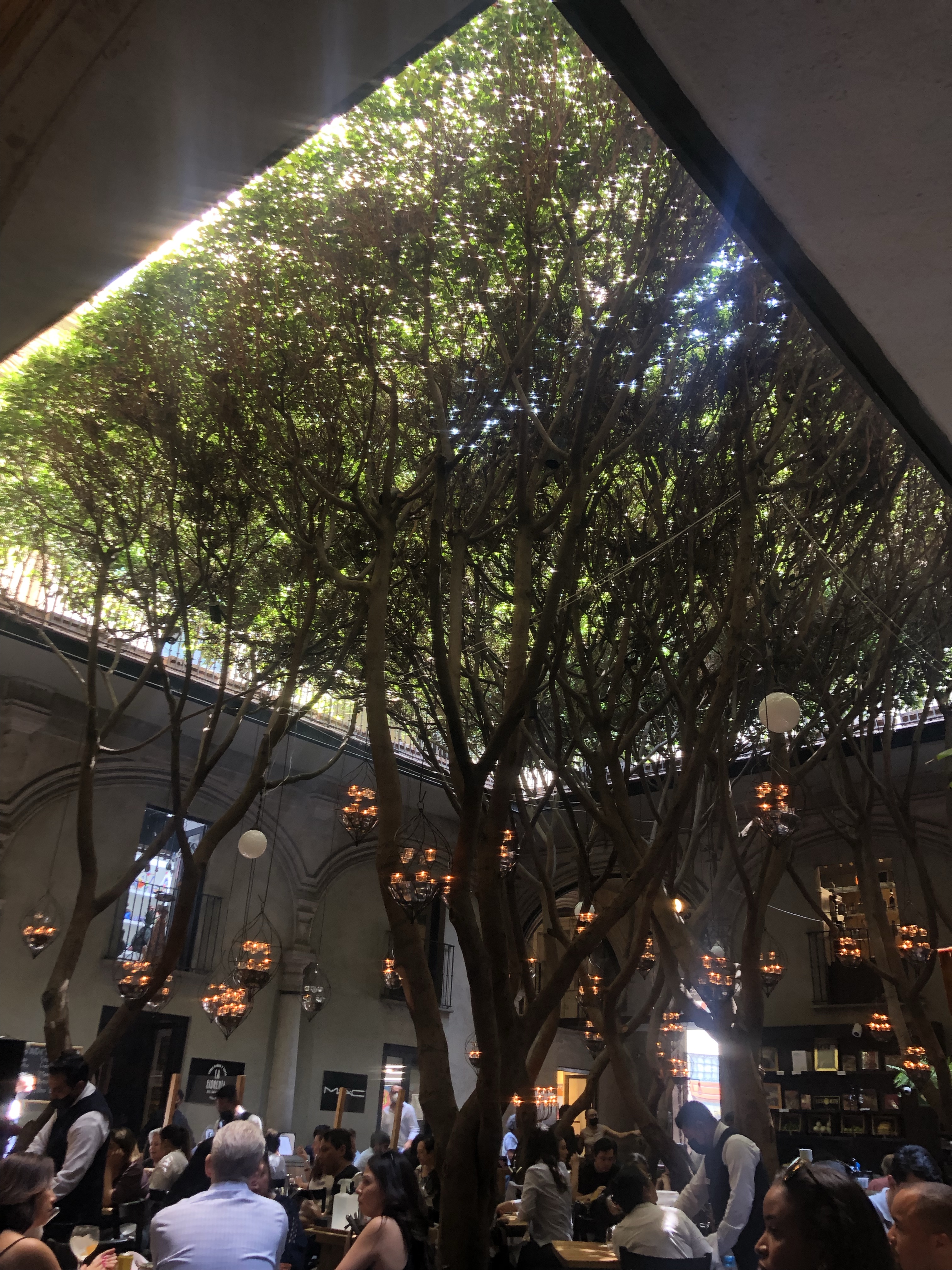


Happy Mother’s Day from Mexico City!
Pictured below is mi esposa Sydjia being serenaded at La Cantina Tenampa, next to la Plaza Garibaldi, where we celebrated our wedding anniversary (10 years!) and one of our favorite spots in Mexico City. Bonus videos: three different versions of my all-time favorite Mariachi ballad, La Bikina.










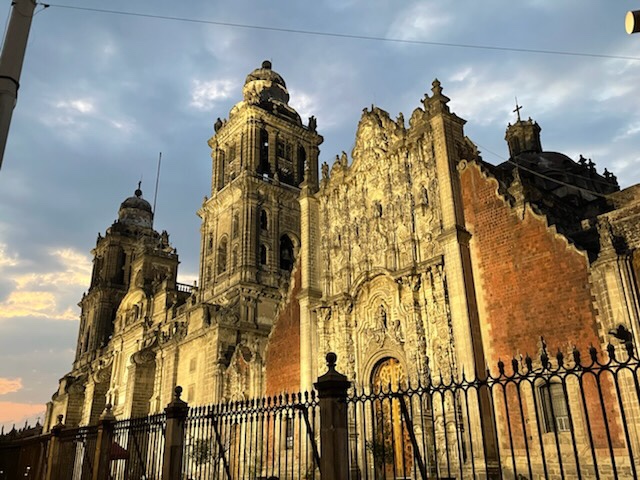
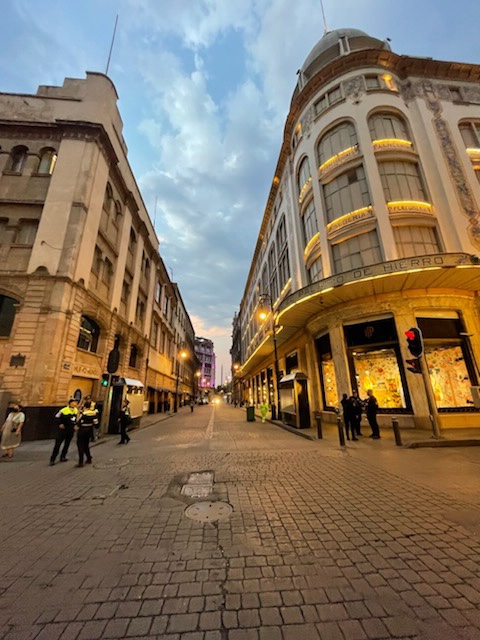

I hate to hit the pause button now that I am on a roll, but I will have to take a one-week hiatus from my “Smith in the City” series because my wife and I will be in Mexico City this week for our 10th wedding anniversary, my first trip to “La Ciudad de los Palacios” since my college days. Next week, however, I will resume my Smithian series, picking up just where we left off–with Horace Walpole’s journal entry for March 2, 1766. In the meantime, I have posted the first part of my “Adam Smith in Paris” paper here (via SSRN). The abstract of my paper appears below:
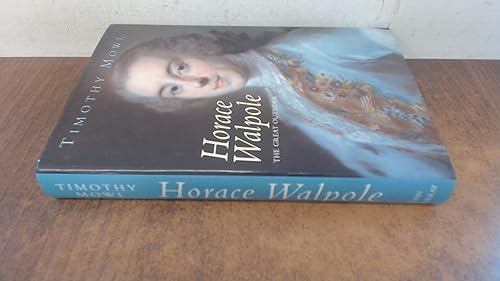
Horace Walpole’s journal entry for Monday, February 17 (1766) provides a glimpse of the ancien regime; it reads: “At night to Prince of Conti’s public night, great concert, Jéliotte and Mlle Fel sung. 4 great tables at supper, served by his guards, pharaoh, biribis, whisk, and berlan.”[1] Who was this prince, and did either Smith or Duke Henry attend his lavish soiree on the 17th?
The Prince of Conti, Louis François de Bourbon (1717–1776), was one of the most affluent and well-connected noblemen of the metropolis, a kind of aristocratic Gatsby in the last years of the Old Regime. Ernest Campbell Mossner (1980, pp. 458-459) describes the Prince of Conti thus: “Louis-François de Bourbon, Prince of Conti, was a remarkable man. A brave and skilful [sic] generalissimo of the French Army in Italy, he had won the battle of Coni in 1744 and retired from the Army three years later. He held the confidence of Louis XV in maintaining secret diplomatic missions throughout Europe until 1755, when he was ousted by the intrigues of Mme de Pompadour. Immediately he assumed the leadership of the opposition and earned the King’s appellation of ‘my cousin the advocate.’”[3] In his personal life, the Prince of Conti was a “handsome man” who “lived handsomely and lavishly,”[4] and “his reputation as a libertine was almost unapproaced; but he permitted himself only one principal mistress at a time.”[5]
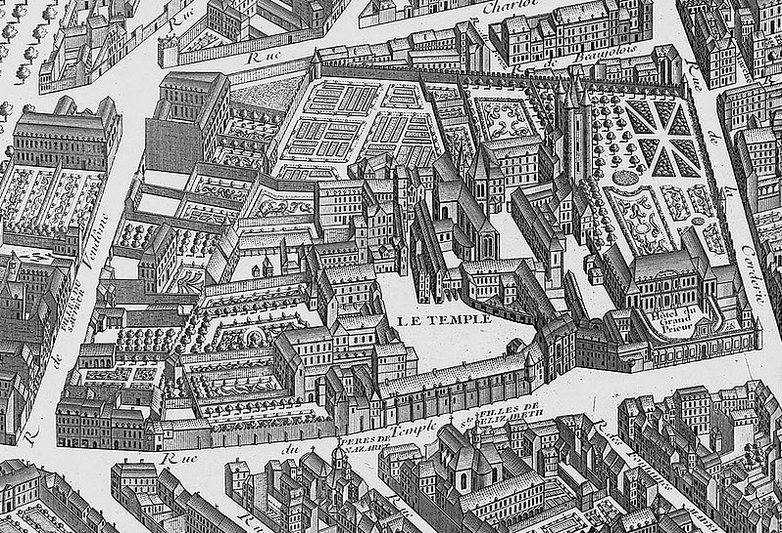
According to Mossner, it was on Mondays that the Prince of Conti hosted sumptuous suppers for up to 50 to 100 people at his luxurious place of residence, a compound called the Temple, an old fortress dating back to the 13th century.[2] Located in the Marais district of the French metropolis, the Temple was one of the most opulent and palatial private compounds in all of Paris (see map below). In the words of Mossner again (1980, p. 459): “As Grand Prior of Malta, the Prince of Conti maintained as his Paris residence the Temple, situated north of the Seine in the eastern extremity of the old city. Within the fortified walls of the spacious enclosure, the original thirteenth-century square and turreted edifice of the Knights Templars was surrounded by more modern buildings. One of the smaller of these, facing north on the rue Notre-Dame-de-Nazareth and with a simple garden on the south, was assigned to [his mistress] Mme de Boufflers. An elegant and spacious town-house, elevated somewhat above the others, was reserved for the Prince himself.”[6]
Furthermore, it was at the Temple that the Prince of Conti “entertained, on a scale rivalling that of the Royal Palace, with theatre-parties, grand assemblies, and intimate soirees. For the Temple had its own theatre, its grand assembly room, and its small salon. All were decorated with white wainscoting, with facings and casings of pressed copper, and with high glass windows offering a vivid contrast to the austerity of the ancient fortress.”[7] The Prince of Conti also maintained a vast and celebrated art collection, housed in a special gallery at the Temple, which he had amassed during the last twenty years of his life. Among other works of art, his collection included the 1764 painting English Tea Served in the Salon des Glaces at the Palais du Temple by Michel Barthélemy Ollivier, showing the infant Mozart at the clavichord.[8]
In short, if Smith and Duke Henry had already arrived in Paris on Saturday, February 15, then this “public night” and “great concert” at the “Prince of Conti’s” was a social call that they would surely have not wanted to miss.
Either way, the Temple would later play an important role in the French Revolution, as the fortress in this Temple complex was converted into a prison during the French Revolution. [See, e.g., Curzon 1888.] In fact, the most prominent members of the French royal family were all jailed at the Temple during the Revolution, including King Louis XVI, who was imprisoned at the Temple from 13 August 13, 1792 until January 21, 1793, the day he was guillotined at the Place de la Révolution, and Marie Antoinette, who was imprisoned in the Temple’s tower from August 13, 1792 to 1 August 1, 1793.[9] Today, a garden known as the Square du Temple is located on the site of the old Temple complex in the 3rd arrondissement of Paris.[10]
Did Adam Smith himself see what was coming, a world-changing revolution that would destroy the old order? In fairness to Smith, it is unlikely that anyone saw a revolution coming in 1766, but at the same time, how could the glaring contrast between the many unemployed or hungry workers of the poorer quarters of Paris and the lavish lifestyle of aristocrats like the Prince of Conti have escaped Smith’s notice?
Compared to the annual income of 50,000 livres that the Prince of Conti received from the Knights Templars,[11] an unskilled male worker in Paris at the time earned about twenty to thirty sous a day (there were twenty sous in a livre), while a skilled mason could earn fifty sous. For reference, in the 18th century the minimum rent for an attic room in Paris was thirty to forty livres a year, while rent for two rooms was a minimum of sixty livres, and a four-pound loaf of bread cost eight or nine sous.[12] At the time, most working-class Parisians were concentrated in the crowded maze of streets in the center of the city, the Île de la Cité,[13] just a few minutes from the Temple on foot. Many of these working-class Parisians toiled as tanners and dyers on the Left Bank of Paris, near the Bièvre River, and in thousands of small workshops and furniture shops in the eastern neighborhood of the Faubourg Saint-Antoine.[14]
Whether or not Smith took notice of these disparities, thousands of unskilled men and women from the poorer regions of France would continue to flood these neighborhoods of Paris in the years before 1789. Moreover, it is this sharp contrast between the haves and have-nots, between the beggars and princes of Paris, that must have in some small way motivated Smith’s transformation from a moral philosopher to a political economist, from a mere theorist concerned with virtue to a pragmatist concerned with real world affairs.
In my previous post, we saw that the names of Adam Smith or his pupil Duke Henry appear in Horace Walpole’s Paris journal no less than 20 times, starting with Walpole’s entry for Feb. 15, 1766, but we also saw an initial two-week gap in Walpole’s journal in which neither Smith nor Duke Henry appears by name at all. So, what was Adam Smith doing in Paris during this period of time, from Feb. 15, 1766 (the first time we hear of Smith) to March 2, 1766 (the next time his name is mentioned). Among other things, it is possible that Adam Smith visited Notre Dame Cathedral during this time. By way of example, Horace Walpole’s journal entry for Wednesday, February 26 contains the following somber words (emphasis added): “To the English Benedictines, and to Notre Dame to see the catafalque for the Dauphin’s funeral oration.”[1]
Although Smith and the young Duke are not mentioned in this journal entry, it is hard to imagine they would miss such a significant and historic event, for the “Dauphin” refers to none other than Louis Ferdinand (1729–1765), the eldest and only surviving son of King Louis XV of France and Queen Marie Leszczyński and the heir apparent to the throne until his death on December 20, 1765, when he died of tuberculosis at the age of 36.[2] Also, as Walpole mentions, the Dauphin’s funeral oration was to take place at the world-famous Notre Dame Cathedral. Constructed in the 12th and 13th centuries and located on the then-crowded Île de la Cité quarter of Paris, Notre Dame is still one of the most famous Gothic structures in the world and one of the most recognized symbols of the city of Paris and the nation of France.[3]
By this time (late February 1766), numerous eulogies had already been published in the Dauphin’s honor. One was by the Jesuit priest Anne Alexandre Charles Marie Lanfant.[4] Another was by a member of the Royal Academy of Sciences and Beaux Artes, Jean-Baptiste-Armand Cottereau.[5] But this particular funeral oration was to take place at Notre Dame, and it was to be delivered by Étienne Charles de Loménie de Brienne, the Archbishop of Toulouse and a prominent figure of Old Regime France. Originally ordained in 1752, Brienne held a wide variety of prominent and lucrative religious titles and would later become Louis XVI’s finance minister (1787-88). In 1766, he was still the archbishop of Toulouse, the provincial town in the south of France where Smith had resided for most of 1764 and 1765.
Walpole mentions that he visited the Dauphin’s catafalque at Notre Dame Cathedral on February 26, but Brienne did not deliver his funeral oration until March 1, 1766. Although I have no evidence to confirm whether Adam Smith or Duke Henry attended the March 1 funeral oration, it is unlikely they would have missed such an important event as the funeral oration for Louis-Ferdinand, who was the next-in-line to the French throne.[6]
If Smith did attend Brienne’s funeral oration on March 1st, or if he subsequently read a published version of Brienne’s eulogy in honor of the Dauphin, he would have also had an opportunity compare the communal impact of the heir apparent’s death, “a punishment sent from Heaven and a public calamity,”[8] with the private lamentations of the Dauphin’s mother: “Her gaze was fixed on [her son’s] image … but soon the awful truth opened a wound in her heart, the lifeless image fell from her hands, leaving her sobbing and in tears.”[9]
Was Adam Smith, whose literary reputation at the time was still based on his 1759 magnum opus The Theory of Moral Sentiments, moved by these words? Either way, what else could have motivated or contributed to Smith’s transformation from a moral philosopher to a political economist? Brienne’s funeral oration also contains an allusion to the age of Enlightenment, to “the torch of sciences [that] today casts its vivid and bursting light.”[7] This reference may provide a clue to Smith’s intellectual transformation, something I shall consider further in my next post.

My next set of “Smith and the City” posts will follow Horace Walpole’s Paris journal to retrace some of Adam Smith’s footsteps during the first eight weeks of Smith’s residency in Paris, i.e. until Walpole’s departure on April 17, 1766.[1] (As I mentioned in my previous post, Walpole had arrived in the French capital on September 13, 1765,[2] several months before Smith’s arrival.) In summary, Adam Smith or his pupil Duke Henry are mentioned by name in Walpole’s travel journal no less than 20 times. The dates and substance of these journal entries are catalogued in chronological fashion in the table below:
| Date of Journal Entry | Reference to Smith or Duke Henry (followed by page number) |
| Saturday, February 15 | “Dr Smith came. Went to an auction of prints. To Mme d’Uson. To Mme de Bentheim, Mme Lillebonne there. To Duchesse de la Vallière, Mme de Ferté-Imbault and Count Golowski there. To Mme Geoffrin’s ….” (302, footnote omitted) |
| Sunday, March 2 | “To Italian play with Lord and Lady G. Lennox, Duke of Buccleuch, Dr Smith, Sir H. Echlin and Captain Jones, Tom Jones.” (305, footnotes omitted) |
| Monday, March 3 | “King went suddenly to the Parliament—packing up and writing letters till late in the evening. Dr Smith and Baron d’Holbach came. To the Temple.” (306) |
| Saturday, March 8 | “Ditto. Mme Geoffrin, Mr Smith, Mme du Deffand, Lord and Lady George came.” (306, footnote omitted) [Note: The word “Ditto” refers to Walpole’s journal entry for the previous day (March 7): “Cold in my eyes.”] |
| Sunday, March 9 | “Ditto. Ditto. and Duke of Buccleuch and M. Schuwalof.” (306) [Note: The second “Ditto” refers to the individuals who visited with Walpole on the previous day (March 8).] |
| Tuesday, March 11 | “Mr Smith and M. de Sarsfield. To take the air. To Mme du Deffand.” (307) |
| Thursday, March 13 | “Dr Smith and Gordon, Principal of the Scotch College came.” (307) |
| Saturday, March 15 | “With Dr Smith to the Scots College.” (307, footnote omitted) [See also pp. 358-360 of Walpole’s “Anecdotes Written in 1766.”] |
| Sunday, March 16 | “To Hôtel de Brancas, Duke of Buccleuch etc. there.” (308) |
| Thursday, March 20 | “Mr Young, Mr Lyttelton, Duke of Buccleuch and Mr Smith came. To shops.” (309) |
| Saturday, March 22 | “To shops. With Lady and Lord George, Mr and Mrs Carr, Duke of Buccleuch, Mr Scot, and Mr Nicholson to the Foire St-Germain, and supped afterwards at Lord George’s.” (309) |
| Monday, March 24 | “Dined at Duke of Buccleuch’s with several English.” |
| Tuesday, March 25 | “To manufacture at Sevè with Lady George, Mrs Ker, Duke of Buccleuch and Mr Scot.” (309, footnote omitted) |
| Wednesday, March 26 | “To Mme d’Usson, Duke of Buccleuch etc. Abbé Colbert, and M. de Barbantane, and Mme de Gacé there. (309) |
| Friday, March 28 | “Supped at Hôtel de Brancas with Duke of Buccleuch, Lord Fitzwilliam and others.” (310) |
| Sunday, March 30 | “To Mme du Deffand. Mr Smith came.” (310) |
| Tuesday, April 1 | “M. de Schuwalof and Mr Smith came.” (311) |
| Monday, April 7 | “The Rena, Lord Tavistock and Mr Smith came.” (312, footnote omitted) |
| Monday, April 7 | “Supped at Lady Mary Chabot’s with Lady Browne, Mme de Bouzols, Mr Smith and Chevalier de Barfort.” (312) |
| Wednesday, April 9 | “Lord Edward Bentick and Mr Smith came.” (312) |
As you can see from this table, Adam Smith and his pupil Duke Henry are mentioned with great regularity and frequency in Walpole’s journal–no less than 20 times–but there is a significant gap early on, a gap consisting of two weeks, between Feb. 15, 1766, when Walpole mentions Smith by name for the first time, and March 2, 1766, the second time in which Smith is mentioned in Walpole’s journal.
The first entry to mention Smith is dated Saturday, February 15, and it tells us that “Dr Smith came,” presumably to the the Parc-Royal, the hotel where Walpole was also residing, though it is unclear whether Smith accompanied Walpole to the “auction of prints” or to the whirlwind of social visits that Walpole made that same day. Either way, though, this entry provides a revealing glimpse and “who’s who” of the salons of ancien régime Paris.[3] But then, a period of two-weeks elapses before Smith is mentioned again in Walpole’s journal. What was Smith doing during this time? As we shall see, if Smith was in Paris in February, it’s very likely that he visited two Paris landmarks during this time, the Temple and Notre Dame Cathedral. I shall explain why in my next two posts …
Continue readingOne man who Adam Smith must have befriended and spent a lot of time with–at least during the first phase of his prolonged Paris residency from February to April 1766–was Horace Walpole (1717–1797). Why do I say this? Because Walpole meticulously kept a daily journal during his seven month sojourn in Paris,[1] the first of many visits Walpole would make to the City of Lights,[2] and the names of Adam Smith or his pupil Duke Henry appear over 20 times in Walpole’s private papers.
But, who was Horace Walpole, and is he a reliable source? Among other things, Walpole wrote the first Gothic novel, operated his own printing press at his Strawberry Hill villa, and was a member of the House of Commons for three decades (1741 to 1768). He was also the son of Sir Robert Walpole (1676–1745), the 1st Earl of Orford, who is regarded by most historians as the de facto first Prime Minister of Great Britain.[3] Horace Walpole was thus a man of many talents and interests–a prolific letter writer,[4] a best-selling author, and a popular politician–he is, quite possibly, one the most fascinating men of letters of his era. But at the time of Horace Walpole’s 1765/66 visit to Paris, which coincided with the first part of Smith’s stay in Paris (February to April, 1766), Walpole’s greatest claim to fame was his popular novel The Castle of Otranto, which was first published in 1764 and which is considered the first Gothic novel.[5]
Walpole was thus an important literary and cultural figure in his own right, and his Paris journal will help us retrace some of Adam Smith’s footsteps during the first eight weeks of Smith’s residency in Paris, i.e. until Walpole’s departure on April 17, 1766.[6] (Walpole had arrived in the French capital on September 13, 1765,[7] several months before Smith’s arrival.) I shall summarize the relevant parts of Walpole’s journal in my next post.
My previous three posts have described some of the features of the 18th-Century “Saint Germain” neighborhood of Paris, the Faubourg Saint Germain, the quarter where Smith stayed for most of 1766, but I forgot to mention one of this faubourg’s most famous attractions: the Café Procope.
To the point, the main reason why Adam Smith may have stayed in the Hotel du Parc-Royal in the Faubourg Saint Germain was its proximity to the Café Procope. The Procope, the oldest café of Paris in continuous operation,[1] was located on the Rue des Fosses Saint-Germain, not far from the Parc-Royal and the Rue du Colombier.[2] A Sicilian chef, Procopio Cutò, had opened a coffee house on this location in 1686, 80 years prior to Smith’s sojourn in Paris.[3] After the Comédie-Française opened its doors in 1689 across the street from his café,[4] Procopio’s establishment began to attract actors, writers, musicians, poets, philosophers, statesmen, scientists, dramatists, stage artists, playwrights, and literary critics.[5] Later, Cutò changed his name to the gallicized François Procope and renamed his business the Café Procope in 1702, the name by which it is still known today.[6]
Although I have no direct evidence that Adam Smith frequented the Procope, given its fame and proximity to the Parc-Royal, I imagine he paid a visit. Perhaps he even met the leading economistes of his day there. At the time of Adam Smith’s visit to Paris, the Café Procope was a hub of the artistic and literary community. The birthplace of the Encyclopédie, the compendium of knowledge co-edited by Denis Diderot and Jean le Rond d’Alembert, is said to have been conceived at Café Procope,[7] and throughout the 18th century, the Procope was the meeting place of the intellectual establishment. Not all patrons of the Procope drank forty cups of coffee a day like Voltaire, who mixed his with chocolate, but they all met at Café Procope, as did future revolutionaries like Robespierre, Thomas Jefferson, and Benjamin Franklin.[8]










Welcome to the online home of the IASS
Hopefully It’s Interesting.
In Conversation with Legal and Moral Philosophers
Relitigating Our Favorite Disputes
PhD, Jagiellonian University
Inquiry and opinion
Life is all about being curious, asking questions, and discovering your passion. And it can be fun!
Books, papers, and other jurisprudential things
Ramblings of a retiree in France
BY GRACE THROUGH FAITH
Natalia's space
hoping we know we're living the dream
Lover of math. Bad at drawing.
We hike, bike, and discover Central Florida and beyond
Making it big in business after age 40
Reasoning about reasoning, mathematically.
I don't mean to sound critical, but I am; so that's how it comes across
remember the good old days...
"Let me live, love and say it well in good sentences." - Sylvia Plath
a personal view of the theory of computation
Submitted For Your Perusal is a weblog wherein Matt Thomas shares and writes about things he thinks are interesting.
Logic at Columbia University
Just like the Thesis Whisperer - but with more money
the sky is no longer the limit
Technology, Culture, and Ethics
Just like the horse whisperer - but with more pages
Poetry, Other Words, and Cats

 prior probability
