The National Archives released another batch of JFK assassination records — 1,491 documents in all — earlier this week (December 15), but this batch of evidence still represents less than 10 percent of the more than 15,000 documents that the government is still hiding from us. For additional background, check out this 2015 blog post by Lauren Harper as well as this recent report by Bryan Bender and Claire Rafford. Here is an excerpt from the Bender & Rafford report:
“The disclosure of the 1,491 documents by the National Archives [on December 15, 2021] follows an executive order from President Joe Biden … that establishes a new process for releasing all remaining JFK-related archives, which were originally supposed to be made public in 2017. But Biden also delayed the full disclosure of thousands of additional files for at least another year — and potentially indefinitely if agencies can convince him or his successors that they need to be kept secret to protect national security.” (links in the original; emphasis added)
That is the title of my latest project. I will post a complete draft on SSRN soon, but in the meantime, here is the abstract:
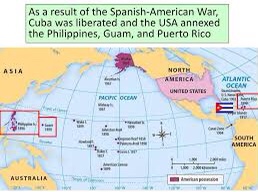
My paper explores the first of the Reconstruction Amendments — the Thirteenth Amendment of 1865 — from the lens of America’s unincorporated territories. Specifically, I identify one possible unintended consequence of abolition. In summary, three decades after the Thirteenth Amendment was officially ratified, the United States gained possession of the Philippines, Puerto Rico, and Guam from Spain in the aftermath of the Cuban-Spanish-American War of 1898. Although the Philippines was officially recognized by the United States as an independent nation on July 4, 1946, the remaining members of this overseas colonial trio — Guam and Puerto Rico — are still “unincorporated” territories of the United States. Given that all persons residing in these territories have severely limited constitutional rights — Chamorros and puertorriqueños are to this day still not allowed to cast ballots in U.S. presidential elections, to name just one glaring example of this strange constitutional situation — my paper will explain why the continued existence of non-self-governing insular possessions like Guam and Puerto Rico violates the original public meaning of Section 1 of the Thirteenth Amendment, which prohibits the existence of “involuntary servitude, except as a punishment for crime whereof the party shall have been duly convicted, … within the United States, or any place subject to their jurisdiction.”
I will conclude my series of blog posts on the allocation of launch licenses with a paean to Ronald Coase’s classic 1959 paper “The Federal Communications Commission” on the FCC’s allocation of TV and radio frequencies. In brief, to this day, if you want to operate a TV or radio station, you will have to apply for a license from the FCC and explain how you will use your license in a way that is consistent with “the public interest.” How does the FCC verify that you will use your assigned TV or radio frequency to promote public values? It holds a “beauty contest” — i.e. a costly and time-consuming administrative hearing.
Back in the late 1950s, soon after the Russians launched the first man-made satellite into orbit (Sputnik 1 on Oct. 4, 1957), Professor Coase launched a powerful critique of the FCC. Instead of allocating TV and radio frequencies using beauty contests, Coase proposed treating these frequencies like private property and auctioning them off to the highest bidder on an open market. At the time, however, Coase’s simple proposal was totally unfathomable to those in the broadcast industry. In his 1959 FCC paper, Coase even cites the following exchange between Frank Stanton, the president of CBS, and a member of Congress during a committee hearing:
As Coase himself notes in reply: “This ‘novel theory’ (novel with Adam Smith) is, of course, that the allocation of resources should be determined by the forces of the market rather than as a result of government decisions.” At the end of the day, we must ask, Why doesn’t the same logic apply to outer space, especially given the problem of satellite congestion?
Note: Below is part four of my series of blog posts on the allocation of launch licenses by the FAA.
Thus far, we have identified a novel solution to the problem of satellite congestion in outer space: the FAA or NASA should auction off the right to launch satellites into outer space instead of giving away these launch licenses for free. But how would a “launch auction” work? The type of auction that most people are familiar with is the “first-price sealed-bid auction” in which all bidders simultaneously submit secret bids — no bidder knows how much the other auction participants have bid. The sealed bids are then opened on a certain date, and the person with the highest bid (or second-highest bid in the case of a “second-price auction”) is declared the winner.
This is not, however, the method used by the FCC to allocate broadband spectrum licenses. Instead, the FCC uses a new method proposed by economists Paul Milgrom and Robert Wilson (both of whom are pictured below) called the “simultaneous ascending auction” or “simultaneous multiple-round auction”. Two of the main differences between the traditional auction format and the FCC format is that the sealed-bid auction usually involves just one round of bidding. In the simultaneous ascending auction, by contrast, there are multiple rounds of bidding, and all bidders are allowed to revise their bids after each round. (Bidders are even allowed to withdraw from the auction after each round.) The highest bids are announced to all the bidders after each round of bidding, and these rounds will continue to occur until no new bids take place — at that point the licenses are sold to the highest bidders.
The simple simultaneous ascending auction format described above has many desirable properties (see here, for example), which I won’t go into here. For now, it suffices to ask, Why doesn’t the FAA use some variation of the simultaneous ascending auction to allocate launch licenses, especially for the new generation of mega-constellation satellites? I will conclude my call for “launch auctions” in my next post.
Note: Below is part three of my series of blog posts on the allocation of launch licenses by the FAA.
Today, I write to propose legislation authorizing the FAA — or better yet, NASA — to allocate launch licenses using auctions. (I will discuss the technical design of these proposed “launch auctions” in my next post; here, I will limit myself to question of the FAA’s legal authority to conduct auctions.)
Currently, the FAA exercises authority over the launching and re-entry of commercial space vehicles — in addition to its jurisdiction over civil aviation — so any private company that wants to launch a rocket or other kind of spacecraft from the United States into outer space must obtain a launch license from the FAA. According to this recent report in the journal Nature (Boley & Byers, 2021, footnote omitted), for example, SpaceX, one of the leading companies in the commercial space industry, has already requested launch licenses “for an additional 30,000 satellites.”
Considering that Low Earth Orbit is becoming a scarce resource (see my previous post), why doesn’t the FAA consider auctioning off the right to launch satellites into outer space, instead of giving away these launch licenses for free?
A landmark historical precedent for this possibility is the Omnibus Budget Reconciliation Act of 1993 (OBRA-93). Among other things, OBRA-93 gave the Federal Communications Commission (FCC) the legal authority to use auctions to allocate property rights in the electromagnetic spectrum. (See here, for example.) Subsequently, Congress expanded the FCC’s auction authority when it enacted the Balanced Budget Act of 1997. Based on these legislative precedents, perhaps the current Congress could enact similar legislation authorizing the FAA or even NASA to conduct “launch auctions.”
One potential roadblock to my Coasean proposal is public international space law — specifically, the Outer Space Treaty, which was originally drafted during the height of the space race between Russia and the United States in the 1960s. (As an aside, the full title of this governing law is “The Treaty on Principles Governing the Activities of States in the Exploration and Use of Outer Space, including the Moon and Other Celestial Bodies” See Resolution No. 2222 (XXI) of the 21st session of the General Assembly of the United Nations (1966).) Among other things, the Outer Space Treaty prohibits “the national appropriation of outer space by claim of sovereignty, by means of use or occupation, or by any other means” — language that could be interpreted to mean that property rights in outer space are forbidden.
That said, even if the Outer Space Treaty is read in this restrictive way — i.e. requiring outer space to remain a commons –, my proposed system of competitive “launch auctions” in place of free “launch licenses” does not necessarily create any exclusive property rights in outer space. Instead, the winner of a launch auction would only have the temporary right to launch a rocket, satellite, or other spacecraft during a given launch window — not the exclusive right to a particular orbit. Of course, the spacecraft to be launched would still have to satisfy the technical specifications set forth in the original call for auction, and these specifications would still be set by the relevant regulatory agency, whether it be the FAA or NASA. I will further survey the logistics of my proposed system of “launch auctions” in my next post …
Note: As I mentioned in my previous post, I will resume my review of Nozick next week; in the meantime, below is part two of my series of blog posts on the allocation of launch licenses by the FAA.
Are there too many satellites in outer space? Check out this April 2021 report in Scientific American, which identifies “a Space Age tragedy of the commons” — the problem of space congestion caused by a proliferation of low-Earth orbit satellites (see, for example, image below), a problem that “is now poised to get much worse because of the rise of satellite ‘mega constellations’ requiring thousands of spacecraft, such as SpaceX’s Starlink, a broadband Internet network.”
Likewise, according to this May 2021 report in the journal Nature, “Companies are placing satellites into orbit at an unprecedented frequency to build ‘mega-constellations’ of communications satellites in Low Earth Orbit (LEO). In two years, the number of active and defunct satellites in LEO has increased by over 50%, to about 5000 (as of 30 March 2021).” As a result, the probability of a disastrous collision in outer space looms even larger as private companies Amazon, SpaceX, and others launch even more satellites into low-Earth orbit — Amazon’s Project Kuiper, for example, will create a mega constellation of up to 3,200 satellites in the near future.
So, what is to be done? Specifically, what is the most cost-effective way of responding to the problem of space congestion without jeopardizing the benefits of innovation, new technologies, and space exploration? Here is my modest proposal. Until a technological solution becomes feasible, why doesn’t the FAA — or any other space agency — auction off its launch licenses instead of giving away those licenses for free?
I will survey my proposed system of “launch auctions” in my next post …
Notes: I will resume my review of Nozick next week; in the meantime, this new series of blog posts on the allocation of launch licenses by the FAA is just a short preview of my next work-in-progress.
Currently, any private company that wants to launch a rocket or other kind of spacecraft from the United States into outer space must obtain a special license from the Federal Aviation Administration (FAA) — specifically, from the FAA’s Office of Commercial Space Transportation. In brief, to get a launch license, the applicant must prove that it is able to take financial responsibility if the launch goes wrong and that the launch won’t threaten U.S. national security, but as you can imagine, this regulatory process is slow, costly, and cumbersome (see image below) — it can take up to six months to get a launch license from the FAA. (See here, for example.)
So, what if the FAA conducted auctions instead? As the great Ronald Coase taught us long ago, competitive auctions would not only generate revenue for the fisc; they would also require private companies to “internalize” the potential harmful effects of their actions in outer space. I will explain in greater detail in my next post why auctions are a far better method for allocating launch licenses than the current cumbersome system …
Today (Dec. 12) is my favorite saint day: la Fiesta de Nuestra Señora de Guadalupe. Here is a traditional song by Ángela Aguilar in honor of our Lady of Guadalupe: https://www.youtube.com/watch?v=4iG0HIgwrAY
Today (12 December) is the Feast Day of the Virgen of Guadalupe, a national holiday in Mexico and one of my favorite feast days of the year! More details here, in Spanish.
Just as I finished watching season 2 of Tiger King, which I loved by the way, I found in my mailbox copies of the Spring 2021 edition of the St Louis University Law Journal (volume 65, issue 3) as well as preprints of my “Teaching Tiger King” paper, which I co-authored with my teaching assistants during the summer of 2020 (and the cover of which is pictured below).
PS: How many law review articles contain pictures, let alone emojis? Except for Ira Steven Nathenson’s contribution (see here), no other paper in this symposium issue on online teaching contained a single image. The main body of “Teaching Tiger King”, by contrast, features no less than six images, including a collage (on p. 530), and three emojis!
PPS: Many scholarly journals no longer publish actual physical volumes anymore, let alone individual preprints, so this special delivery was an unexpected treat.
Happy Friday! I am reblogging Part 31 of my extended review of “Anarchy, State, and Utopia.” (In brief, the post below concludes my review of Chapter 5 (pp. 113-119) with a stinging rebuke of two of Robert Nozick’s central claims.) We are now halfway through Nozick’s magnum opus, but I will hit the metaphorical “pause” button and resume my review of Nozick in a week’s time in order to address a few other matters — specifically, (1) an update about the mechanics of my “conspiracy theory retrodiction market” idea, (2) a reply to Professor Michael Pardo’s most recent paper on legal proof (see here), which I finally got around to reading last week, and (3) my latest work-in-progress on the possibility of property rights in space orbits.
It’s time to wrap up our review of Chapter 5 of Anarchy, State, and Utopia (ASU). The last two subsections of Chapter 5 (pp. 113-119) are philosophical garbage disappointing. Why? Because Nozick concludes with two Panglossian claims, and neither rosy conclusion is supported by any actual evidence. First, he claims that a territory’s dominant protection agency will eventually become “a statelike entity” (p. 118), since it will prohibit non-clients from enforcing their rights in their dealings with the clients of the protection agency. Next, Nozick concludes that the phase transition from private protection racket to statelike entity will occur without anyone’s natural rights being violated, since the dominant agency will agree to compensate non-clients by providing them in kind protection services. Seriously? Who is he kidding? Nozick begs a number of fundamental questions in reaching these unsupported and speculative conclusions. In particular, and putting aside the free rider…











 prior probability