Happy Kwanzaa! I am now resuming my in-depth review of Robert Nozick’s “Anarchy, State, and Utopia”, so let’s pick up where we left off: with Chapter 6. That chapter has six subsections, and the post below — part 32 overall of my epic review — covers the first subsection of Ch. 6, where Nozick models the state of nature as a Prisoner’s Dilemma.
We almost considered skipping Chapter 6 of Anarchy, State, and Utopia, since Nozick himself invites his readers to do so on p. 120: “The reader who wishes to pursue the main flow of our argument may proceed directly to the next chapter.” But as we have noted in so many of our previous posts, Nozick has left too many issues open and ends untied thus far, problems that he promises to tackle in Chapter 6. In addition, Nozick raises two excellent questions in the first subsection of Chapter 6 (pp. 120-125). First, Nozick asks what equilibrium is most likely to occur in a state of nature? To this end, he models the state of nature as a Prisoner’s Dilemma (see example below). According to Nozick, there are four possibilities in all:
Option A: You can join a protection association and allow your neighbors to join one.
Happy Boxing Day! You may have heard about the James Webb Space Telescope, which was launched 10 years behind schedule and cost almost $10 Billion USD to complete. (See this NY Times report, for example.) What you may not be aware of is that the Webb Telescope will not be in orbit around the Earth — it will orbit the Sun! (See image below; more details about the Webb Telescope’s solar orbit are available here, via NASA.) Also, the Webb Telescope is not the first spacecraft to orbit the Sun; that honor goes to Luna 1, which went into orbit around the Sun, between the orbits of Earth and Mars, on 4 January 1959. In any case, I am taking this opportunity to re-arrange and share the links of my previous blog posts on the possibility of allocating orbits in outer space using auctions:
I will resume my epic, in-depth review of Nozick on Monday; in the meantime, all I want for Christmas is “Mariachi Show 2000” — check out their version of Jose Feliciano’s classic song “Feliz Navidad” — the best version I have ever heard!
To commemorate the holiday traditions of “Nochebuena” and Christmas I am posting this portrait of “The Virgin and Child with Saint Anne” by the Greek artist El Greco (b. 1541, d. 1614), who completed this work in the year 1600 in Toledo, Spain, where El Greco lived during the second half of his life. (This oil on canvas is now part of the art collection of the Wadsworth Atheneum Museum of Art in Hartford, Connecticut.) One of the things that I love about this work is that includes Saint Anne, the mother of the Virgin Mary and Jesus’ maternal grandmother.
Among other things, the holidays are a time when I finally get to catch up on my scholarly readings. Below, for example, is a listing of some of the sundry papers and books I am studying this season:
I still have one more piece of unfinished business before I resume my in-depth review of Robert Nozick’s magnum opus Anarchy, State, and Utopia, and that is “Grounding Legal Proof” — a paper on the “epistemology of evidence law” authored by Michael S. Pardo, a law professor at Georgetown. (Hat tip to my colleague and friend Larry Solum, who also teaches at Georgetown, for bringing Pardo’s thought-provoking paper to my attention last summer.) Specifically, how do we prove a fact in a legal case?
By way of example, consider the case of Muckler v. Buchl, 276 Minn. 490 (1967), available here, which Pardo mentions in the introduction to his paper. In that case, a 55-year-old woman fell down a flight of stairs at an apartment building and died four months later as a result of the injuries she suffered during the fall. Her husband brought a wrongful-death lawsuit against the landlord, and during the trial of this case, a witness testified that the stairs were dimly lit, but this witness did not actually see the plaintiff’s fall. Is there sufficient evidence for the jury to find, by a preponderance of evidence (the standard of proof in civil cases), that the woman’s fall was caused by the lack of lighting?
In summary, Professor Pardo provides a good overview of the two main academic schools of thought regarding how to approach questions like these — he describes probabilistic approaches to evidence as well as story-telling or “explanatory” accounts — but he is on more shaky ground (pun intended!) when he concludes that explanatory theories of evidence law are better than probabilistic ones. Why? Because Pardo’s basic “probability-versus-explanation” dichotomy presents us with a false choice! In reality, all evidence is probabilistic — even the definition of relevant evidence in the modern rules of evidence expresses the test of legal relevance in probabilistic terms — and as the great Frank Ramsey (pictured below), along with Bruno de Finetti, showed us almost 100 years ago, the truth-value of a disputed fact can always be expressed in terms of the fact-finder’s subjective “degree of belief” or credence. (FYI: I explain Ramsey’s ideas more fully here.)
To return to the tort case mentioned above, whether the evidence supports the conclusion that the woman’s fall was due to poor lighting is ultimately nothing more than a probabilistic guess based on the testimony presented in the case and one’s common sense. Or to borrow Professor Pardo’s own preferred jargon, whether an explanation of the evidence in a case is “plausible” or not — or whether that explanation is more believable than a competing story — depends on one’s subjective probability of that particular story being true. Why evidence scholars would choose to gratuitously reject this key insight is beyond me. Perhaps “probability-phobia” is to blame? Whatever the reason, if there is one area of law that stands to benefit the most from Ramsey and de Finetti’s insights it is the law of the evidence.
PS: I will return to the topic of evidence law and subjective probability after I complete my review of Nozick.
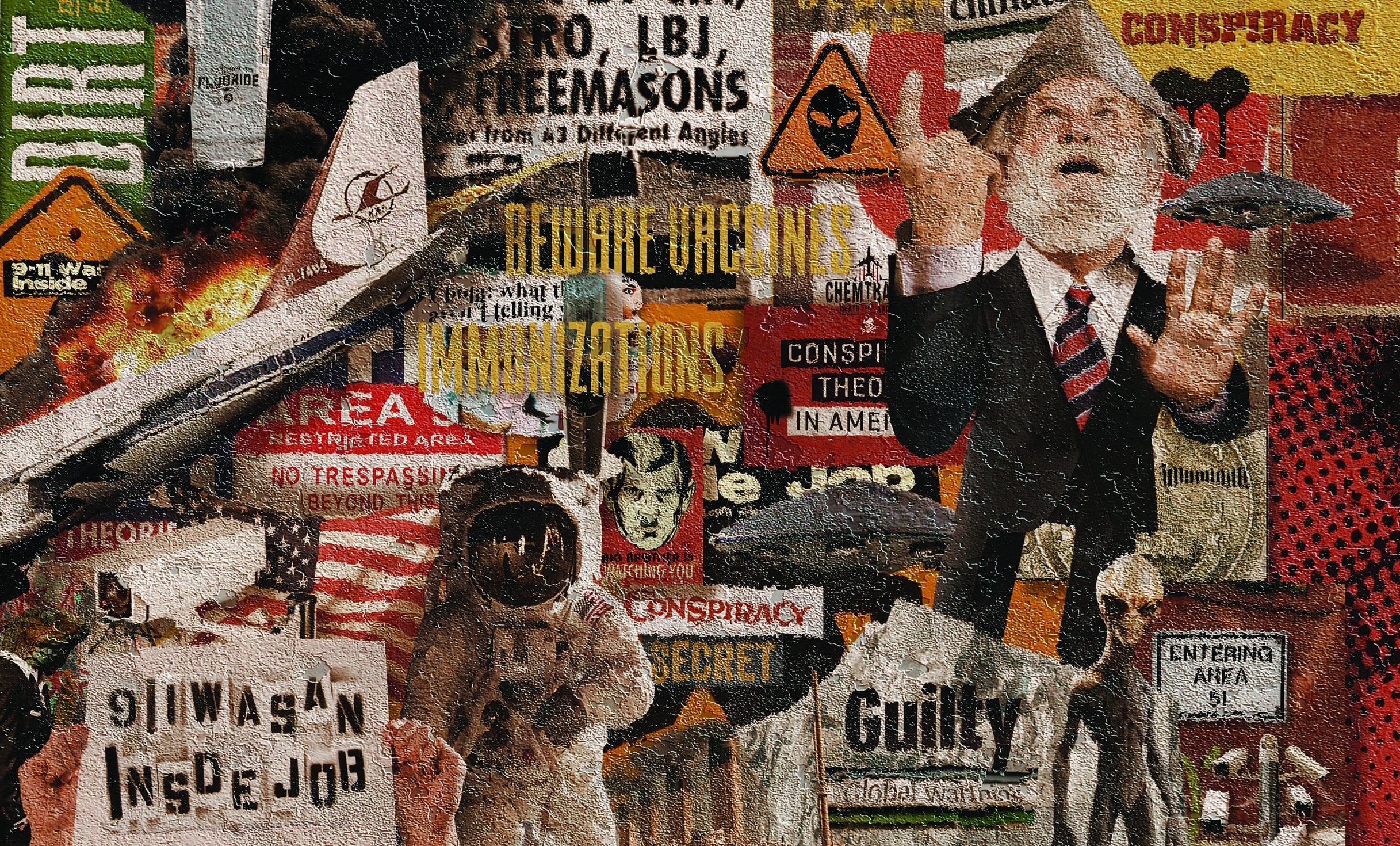
Today, I am reblogging one of my most popular blog posts from 2021. In the post below (dated 27 August), I proposed a betting market in fake news and conspiracy theories as an alternative to censorship, but then I asked how would such a market work in practice — i.e. how would we decide whether a given news item or conspiracy theory were true for purposes of settling bets on this market?
Originally, in the first draft of my paper Betting on Conspiracies, I had proposed the creation of a special “conspiracy theory court” with randomly-selected jurors to settle these bets, and when I presented this solution at the 2021 Conference of the Central States Law School Association (CSLSA) on September 25 of this year, a colleague even suggested to me that I pitch my conspiracy theory court as a Reality TV show — “Q, Meet Judge Judy.”
Then, Steven J. Brams, a professor of politics and game theorist at NYU, wrote to me in October of this year to propose a more simple, elegant, and ingenious solution to the bet-settlement problem. Professor Brams’s solution is to discard the special court and keep the market open indefinitely. In Professor Brams’ own words:
“I see two possible problems with your Conspiracy Theory Betting Market. You recognize there is a problem of ‘who decides,’ but I think there is also a problem of when a decision–either for or against the conspiracy–would be made. To obviate these problems, I suggest that no decision be made; instead, the market would be kept open indefinitely. Any bettor could opt out at any time, pocketing his winnings if the current price is above what he paid for his bet (either for or against the conspiracy) or taking a loss at the current price.
“A bettor would presumably stay in if he thought the price of his choice would increase or opt out if he thought it would fall. The price would therefore track belief or non-belief in the conspiracy, with no necessary final resolution. But bettors would have an incentive to seek new information that not only supports their choice but is also likely to persuade other bettors, thereby advancing the search for the truth.
“In [Milton] Friedman’s words, it would be ‘politically profitable for the wrong people to do the right thing’ by acting according to the consensus choice–if there is a consensus, and it reflects the more compelling (truthful) choice–especially if they are on the losing side of the market and could lose even more if they stayed in. As long as there is yet-to-be-discovered evidence that may be convincing to bettors, at least some conspiracies should move toward resolution without the need for a conspiracy court.”
I love the simplicity of Professor Brams’ elegant solution and will revise my conspiracy theory betting market proposal accordingly.
With apologies to my colleague and friend Robin Hanson, that is the tentative title of my next project, which builds on my previous work “Betting on Conspiracies,” which is forthcoming in The Journal of Law & Public Policy. By way of example, was 9/11 an “inside job”? Was the 2020 election stolen? Did Trump collude with “the Russians”? In summary, the conventional wisdom is that the spread of conspiracy theories is dangerous to democracy, and a growing chorus of voices are thus calling for direct regulation of social media platforms to counter this threat. Some have even called for the appointment of a “reality czar” (see here, for example) and big tech firms like Facebook have gone as far as to de-platform (i.e. censor) President Trump.
Pause. Isn’t it possible that these drastic measures and proposals (e.g. direct regulation of speech, reality czars, and the de-platforming…
Via Marginal Revolution, the Amazing Tyler Cowen recently blogged about this new paper by Aleksandra Urmana, et al. To the point, the paper studies search results across five search engines — Google, Bing, DuckDuckGo, Yahoo!, and Yandex –in order to figure out which search engine censors conspiracy theories the most. (For his part, Cowen asks, Which search engine does the most to censor true conspiracy theories?) The Urmana, et al., paper concludes that, except for Google, the other four search engines “consistently displayed conspiracy-theory results and returned links to conspiracy-dedicated websites in their top results, although the share of such content varied across queries.” In other words, it is Google that does the most to censor conspiracy theories. What if, instead of trying to suppress or censor conspiracy theories, Google set up a special market to allow people bet on them instead? I propose just such a possibility here and here. I will say more about my “retrodiction market” idea in my next post.
Why Not Use Auctions to Allocate Launch Licenses? — a five-part series of blog posts on SpaceX and the FAA, which are available here, here, here, here, and here, and which I will write up into a formal white paper during the holiday break.
Guam, Puerto Rico, and the 13th Amendment — a 214-word abstract for the Constitutional Law Institute’s inaugural conference on the Reconstruction Amendments to be held at the University of Chicago Law School in April of 2022.
I also reviewed several books during the 2020-2021 academic year. Lastly, here are my year-in-review blog posts for 2020, 2019, and 2018.
Happy Holidays! Although I am all about Las Posadas, Nochebuena, and Puerto Rican parrandas this time of year, I have to confess that I also love Bruce Springsteen’s rock-and-roll homage to Santa. (Hat tip to Kara Jayne for the link to this vintage 1978 version of this classic Yuletide song.) On a different note, congratulations to the fall cohort of the Class of 2021 at my home institution, the University of Central Florida (UCF), who just received their college degrees, including my undergraduate teaching assistant Antonella Vitulli, who graduated summa cum laude.














 prior probability