Tyler Cowen commits the genetic fallacy

One week ago, Tyler Cowen, the prolific co-author of the popular “Marginal Revolution” blog, published this odd post on “The IRS tax data leak.” Instead of engaging the merits of these damning allegations — the fact that many of the most wealthiest Americans are self-righteous hypocrites who game the tax system in order to avoid paying their fair share of federal taxes — Cowen decided to dwell on the “ethics” of the data leak. Among other things, Cowen concluded that “ProPublica acted unethically, and in fact nothing fundamentally new or interesting or surprising was learned from their act as accessory.”

Let us assume for the sake of argument that Cowen is right, that ProPublica somehow acted unethically by publishing private tax data and that nothing new was learned from these sordid revelations. (Put aside the fact that Cowen, like most commentators calling for greater ethics, never bothers to share with his readers what theory of ethics was in play here. Virtue ethics? Duty Ethics? Consequentialism?) Even so, Cowen is committing a version of the genetic fallacy. Instead of questioning the ethics of our perverse tax system itself, Cowen chooses to focus on the illegal provenance of ProPublica’s data. Sorry, but no dice …

On the contrary, a strong case can be made that ProPublica’s exposé, by revealing how little U.S. billionaires pay in taxes and by exposing their rank hypocrisy, was highly ethical–under whatever theory of ethics you prefer. After all, what ProPublica did was to reveal the truth, and how can transparency and truth ever be inconsistent with ethics? Furthermore, although I already knew that companies like Amazon pay little in taxes, I did not know, contra Cowen, that Jeff Bezos–the richest man in the world–pays little in taxes. Also, thanks to the N.Y. Times, I knew Donald Trump paid only $750.00 in federal income taxes in 2016; I did not know that Elon Musk paid $0 in 2018! So, don’t lecture me about “ethics”!

Understanding Genetic Fallacy With Examples
Posted in Uncategorized | Leave a comment

Yesterdayland?

On this day (June 14) in 1959, the Disneyland Monorail System, the first daily operating monorail system in the Western Hemisphere, opened to the public in Anaheim, California. Via Wikipedia, here are some facts and figures about Disneyland’s original monorail system:

  • Grand opening: June 14, 1959
  • Designer: WED Enterprises
  • Three trains: Mark VII Red, Mark VII Blue, and Mark VII Orange
  • Max train cars on beam: 3
  • Track length: 2.5 miles (4 kilometers)
  • Ride duration: 10 minutes, 30 seconds
  • Coupon required (originally): “E”
  • Ride system: Each train was propelled by six DC electric motors mounted in articulated powered trucks shared between cars, not just the lead car.
  • 1959 construction costs of the entire system averaged over $1 million per mile (>$620,000/kilometer)
  • Oversized ceremonial scissors failed to cut the ribbon during the televised opening ceremony, so Walt simply tore it
Posted in Uncategorized | Leave a comment

Loved it!

Posted in Uncategorized | Leave a comment

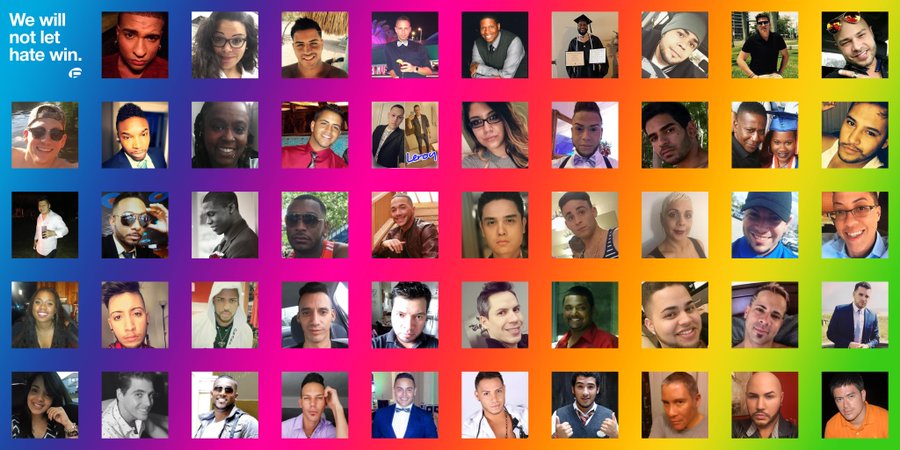
Today (June 12) marks the five-year anniversary of the Pulse Nightclub Massacre in Orlando, Florida. I still break down in tears every time I think about the 49 beautiful souls (pictured below) who lost their lives that night. In their honor, I want to dedicate Ariana Grande’s version of “Over the Rainbow” from June 2017. #KeepDancingOrlando

Remembrance Events Friday For Victims Of Pulse Nightclub Massacre Four  Years Ago – CBS Miami

F. E. Guerra-Pujol's avatarprior probability

View original post

Posted in Uncategorized | Leave a comment

Probabilistic Truth

Alternative Title: Review of Robert Sanger, “Gettier in a Court of Law” (Concluding Post)

Alternative Title #2: The Irrelevance of Gettier Problems (with Apologies to Linda Zagzebski)

I want to conclude my review of Sanger’s Gettier paper with the following observation: Truth is not some binary value — i.e. a belief is not either true or false — but rather truth comes in degrees. In a word, truth is often probabilistic.

This unorthodox idea is often referred to as “degrees of belief” or “credences” and is associated with Bayesian epistemology a/k/a “subjective probability”–a topic that I have explored in some of my previous posts; see, for example, here and here. (This approach to truth can be traced back to Frank Ramsey and Bruno de Finetti; more recently, one of the leading contemporary exponents of this approach was Richard Jeffrey; see here.) Stated simply, a credence or degree of belief formally represents the strength with which we believe the truth of various propositions. Stated simply, the higher one’s degree of belief for a particular proposition, the higher one’s confidence in the truth of that proposition. In other words, beliefs may vary in degrees of strength or weakness–beliefs may come in shades of grey–or put another way, beliefs are not binary, are not all or nothing. Instead, my belief in a given conspiracy theory, for example, may range anywhere from 0 to 1.

Before proceeding, I now want to pose two further questions about the idea of degrees of belief. One is definitional. To the point: what is the difference between a plain and simple “belief” and a Bayesian “degree of belief”? In particular, is there some threshold or cut-off point (say, .9 or .95 or .99) above which a degree of belief acts like a full-fledged belief? The other question is logistical in nature. Specifically, when we are engaged in human reasoning, are our degrees of belief “infinitely precise real numbers”–e.g., exact numerical values ranging from 0 to 1–or “something less precise”–e.g., high, medium, and low? In other words, can a degree of belief really be expressed in precise numerical terms, and if so, how? (This second question is especially delicate because, if it turns out that, for whatever reason, we cannot assign a precise numerical value to a degree of belief, how can we transpose the axioms of probability into the Bayesian “subjective probability” framework? See also the entry for “Imprecise Probabilities” in The Stanford Encyclopedia of Philosophy.)

Putting aside these subsidiary questions (for now), the main question is, What do “degrees of belief” have to do with the things we have been talking about in our previous posts in this series, such as Gettier problems and photographic evidence, such as the picture of the sheep-dog in Sanger’s case of the negligent shepherd or the Zapruder film of the JFK assassination? In brief, two key conclusions or points flow from the idea of subjective probability or degrees of belief. One is that Gettier problems are often an irrelevant sideshow. Why? Because we cannot always determine whether a belief is true or false, except in the simplest or most trivial cases–like the number of coins in someone’s pocket (Gettier’s example) or the presence of a sheep in a field (Sanger’s example). In difficult cases, like whether Lee Harvey Oswald acted alone, or acted at all, in JFK’s murder, our beliefs are probabilistic.

The second conclusion is this: even if Errol Morris is correct to conclude the “photographs [and film clips] are neither true nor false” or “have no truth-value,” my Bayesian reply is, “So what?” Truth is often probabilistic anyways, not a binary or all-or-nothing value. Whether the photograph or film clip weakens or even falsifies our beliefs–shows that our beliefs might be or are, in fact, false, as in Sanger’s sheep-dog example–or whether such evidence supports our pre-existing beliefs, either through confirmation bias or because our beliefs are indeed likely to be true, the main point is that a photograph or a film clip can change, either up or down, our degrees of belief.

What is Probability?. Understanding the interpretations of… | by Devin Soni  👑 | Towards Data Science
Posted in Uncategorized | 1 Comment

Friday funnies: death, taxes, and emails

I am interrupting my series on Sanger’s Gettier paper to share this New Yorker cartoon. Benjamin Franklin, among others, is reported to have said, “… in this world nothing can be said to be certain, except death and taxes.” Shall we now add “emails” to this list of unavoidable horribles?

Posted in Uncategorized | Leave a comment

Postscript: the problem of photographic evidence

Alternative Title: Review of Robert Sanger, “Gettier in a Court of Law” (Part 4)

If you go back to my previous posts in this series (see here and here, for example), you will notice that they all involve photographic evidence of some sort–the picture of the sheep-dog in Sanger’s Gettier paper or the Zapruder film of the JFK assassination. This observation, in turn, poses a new question: is a photograph or a film clip, standing alone, able to generate knowledge in the sense of a “justified true belief” or is such evidence especially vulnerable to the Gettier problem, i.e. the problem of a justified belief that turns out to be false.

As I thought about this question, I stumbled upon this beautiful book Believing Is Seeing: Observations on the Mysteries of Photography, available here, by Errol Morris, an award-winning film director. Morris’s book is about the nature of truth and belief in the domain of photography, and he later summarized the main points of his book with a series of thought-provoking tweets. (Morris posted his tweets on October 1 and 2, 2011; see here.) Of the ten tweets in his series, the ones that I found most relevant for my analysis of the Zapruder film were #3, 4, 6, 8 and 10. Below, I will restate Morris’s tweets in reverse order (also, for clarity, each of his points appears in italics, followed by my commentary in brackets):

#10. “Photographs provide evidence. (The question is of what?)” [I am starting with Morris’s last tweet in his series because it is the most relevant one for our analysis of the Zapruder film. A photograph or film clip might provide crucial evidence of “what happened?” at a given time and place.]

#8. “The more famous a photograph is, the more likely it is that people will claim it has been posed or faked.” [The Zapruder film is a case in point, but that said, sometimes photos are, in fact, fake or manipulated. Think of Ansel Adams’ famous “falling soldier” photograph during the Spanish Civil War, a picture that was probably staged.]

#6. “Uncovering the relationship between a photograph and reality is no easy matter.” [As I mentioned above, photographic evidence can purport tell us “what happened?” at a given time and place. The problem, however, is that that the photo might be staged, or even more epistemologically troubling, the photograph or film clip might be consistent with different good faith interpretations of “what happened?”]

#4. “False beliefs adhere to photographs like flies on wallpaper.” [Again, the Zapruder film is a case in point, but how do we know when a belief is true or false? How do we know which JFK conspiracy theory to believe in? This observation is the crux of the Gettier problem: a picture or movie clip might generate a narrow or wide variety of beliefs about “what happened?,” and some or many of these beliefs might even be justified, but–and here’s the rub–most of these beliefs might turn out to be false!]

#3. “Photographs are neither true nor false. (They have no truth-value.)” [This last point is Morris’s most controversial one, but is he right? Read on …]

Morris elaborated on point #3 in this fascinating essay, which was published in the New York Times on July 10, 2007 under the heading “Liar, liar, pants on fire.” Among other things, Morris makes the following keen observation (emphasis added):

“The idea that photographs hand us an objective piece of reality, that they by themselves provide us with the truth, is an idea that has been with us since the beginnings of photography. But photographs are neither true nor false in and of themselves. They are only true or false with respect to statements that we make about them or the questions we might ask of them.”

In other words, a bare photo or film clip has no truth-value when it is standing alone–i.e., without any words, like a caption or some form of narrative explanation. Stated in Gettier terms, a photograph of a sheep-dog (like the one Sanger refers to in his Gettier paper) or a film clip (like the infamous Zapruder film) might generate a number of beliefs, and some of these beliefs might even be justified, but most of these beliefs–even justified ones–might turn out to be false.

I will now conclude with some final observations. In Sanger’s example, the picture of the sheep-dog was designed to dispel the shepherd’s justified belief that he saw a sheep in his field. Sanger’s picture of the sheep-dog (assuming the enlargement did not produce a fuzzy image) ended up rebutting or falsifying the shepherd’s belief that he saw a sheep. But the case of the Zapruder film is different. Instead of providing us a true picture of what really happened on November 22, 1963, the Zapruder film generates any number of competing hypotheses or beliefs about what happened, e.g. the lone-gunman theory versus the Grass Knoll conspiracy.

What is to be done, then? I think the idea of subjective probability–the bayesian notion that there are “degrees of belief”–might be the best way out of this Zapruder film conundrum and out of other Gettier problems more generally. I will elaborate on this observation and conclude my review of Sanger in my next post.

Screen Shot 2021-06-10 at 2.47.50 PM

Posted in Uncategorized | Leave a comment

Gettier and Garrison: Justified True Beliefs and JFK

Alternative Title: Review of Robert Sanger, “Gettier in a Court of Law” (Part 3)

I want to continue my review of Sanger’s paper “Gettier in a Court of Law” by returning to the Zapruder film of the assassination of JFK. New Orleans District Attorney Jim Garrison was the first person to actually show the Zapruder film in public. Garrison screened Zapruder’s home movie during the trial of Clay Shaw, a respected New Orleans businessman. As it happens, Shaw was the only man to ever be prosecuted for the murder of President Kennedy, so I want to take a closer look at Garrison’s case against Shaw and its relation to the ideas in Sanger’s Gettier paper.

In 1966, Garrison opened a criminal investigation into the assassination of President John F. Kennedy. The details of this colorful and unorthodox investigation are memorably depicted in Oliver Stone’s magnum opus “JFK,” starring Kevin Costner as Jim Garrison. (A poster of Stone’s controversial movie is pictured below.) For our purposes here, it suffices to say that Garrison’s investigation led him to conclude that a group of individuals–Clay Shaw, David Ferrie, and Guy Banister among them–were involved in a wider conspiracy to kill JFK and that Shaw, Ferrie, and Banister conspired to set up Lee Harvey Oswald as the fall-guy for the murder.

Alas, Banister had died of a heart attack in 1964, while Ferrie had died under suspicious circumstances on February 22, 1967–during Garrison’s investigation, so Garrison ended up bringing charges only against Clay Shaw, a respected businessman and founder of the International Trade Mart in New Orleans. What was the evidence against him?

  1. Clay Bertrand Alias. Three days after the assassination (November 25, 1963), New Orleans attorney Dean Andrews told the FBI that he received a telephone call from a man named Clay Bertrand, on the day of the assassination, asking him to defend Oswald. According to Garrison, Clay Shaw was the man named as Clay Bertrand in the Warren Commission Report.
  2. Russo Testimony. During the trial of Clay Shaw, which took place in January–February 1969, Garrison called insurance salesman Perry Russo as his main witness. Russo testified that he had met Clay Bertrand, who he identified as Clay Shaw in the courtroom, at a party at David Ferrie’s apartment. At the party, Russo said that Lee Harvey Oswald, David Ferrie, and Clay Bertrand/Clay Shaw had talked about killing Kennedy.
  3. Jack Martin Testimony. On the afternoon of November 22, 1963, the day President Kennedy was assassinated, New Orleans private investigator Guy Banister and one of his employees, Jack Martin, were drinking together at a bar located next door to 544 Camp Street in New Orleans. On their return to Banister’s office, the two men got into a heated dispute. Banister accused Martin of having stolen some of his files and drew his .357 Magnum revolver, striking Martin with it several times. During this altercation, Martin is reported to have yelled: “What are you going to do–kill me like you all did Kennedy?
  4. Oswald’s Activities in New Orleans. Garrison’s investigation also uncovered several curious facts about Lee Harvey Oswald’s activities in New Orleans. During the summer of 1963, Oswald had opened a chapter of the “Fair Play for Cuba Committee” in New Orleans. Although Oswald was its only member, he ordered 1,000 leaflets from a local printer with the slogan “Hands Off Cuba!,” and on August 16, 1963, Oswald handed out these leaflets in front of the International Trade Mart in New Orleans (the same organization founded by Clay Shaw). Also, some of Oswald’s leaflets had the address “544 Camp Street” hand-stamped on it. Around the corner of 544 Camp Street — but located in the same building — was the address “531 Lafayette Street,” which was the address of Guy Banister Associates, the private detective agency run by Guy Banister. (As an aside, in the late 1970s, ten years after Garrison’s case against Clay Shaw, the House Select Committee on Assassinations investigated the possible relationship of Oswald to Guy Banister. The committee was unable to interview Guy Banister (who died in 1964), but the committee did interview his brother Ross Banister. Ross “told the committee that his brother had mentioned seeing Oswald hand out Fair Play for Cuba literature on one occasion” and he speculated that Oswald had used the 544 Camp Street address on his leaflets to embarrass Banister. Guy Banister’s secretary, Delphine Roberts, however, would tell the committee a far different story. According to Banister’s secretary, she saw Oswald at Banister’s office and “Oswald came back a number of times. He seemed to be on familiar terms with Banister and with the office.”)
  5. Zapruder Film. The trial of Clay Shaw was also the first time the Zapruder film was showed in public. Garrison was able to subpoena a copy of Zapruder’s infamous home movie from Life Magazine in New York City. (Life Magazine had physical possession and owned the legal rights to the Zapruder film from November 1963 until April 1975, when Life decided to return the film to Zapruder’s heirs.) After Garrison called Abraham Zapruder himself to the witness stand to authenticate the film, the District Attorney then played the movie for the members of the jury. According to Garrison, the film is evidence of a conspiracy to kill JFK because it shows that the fatal shot to President Kennedy was fired from the front of his motorcade.

Is this enough evidence to convict Clay Shaw a/k/a Clay Bertrand (assuming Shaw was, in fact, Bertrand) of conspiracy to commit murder? In a criminal case, evidence of guilt must be proved beyond all reasonable doubt, or philosophically speaking, one must have a “justified true belief” that the defendant is guilty. In my view, the case against Shaw, while not frivolous, is weak at best, and so the jury correctly acquitted Shaw of all charges. That is, given the available evidence, I could have a “justified true belief” that Shaw and Bertrand were the same person (i.e., I could believe Russo’s testimony) but still find Shaw not guilty of the criminal charges against him. Similarly, after seeing the Zapruder film and sifting through the other evidence uncovered by Garrison, I could have a “justified true belief” that the assassination of President Kennedy was the result of a criminal conspiracy — a conspiracy with deep roots in New Orleans — but at the same vote to exonerate Shaw.

I will begin wrapping up my review of Sanger and my philosophical analysis of the Zapruder film in my next post …

JFK movie pamphlet oliva- Stone ke bin kosna-: Real Yahoo auction salling
Posted in Uncategorized | 1 Comment

Edmund Gettier and the Case of the Negligent Shepherd

Alternative Title: Review of Robert Sanger, “Gettier in a Court of Law” (Part 2)

Picking up where we left off in my previous post, let’s now turn to the second part of Professor Sanger’s Gettier paper, where he shows how the rules of evidence are able to untangle Gettier problems. To see this, let’s return to Professor Sanger’s hypothetical Gettier problem involving a shepherd. Specifically, imagine a scenario in which one of his sheep has trampled on a neighbor’s garden. The neighbor then sues the shepherd seeking compensation (money damages) for the destruction of his garden on the theory that the shepherd had a common law or statutory duty to “fence-in” his sheep. Call this “The Case of the Negligent Shepherd.” (This title, however, is something of a misnomer, as historically speaking the tort of trespass was a strict liability tort, but let’s set that detail to one side as my title has a nice ring to it.)

Further imagine, in keeping with Sanger’s original hypo, that the shepherd raises an affirmative defense–the sheep was in his field at the time and thus could not have trampled on the neighbor’s garden–and at trial, or more likely during his pre-trial deposition, the shepherd testifies under oath: “I saw my sheep in my field at noon on that particular day.” (Sanger, 2018, p. 416.) Then, on cross-examination, the neighbor’s lawyer introduces Exhibit A, a close-up photograph of the shepherd’s field, which was taken on the same day and time that the shepherd claims to have seen his sheep in his field and which shows a dog, like the one pictured below. (In reality, this photograph would have most likely been produced during the discovery phase of the case, leading to settlement or summary judgment, but let us ignore this pesky detail for now.) The lawyer then cross-examines the shepherd as follows: “I direct your attention to that dog. Isn’t a fact that you saw the dog and not your sheep?” (Ibid.) To avoid committing perjury, the shepherd concedes that it is a dog: “You are right. From my vantage point, the dog did look like my sheep. Now that you show me this photograph, I must admit I saw the dog and not my sheep.” (Ibid.)

Philosophically speaking, the shepherd was claiming on direct examination that he had a “justified true belief” that the sheep he thought he saw was, in fact, a sheep in the field (and thus had knowledge of the sheep being in the field), but on cross examination this claim turned out to be based on a false belief. In reality, the sheep was a dog–a breed of “sheep dog” like the one pictured above. As a result (Sanger, 2018, p. 417), the shepherd “cannot make a broader claim under the Rules of Evidence (or logic) that because he saw a dog he deduced that his sheep must be somewhere else in the field ….” Sanger’s full legal analysis appears on page 417 of his paper (footnotes omitted) and is worth quoting in full:

“Testimony can be offered as either direct evidence or circumstantial evidence. Direct evidence is offered to prove a fact, e.g., it is probative to the claim that the witness saw the sheep in the field at the relevant time. Circumstantial evidence is offered to prove circumstances that create an inference that another fact is true, e.g., the witness saw sheep hoof prints in the field as circumstantial evidence that may be probative to the claim that a sheep had been in the field. Professor Gettier’s caveat about a deduction of P from Q would be relevant to circumstantial but not to direct evidence. But here, and in all Gettier problems, the claim is of direct evidence, not circumstantial. It is not proffered that a false belief of seeing a sheep on this side of the hill would be a circumstance that could support a deduction that there was a sheep on the other side of the hill. Hence, in a court of law the false belief that he saw his sheep would not be admitted as evidence that there was a sheep somewhere else in the field.”

To the point, Sanger uses the case of the negligent shepherd to argue that a “justified true belief” cannot constitute knowledge of a fact when one’s belief turns out to be false. According to Sanger (pp. 417-418), for example, “The judge would not instruct the jury … that, ‘If you do not believe that [the shepherd] saw his sheep, and you conclude that he saw a sheep-like dog, you may consider his testimony as circumstantial evidence that a sheep was somewhere else in the field.’ To the contrary, if the jury concluded that [the shepherd] saw a dog, his testimony would have no probative value whatsoever as to whether a sheep was anywhere else in the field.”

To sum up, for Sanger (p. 420) a person’s claim to knowledge in a Gettier problem “is parallel to a claim of a witness in court who testifies to personal knowledge of a fact.” Therefore, if the witness’s belief turns out to be false, the rules of evidence would require a jury to reject the witness’s claim, even though the witness may have at one time had a “justified true belief” about his claim! I therefore take the main lessons of Sanger’s paper to be as follows. Although Gettier cases may seem to be rare or exotic occurrences, in reality Gettier cases occur all the time, especially in law cases, and the rules of evidence used by judges at trial can easily deal with these special cases without too much fuss. In other words, with the rules of evidence, we don’t need to “overthink” (my words, not Sanger’s) Gettier cases.

Sanger’s shepherd hypo, however, is highly stylized. It is highly improbable that this simple case would have ever gone to trial under our existing system of civil litigation, which is time-consuming and expensive; it is more likely that it would have been settled out of court or would have resulted in a “summary judgment,” a ruling by the judge without the need for a jury. So, I will consider a more realistic and compelling example of a Gettier case in law in my next post. I will return to the Zapruder film and talk about legendary New Orleans District Attorney Jim Garrison (who is pictured below), the only prosecutor to bring a criminal case in connection with the assassination of JFK.

Jim Garrison | C-SPAN.org
Posted in Uncategorized | 1 Comment

Remember the Zoot Suit Riots

I am interrupting my series of blog posts on “the Zapruder film and the Gettier problem” (see my previous post, for example) to commemorate the 78th anniversary of the last day of the infamous Zoot Suit Riots, which occurred over several days in Los Angeles, California in June of 1943. I was born and grew up in L.A., yet I was never taught about the Zoot Suit Riots or the “Sleepy Lagoon Murder” in any of my history or social studies classes in school. Why not? Was it because of racism against Chicanos and Hispanics generally or just wilful ignorance? Bad intentions or benign neglect?

Zootsuit.jpg
Posted in Uncategorized | 3 Comments