
I interrupt my series of blog posts on Bayesian voting to share this video clip with my loyal followers. It’s a video I shot on my phone of Tim Tebow’s first-ever Spring Training home run …
I interrupt my series of blog posts on Bayesian voting to share this video clip with my loyal followers. It’s a video I shot on my phone of Tim Tebow’s first-ever Spring Training home run …
Now that we have described how quadratic voting works (see my blog post dated 23 Feb. 2020) and have presented several salient objections to this complicated method of voting (see my previous blog post), in this post I shall present a simpler alternative procedure of collective decision-making, one that I have described on many previous occasions (see here and here, for example, via The Journal of Brief Ideas). For the record, my alternative method of voting is inspired by the work of Dr. Warren Smith and goes by various names, including cardinal voting, range voting, score voting, and utilitarian voting, just to name a few. But in my case, because I wish to make an explicit connection between intensity of preferences and degrees of belief, I prefer to call this technique “Bayesian voting.” In brief, under this method of collective decision-making voters are allowed express the intensity of their preferences on every issue or candidate on the ballot. The winner is the candidate that receives the highest cumulative score.
That’s it! That’s all there is to it. There is no need to distribute a set number of “voice credits” to the voters beforehand or to any crunch any obscure mathematical equations beyond simple addition. To see for yourself how Bayesian voting might work in practice, in a real-world election, check out the sample Bayesian ballot pictured below and which I have borrowed from this helpful website:

Image credit: Ciaran Dougherty
Or, better yet, let’s return to the very same example that we already used in one of our previous posts to illustrate how quadratic voting works: the upcoming South Carolina presidential primary. Assuming once again (for the sake of simplicity) that only five candidates are competing in this early primary, a Bayesian ballot might thus look like this:

Under the traditional one-man, one-vote rule, each voter is allowed to choose only one candidate from this five-person slate of candidates. Under Bayesian voting, by contrast, each voter would be allowed to rank or score every candidate along some uniform scale, such as the familiar 0 to 10 scale. (I have used a five-point scale in my sample South Carolina ballot above, since many voters will already be familiar with the five-star rating system of yore used by Netflix to rank films.) As I mentioned above, the winner would be the candidate that receives the highest cumulative score. Bayesian voting thus combines the best of both worlds: it captures the simplicity of the “one-man, one-vote” rule, and it also allows voters to express the intensity of their beliefs and preferences. Furthermore, as Warren Smith and others have shown, in addition to its simplicity and intuitive appeal, Bayesian voting has many additional virtues. I will identify and describe these virtues in my next blog post.
I explained how quadratic voting works in my previous post, where I presented a simple quadratic voting procedure in which voters are allocated an equal number of “vote credits” before going to the polls. Yet, whenever we are evaluating a proposal for reform like quadratic voting, we must not only consider the benefits of the proposed reform; we must also weigh the costs of the reform as well. Does quadratic voting pass this cost-benefit test? With this test in mind, I will identify several potential problems with this method of voting.
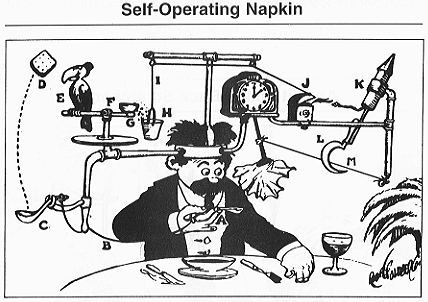
1. The “Rube Goldberg” Objection. The most serious objection to quadratic voting is that it is too damn complicated to operationalize at an acceptable cost. Like a fabled Rube Goldberg Machine, Quadratic Voting introduces a non-trivial amount of complexity into the simple act of voting. For starters, how many “vote credits” should each voter receive? May voters accumulate unused vote credits for future elections? Will voters be allowed to transfer some or all of their vote credits to other voters? What would a “quadratic ballot” look like? What happens if a voter makes an arithmetical error when allocating his vote credits among his preferred candidates? And so on. For all its faults and imperfections, the “one-man, one-vote” rule is easy to understand and easy to operationalize, while even the simplest quadratic voting schemes, by contrast, resemble an elaborate and cumbersome Rube Goldberg machine, a device designed to perform a simple task in an indirect and overly-cumbersome way (like the elaborate “Self-Operating Napkin” contraption pictured below).
2. The “Tyranny of the Minority” Problem. Another potential problem with quadratic voting is that, despite its complexity, it is not immune to strategic voting. Specifically, a large-enough minority of intense zealots could end up overriding the will of the majority of voters by allocating their “vote credits” in a strategic manner. To see this, consider the South Carolina example from my previous blog post. To keep it simple, let’s assume that x number of Democrat voters go to the polls to choose their preferred candidate, where x = 10 voters, and let’s further assume that six of these voters prefer a moderate candidate like Amy Klobuchar, Pete Buttigieg, or Joe Biden, while the remaining four voters prefer a more radical candidate like Bernie Sanders or Elizabeth Warren. If the six moderate voters end up distributing their “vote credits” evenly among the three moderate candidates–while the four zealous voters agree to assign all of their “vote credits” to one of the radical candidates–, the radical candidate could end up winning the primary by a landslide(!), even though he or she is supported by only 40% of the voters! In fairness, this objection applies to other forms of voting as well, including the “one-man, one-vote” system, but at least with one-man, one-vote, the lack of majority support is transparent in the final vote count. Quadratic Voting, by contrast, could produce a false picture of reality, with the radical/minority candidate receiving the largest number of total votes. File under: WTF!
3. The Buterin Problem. In his excellent primer on Quadratic Voting, Vitalik Buterin identifies an important gap in all Quadratic Voting schemes: who decides what issues and which candidates get to go on the ballot in the first place? In fairness, this objection applies equally to all methods of voting: whoever has the power to set the agenda (or to decide which candidates may run for office) can strategically manipulate the agenda or ballot to achieve his preferred outcome. But this objection is especially salient in the context of quadratic voting. Why? Because even the simplest version of quadratic voting is far more complicated and elaborate that the “one-man, one-vote” rule (see Objection #1 above), so why should we adopt a more complex procedure voting if the complex method is just as amenable to manipulation as “one-man, one-vote” schemes?
Nevertheless, despite these objections, ideally we would still like to find a viable way of taking the intensity of voter preferences into account. To this end, I will present an alternative — and far more simpler — method of achieving this goal in my next post, a method I have christened “Bayesian voting.”
Update (11/3): I develop these ideas more fully in my paper “Weyl Versus Rasmey: A Bayesian Voting Primer,” available here.
We stipulated in our previous post how beliefs and preferences can come in degrees. I also mentioned how this simple insight has radical implications for any domain in which voting is used to make collective decisions. Why? Because the various voting methods that are used to make decisions in legal and political domains pay no heed to the decision makers’ degrees of belief or to the intensity of their preferences. Simply put, whether the decision makers consist of a population of registered voters, a group of legislators, a panel of appellate judges, or even a 12-man jury, the traditional “one-man, one-vote” rule does not accurately measure the strength or intensity of the decision makers’ beliefs and preferences.
To remedy this defect of traditional voting methods, my colleague Glen Weyl has recently proposed a new voting method called “quadratic voting,” a simple but ingenious mechanism that does allow voters to express the strength or intensity of their preferences. This new voting procedure has not only received extensive academic attention (see, for example, all the formal papers published in the July 2017 issue of the journal Public Choice); it has also been tested in some real-world and artificial settings (by way of introduction, see this entry for “history of quadratic voting” in Wikipedia). In this post, I will explain how quadratic voting works.
There are several concise and good introductions to quadratic voting–including this primer by Vitalik Buterin as well as this formal paper by Stephen Lalley and Glen Weyl–so this post will be brief. Boiled down to its two most essential features, quadratic voting is a simple voting procedure in which (1) voters are allowed to buy as many votes as they want but in which (2) the price of each additional extra vote purchased is the square of the number of votes purchased. Now, before proceeding any further, an important clarification is in order: the payment of votes can be made using a real currency or cryptocurrency, such as Bitcoin, Dollars, Pesos, etc., or these payments can be made using tokens or some other form of artificial currency. Lalley and Weyl, for example, have proposed that an equal amount of tokens or “voice credits” be distributed to all the voters before they cast their votes.
Let’s stick with Lalley & Weyl’s innovative idea of “vote credits,” which is less amenable to ethical objections than QV systems with actual money in play (see, e.g., Laurence & Sher, 2017), and let’s use a concrete real-world example to see how their ingenious quadratic system would work in practice. By way of illustration, let’s consider the upcoming Democratic presidential primary to be held in South Carolina on 29 February 2020. To simplify, since billionaire candidate and late-entrant Mike Bloomberg is not yet on the ballot, assume the voters in the Palmetto State must choose among the following five viable candidates:

Under the traditional method of voting (one-man, one-vote), each voter must vote for one — and only one — candidate. Under Lalley and Weyl’s quadratic system, by contrast, each voter is allocated, say, 25 “vote credits” before the election, and each is then allowed to allocate these credits among the candidates in whatever way they wish. But there is a catch. The more votes you allocate to a given candidate, the more each additional vote will cost you. For example, let’s say you are a die-hard Bernie Sanders supporter, so you want to allocate all of your votes to Senator Sanders. The price of one vote will cost you only one vote credit, but the price of two votes will cost you four credits (two squared), while the price of three votes will cost you nine credits (three squared), and so on, as illustrated in the following vote-payment table below:

As a result, if you wish to allocate your entire vote budget to Bernie (or to some other candidate, for that matter), it will cost you 25 vote credits, but at the same time, your preferred candidate will receive only five votes because of the quadratic cost structure of this voting method. Okay, now that we have presented the least objectionable form of quadratic voting, I will identify and discuss the main flaws with this method — and then present a simpler alternative to quadratic voting that I call “Bayesian Voting” — in my next two posts.
Reference: Ben Laurence and Itai Sher, “Ethical considerations on quadratic voting,” Public Choice, Vol. 172 (July, 2017), pp. 195-222.
I mentioned in my previous post that Frank Ramsey was one of the founding fathers of the subjective interpretation of probability, and I also noted how Ramsey’s approach forever changed my view of the world. Before Ramsey (BR), I used to think that beliefs in propositions were binary or “all-or-nothing” entities–either a proposition was true or false. After Ramsey (AR), I now realize that beliefs can come in many shades of grey or degrees. Take one’s belief in God, for example. People often discuss or debate the question of God’s existence in binary terms: either “God exists” or “He does not exist,” right? But what if you are not 100% sure whether such a supreme being exists, or what if you find the arguments for or against the existence of an all-powerful deity equally compelling or persuasive? In a word, why can’t we assign a probability of 1/2 to this proposition? Indeed, why can’t we assign any other intermediate value between 0 and 1, with 0 representing a Richard Dawkins-like dogmatic atheism and 1 representing a Pope Francis-like faith in God?
On this subjective or “Ramsian” view of probability, one’s personal belief in the likelihood of God’s existence (or in any other proposition) is simply a numerical representation of one’s individual degree of confidence or “degree of belief” in God. Thus stated, one’s belief in God can take any value from 0 to 1, depending on how strong or weak one’s belief in God is (as the case may be). More importantly, even if two individuals have access to the same pieces of evidence or to the same arguments, they could still end up assigning different probabilities to the same proposition! After all, facts are often open to a wide variety of competing interpretations, or maybe they assign different weights to the evidence available to us, or maybe my belief in X is an essential part of my self-identity, etc., etc.
Furthermore, the possibility of degrees of belief–the idea that beliefs can be partial–not only sheds lights on our understanding of probability; this idea also illuminates the concept of “preferences.” Simply put, if beliefs and probabilities can come in degrees, so too can preferences. [As an historical aside, the idea of preference intensity was first introduced and formalized by two European economists, Ragnar Frisch and Vilfredo Pareto, in the mid-1920s (see, e.g., Farquhar & Keller (1989), p. 205), around the same time when Frank Ramsey was developing his model of subjective probability!] This insight, in turn, has important implications for politics and law–for any domain in which voting is used to engage in collective decision-making, whether it be a population of registered voters, a group of legislators, a panel of appellate judges, or even a 12-man jury. Voting in all of these various domains (ballot box, legislatures, and courts) are based on the general principle of “one-man, one-vote,” and these votes are binary in nature: either the liberal or the conservative candidate is elected; either the legislation is enacted or not; either the defendant is guilty or not guilty. But what if we replaced the traditional method of binary voting with a more nuanced method of “Bayesian voting”–i.e. what if we allowed voters, legislators, judges, and jurors to express their degrees of belief (or the intensity of their preferences) when they are casting their votes?
It turns out that the leading proponents of “Quadratic Voting” (QV) such as Glen Weyl, Vitalik Buterin, and many others have finally recognized this virtue, but alas their proposed QV methods have many deep flaws when compared to pure “Bayesian voting.” I will identify and discuss these flaws in my next few blog posts.
Reference: Peter H. Farquhar and L. Robin Keller, “Preference intensity measurement,” Annals of Operations Research, Vol. 19 (1989), pp. 205-217.
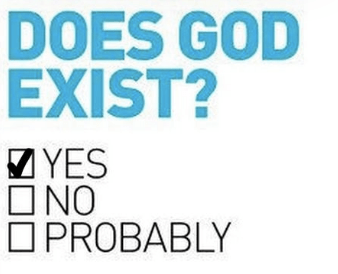
Image credit: Shri Kripalu Kunj Ashram
That is the subtitle of Cheryl Misak’s intellectual biography of the great British polymath Frank Ramsey, who was born on this day (22 February 1903) twelve decades ago. Among many other things, Ramsey was one of the founders of the subjective interpretation of probability, an influential theory that has shaped my own view of the world. I will have more to say about subjective probability in my next post. In the meantime, check out this excellent excerpt from Misak’s beautiful book.

Check out this beautiful 26-page paper on “Chalk: Materials and Concepts in Mathematics Research” by Michael Barany and Donald MacKenzie. According to one of the authors of the chalk paper (Barany), one of the advantages of blackboards is that they smudge productively: “Often a mathematical argument will involve taking some term or idea and rewriting it or rephrasing it in a fruitful way. You can do that by using an eraser or the side of your hand to rub out the thing you’ve rephrased and writing over it, but the smudge will still be visible. Being able to write over something while leaving visual evidence there was something before – is a nontrivial part of how mathematicians communicate those kinds of arguments.” In other words, the inherent messiness of blackboards turns out to be a feature, not a bug. In addition, a minor (but non-zero) benefit to using blackboards is that you can tell when chalk is about to run out in a way that you can’t tell when a whiteboard marker is about to run out. More information is available here (via the Concord Monitor); hat tip: @pickover.
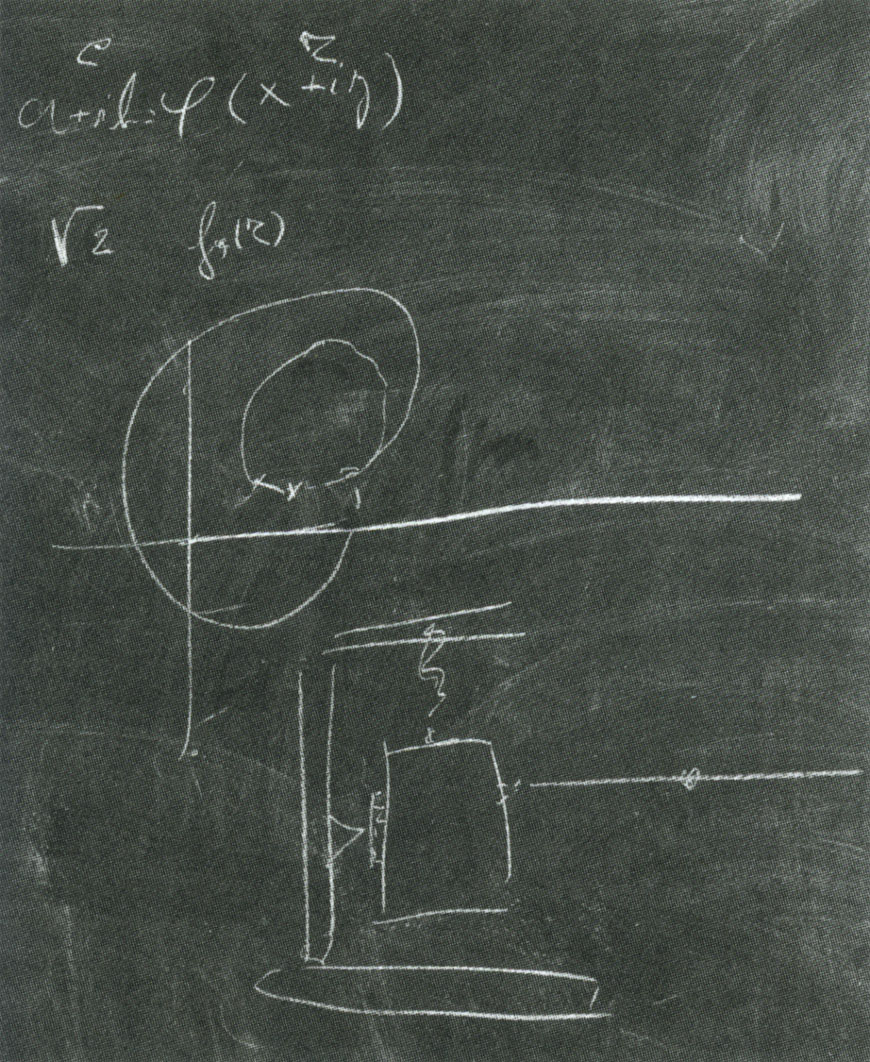
Niels Bohr’s last blackboard, Copenhagen. Source: Niels Bohr Arkivet.
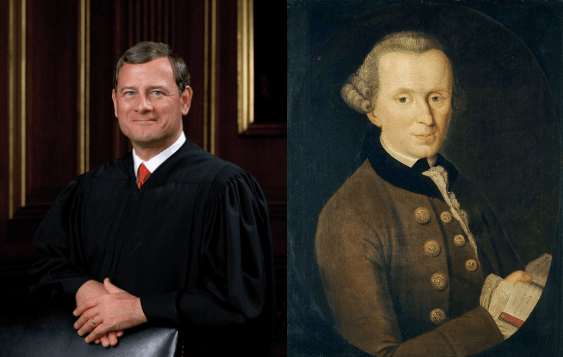
Nine years ago (2011), Chief Justice John Roberts (pictured below, left) presented this devastating critique of legal scholarship. Among other things, the Chief made this wisecrack: “Pick up a copy of any law review that you see, and the first article is likely to be, you know, the influence of Immanuel Kant on evidentiary approaches in 18th Century Bulgaria, or something, which I’m sure was of great interest to the academic that wrote it, but isn’t of much help to the bar.” (The Prussian philosopher is pictured below, right.)
Five years ago (2015), law professor Orin Kerr wrote up this tongue-in-cheek scholarly reply to the Chief Justice’s critique. In brief, Professor Kerr conducted an extensive review of Kant’s original works of scholarship, concluding that “Kant never wrote about evidence law.”
Last year (2019), I responded to Kerr’s reply to the Chief Justice’s original remarks about Kant’s purported influence on the law of evidence. For my part, I propose a different way of responding to the Chief Justice’s critique of legal scholarship. Instead of searching through old tomes in dark and dusty libraries for a direct correspondence or causal relation between Kant’s work and evidentiary approaches in 18th Century Bulgaria, I propose the following thought experiment: What if Kant were an 18th Century Bulgarian law professor?
That is the title of my most recent contribution to the literature on judicial voting, a literature that goes back to Frank Easterbrook’s excellent paper “Ways of criticizing the court,” which was published in The Harvard Law Review in 1982. Unlike a traditional law review, however, where your average article can easily exceed 30,000 words (60 pp.) and contain over hundreds of obscure footnotes, my pithy scholarly piece was published online in The Journal of Brief Ideas (see below), where submissions may not exceed 200 words! (As an aside, I am also currently writing up a larger piece titled “Bayes versus Weyl” in which I compare and contrast my simple method of Bayesian voting with Glen Weyl’s more complicated “quadratic voting” method. I will blog about both of these voting methods–and explain why Bayesian voting is superior to quadratic voting–next week.)

File this addendum under “backward induction,” a strategic concept that will be familiar to anyone who has studied game theory. Regarding the latest airplane seat controversy (#reclinegate), the one that occurred on an American Airlines flight from New Orleans to Charlotte, a lot of people are saying that the lady in the video (Wendi Williams) should not have reclined her seat in the first place because the man in the back row (who is admittedly the biggest jerk in the world) was in a seat that did not recline. The problem with this observation, however, is that it ignores the logic of backward induction. In brief, if a passenger in the next-to-last row should not recline her seat because the last row does not have seats that recline, then the person in the third-to-last row should not recline their seat because the person in the next-to-last row isn’t able to recline, and if the person in the third-to-last row should not recline their seat, then the person in the fourth-to-last row shouldn’t either … By this logic, no one — not even the person in the first row! — should be able to recline their seat.
The Washington Post (via Natalie B. Compton) recently published “The completely correct guide to reclining on an airplane.” The problem with The Post’s guidelines, however, is that they are not only incomplete (what about commuter flights?); they are also inconsistent (since the application of this set of complex and multifarious rules depends on a wide variety of subjective factors, like the height of the reclinee). As a public service, then, I am reposting three of my previous blog posts on this subject:
View original post 8 more words










Welcome to the online home of the IASS
Hopefully It’s Interesting.
In Conversation with Legal and Moral Philosophers
Relitigating Our Favorite Disputes
PhD, Jagiellonian University
Inquiry and opinion
Life is all about being curious, asking questions, and discovering your passion. And it can be fun!
Books, papers, and other jurisprudential things
Ramblings of a retiree in France
BY GRACE THROUGH FAITH
Natalia's space
hoping we know we're living the dream
Lover of math. Bad at drawing.
We hike, bike, and discover Central Florida and beyond
Making it big in business after age 40
Reasoning about reasoning, mathematically.
I don't mean to sound critical, but I am; so that's how it comes across
remember the good old days...
"Let me live, love and say it well in good sentences." - Sylvia Plath
a personal view of the theory of computation
Submitted For Your Perusal is a weblog wherein Matt Thomas shares and writes about things he thinks are interesting.
Logic at Columbia University
Just like the Thesis Whisperer - but with more money
the sky is no longer the limit
Technology, Culture, and Ethics
Just like the horse whisperer - but with more pages
Poetry, Other Words, and Cats


 prior probability