Vicious circle or virtuous spiral? (law and morality feedback loop edition)

Building on the work of Donald Regan, law professor Bert Huang explores the complex relationship between law, ethics, and artificial intelligence in his beautiful paper “Law’s halo and the moral machine” (hat tip: @lsolum). Among other things, Professor Huang describes a “feedback loop” between law and morality: the scope of existing legal duties might exert some level of influence on our moral judgements about right and wrong (i.e. knowledge of the law might produce a “moral halo” effect), and at the same time our moral intuitions might influence what the content of the law should be (cf. natural law theory). For my part, I find this conjecture to be plausible, but given the problem of motivated reasoning and the primacy of Humean emotions, is this feedback loop more likely to produce a virtuous spiral or a vicious circle? (Why vicious? Because morality can be used to justify bad deeds as well as good ones.) Also, what if we used auctions or some other market method to determine what our moral or legal duties should be, a counter-intuitive possibility that I have further explored in two of my previous papers: “Trolley Problems” (2014) and “Coase and the Constitution” (2011)?

Image result for vicious circle

Is the circle a vicious or virtuous one?

Posted in Uncategorized | Leave a comment

Here we go again (reclining airplane seat controversy edition)

The Washington Post (via Natalie B. Compton) recently published “The completely correct guide to reclining on an airplane.” The problem with The Post’s guidelines, however, is that they are not only incomplete (what about commuter flights?); they are also inconsistent (since the application of this set of complex and multifarious rules depends on a wide variety of subjective factors, like the height of the reclinee). As a public service, then, I am reposting three of my previous blog posts on this subject:

  1. The Airplane Seat Dilemma (10 Sept. 2014) (where we note the “reciprocal nature” of the right to recline versus the right to legroom);
  2. The right to recline? (3 Oct. 2014) (where we explain why disputes over the “right to recline” on airplanes are a textbook example of a situation involving unclear or contested property rights);

  3. The problem of reclining airplane seats (7 Oct. 2014) (where we summarize our analysis of the right to recline).
Image result for recline airline seat

It depends?

Posted in Uncategorized | 1 Comment

What is the optimal number of email folders?

For me it’s three. In addition to my main inbox, which serves as a holding pen for my most pressing matters (i.e. messages that I must respond to before I go to bed), I make use of only three email folders as follows:

  1. “Action this week” folder: Everything that requires a response before the end of the week. (I will respond to these on Friday afternoon; my way of getting revenge on the person or organization who sent me the original email in the first place.)
  2. “Happiness” folder: Emails that brighten my day or make me happy in some way (e.g. a thank you note from a student, an acceptance of publication from a journal, or other good news) go here.
  3. Zafacónfolder: I dump most of my emails into this massive catch-all folder (out-of-sight, out-of-mind!), just in case I may need to reference a particular email again, or if I am otherwise unwilling to hit the “delete” button. (In Puerto Rico, the word “zafacón” is slang for a general or all-purpose category.)
Image result for zero inbox memes

Pro-tip: just hit “delete” or dump everything into your “catch-all” folder.

Posted in Uncategorized | Leave a comment

Chess children

Posted in Uncategorized | Leave a comment

Dresden, 1945

Via Wikipedia (citations omitted): “In four raids between 13 and 15 February 1945, 722 heavy bombers of the British Royal Air Force (RAF) and 527 of the United States Army Air Force (USAAF) dropped more than 3,900 tons of high-explosive bombs and incendiary devices on the city. The bombing and the resulting firestorm destroyed more than 1,600 acres (6.5 km) of the city centre. An estimated 22,700 to 25,000 people were killed ….” Victor’s justice aside, why wasn’t the bombing of Dresden by the Allies a war crime?

Posted in Uncategorized | Leave a comment

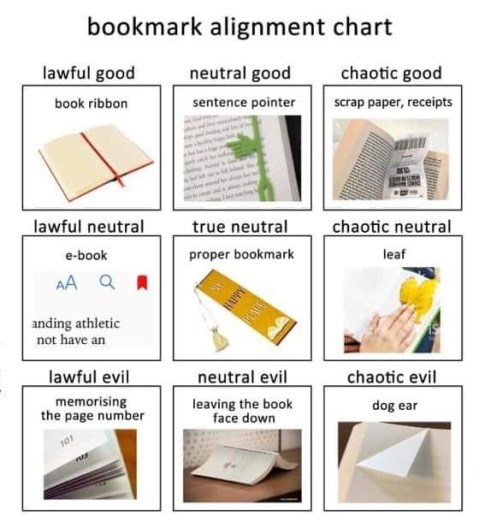
Taxonomy of bookmark techniques

Hat tip: @sheldongilbert

Posted in Uncategorized | Leave a comment

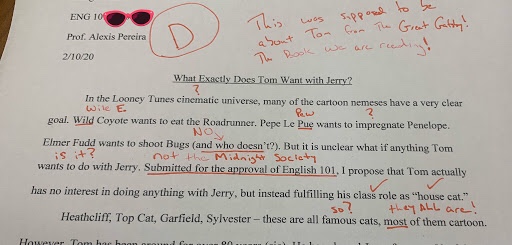
What exactly does Tom want with Jerry?

That is the title of a spoof college essay posted by Alexis Pereira (@MrAlexisPereira) on Twitter the other day. (See picture below.) According to Wikipedia, Tom and Jerry is a series of animated short films created by William Hanna and Joseph Barbera in the 1940s that “centers on a friendship/rivalry (a love-hate relationship) between the title characters Tom, a cat, and Jerry, a mouse.” The thing is, I used to watch Tom and Jerry cartoons (among other things) after school when I was a child, so I wish Mr Pereira would post the entire essay!


Posted in Uncategorized | Leave a comment

Is the swing voter a myth?

Once upon a time, the academic economist Harold Hotelling (pictured below, left) developed a formal mathematical model called the median voter theorem to help explain elections. According to this influential theory of politics, a majority rule voting system will select the outcome most preferred by the median voter. But what if this model is wrong or incomplete? Rachel Bitecofer (pictured below, right), who is a professor of politics at Christopher Newport University in Virginia, has developed a new way of forecasting elections. This excellent essay by David Freedlander (via Politico Magazine) summarizes her ideas about voting this way: “Bitecofer’s theory, when you boil it down, is that modern American elections are rarely shaped by voters changing their minds, but rather by shifts in who decides to vote in the first place.” Freedlander adds: “To her critics, she’s an extreme apostle of the old saw that ‘turnout explains everything,’ taking a long victory lap after getting lucky one time. She sees things slightly differently: That the last few elections show that American politics really has changed, and other experts have been slow to process what it means. If she’s right, it wouldn’t just blow up the conventional wisdom; it would mean that much of the lucrative cottage industry of political experts—the consultants and pollsters and (ahem) the reporters—is superfluous, an army of bit players with little influence over the outcome. Actually, worse than superfluous: that whole industry of experts is generally wrong.”

Screen Shot 2020-02-11 at 10.30.39 AM

Posted in Uncategorized | Leave a comment

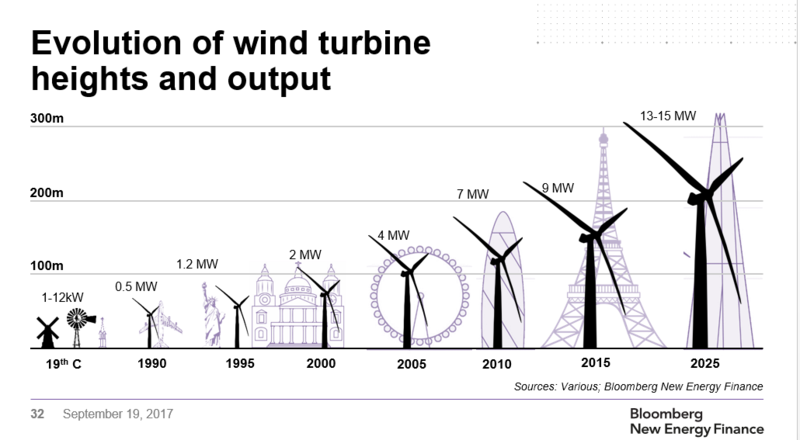
How big is too big (windmill edition)?

Maybe they are not yet big enough! Check out the following excerpt from this report by David Roberts (via Vox; link in original): “It is impressive as an engineering feat, but the significance of growing turbine size goes well beyond that. Bigger turbines harvest more energy, more steadily; the bigger they get, the less variable and more reliable they get, and the easier they are to integrate into the grid. Wind is already outcompeting other sources on wholesale energy markets. After a few more generations of growth, it won’t even be a contest anymore”

Picture

More details here and here (hat tip: @pickover).


Posted in Uncategorized | Leave a comment

Sunday Funday (emoji keyboard edition)

Posted in Uncategorized | Leave a comment