Hohfeld’s taxonomy (powers)

This week, we are revisiting Wesley Hohfeld’s fourfold taxonomy of legal rights (the great Professor Hohfeld is pictured below), and we already examined “immunities from authority” in our previous post. Here, we will explore another type of right or entitlement: the power to create a new entitlement, transfer an entitlement, or change an existing entitlement. Simply put, a person with a power has the ability to create a new entitlement, the ability to transfer an existing entitlement held by oneself, and the ability to alter or modify entitlements held by oneself or by another person. A classic example of a Hohfeldian power is the law of contracts. If A makes an offer to B, then B has the power to accept the offer, and A’s acceptance of the offer changes the legal obligations of A, since B’s acceptance creates a legally-enforceable contract that is binding on both A and B–assuming, of course, their agreement otherwise satisfies all the elements of a contract, such as capacity, bargained-for consideration, and lawful purpose.

Another example of powers are property rights. If you own property, you enjoy a specified set of legal powers over that property. Among other things, the owner has the power to exclude others from entering or using his property without the owner’s consent. Go back to our tattoo example from our previous post. You have a property right in your body, so you have the power to put a tattoo on your body. Of course, the law may place limits on your powers. If the police are engaged in a hot pursuit, they may enter your private property to apprehend a fleeing felon. (Stated in Hohfeldian terms, the police have the power to pursue fleeing felons, even on private property. Likewise, the government has the power of eminent domain, i.e. the power to take your property in certain situations.) Even your exclusive property rights to your body are limited. The National Organ Transplant Act of 1984, for example, outlaws the sale of human organs, so you are not allowed to sell one of your kidneys even though you own them.

Thus far, we have examined Hohfeldian powers and immunities. We will continue our review of the remaining Hohfeldian entitlements (claim rights and liberties) in our next two posts …
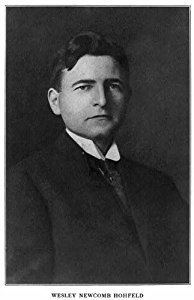
Image result for wesley hohfeld
Posted in Uncategorized | 2 Comments

Hohfeld’s taxonomy (immunities)

In my previous post, I introduced (via Larry Solum’s legal theory blog) Wesley Hohfeld’s influential fourfold taxonomy of “entitlements” or legal rights: claim rights, liberty rights, powers, and immunities. Let’s now take a closer look at Hohfeld’s taxonomy, beginning (in reverse order) with “immunities.” For Hohfeld, an immunity refers to an immunity from authority, but what does this (“immunity from authority”) really mean? To understand this type of right (i.e. immunity from authority), we first have to ask ourselves, what are the main functions of law.

One important function of law is to confer benefits or entitlements (such as property rights) on persons. Perhaps the most fundamental such entitlement or right we have is the right to our own bodies. Broadly speaking, each person of age and sound mind has an exclusive entitlement or property right to his own body. (Minors or mental incompetents, by contrast, are owned by their parents or legal guardians, as the case may be.) An immunity from authority, then, simply means that no one else has the legal right or authority to tell what you can do or not do with your own body. You want to get a tattoo, for example? Although I would strongly caution you to not get a tattoo (or if you do get one, to make it as small and inconspicuous as possible), I have no legal authority over you, and thus I can’t legally prohibit from you getting a tattoo. Assuming you are an adult of sound mind, when it comes to tattoos you enjoy a legal immunity from my authority.

Nevertheless, the law imposes a wide variety of restrictions on what we can or cannot do with our bodies, such as suicide, the consumption of certain drugs, “sex work” and certain types of sex acts, etc. In other words, even though we have a general property right in our own bodies, immunities from authority are not the whole story, for this general right or entitlement is protected in various additional ways, and some of these protections may end up limiting some aspects of our bodily entitlements. To understand the full scope of these entitlements, we need to study the remaining three types of Hohfeldian legal rights, which we will continue to do in our next few posts …

Related image

Source: cyprian64, via Imgur

Posted in Uncategorized | 2 Comments

Hohfeld forever

The great Wesley Hohfeld (the Dmitri Mendeleev of law) famously identified four types of legal rights: claim rights, liberty rights, powers, and immunities. Alas, Hohfeld’s own writings explaining his fourfold taxonomy are not very “user friendly.” Via our colleague and friend Larry Solum, here is the best (and most succinct) summary of Hohfeld’s influential taxonomy of rights we have ever read. Below is an excerpt from Solum’s summary of Hohfeld’s fourfold taxonomy (emphasis added by us): Continue reading

Posted in Uncategorized | Leave a comment

A critique of stakeholder theory

A stakeholder without a veto is just window dressing, but if there are too many stakeholders with veto rights, nothing gets done. Mark J. Dunkleman’s excellent history of New York City’s Penn Station provides an instructive case study of this critique:

In the dozens of interviews I conducted with those who have worked on Penn Station during the past three decades, I encountered a parade of complaints that but for one particular obstacle, the project would have been completed expeditiously. If only the postal service hadn’t obstructed Moynihan at the first turn. If only Amtrak hadn’t rejected an early deal. If only the Port Authority had offered more money. If only Washington had appropriated additional funds. If only Jim Dolan had decided to accept a new arena. If only for 9/11. If only Spitzer hadn’t been forced to resign. If only for the financial collapse. Taken together, the conversations come to feel like something akin to the parable of the blind men and the elephant. Everyone describes what was surely an important obstacle. But it’s only after taking them all together that the full picture becomes clear. In a dynamic where so many players can exercise a veto, it’s nearly impossible to move a project forward. No one today has the leverage to do what seems to be best for New York as a whole. And ultimately, government is rendered incompetent.

Of course, for us students of the great Guido Calabresi (my intellectual mentor) or the late Ronald Coase (my intellectual hero), none of this new.

Related image

Source: Manzhynski et al. (2018).

Posted in Uncategorized | Leave a comment

a circle thief

Sunday funday! Animation by Natsumi Comoto (hat tip: Kottke).

Posted in Uncategorized | Leave a comment

An illustration of the law of diminishing marginal utility?

Is Disney’s Star Wars strategy counter-productive? More details about Disney’s decision-making are available here. (Also, here is Wikipedia’s entry for diminshing marginal utility.)

Posted in Uncategorized | Leave a comment

Does the American with Disabilities Act apply to commercial aircraft?

Apparently not, as noted in this fascinating report by Michael Schulson on “The Physics (and Economics, and Politics) of Wheelchairs on Planes.” File under: Hmmm.

Posted in Uncategorized | Leave a comment

Police error?

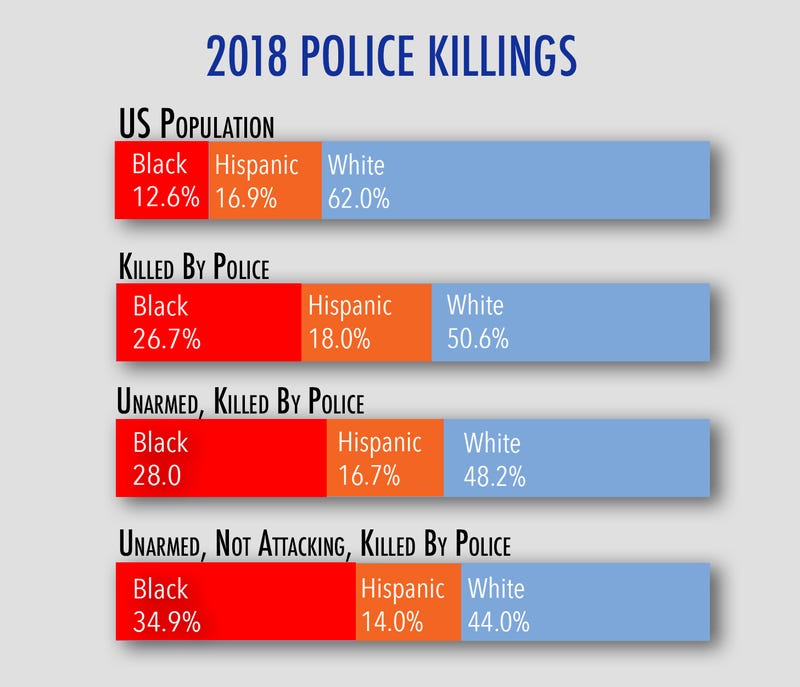
Another police chase (this one in South Florida) on busy highways led to the deaths of two innocent civilians, including Frank Ordoñez, a UPS driver and father of two children. Call me a “Monday morning quarterback,” but why didn’t the police just call off the chase as soon as the robbers hijacked the UPS van? After all, all UPS trucks have GPS tracking devices.

Update (4:26 PM): “Nineteen officers from five agencies fired into the UPS truck, and the number of rounds expended could exceed 200 …” File under: WTF? More infuriating details here.

Image result for how many people have the police killed

Source: The Root

Posted in Uncategorized | Leave a comment

Ten-year challenge (pop culture & the law edition)

During the last ten years (2009-2019), I authored or co-authored the following five papers in which I explored a wide variety of popular culture artifacts (novels, movies, TV shows, urban legends, etc.) from a legal perspective:

1. Gödel’s loophole (2013) (Kurt Gödel’s alleged discovery of a logical contradiction in the U.S. Constitution).

2. Clones and the Coase theorem, with Orlando Martinez (2012) (Blade Runner).

3. Buy or bite? (2014) (vampires).

4. Finding Santiago (2015) (Hemingway’s Old Man and the Sea).

5. Breaking Bad Promises (in progress) (Breaking Bad, Mexican narcocorridos, payday loans).

Enjoy!

Image result for pop culture
Posted in Uncategorized | Leave a comment

What’s your excuse?

Readers Block

Credit: Grant Snider (hat tip: Kottke)

Posted in Uncategorized | Leave a comment