In the third subsection of Chapter 10 of ASU (pp. 309-312), Nozick provides two additional reasons why a universal utopia for everyone is an impossible fantasy. The first reason is “the fact that people are different” and have different values (p. 309). (And even when our values overlap, we assign different weightings to the values we may share!) The other reason is the ubiquity of trade offs. Unless we postulate a magic wand that allows us to summon manna from heaven, not all goods can be realized simultaneously, so trade-offs will have to be made, even in utopia! Moreover, as Nozick correctly notes (p. 312), “there is little reason to believe that one unique system of trade-offs will command universal assent. Different communities, each with a slightly different mix, will provide a range from which each individual can choose that community which best approximates his balance among competing values.” Continue reading
Possible worlds versus the actual world
We restated Robert Nozick’s mental model of imaginary worlds in our previous post. Next, in the second subsection of Chapter 10 of ASU (pp. 307-309), Nozick hits the pause button to compare and contrast his model of possible worlds with the actual world. Here, Nozick explores the line between fantasy and the feasible, giving several reasons why we won’t be able to realize his model of possible worlds in the actual world. Among these are conflict, friction, and closed borders.
- Conflict and war. What happens when the worlds come into conflict with each other? Or as Nozick notes (p. 307): “Unlike the model, in the actual world communities impinge upon one another, creating problems of foreign relations and self-defense and necessitating modes of adjudicating and resolving disputes between the communities.”
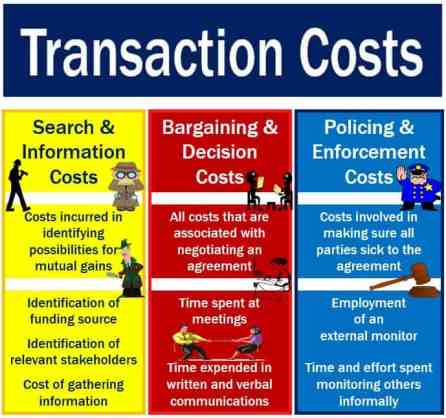
- Friction. Another obstacle are information costs (ibid.): “In the actual world, there are information costs in finding out what other communities there are, and what they are like, and moving and travel costs in going from one community to another.”
- Closed borders. Imagine living in Communist Cuba or East Berlin during the Cold War, or as Nozick puts it (pp. 307-308), “in the actual world, some communities may … try to prevent [their members] from freely leaving their own community to join another. This raises the problem of how freedom of movement is to be … enforced when there are some who will wish to restrict it.”
In short, these problems will make it difficult, if not impossible, to project his model of possible worlds onto the actual world. Nevertheless, as Nozick notes, sometimes the second best is good enough, citing R. G. Lipsey & Kelvin Lancaster’s influential paper, “The General Theory of the Second Best,” Review of Economic Studies, Vol. 24, No. 1 (Dec. 1956), pp. 11-32, available here. In other words, just because Nozick’s model of possible worlds diverges from the actual world, doesn’t mean we should give up our search for utopia. We will review Nozick’s “framework for utopia” in our next post.

Finding utopia
Nozick builds a beautiful mental model in the first subsection of Chapter 10 of ASU (pp. 297-306). This simple model has the following parts (p. 299):
- Universal imagining rights. “Imagine a possible world in which to live; this world need not contain everyone else now alive, and it may contain beings who have never actually lived. Every rational creature in this world you have imagined will have the same rights of imagining a possible world for himself to live in (in which all other rational inhabitants have the same imagining rights, and so on) as you have.” That is, you are allowed to imagine your own possible utopia or association and you are allowed to populate your imaginary society with as many or little “rational creatures” as you like, but everyone else in your world is also allowed to imagine their own utopian associations.
- Universal emigration rights. “The other inhabitants of the world you have imagined may choose to stay in the world which has been created for them (they have been created for) or they may choose to leave it and inhabit a world of their own imagining.” In two words, open borders!
- Iteration. There is no arbitrary stopping point. This process of imagining new utopian associations and entrance into and exit from these imaginary societies will continue indefinitely until someone imagines a world that people want to voluntarily join and remain in.
Overview of Chapter 10 of ASU
After many months and multiple blog posts, we have now reached the tenth and last chapter of Anarchy, State, and Utopia. Nozick begins this chapter by asking whether his ideal of the minimal state would inspire men to struggle or make sacrifices on its behalf, or as Nozick puts it (p. 297, end note omitted): “Would anyone man the barricades under its banner?” Before we jump into Chapter 10, however, let’s take a closer look at its overall organization and structure.
Chapter 10 is titled “A Framework for Utopia,” and it is the most creative and thought-provoking chapter in a book full of creative and thought-provoking ideas. This last chapter is divided into eleven separate subsections as follows:
- The model (pp. 297-306)
- The model projected onto our world (pp. 307-309)
- The framework (pp. 309-312)
- Design devices and filter devices (pp. 312-317)
- The framework as utopian common ground (pp. 317-320)
- Community and nation (pp. 320-323)
- Communities [that] change (pp. 323-324)
- Total communities (p. 325)
- Utopian means and ends (pp. 326-331)
- How utopia works out (pp. 331-333)
- Utopia and the minimal state (pp. 333-275)
Here, Nozick will “pursue the theory of utopia to see where it leads” (ASU, p. 297). But what conditions must a society satisfy to qualify as a “utopia”? Nozick will present a beautiful and original mental model to begin his pursuit of utopian theory; we will restate his model in our next post.

Optimal Auctions and Hamilton
We interrupt our ongoing review of Anarchy, State, and Utopia to ask a simple question: why isn’t there a movie version of the popular Broadway musical “Hamilton” yet? According to this report in The Wall Street Journal (hat tip: kottke), we might just get what we have been wishing for! (As much as my dear wife Sydjia and I would love to see this musical in person, we are not going to pay thousands of dollars for this privilege.) A massive bidding war is apparently going on to bring “Hamilton” to the silver screen, and bids for the legal rights to the musical might exceed $50 million! For more details about auction theory in general, check out this undergraduate course on optimal auctions (via Cheap Talk).
Nozick on hypothetical histories
Nozick devotes the last subsection of Chapter 9 of ASU (pp. 292-294) to the problem of “hypothetical histories.” Here, he poses a crucial question (p. 293): “How should hypothetical histories affect our current judgment of the institutional structure of society?” This hypothetical history question is especially poignant because both John Rawls and Robert Nozick use this device–hypothetical histories–to build their theories of justice by which to evaluate the structure of North American society today: Rawls’s is the original position; Nozick’s, the dominant protection association. Nevertheless, Nozick’s answer to his hypothetical history question is less than satisfying. (See, e.g., David Johnston, The Idea of a Liberal Theory, Princeton U Press (1994), p. 56, n. 36, available here.) In fact, his analysis of the relation between hypothetical and actual histories ends up falling into a vicious circle! Continue reading
The problem with demoktesis
Let’s start wrapping up our review of Chapter 9 of Anarchy, State, and Utopia (ASU) by taking stock of Robert Nozick’s mind-blowing thought experiment in this chapter. In summary, Nozick imagines a collective corporate entity or Great Corporation in which “each person owns exactly one share in each right over every other person, including himself.” (ASU, p. 285.) In other words, each person has an equal say in the lives of all others. Furthermore, Nozick coins a new term to christen this system: demoktesis or “ownership of the people, by the people, and for the people” (p. 290). What is so terrible about this imaginary scheme? It turns out there are two big problems with demoktesis. One is the problem of holdouts. According to Nozick (pp. 289-290), persons who refuse to participate in this scheme would not be allowed to remain in the same territory in which the great corporation operated; nor would they be allowed to create a competing corporation. For my part, my initial response to this argument was to push back against Nozick’s conclusions regarding holdouts. His entire scheme is imaginary, so why can’t we imagine an alternative world consisting of competing human corporate conglomerates? Continue reading
Say it ain’t so …
Update (8/3): We are happy to report that the comments on Marginal Revolution are now back open!
We interrupt our ongoing review of Anarchy, State, and Utopia to bring a matter of marginal significance (in the scheme of things) to the world’s attention. For years, one of our favorite sites on the Internet has been Marginal Revolution (MR), an eclectic economics blog authored by Tyler Cowen and Alex Tabarrok. But one week ago (24 July 2018), the Marginal Revolution blog announced it was going to completely turn off the comments section to MR “for the time being.” Worse yet, aside from a tongue-in-cheek (and easily refutable) justification for this momentous decision, no explanation was provided. (My guess, however, is that the fraction of defectors on MR–i.e. persons who post inane, irrelevant, or profane comments–grew too large relative to the fraction of cooperators, producing an awful cacophony instead of an enlightened discussion on the front end and making moderation of the comments section a tedious chore on the back end.) Nevertheless, I often learned as much from the comments as I did from the MR blog itself, so I hope this “time being” is a short one and that our colleagues Cowen and Tabarrok reopen the comments.

Nozick’s Lockean digression
As we mentioned at the end of our previous post, smack dab in the middle of one of the most original and mind-blowing thought experiments in the history of political philosophy, Nozick digresses to discuss Locke’s views on parental ownership of children. Although the ostensible reason for this Lockean digression is to figure out whether children are to be included in Nozick’s imaginary “one-shareholder, one vote” scheme, we suspect that the true reason for tucking this digression away in this part of the book might be a more sinister one: to conceal some serious internal contradictions in Locke’s labor theory of property rights. Continue reading
Nozick’s thought experiment
You may have heard the slogan “corporations are people”; but what if people were corporations? The second subsection of Chapter 9 of ASU contains just such a mind-blowing thought experiment. In summary, Nozick borrows the Beckerian concept of “human capital” from the world of economic theory and takes this idea to its logical conclusion. He imagines a society in which each person has the right to incorporate himself as a human corporation, the right to sell off shares of stock in himself, and the right to buy shares in other people. In this imaginary world, it is perfectly legal for people to sell off discrete property rights in themselves, including “the right to decide from which persons they could buy certain services (which they call occupational licensure rights); the right to decide what countries they would buy goods from (import-control rights); … and so on.” (ASU, p. 283, emphasis in original.) Not only is it perfectly legal for people to buy and sell shares of such rights; this practice becomes so widespread and pervasive that, in Nozick’s words (p. 284), “just about everyone sells off rights in themselves, keeping one share in each right as their own, so they can attend stockholders’ meetings if they wish.” Continue reading