The logic of Robin Hood (review of Atlas Shrugged, part 1)

Is Robin Hood a good guy or a bad guy? Our previous post identified three original ideas in Atlas Shrugged. One of these is Ayn Rand’s revisionist critique of Robin Hood, the legendary outlaw who robbed from the rich and gave to the poor. This counter-intuitive critique appears on pp. 532-533 of this monumental tome (all page references are to the 35th anniversary edition of Atlas Shrugged, the one with an Introduction by Leonard Peikoff), or about halfway into the novel, where one of the secondary characters in the novel (the Norwegian pirate Ragnar Danneskjöld) questions the moral ideal of Robin Hood, describing him as “the most immoral and the most contemptible” anti-hero. (By the way, we begin our review of Atlas Shrugged with the Robin Hood passage because the idea expressed in this passage is central to the main thesis of the novel: government regulators are “looters” who use coercion–regulation, fees, taxes, etc.–to extort wealth from the producing class–businessmen, corporations, and self-made tycoons–to entrench their own bureaucratic positions of power.) So, without further ado, here are the words of Ayn Rand’s alter ego Ragnar Danneskjöld: Continue reading

Posted in Uncategorized | 6 Comments

Three original ideas in Atlas Shrugged

We have been reading Ayn Rand’s magnum opus “Atlas Shrugged.” Among many other things, her monumental novel expresses three original ideas:

  1. Robin Hood was a scoundrel, not a hero.
  2. Trademarks and corporate logos (see below) are the modern equivalent of coats of arms.
  3. Who you make love to is an expression of what your values are.

We will elaborate on these three ideas in future blog posts.

Posted in Uncategorized | 2 Comments

What we’ve been reading …

Atlas Shrugged is a massive tome (over 1000 pages) and a cult-classic; we will post a review soon.

Posted in Uncategorized | Leave a comment

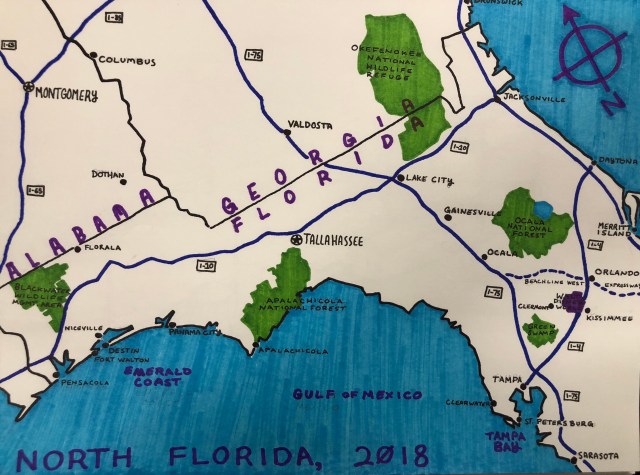
Map of Greater North Florida at a 45° angle

This beautiful map of the Florida-Georgia-Alabama line (hand-drawn by Reddit user lemastersg) has made me see my current hometown (Orlando, Fla. — Go Knights!) in a whole new geographical light!

Posted in Uncategorized | 1 Comment

SCOTUS and Supermajority Voting (Wayfair, part 3)

This is our third and last post on the Wayfair case. In our previous post, we presented a “Coasean critique” of the majority’s rationale in South Dakota v. Wayfair. In brief our critique is: yes, tax loopholes are unfair to certain sectors, but guess what? Getting rid of the loophole would be unfair to others. Today, however, we explore an even deeper problem with the Wayfair case: the majority’s dangerous disregard for the doctrine of stare decisis. Continue reading

Posted in Uncategorized | 1 Comment

A Coasean Critique of the Wayfair Case

Note: this is the second of three blog posts on the Wayfair case. (Our last post will appear tomorrow.)

In our previous post, we patiently restated the facts and identified the main legal and theoretical issues in South Dakota v. Wayfair, Inc., the online sales tax case decided by SCOTUS on 21 June 2018. Today, we will present a Coasean (or is it Coasian?) critique of the majority opinion in this case. To appreciate our analysis, however, we need to back up and say a few words about the late economist Ronald H. Coase, the source of our “Coasean critique.” Continue reading

Posted in Uncategorized | 4 Comments

South Dakota v. Wayfair (1 of 3)

The U.S. Supreme Court recently decided, by a 5-4 margin, the case of South Dakota v. Wayfair, Inc. (You can read the court’s historic decision for yourself here.) Our analysis of Wayfair will proceed in three parts. First (part I) are the facts and issue spotting: what was this case all about? Next (part II), we will question Justice Kennedy’s fairness-based majority opinion, exposing a fundamental fallacy in his reasoning. Lastly (part III), we will propose a meta-legislative solution (inspired by the work of our colleague Randy Kozel) to strengthen the Supreme Court’s broken stare decisis doctrine. Today, let’s review the facts of the Wayfair case and spot the main legal issues: Continue reading

Posted in Uncategorized | 3 Comments

¡Viva Alexandria!

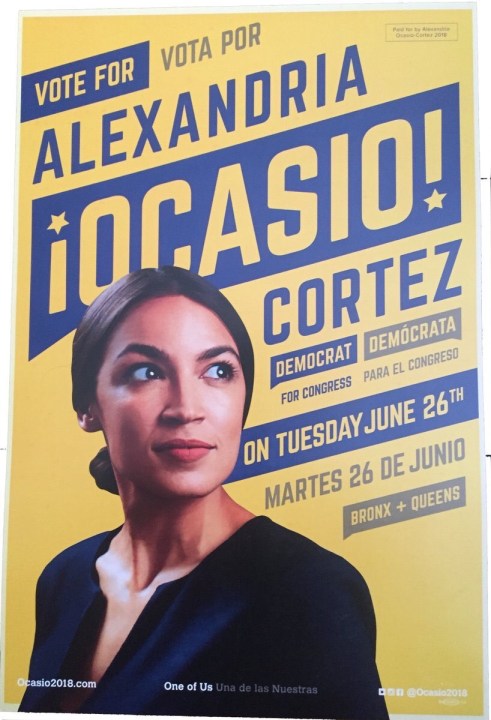
Although we don’t know what to make of her “democratic socialist” politics, we really, really love Alexandria Ocasio-Cortez’s beautiful bilingual campaign poster (pictured below). By the way, will the general election in her district be a good test of the median voter theorem? More fascinating observations about this dark horse candidate here, via hyper-blogger Tyler Cowen (Marginal Revolution).

Posted in Uncategorized | Leave a comment

Summer Status Update

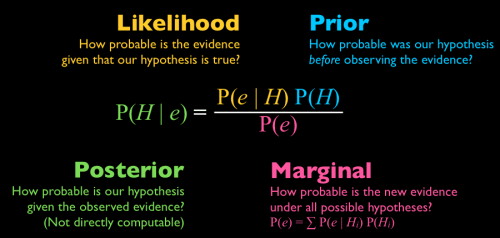
We will be posting our analysis of South Dakota v. Wayfair, Inc., as well as our review of “Finding Law” by Stephen A. Sachs, in the next day or two. In the meantime, given our fascination with all things Bayesian and with the use of probabilistic methods in law, we are adding the following three items (which we will need to print before reading) to our summer reading list:

  1. Emma H. Geller: Bomb threats and Bayes’ Rule.
  2. Larry Laudan: Why presuming innocence is not a Bayesian prior.
  3. David Colquhoun: Statistics and the law: the prosecutor’s fallacy.
  4. William M. Briggs: There is no prior? What’s a Bayesian to do? Relax, there’s no model, either.
  5. David Papineau. Thomas Bayes and the crisis of science. (Added to my list on 6/29.)
Image result for bayes theorem

Source: Emma H. Geller

Posted in Uncategorized | 2 Comments

FYI: this year’s most popular World Cup jersey

Related imageSuper Eagles on fleek! Via CNBC, Ruth Umoh (@ruthumohnews) reports: “Prior to its official June 1 release date, Nike had already received 3 million pre-orders for the jersey [of the Nigerian National Team] …. That sets a new pre-order record for an African team and even some of the biggest soccer clubs in the world. To put that into perspective, top-three soccer club Manchester United sold the most jerseys globally in 2016, with 2.85 million sales.” (By the way, there is also a thriving market in counterfeit jerseys.) Double hat tip: digg and Vanity Fair.

Posted in Uncategorized | 2 Comments