Assorted Links (Philosophy of Hacking Edition)

Below are five essays and articles discussing various ethical aspects of hacking or the ethics of teaching how to become a computer hacker:

  1. Loyd Blankenship (a/k/a The Mentor), The Conscience of a Hacker (8 January 1986),  available here, via archive.org.
  2. Ellen Nakashima & Ashkan Soltani, The Ethics of Hacking 101 (7 October 2014), available here, via The Washington Post.
  3. Nicole Radziwill, et al., The Ethics of Hacking: Should It Be Taught? (2015), available here, via arXiv.
  4. Eric Steven Raymond, How to Become a Hacker (2001), available here, via catb.org.
  5. Marcia J. Wilson, Is Hacking Ethical? (24 March 2004), available here, via Computer World.
Image result for hacker manifesto
Posted in Uncategorized | Leave a comment

The Ethics of Facemash

Let’s consider the ethics of Facemash and computer hacking generally. (We will study the law of hacking at a later time.) Although hackers are often shadowy actors, lurking behind the scenes, it turns out that hacking isn’t always wrong. Among hackers, the rightness or wrongness of hacking depends on some mixture of the hacker’s internal motivation as well as the ultimate consequences or effects of the intrusion. In short, we must ask: why is the hacker breaking into someone’s computer system? Is the hacker trying to expose or identify any hidden weaknesses in the system in order to make the system safer and stronger in the future (a “white hat” hacker)? Or does the hacker just want to inflict harm or steal data for the hacker’s own personal benefit (a “black hat” hacker)?

Now, let’s apply this pragmatic approach or “common sense” ethics to the Facemash Affair. To us, it looks like Facemash was some strange combination of white hat and black hat hacking. On the one hand, Facemash was meant as a prank, one that also exposed just how woefully inadequate Harvard’s security measures were. Further, the Facemash algorithm used to rank the hotness of students was a novel and sophisticated application of the Elo chess ranking algorithm used to rank grandmasters. But at the same time, one could argue that — regardless of the ethics of hacking — the Facemash website was designed to appeal to the user’s basest sexual instincts. After all, should students be openly ranking the hotness of their fellow students? Isn’t the concept of “hotness” shallow and maybe even sexist? In short, ranking people based on their physical appearance (and without their consent!) is just plain wrong! But, hey, what’s wrong with ranking people based on their physical appearance? After all, isn’t “hotness” just another word for “beauty”? And isn’t the pursuit of beauty one of the driving forces of Western art and culture? Suffice it to say that the Facemash Affair is so intriguing to us because it raises more questions than answers …

Screen Shot 2018-01-27 at 12.33.17 PM

Your guess is as good as ours!

Posted in Uncategorized | 5 Comments

Reacting to Facemash: The First Day of Class

Today (1/26) was my first day of class! But I won’t be giving or recording any lectures this semester. In fact, this semester marks the first time in almost 20 years of teaching (I began teaching in August of 1998) that I will completely cede control of the classroom to my students, so suffice it to say that I am very excited — and terrified at the same time! Specifically, in place of lectures I have decided to try something new called “Reacting to the Past” in which students are assigned real-life historical roles and re-enact contentious debates that occurred during pivotal moments in the past. (See, for example, the text for the reacting game “India on the Eve of Independence” pictured below.) For my business law class, I created a new reacting game (available here) based on an infamous hacking incident — “The Facemash Affair” — that occurred during the 2003-04 academic year at Harvard, well before the first iPhone was ever sold and before websites like Twitter or YouTube were launched. For the first phase of my Facemash game, I created several pro-Facemash and anti-Facemash factions based on actual student groups at Harvard that existed in 2003, such as HackHarvardCollege (a hacker group) and the Radcliffe Union of Students (a feminist group), and I also threw some wild cards into the mix, such as the John Adams Society (a debate club) and the LowKeys (an a capella group). In our next class, the Harvard UC (Undergrad Council) will call an emergency meeting to order, and these groups will debate what position the UC should take regarding Facemash. Did Facemash violate Harvard’s Standards of Conduct? Could Harvard have done more to prevent the hack? My role will be that of a “Gamemaster.” Instead of lecturing, I will take a seat in the back of the room and try not to interfere during the proceedings, unless absolutely necessary. Stay tuned: we will consider some legal and ethical aspects of hacking in our next few blog posts …

Image result for reacting to the past
Posted in Uncategorized | 4 Comments

The Proviso

Nozick grapples with Locke’s famous proviso (the one purporting to limit the right of private ownership) in the last few pages of Section I of Chapter 7 of ASU. In brief, according to Locke, the initial acquisition of private property in the state of nature is morally justified only when ‘enough and as good [is] left in common for others.’ (See p. 175). In other words, everyone has a right to acquire land so long as no one else is made worse off by such acquisition, but as Nozick notes on p. 176, there are two ways in which you may be made worse off (contra Locke’s proviso) when someone else (a neighbor, say) acquires a plot of land: (1) even if many other plots of land are still available to you, you have lost the opportunity to acquire a particular plot of land, since you now won’t be able to acquire the specific plot of land acquired by your neighbor, and (2) your freedom of action will also be restricted, since now you won’t be allowed to intrude upon or use in any way your neighbor’s plot of land. Does Locke’s proviso make private property untenable?

Not so fast, argues Nozick. There are two reasons why private ownership may not run afoul of Locke’s proviso. First, according to Nozick (p. 177), private ownership makes everyone better off “by putting [assets] in the hands of those who can use them most efficiently.” (This proposition, however, is true only if the right of acquisition of property rights also entails a right to transfer such rights and not just a right of possession, something which is not obvious.) Secondly, and far more importantly, however, is that we need to establish a base line for comparison to determine whether the institution of private property makes people (most?; all?) better off. Is the base line a world without any private property?

For our part, what about essential natural resources like air and bodies of water? Are there some assets that should always be owned in common? If so, how should we draw the private-public ownership line? This concludes our review of Section I of Chapter 7 of ASU. Due to other commitments, we will call a time out for the next few days and jump into Section II next week …

Image result for locke proviso

Credit: Dion Loker

Posted in Uncategorized | 2 Comments

Nozick on Locke’s labor theory of property rights

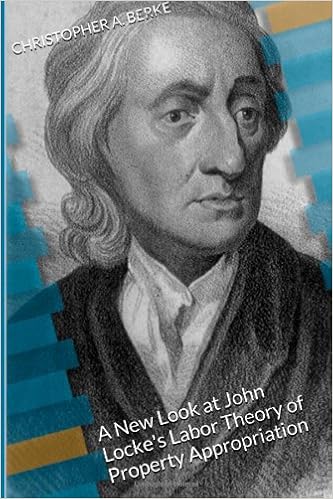
Nozick devotes the next few pages of Chapter 7 (pp. 174-182) to Locke’s “sweat equity” or labor theory of property rights acquisition and to the so-called “Lockean proviso” — the moral claim that everyone has a right to acquire land so long as no one else is made worse off. Let’s talk about Locke’s labor theory today. (Entire books have been written about this theory. See, for example, Christopher Aaron Berke, A New Look at John Locke’s Labor Theory of Property Appropriation, (2013), pictured below. But Nozick’s explanation in ASU is still the best!) According to Nozick (p. 174), “Locke views property rights in an unowned object as originating through someone’s mixing his labor with it.” But as Nozick correctly notes, Locke’s mixing criterion generates many embarrassing line-drawing questions. For example: how much work or labor is required to own a plot of land, or how big a plot does my labor entitle me to? More fundamentally, (ibid.), “Why does mixing one’s labor with something make one the owner of it?” For our part, we would add the following query to Nozick’s already extensive list: does this Lockean or “natural ownership” right include only an inalienable right of possession (while the owner is alive), or does it also include the right of transfer? If the latter (ownership rights are alienable), how can we test the truth of such a claim, or is it just because we say so? We will turn to the Lockean proviso tomorrow …

Image result for locke's labor theory of property
Posted in Uncategorized | 1 Comment

Forced labor or social labor? Nozick’s critique of taxation of wages

Nozick continues his devastating critique of so many theories of distributive justice on pp. 167-174 of ASU. He is on a major roll now, and his arguments are compelling. Here is just a small sample of some of Nozick’s most powerful points:

  • Families pose a problem for most theories of justice, especially those theories based on patterns or end-states. Why? Because (p. 167) “… within a family [may] occur transfers that upset the favored distributional pattern.”
  • Social-wide patterns of distribution are unstable (p. 168): “The likelihood is small that any actual freely-arrived-at set of holdings fits a given pattern; and the likelihood is nil that it will continue to fit the pattern as people exchange and give.”
  • Taxation of wages is worse than theft; such taxation is a form of forced labor. After all, if the government can’t force you to give up x hours of your time per week to help the needy, then why does the government have the right to take the equivalent of x hours of your weekly paycheck to produce the same result? (See pp. 169-172 for a full exposition of Nozick’s simple and intuitive argument against taxation.)

The forced labor analogy is especially poignant, for like the Wilt Chamberlain Argument, Nozick’s critique of taxation of wages appears (to us) to be irrefutable. Forced labor is usually defined as being forced to work for little or no pay, but what do you call it when you are paid in full for your work, but a third party is allowed to take (or “withhold”) some fraction of your wages? Also, why does Nozick limit his devastating critique of taxation to wage taxes? Doesn’t it apply to all forms of taxation? If so, what is the moral basis upon which any tax can be justified? And if no moral justification of taxation is possible, then how are essential public goods like courts, cops, and the common law to be financed?

Image result for gulag poster
Posted in Uncategorized | 1 Comment

Let’s take a day off

We will resume our review of Anarchy, State, and Utopia in a day or two.

Posted in Uncategorized | Leave a comment

Nozick on Sen

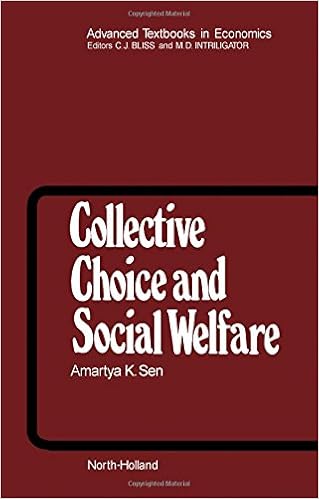
The next subsection of Chapter 7 (pp. 164-166) contains a dense digression on Chapters 6 and 6* of Amartya K. Sen’s advanced treatise on Collective Choice and Social Welfare (pictured below). We won’t comment on Nozick’s treatment of Sen’s work here, except to say that his short digression has spawned some secondary scholarly controversy. See, for example, C. R. Perelli-Minetti’s 1977 paper “Nozick on Sen: A Misunderstanding” — published in Vol. 8 of the journal Theory and Decisions on pp. 387-383 — and Miles Sonstegaard’s 1987 paper “Nozick on Sen: A Reply to Perelli-Minetti” — published in Vol. 22 of the same journal on pp. 203-207. Unfortunately, both of those intriguing papers are gated. Once we are are able to obtain copies of those papers, we will revisit Nozick’s treatment of Sen. For now, in terms of the overall number of pages in Anarchy, State, and Utopia, we are now half-way through Nozick’s book!

Image result for amartya sen collective choice and social welfare
Posted in Uncategorized | Leave a comment

The Wilt Chamberlain Argument

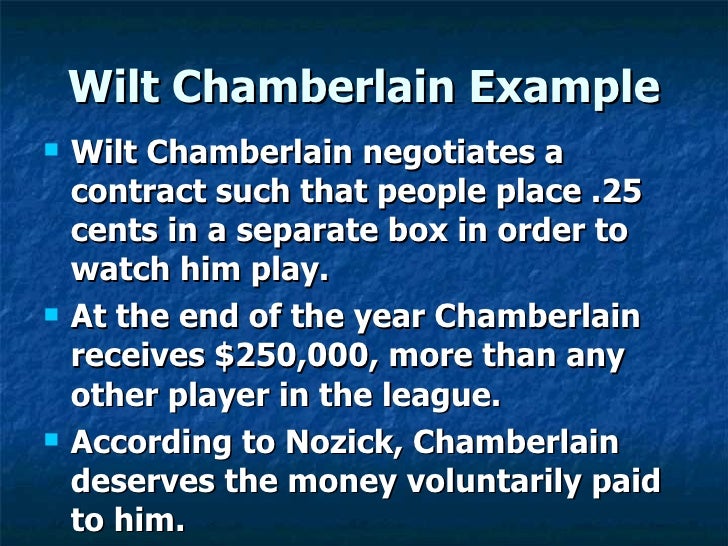
Nozick introduces his “Wilt Chamberlain Argument” on pp. 160-164 to show why most pattern-based or end-state distributions are unstable. The argument is not only simple and intuitive; it also shows why massive amounts of inequality can be consistent with justice. In summary, the argument goes like this:

Image result for nozick Wilt Chamberlain example

I must confess that I was flabbergasted when I first saw this famous example so many years ago. For starters, I liked Nozick’s willingness to use an example from popular culture. (Here was a Harvard philosopher who knew a thing or two about sports!) But even more importantly, I thought that Nozick’s Wilt Chamberlain Argument was (is) irrefutable. After all, if enough people freely want to pay an extra amount of their money to see their favorite player, shouldn’t the player be able to keep that money? Nevertheless, there is a possible flaw with Nozick’s argument. What if the team decides to breach its contract with Wilt Chamberlain? In that case, Chamberlain could resort to self-help (not play the following season unless he is paid), or he could sue his team in a court of law to enforce his contract (unless the contract has an arbitration clause!). Yet courts are expensive to operate, and the set of rules under the rubric of contract law (whether based on model legislation like the UCC or common law principles) doesn’t just arise out of thin air. Isn’t it just, then, that Wilt Chamberlain be required to pay for this legal infrastructure out of his earnings? Moreover, doesn’t Wilt Chamberlain have a moral duty to share some fraction of his earnings (via charity, not taxes) with some less fortunate souls, say poor kids who would like to play basketball?

Posted in Uncategorized | 1 Comment

Nozick: distribution versus production

Nozick considers other historical or “patterned” approaches to justice on pp. 155-160 of ASU, such as “distribute according to moral merit” and “distribute according to usefulness to society” and other formulations. Putting aside definitional problems — i.e. the awkward fact that there are many different conceptions of “morality” and “utility” — Nozick points out how all these alternative approaches to justice all suffer from the same major flaw. They focus exclusively on questions of distribution (who gets what?) and neglect questions of production (who makes what?). Nozick’s entitlement theory of justice, by contrast, emphasizes the problem of production (p. 160, emphasis in original): “The situation is not one of something’s getting made, and there being an open question of who is to get it. Things come into the world already attached to people have entitlements over them.” In other words, most theories of distributive justice erroneously assume that there is already a large enough pie to give away, but in reality, the pie has got to be made before it can be distributed!

Related image
Posted in Uncategorized | Leave a comment