Review of Wendt’s theory of moderate libertarianism

This post is part of a series of blog posts reviewing select essays published in the new Routledge Handbook of Libertarianism. In this particular post, we will review Fabian Wendt’s dangerous essay on “Libertarian property rights and the Lockean sufficiency proviso.” (Wendt, a philosopher at Chapman University, is the author of Compromise, Peace, and Public Justification: Political Morality beyond Justice; see book cover below.) In his essay, Dr Wendt revisits Nozick’s “Lockean proviso“, distinguishes between “right-libertarian” and “left-libertarian” theories of justice, and then proposes a third way: moderate libertarianism.

Let’s begin with Locke’s property-rights proviso, which imposes an outer limit on the rights of acquisition and ownership of private property in the state of nature, i.e. in a world without formal property rights. According to the great political theorist John Locke (in sec. 27 of his Second Treatise), a person in a state of nature automatically acquires a moral (or natural) property right in a virgin parcel of land (i.e. a parcel that has not yet been acquired someone else) as soon as he claims that land and “mixes” his labor with it, i.e. by making improvements on the land, such as farming the parcel, building a house on it, etc. But at the same time, Locke imposes a limit on this right. One must leave enough parcels of land for others, or in Locke’s own words: “there [must be] enough, and as good, left in common for others.”

So, what should we make of Locke’s little proviso today? Right-libertarians either ignore it, play it down, or openly reject it as a non-sequitur, since we no longer live in a state of nature and since the idea of “mixing” one’s labor with land is vague or open-ended. Left-libertarians, by contrast, embrace the proviso with gusto to justify redistribution or the equal allocation of a minimum set of material resources to all persons. Wendt’s attempt to strike a balance between these two extremes–his theory of moderate libertarianism–is no doubt well-meaning and well-intentioned, but in truth, his theory is really a disguised form of left-libertarianism. Why? Because once we accept Locke’s little proviso, there is no principled way of imposing limits on the use of public coercion in order to provide everyone with “sufficient resources,” to quote Wendt himself. (That is why we called his essay “dangerous” at the outset of this post.) Worse yet, how much resources are sufficient? Wendt cannot say. The notion of “sufficient resources” is itself vague and open-ended.
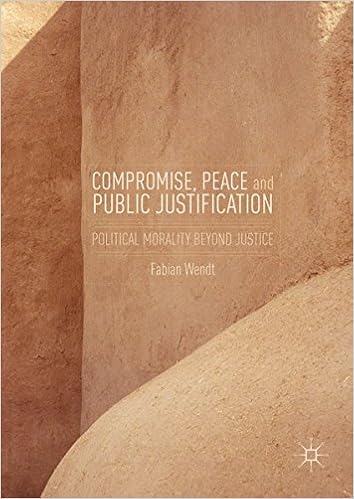
Image result for Compromise, Peace and Public Justification: Political Morality beyond Justice
Posted in Uncategorized | 1 Comment

Review of Mulligan on libertarianism versus meritocracy

Happy Friday the 13th! We now proceed with our review of some of the essays published in the new Routledge Handbook on Libertarianism. In this post, we will review Thomas Mulligan’s erudite essay “Libertarianism vs. meritocracy.” (Mulligan, a political theorist/philosopher and faculty fellow at Georgetown University, is the author of Justice and the Meritocratic State; see book cover below.)

In his essay, Dr Mulligan compares and contrast a meritocratic approach to justice with a libertarian one. Although both approaches share many things in common–for example, both theories “believe that markets are the right way to organize economic activity, thereby promoting broad prosperity” and “… both reject the egalitarian’s call for equal economic outcomes”–Mulligan emphasizes the differences between both theoretical frameworks. To simplify, each approach employs a different core criterion to measure justice: the meritocratic perspective prefers merit to liberty, while libertarians, in contrast, prefer liberty to merit. As a result, for libertarians, “firms allegedly are at liberty to discriminate, in hiring and compensation, however they like. Under libertarianism, there is no moral requirement to hire, promote, or reward meritorious people.” From a meritocratic point-of-view, by contrast, “hiring and salaries should purely be functions of merit. It is unjust to deny a meritorious woman a job on account of her sex. It is unjust to deny a meritorious man a job in order to promote ‘diversity’. The same goes for discrimination on the basis of race, appearance, sexual tastes, religion, and all the rest. Merit, and merit alone, is what ought to count.”

Unfortunately for Dr Mulligan, however, his distinction between libertarian and meritocratic conceptions of justice is more apparent than real, since most libertarians would most likely take some type of merit into account when making decisions. But in any case, a more difficult problem–perhaps an intractable one–for Mulligan is that he is simply unable to provide us with a viable working definition of “merit” that everyone could agree to (i.e. beyond one at a high a level of generality). In the absence of a universal definition of “merit”, shouldn’t people be free to choose their own conceptions of merit?

Image result for justice and the Meritocratic State
Posted in Uncategorized | 1 Comment

#Moore’sLaw

Hat tip: Cliff Pickover

Posted in Uncategorized | Leave a comment

Review of Flanigan’s libertarian approach to medicine

In this post, we will review Jessica Flanigan’s thoughtful essay on “Libertarianism and medicine,” published in the new Routledge Handbook of Libertarianism. (Dr Flanigan is an ethicist at the University of Richmond.) Professor Flanigan points out a potential asymmetry in the way the market for medical services is regulated. On the one hand, we have the doctrine of informed consent: doctors are not allowed to mislead, trick, coerce, or force their patients to undergo treatments they don’t want. But at the same time, the right of doctors to prescribe certain drugs or treatments–as well as the right of patients to obtain new drugs or treatments–is severely restricted, regardless of whether there is consent or not. Specifically, the FDA–in the name of health and safety–has the power to veto doctor and patient decisions, or as our friend and colleague Alex Tabarrok has so often noted (Tabarrok, an economist at George Mason U, has written extensively about the FDA’s paternalistic policies), the FDA may flat out prohibit doctors from providing risky treatments and experimental therapies, even when patients are willing to consent to such treatments or therapies. On balance, we agree with Flanigan’s (and Tabarrok’s) libertarian critique of the FDA: patients should be free to make their own choices, even risky ones. That said, however, why should the moral concept of consent trump the need for ex ante, third-party (non-patient) measurement of the harms and benefits of new treatments? In the alternative, might there not be an optimal amount of paternalism in medical markets? After all, just as the doctrine of informed consent does not apply to medical emergencies, one could argue that the market for medical services requires some level of oversight and some restrictions in order to prevent doctors and drug companies from exploiting severely ill patients. We have to draw a line somewhere; the question, as always, is where?

Posted in Uncategorized | 1 Comment

A friendly critique of Richard Thaler and behavioral economics generally

In our previous post, we included several links describing Richard Thaler’s major contributions to economics, finance, law, and other fields. (Thaler was awarded a “Nobel Prize” in economics earlier this week.) Rather than engaging in hero-worship or the usual congratulatory blather, we will instead use this post to offer two friendly criticisms of Thaler’s behavioral approach to economics. 

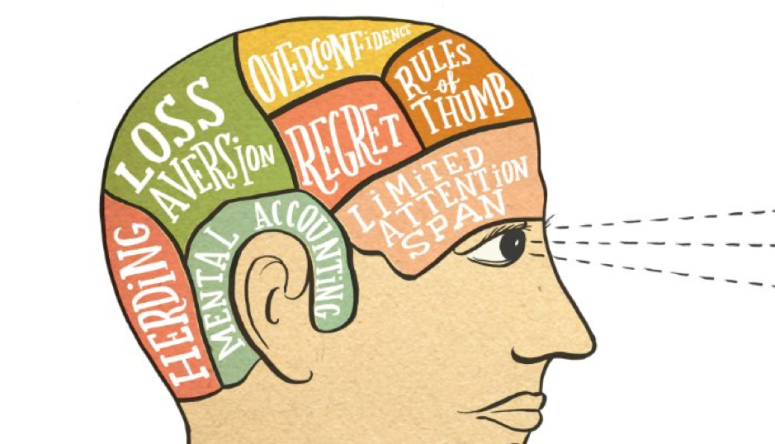
First off, although Thaler and his many behavioral disciples are right to point out the many, many ways in which human behavior deviates from perfect rationality (see image below for a sampling of these quirks), upon closer inspection it turns out that many of these deviations from rationality run in opposing directions! By way of example, behavioralists like to point out how people tend to be overly optimistic, systemmatically underestimating significant risks (such as texting while driving), but at the same time, behavioralists have also shown that people tend to overestimate very small risks (such as the risk of a mass shooting or an act of terrorism). The problem, however, is that these tendencies or heuristics run in different directions. When two heuristics collide with each other, which one prevails, or do they just end up cancelling each other out?

Another critique we have of behavioralists is their implicit elitism or “expert bias.” Specifically, when behavioralists are busy designing new public policies to promote retirement savings or incentivize organ donations (their favorite, well-worn examples), they often assume a condescending “we know best” attitude about people’s preferences. But beyond these low-hanging fruit, people’s policy preferences are not always homogenous. So, instead of ignoring or discounting our heterogeneous preferences, behavioralists should concede that their psychological models and preferred policies might have many shortcomings …

Posted in Uncategorized | 2 Comments

Assorted links (Richard Thaler edition)

In honor of Richard H. Thaler receiving the 2017 Nobel Prize in Economics (or the Sveriges Riksbank Prize in Economic Sciences in Memory of Alfred Nobel, to be more precise):

  1. Thaler’s memoir and approach to economics (free Kindle ebook via Amazon)
  2. Press release dated 9 October 2017 (via the Swedish Royal Academy)
  3. Tyler Cowen’s review of Thaler’s contributions to economics (via Marginal Revolution)
  4. Kevin Bryan’s review (via A Fine Theorem)
  5. Gregory Karp’s review (via The Chicago Tribune)
  6. Find your cello (commencement address by Richard Thaler)
Image result for nobel economics

¡Feliz cumpleaños, Quique!

Posted in Uncategorized | 1 Comment

Review of Hidalgo’s case in favor of open borders

Today, we are resuming our review of the new Routledge Handbook of Libertarianism. The four essays we have reviewed thus far have all focused on various abstract aspects of libertarian theory. By contrast, the next few papers we will review can be categorized as essays about public policy, i.e. “applied libertarianism” as opposed to “theoretical libertarianism.” In particular, let’s begin with Javier Hidalgo’s essay “The libertarian case for open borders.” (Dr Hidalgo, a professor at the University of Richmond, studies the ethics and political philosophy of immigration.) Prof Hidalgo points out a major contradiction in applied libertarian thought: many free-market libertarians are committed to the free movement of goods but are simultaneously opposed to the free movement of peoples. For his part, Dr Hidalgo argues that most restrictions on immigration are not justified. Why not? Because immigration restrictions prohibit many mutually beneficial economic and personal exchanges between people of different nationalities. Moreover, Hidalgo anticipates and persuasively refutes many pro-libertarian objections to free and open immigration.

To his credit, Prof Hidalgo is that rare breed: an intellectually-honest libertarian, for he candidly and openly acknowledges that libertarians are perfectly willing to restrict individual liberty when such restrictions are justified, and he offers this dramatic example: “most libertarians would deny that you have a right to own, say, a tank or nuclear warhead.” Therein lies the main weakness with Dr Hidalgo’s argument in favor of open borders: where do we draw the line between “justified” restrictions of individual liberty, such as laws that prohibit me from owning an F-16 fighter jet, and “unjustified” restrictions of liberty, such as laws that prohibit me from hiring an illegal alien? Yet, as we mentioned in a previous post (regarding assault rifles), reasonable men and reasonable women might measure the potential harms and prospective benefits of open borders differently. For our part, we would emphasize two points. First off, we already have a limited form of “open borders”; for the most part, people inside the USA are free to travel and work in any U.S. State and to ship most goods across State lines, so the real question is: should our domestic “open border” policy be expanded to include other countries, like our neighbors Mexico and Canada? Secondly, any transnational open-border policy should ideally be a reciprocal one: other countries must agree to open their borders too.

Image result for us open borders

Posted in Uncategorized | 2 Comments

Taxonomy of vacation photos

Credit: Mari Andrew (hat tip: kottke)

You can check out more of Mari Andrew’s art here. (We are taking Sunday off to finish reading “Moral Machines”; we will resume our review of the Routledge Handbook of Libertarianism on Monday.)

Posted in Uncategorized | Leave a comment

Blade Runner Redux

We are interrupting (again) our review of the new Routledge Handbook on Libertarianism to shout out the general release of the new Blade Runner sequel (now showing at a movie house near you!), which we are hoping to see this weekend. Also, to mark this momentous occasion, we are posting a link to our old paper “Clones and the Coase Theorem,” published in 2011 in the Journal of Law & Social Deviance (LSD). See excerpts below. Enjoy!


Posted in Uncategorized | Leave a comment

Review of Somin’s theory of voter ignorance

In this post, we will review Ilya Somin’s intriguing essay “How political ignorance strengthens the case for libertarianism,” published in the new Routledge Handbook of Libertarianism. (By the way, Somin, a law professor at George Mason University, has written an entire tome about political ignorance. See book below.) First off, Prof Somin begins with the problem of voter ignorance. It’s not that voters are stupid; rather, it’s an incentive problem. Since there is a tiny probability that one’s vote will be the decisive one, it doesn’t make sense to spend a lot of time and effort acquiring relevant information and studying the issues. So, why do people vote at all? According to Somin, voting is more like pro sports: a chance to express support for one’s favorite political team! (On a personal note, having lived in Puerto Rico for many years, where island politics is the national pastime, we love this expressive explanation of voting.)

Next, Prof Somin identifies the problem of expert ignorance. As Somin correctly notes, we can’t rely on experts to “nudge” us in the right direction because people have radically diverse preferences about whatever problem or issue the experts are trying to fix. More fundamentally, as the “socialist calculation debate” of the mid-Twentieth century showed, expert knowledge is an oxymoron. (For what it’s worth, we’ve blogged about the socialist calculation debate before and have tried to apply the lessons of this great debate to the empirical economics movement of today.)

So, given how pervasive and deep the problem of ignorance is, what is to be done? Unfortunately, the rest of Somin’s essay is very weak here. Somin’s solution is to let people vote with their feet (or with their wallets) by choosing where to live and which products and services to buy: “It is easier to vote with your feet to a different city or State …, and easier still to vote in the private sector.” But in a world in which every major city has some form of occupational licensing, and in a world of giant Internet monopolies like Google and Facebook and boilerplate contracts, how much freedom do we really have to vote with our feet or wallets?

Image result for somin political ignorance
Posted in Uncategorized | 1 Comment