Dropping the “the” from Facebook (Lesson 14)

In fact, the only thing that really bothered [Sean Parker] about the site was the ‘the’ in the name. It wasn’t necessary. He hated unnecessary things.” –Excerpt from Chapter 22 of Accidental Billionaires.

In “The Social Network” (the movie version of the bestselling book Accidental Billionaires), Sean Parker advises business partners Mark Zuckerberg and Eduardo Saverin to drop the word “the” in the company’s original name and web address: “TheFacebook.com.” But there’s an important legal problem that both the movie and the book fail to explore: what if a so-called cybersquatter has registered the domain name “facebook.com” first? In other words, how can a company like Facebook obtain the legal rights to “Facebook.com” if somebody else has already registered that same domain name first? (Also, what happens if a cybersquatter has registered a similar domain name like “face-book.com”?)

Accordingly, in our next class we will address these real-life legal questions by re-enacting an actual private arbitration proceeding conducted under the auspices of the World Intellectual Property Organization (WIPO): Facebook, Inc. v. Fabulous.com Pty Ltd., Case No. D2007-1193. We will need two volunteers for this activity:

I. Legal representative for the Complainant: you represent Facebook. To win this case, you will have to prove the following three elements:

  • Why the domain name “face-book.com” is identical or confusingly similar to “Facebook.com”;
  • Why the Respondent (i.e. the current owner of the domain name “face-book.com”) does not have a legitimate interest in the domain name “face-book.com”;
  • Why the respondent is acting in bad faith.

II. Legal representative for the Respondent: you represent Fabulous.com Pty Ltd., the company that owns the legal rights to the domain name “face-book.com”, and in order to prevail in this case, you will have to persuade the arbitration panel of just one thing:

  • Why the domain name “face-book.com” is not identical or confusingly similar to “Facebook.com,” or
  • Why your company has a legitimate interest in the domain name “face-book.com,” or
  • Why your company is not acting in bad faith.

III. The class as a whole will play the role of the WIPO arbitration panel and will thus decide the outcome of this case.


Posted in Law, Web/Tech | Leave a comment

Probabilistic business hours

We found this probabilistic “hours of business” sign at a small bookstore next to our favorite cafe in Winter Park, Fla.

Posted in Bayesian Reasoning, Probability | 3 Comments

Je suis Bruxelles

https://twitter.com/wiwibloggs/status/712231393091305472

Posted in Current Affairs | Leave a comment

Doughnut Pool Table

Why are most billiards tables always rectangular? The artist Cleon Daniel has designed and built a round “doughnut pool table” (pictured below) for our edification. You can check out more of the artist’s work here via Design Boom. (Hat tip: Cliff Pickover.)

Artist Credit: Cléon Daniel


Posted in Art, Games | Leave a comment

Visualization of moral entropy in Breaking Bad

Posted in Art, Culture, Ethics | Leave a comment

Review of “Contract as Promise”

Law professor Charles Fried published a little book called “Contract as Promise” in 1981. (It’s now in its second edition and is required reading in many contracts law courses.) His thesis, simply stated, is that promises are self-imposed moral obligations. He calls his thesis the “promise principle” and explains its relation to two other fundamental legal principles, such as the tort principle (A must compensate B for harms A causes to B) and the principle of restitution (if A receives an undeserving benefit at B’s expense, A must return that benefit to B unless a gift was intented). There are many problems with Fried’s thesis, however. First of all, Fried does not devote a single word to the doctrine of “illegal agreements” (contracts lacking a lawful purpose). We find this omission very troubling: if promises are based on some deep ethical principle of morality, then we want to know what Fried has to say about illegal promises, i.e. about promises to do something illegal or even promises to do something immoral!

Secondly, Fried concedes that many areas of contract law, such as the mailbox rule, are based on mere “rules of convenience,” not on the promise principle. But hold on: if certain background rules are based on rules of convenience (as they surely are), then why can’t we argue that promissory obligations themselves are also based on rules of convenience, as opposed to rules of morality? In addition, Fried also concedes that the promise principle plays absolutely no role in cases of mutual mistake (p. 60) as well as in cases of unilateral mistake (p. 62) … (By the way, all page references are to the original paperback edition of “Contract as Promise.”)

Thirdly, we’re not impressed with Fried’s analysis of blackmail in Chapter 7 of “Contract as Promise.” We understand Fried’s common sense position: why Fried would argue that a promise made under the threat of blackmail is not a legally or morally binding promise, but we must confess that we don’t understand why this has to be the case from a moral perspective. In fact, we see a potential link between Fried’s analysis of blackmail and his expert analysis (in Chapter 6) of the duty to disclose in certain contracting situations. The link is this: what about the blackmail victim’s duty to disclose? Shouldn’t the blackmail “victim” have a legal duty to disclose the information that he wants to keep secret? (Take Fried’s own example of the moral philosopher who was convicted of embezzlement “many years ago” (p. 96). We would argue that it’s the moral philosopher who is acting immorally by trying to hide this embarassing information about his past. Yes, the philosopher’s blackmailer is now trying to profit off his victim’s misfortune, but why do legal scholars tend to focus exclusively on the blackmailer’s wrongdoing?)

But most importantly, we found Fried’s point about the reciprocal nature of promises on page 117 to be very revealing. In our view, what makes a promise “morally” binding is not the fact that it is “self-imposed” (to borrow Fried’s own formulation on p. 112). After all, if a promise is self-imposed, so what? The fact that I have self-imposed an obligation on myself tells me nothing about whether I am justified in breaking my promise in the future, especially if the conditions under which I made my promise have changed. To us, what makes a promise a “moral” event is its reciprocal nature: I make promises to other people (and I keep my promises) because I want other people to make and keep their promises to me. In short, we take a pragmatic view of promising.

The promise principle …

Posted in Law, Philosophy | 1 Comment

Our favorite song 

Posted in Music | Leave a comment

The Law of Agency (Lesson 13)

Because of the ubiquity of principal-agent relationships in the business world, we will spend an entire lecture on the law of agency in our next class (3/21).

Although we have been focusing mostly on the founding of Facebook this semester, let’s take a “time out” from Facebook, and let’s instead consider the fictional world of secret agent 007 James Bond. In legal terms, Mr Bond works for the British secret intelligence service, known as “MI6” for short. Mr Bond is thus the AGENT, while MI6 is the PRINCIPAL. Whenever we see a principal-agent relationship, an important legal question that often arises is this: When is the principal legally liable for the acts committed by its agents? Under the legal doctrine of respondeat superior, the answer depends in large part on whether the principal’s agents are employees or whether they are independent contractors.

Consider, by way of example, the opening car chase sequence in the film “Skyfall,” in which James Bond and fellow secret agent Eve Moneypenny chase some bad guys and appear to cause various property torts against merchants of the Grand Bazaar, a huge market located in Istanbul, Turkey (a map of which is pictured below), where this car chase sequence takes place. Now, let’s imagine what would happen if the owner of the Grand Bazaar were to sue MI6 in tort for the negligent acts of MI6’s agents James Bond and Eve Moneypenny. Would MI6 be legally liable under the law of agency — specifically, under the doctrine of respondeat superior — for the property damage caused by secret agents Bond and Moneypenny in the course of their mission?

To answer this question, we will re-enact a hypothetical legal proceeding in our next class: Grand Bazaar vs. MI6. We will need several student volunteers for this in-class assignment:

  1.  Barrister-at-law* for the Grand Bazaar: Your mission, should you decide to accept it, is to argue why MI6, the principal, is legally liable for the torts (property damage) caused by its secret agents James Bond and Eve Moneypenny during the car chase scene in the Grand Bazaar.
  2. Barrister-at-law* for MI6: Your mission is to argue why MI6, the principal, is not legally liable for the tortious act of its secret agents James Bond and Eve Moneypenny.
  3. Barrister-at-law* for the secret agents: Your mission is to argue why your clients James Bond and Eve Moneypenny did not commit any torts, i.e. are not themselves directly responsible for the property damage that occurred during the car chase.
  4. The Jury: The class as a whole will play the role of the jury.
[*] Note: A barrister is how a trial lawyer is referred to in England.
Posted in Law | Leave a comment

Lego art (Dome of the Rock edition)

From Wikipedia (footnotes omitted): “The Dome of the Rock — Arabic: قبة الصخرة‎ (transliteration: Qubbat Al-Sakhrah), Hebrew: כיפת הסלע‎ (transliteration: Kipat Hasela) — is a shrine located on the Temple Mount in the Old City of Jerusalem … [It] is now one of the oldest works of Islamic architecture [and] has been called ‘Jerusalem’s most recognizable landmark’ * * * The site’s significance stems from religious traditions regarding the rock, known as the Foundation Stone, at its heart, which bears great significance for Jews and Muslims.”

Posted in Art, Culture, History | Leave a comment

Classroom primary

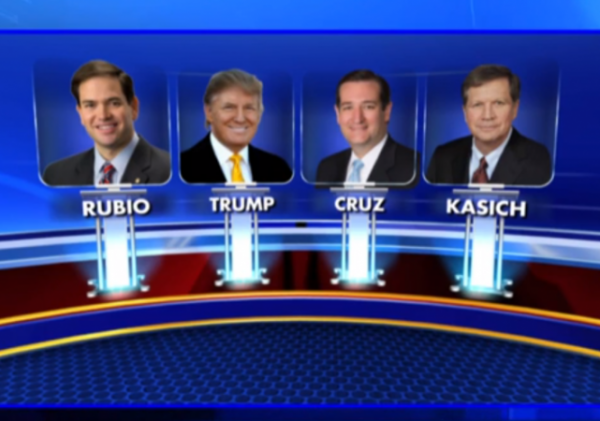
We teach a large business law and ethics lecture (n = 750) at a research university in Central Florida, and on Monday (3.14), we conducted an informal poll (via REEF polling) to see which candidates on the Republican side our students would vote for. The choices were as follows:

(A) Marco Rubio

(B) Donald Trump

(C) Ted Cruz

(D) John Kasich

(E) None of the above

Guess which choice won the most votes?

Yup … (E)

Posted in Current Affairs, Politics | Leave a comment