No vehicles in the park?

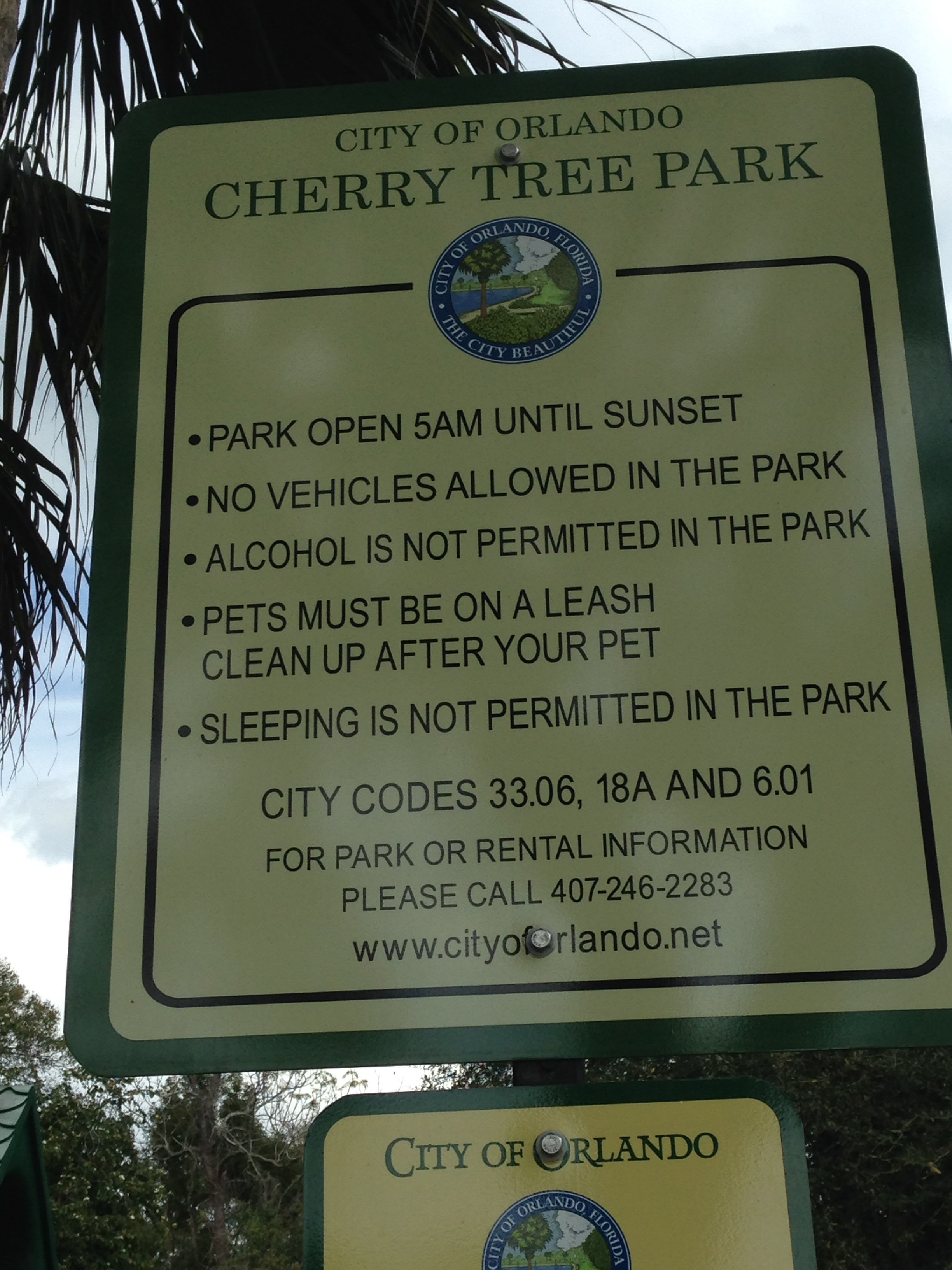
In this post, let’s revisit H.L.A. Hart’s paradigm example of the problem of interpretation in law: a prosaic ordinance prohibiting “vehicles in the park” (a real life example of just such an ordinance is pictured below). Assume the text of this municipal ordinance leaves the term “vehicle” undefined; as a result, whether a miniature scooter is included within the definition of vehicles is an open question, a matter of judicial interpretation. How should a judge decide this delicate question? On the one hand, we have the “plain and ordinary meaning rule.” Courts generally assume that the words of an ordinance or statute are to be read using in their plain and ordinary sense, so if a scooter is a “vehicle” in a literal sense, then it is a vehicle within the plain and ordinary meaning of the ordinance. On the other hand, however, we have the “rule of lenity,” which tells us that ambiguous criminal laws must be read in favor of the defendant and against the government. Or, in the words of William Blackstone, “penal statutes must be construed strictly.” So, which rule of interpretation should apply to this case?

Define vehicle!

Posted in Uncategorized | 1 Comment

Judging the Magna Carta

You may have heard of “The Living Constitution” (i.e. the idea that the Constitution changes over time to meet our current needs), but have you ever heard of “The Living Magna Carta”? If not, check out this beautiful paper by R.H. Helmholz titled “The Myth of the Magna Carta Revisited,” published in the latest issue of the University of North Carolina Law Review: Vol. 94, No. 5 (2016), pp. 1475-1493. The paper explores how the meaning of the Magna Carta has evolved over time and how some of its substantive provisions were interpreted by the leading English jurists Sir Edward Coke (b.1552-d.1634) and Sir William Blackstone (b.1723-d.1780). Professor Helmholz concludes that Coke and Blackstone gave “expansive readings” to the Magna Carta by looking beyond the specific words used in the text of the Great Charter in order to discern its goals and purposes. More importantly, Professor Helmholz claims that this purposeful approach–i.e. asking, what is the purpose of the statute; what problem was it designed to solve?–was the most commonly used theory of statutory interpretation during the Middle Ages. Fine, but what happens when a statute has multiple purposes or goals? How do we decide which goal takes precedence over the others?

Hey, King J! Sign here, or we’ll chop your head off!

Posted in Uncategorized | 1 Comment

Litigation as a dollar auction

That is the title of our most recent work-in-progress, available here on SSRN. Here is an extract from the first draft of our four-page paper: “Martin Shubik [pictured below] introduced the dollar auction game in a short paper published in 1971 in The Journal of Conflict Resolution. In the original version of Shubik’s game, an auctioneer auctions off a dollar bill (or other fixed prize) to the highest bidder. In addition, both the highest bidder and the second-highest bidder must pay their respective bids to the auctioneer. Scholars have discovered real-life ‘dollar auctions’ in a wide variety of settings, including mergers and acquisitions, free agency in sports, arms races and patent races, international conflict, and even romance. To this list of real-world applications of the dollar auction, we would add civil litigation. Although some commentators have remarked in passing on the possible parallels between civil litigation and the dollar auction game, in this paper we explore this potential connection in greater detail.” In our previous work, we have compared litigation to the game of poker (see “The Poker-Litigation Game“); in our dollar auction paper, by contrast, we explain the equivalence between placing a bet and making a bid in the context of civil litigation. (By the way, shout out to William Poundstone, who introduced us to the dollar auction many years ago in his book Prisoner’s Dilemma, pictured below.)

Posted in Uncategorized | 6 Comments

What is the optimal level of liberty?

Our friend and colleague Alex Tabarrok recently wrote this depressing blog post reporting that “freedom in the world is in decline.” But how does one even begin to measure something like “freedom,” and even if one could measure such a thing, what would the optimal level of liberty be? Although we agree in principle with John Stuart Mill (“On Liberty”) that one should not be free to harm others, the harm-principle doesn’t solve the liberty problem (how much or how little liberty is the right amount of liberty); it just raises a new and possibly even more perplexing question: what counts as a “harm”?

image credit: learnliberty.org

Posted in Questions Rarely Asked, Uncategorized | 3 Comments

Gone fishing …

FYI, we won’t be blogging over the Fourth of July weekend. We’ve decided to declare our independence from the Internet to spend more time with our family and friends …

IMG_9223

Chomp, chomp

Posted in Uncategorized | Leave a comment

2016 presidential election forecast

Happy Canada Day! Check out this election forecast from our friends at FiveThirtyEight. Is Nate Silver underestimating Trump’s chances again? Or does Clinton really have this locked up?

538 Trump Hillary

Source: FiveThirtyEight

Posted in Current Affairs, Politics, Probability | 2 Comments

Nested promises

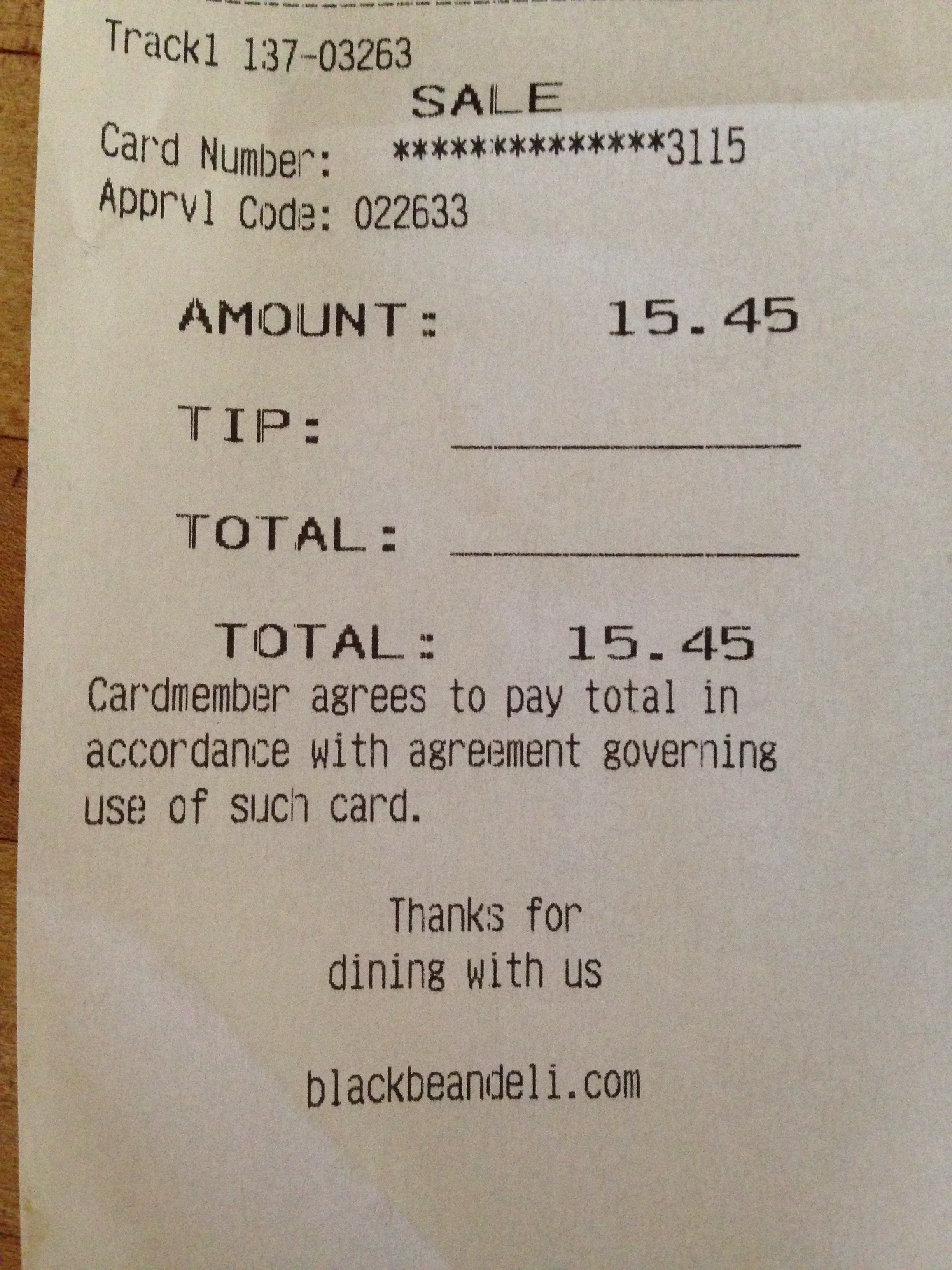
Have you ever noticed the fine print on some merchant receipts? Does this example of an agreement within an agreement (i.e. “I promise to keep my previous promise to pay”) make any logical sense? Does it make the original promise any more solemn or any more legally or morally binding?

what?

Posted in Uncategorized | 3 Comments

Cars are far more dangerous than AR-15s

We understand all the fuss over “gun control,” especially after the recent tragic events in our home city Orlando, Florida, but statistically speaking, my fellow Floridians should worry more about pedestrian safety and the level of texting and driving on our roadways. By way of empirical example, see Table 1 of this 2014 road safety report titled “Dangerous by Design”:


Rank


Metropolitan area

Total pedestrian deaths (2003–

2012)

Annual pedestrian deaths per 100,000

(2008–

2012)

1 Orlando-Kissimmee, FL 583 2.75
2 Tampa-St. Petersburg- Clearwater, FL 874 2.97
3 Jacksonville, FL 359 2.48
4 Miami-Fort Lauderdale-Pompano Beach, FL 1,539 2.58


Posted in Bayesian Reasoning, Economics, Law | 10 Comments

“Abuse Standards Violation”

That is the title of an art exhibit in London created by the husband-and-wife artistic team of Franco and Eva Mattes. (Check out this review by Ted Loos (NY Times) for more details.) In summary, the focus of this exhibit is four video works from Matteses’ series “Dark Content” in which they conduct interviews of anonymous, low-paid workers that companies like Google and YouTube employ to remove objectionable material from their websites. According to Loos’s review, “the content these subcontractors have erased ranges from images of Osama Bin Laden to fringe fetish porn and videos of suicides. One man says a fellow moderator was asked to remove images of SpongeBob laughing.”

Credit: Franco Mattes; Eva Mattes

Posted in Art, Culture, Web/Tech | Leave a comment

Price effects, virtue effects, and the law

Richard Craswell, a law professor at Stanford, once posed the following question in his paper titled “Promises and Prices”: why do economists and philosophers who study law differ so greatly in the relevance they assign to price effects. Here is an excerpt:

 “… when economists evaluate a proposed change in the law, they will usually want to determine just how many buyers would prefer to pay the higher prices … By contrast, philosophers seem to evaluate legal changes without worrying about the effect on prices …”

This question has haunted us ever since we saw Craswell present his paper five years ago at a 2011 symposium on “The Future of Contract Theory” at Suffolk University in Boston. Let’s consider contract law, for example. When should mere promises by legally enforceable, and what remedy, if any, should the law provide for breach of contract? Broadly speaking, an economist might argue that a world with stronger legal remedies will lead to higher contract prices than a world with weaker legal remedies, all other things being equal.

There are several possible replies to Craswell’s point about price effects. For starters, one could point out that the relation between contract law and price effects can be unclear in the real world (cf. Eric Posner). All other things are rarely if ever equal, so price effects could be indeterminate and thus hard to predict ahead of time. Another reply is to emphasize the “virtue effects” of law, not just price effects. Professor Seana Shiffrin, for example, has argued that the rationale of our legal rules must be acceptable to a virtuous moral agent. At a minimum, the law should not erode our moral characters or make it difficult to develop our moral capacities. But putting aside the fact that there can be conflicting virtues, how would we even begin to measure the level of virtue in a given community?

For this post, however, let’s assume that both price effects and virtue effects can be measured with a high probability of precision. If we were to combine the insights of Professors Craswell and Shiffrin into a single analytical framework, every change in law could potentially produce four possible outcomes:

Screenshot 2016-06-26 08.07.21

Notice that B is the ideal outcome: a change in law that leads to lower prices and to higher levels of virtue on average or in total (again, assuming we could really predict or measure these things with any degree of accuracy), while C, by contrast, is the worst possible outcome. But what if we had to choose between A and D: between a change in law that led to higher prices and higher levels of virtue and a change in law that led to lower prices and lower levels of virtue? In any case, doesn’t our analysis reveal the bogus nature of the debate between Craswell and Shiffrin, since price and virtue effects are, in fact, impossible to measure in the real world?

Posted in Bayesian Reasoning, Ethics, Law, Probability | 2 Comments