Facebook Postscript

This semester, we reenacted many pivotal scenes from the film “The Social Network” — and we read Ben Mezrich’s book “Accidental Billionaires” on which the film is based — in order to explore in-depth many legal and ethical issues in the business world. The movie, which was released in the fall of 2010, ends with the following epilogue:

Facebook has 500 million members in 207 countries. It’s currently valued at 25 billion dollars. Mark Zuckerberg is the youngest billionaire in the world.

That was before Facebook’s initial public offering (IPO) in 2012. Today (spring of 2016), Facebook has three times as many active users (over 1.49 billion) and is valued at over 200 billion dollars! 

(By the way, for our last class (4/25), students may volunteer to present their final projects in class. Each student or group of students, as the case may be, will be allocated a maximum of five minutes to make their presentations. The class as a whole will select the best final project, and the professor will feature the winning final project on his blog.)

Image Credit: Quartz

Posted in Uncategorized | Leave a comment

Greater Mexico

Today’s history lesson (via imgur) consists of an old map of the Californias (circa 1838). We tend to forget that the entire southwestern USA used to be Mexican territory before the Mexican-American War of 1848, an unjust and illegal war of aggression (territorial expansion) provoked by the United States.
California in 1838 - When it was part of Mexico

h/t: ppbears

Posted in Uncategorized | Leave a comment

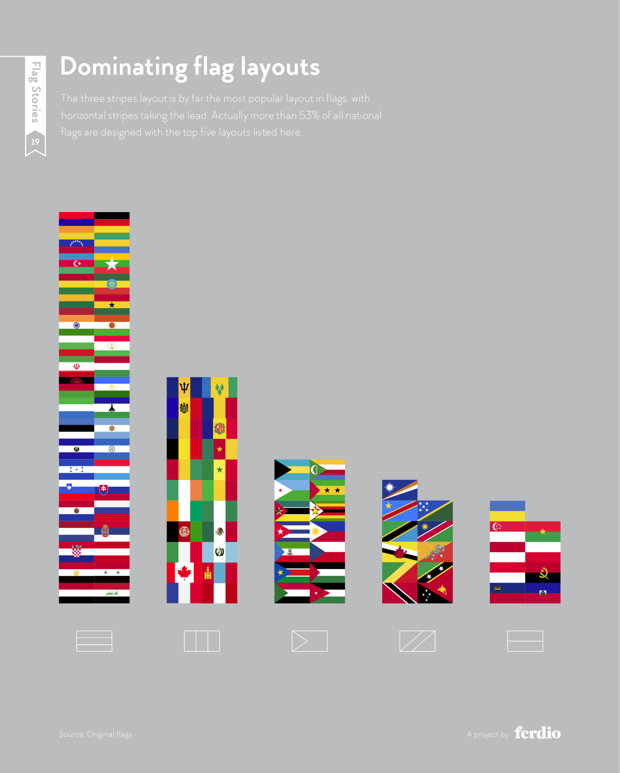
The geometry of national flags

Image credit: Jeppe and Birger Morgenstjerne

Posted in Uncategorized | 2 Comments

Requiescat in pace

Update (4/24): Wow! After we reposted a fan video on YouTube of an old performance of “Let’s go crazy,” it took less than 24 hours for the video to be taken down. In any case, we confess that we weren’t really huge fans of the Artist Formerly Known as Prince (or of the late David Bowie, for that matter), but here is one of our favorite Prince songs (“I would die 4 U”) from when we were growing up. Shout out to Tracye Dukes for her heartfelt tribute to Prince and for her moving version of “I would die 4 U”:

Posted in Culture, Current Affairs, Music | Leave a comment

In defense of Paul Krugman (Earth day edition)

Economist Paul Krugman recently wrote up a short and provocative essay in the N.Y. Times on “Econ 101 boosterism” or the naive application of textbook economics to real-world moral and legal problems. In his essay, Krugman compares the pros and cons of two opposing approaches to reducing global warming or climate change: (a) a regulatory or command-and-control approach (e.g. banning coal) versus (b) a market approach (e.g. cap and trade). At least one of Krugman’s colleagues (Ashok Rao) was quick to criticize Paul Krugman’s essay, claiming that Krugman ignores the effect prices have on consumers’ consumption patterns. But Ashok Rao (and Tyler Cowen, for that matter) commit a major (and common) economic fallacy: they confuse markets with carbon taxes. In defense of Krugman, he wasn’t writing about a carbon tax at all; he was writing about cap and trade. If we’ve learned anything from the great English economist Ronald Coase, it’s that a Pigovian tax is NOT a market solution; it’s just another form of command and control.

Image credit: Wikipedia

Posted in Current Affairs, Economics, Law | 2 Comments

Vocabulary visualization

Vocabulary Wheel for describing emotions

They left out “meh” …

Posted in Culture, Language | Leave a comment

The Seven States of America?

What if we just abolished the 50 States or replaced them with seven mega-regions or provinces? (See below for a hypothetical example of what such a proposal might look like on a map.) After all, our northern neighbors in Canada have only 10 provinces. So, aside from historical tradition, why do we still need 50 separate States?

7 States Of America

Image Credits: N.Y. Times and Joel Kotkin (boundaries and names of 7 mega-regions)

Posted in Bayesian Reasoning, History, Maps, Questions Rarely Asked | Leave a comment

What do you want to do when you grow up?

Why do we ask youngsters what do they want to be; instead, we should be asking them what do they want to do when they grow up. But even this suggestion raises a deeper question: why would anyone ever want to “grow up”; why can’t we just “grow”?

Picture Credit: F. E. Guerra-Pujol

Posted in Bayesian Reasoning, Culture | Leave a comment

Who wore it best?

Posted in Culture, Current Affairs, Politics | 1 Comment

Review of Aden et al. (part 3 of 3)

In our previous two posts, we reviewed the main details of a proposed private law solution to Puerto Rico’s public debt crisis. (This proposed solution would not require any new legislation, and it appears in this working paper by Aden, et al., 2016.) Here, we will evaluate the feasibility and merits of this solution.

For starters, we really admire the simplicity and elegance of the private law solution in the Aden et al. paper. After all, since a municipal bond is, legally speaking, nothing more than an investment contract, the relevant provisions of the Puerto Rico Civil Code should, in principle, apply to bonds emitted by the government of Puerto Rico. That said, what if the parties to the underlying bond contracts opted out of Puerto Rico law? We would not be surprised if the underlying contracts relating to Puerto Rico’s municipal bonds contained either a choice of law clause or a forum selection clause (or both). But even if Puerto Rico law did apply to these bonds, there are three additional legal barriers the government of Puerto Rico would have to overcome in order to implement the solution in Aden et al.: (1) can a government agency or instrumentality be a debtor under the provisions of the Puerto Rico civil code, (2) are bonds really a “joint obligation” under civil law, and (3) does federal bankruptcy law preempt the provisions of the Civil Code discussed in Aden, et al.? The third issue is currently awaiting resolution by the U.S. Supreme Court, so let’s focus on the first two issues in the remainder of this post.

To begin with, we see no good reason why the relevant debtor/creditor provisions of the P.R. Civil Code shouldn’t apply to a government agency or instrumentality. If anything, the same laws that apply to private persons and business entities should also apply to the government. Nevertheless, Aden et al. might be on shakier ground regarding step two of their proposed solution. We are under the impression that “joint obligations” (oligaciones solidarias) under the civil code refers to joint ownership of an indivisible thing (like a painting or a boat). In the case of bonds, by contrast, each individual bondholder’s ownership interest or credit rights can be easily and separately ascertained, so a strong argument can be made that bonds (or stocks, for that matter) should never be classified a “joint obligation.” Lastly, even if bonds (i.e. investment contracts) could be classified as a “joint obligation” under civil law (thus solving the critical holdout problem identified in Aden et al.), the government of Puerto Rico would still need to offer a restructuring deal that would be attractive enough to obtain the support of a simple majority of the relevant class of bondholders. How likely is that?

In the alternative, then, we would offer a procedural solution to the P.R. debt crisis: what if the Puerto Rico government and its major creditors (see below) were to agree to some form of binding arbitration to settle their differences?

Posted in Economics, Law | Leave a comment