No Internet Week

That is the title of this provocative film project. So, my fellow web friends, could you survive a week with no internet? (Or, while we’re at it, with no cable TV?) Consider the upside:

The first thing that struck me after a day of abstention wasn’t so much what I lost, but what I gained. Time. So much time. Not taking my phone into the bedroom with me was giving me at least two hours extra a day. The second thing that became apparent was how much “dead time” I spent looking at my phone for stimulation. And how “dead time” had become “all the time”. Pretty much anywhere and everywhere. In bed, at both ends of the day, in cabs, on toilets, during meetings, during meals, whilst watching TV. Suddenly, without the internet, all those things became what they used to be. Things in their own right rather than providing background to me using my phone.

From James Brown, editor of the fun website Sabotage Times.

Posted in Uncategorized | Tagged , , | Leave a comment

Self-explanatory?

This is a “GDP map” of the US in which each State is renamed for a country with a similar level of economic output or GDP (Gross Domestic Product). Although GDP is an imperfect and crude measure of economic prosperity, this unorthodox map paints a dramatic picture, showing how wealthy the US is relative to the rest of the world. You can read more about this strange map at Strange Maps and also at The Big Picture.

Posted in Uncategorized | Tagged , | 2 Comments

Nothing to blog on today …


Posted in Uncategorized | Tagged | 2 Comments

Gran Colombia

The great liberator Simon Bolivar once proposed the creation of the Republic of “Gran Colombia” (see map below), a south-of-the-border constitutional democracy or United States of South America consisting of the modern-day countries of Venezuela, Colombia, Panama, and Ecuador (the same regions which Bolivar’s brave men had liberated from Spanish colonial rule). Alas, Bolivar’s bold project ended in failure. Imagine, however, how much different the world would be today if Bolivar’s beautiful and quixotic idea had succeeded. Would these states have become more prosperous and politically stable had their fleeting federation lasted? Would the other states of Spanish South America have eventually joined this federal republic ? Would Bolivar’s Republic of Gran Colombia, had it lasted, now rival and perhaps outshine the United States in influence and prestige?

Posted in Uncategorized | Tagged , , | Leave a comment

Happy Three Kings Day

By the way, why is Three Kings Day, or Epiphany, not really celebrated in the Anglo-American world?

Posted in Uncategorized | Tagged | Leave a comment

Should Afghanistan become the 51st State?

The United States launched “Operation Enduring Freedom” in Afghanistan in October 2001, and although US forces quickly removed the stubborn leaders of the Taliban from power and shut down the training camps of the Al Qaeda terrorist network, we have not defeated these formidable enemies yet. Indeed, the War in Afghanistan is still not over.

Here’s a thought. Why don’t the people of Afghanistan petition Congress to become the 51st State? As a State, Afghanistan would have more direct influence over US foreign policy in the region, since she would be entitled to two senators and more than 40 representatives in the Congress, based on Afghanistan’s population of 31 million. (By comparison, the State of California, with a population of 38 million, has 53 representatives.) The US would also benefit from this arrangement, since Afghanistan would be subject to federal taxation and would be required to maintain a “republican form of government” under Article IV of the US Constitution. This proposal may sound crazy, but wouldn’t both countries be better off if Afghanistan were to become the first Islamic State of the US?

File:Flag of Afghanistan.svg


Posted in Uncategorized | Tagged , , , | 3 Comments

Who reads academic papers?

It turns out that no one does, not even academics! According to this devious but brilliant little paper published in the journal Complex Systems by Mikhail Simkin and Vwani Roychowdhury, researchers at UCLA who found an ingenious way [*] of estimating what fraction of academics actually read the papers they cite, the truth is that most “scholars” do not bother to read all the papers that they themselves cite in their published works. (Alas, the paper does not distinguish between tenured and untenured scholars. It would be interesting to measure which of these two groups of academics is engaged in greater amounts of scholarly deception.)

[*] Without getting into the technical details of their paper, suffice it to say that their method focuses on the distribution of misprints in citations.

Citogenesis

Hat tips to xkcd for the cartoon and to Spartacus for taking me to Daniel Luzer.

Posted in Uncategorized | Tagged , | Leave a comment

The future of law and legislation?

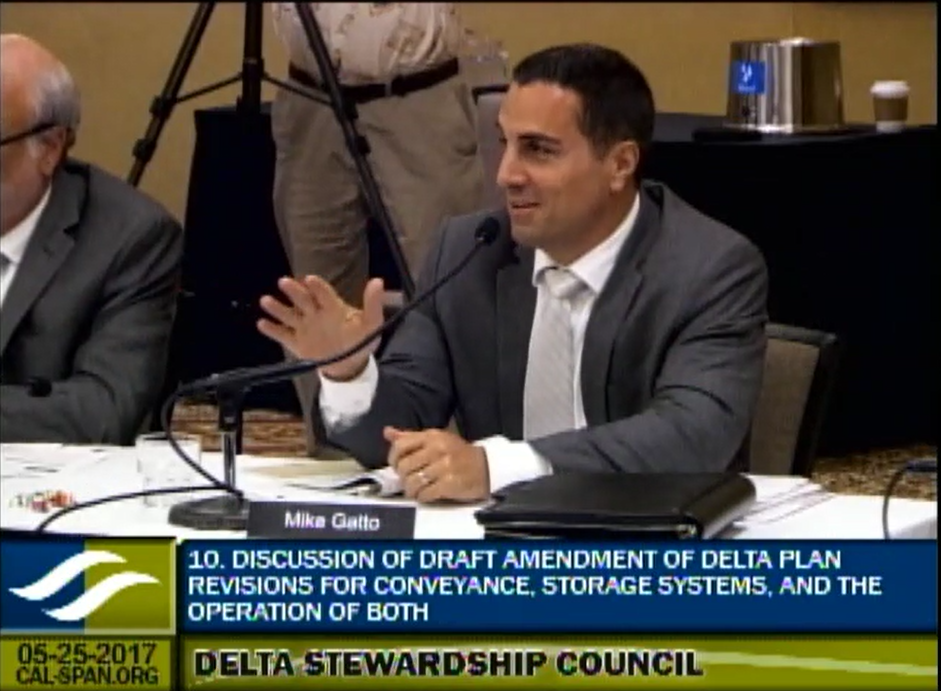
A legislator in California, Mike Gatto (pictured below), recently set up the world’s first Wiki-bill in order to enable private citizens to act as cyber-legislators and help draft an actual law. According to Assemblyman Gatto:

Government has a responsibility to listen to the people and to enable everyone to be an active part of the legislative process. That’s why I’ve created this space for you to draft real legislation. Just like a Wikipedia entry, you can see what the current draft is, and propose minor or major edits. The marketplace of ideas will decide the final draft. We’re starting with a limited topic: probate. Almost everyone will face the prospect of working through the details of a deceased loved one’s finances and estate at some point during their life. I want to hear your ideas for how to make this process less burdensome.

Is this cool, or what? Perhaps in the future, we could expand this idea to create a streamlined system of “wiki-cases” — or “WikiJustice, the free dispute resolution system” — to enable people to act as cyber-judges and cyber-jurors and decide legal cases and controversies more directly, quickly, and accurately than under the current cumbersome legal system.

Image result for mike gatto

Hat tip: Alfred Brody, via the Faculty Lounge.

Posted in Uncategorized | Tagged , , , | 1 Comment

When will Cuba be free?

Yesterday, 1 January 2014, General Raul Castro (i.e. Cuba’s Pinochet) delivered yet another tedious and long-winded speech to commemorate the triumph of the Cuban Revolution. (Why are most revolutionaries, generally speaking, so much better at giving rousing speeches than respecting basic human rights?) You can read his dull and dreary speech (in Spanish) here, but why bother? It’s the same old tired rhetoric of yesteryear. But this remarkable event, the 55th anniversary of the Cuban Revolution, raises a larger and more important question. We Cubans are, for the most part, a strong-willed, independent-minded, and freedom-loving people, so how have Raul and his brother Fidel (like Mugabe in Zimbabwe) managed to stay in power for so long? When will Cuba be free and prosperous again (or at least prosperous)?

Posted in Uncategorized | Tagged , , | Leave a comment

What is the “optimal” number of U.S. States?

Map courtesy of Andrew Shears

Put differently, what would a map of the USA look like if all the secession movements in US history had succeeded? This beautiful map [*], created by Andrew Shears, a professor of geography at Mansfield University, provides one possible to answer to this question. Thanks to digg.com and Chris Cillizza of the Washington Post for this whimsical pointer.

[*] Note: The State of Colorado is still pretty much in one piece on this map because Professor Shears’ counterfactual map covers secession movements up to the end of 2011.

Posted in Uncategorized | Tagged , | Leave a comment