Nanny Stadiums

You may have heard of the term “nanny state“–which is what the USA, with its Puritanical bans on smoking (even outdoors in many places), compulsory seat-belt laws, etc., is becoming–, but have you heard of nanny stadiums?

prior probability thinks the new NFL bag policy is pretty lame. Why do we put up with this nonsense? Why do we sacrifice liberty in the name of security?

This is what lameness looks like.

Posted in Uncategorized | Tagged , , , | 5 Comments

Justice for Johnny Football?

ESPN is reporting that the college sports cartel otherwise known as the NCAA will suspend Johnny Manziel, the popular quarterback of the Texas A&M football team, for the first half of this Saturday’s season opener against Rice for violating NCAA bylaw 12.5.2.1. This is the rule that exploits our student-athletes by prohibiting them from allowing their names or likenesses to be used for commercial purposes. So is this half-game suspension a just punishment for Johnny Football? That is, is it too little or too much?

www.businessinsider.com

Posted in Uncategorized | Tagged , , , , | 3 Comments

“I have a … copyright”

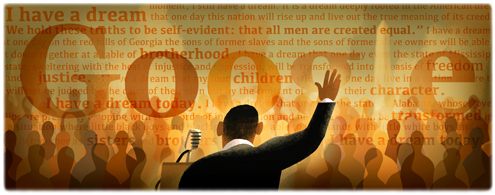
Today is the 50th anniversary of Dr. Martin Luther King’s historic “I have a dream” speech. The excellent Walter Olson of overlawyered.com asks, “Did you know MLK’s ‘I have a dream’ speech is copyrighted?” It is, and it won’t enter the public domain until the year 2038. Nick Gillepsie at drum.com tells the full story here.

prior probability asks a deeper question: do we even need copyright law? Would MLK have decided against giving his ‘I have a dream speech’ if he knew ex ante that such a speech were not protected by copyright law?

Posted in Uncategorized | Tagged , , | 2 Comments

Is an illegal tackle a “tort”?

The latest round of rule changes in the National Football League (NFL) has received a lot of commentary on TV and in the blogosphere lately, especially the new rule that now makes it illegal for ball-carriers and tacklers to lead with the crown of their helmets when both players are outside of the tackle box.

If player injuries are such a serious problem in the NFL, what would be the best way to solve to this problem? Should a player be able to sue another player in tort for an illegal hit?

Posted in Uncategorized | Tagged , , | 9 Comments

Is Keith Olbermann’s the “worst sports person in the world”?

The debut of “Olbermann”, Keith Olbermann’s new show on ESPN2, occurred last night. Among other things, Mr Olbermann criticized Manish Mehta, a sports reporter for the New York Daily News, for the way he conducted himself at a post-game press conference after a NY Jets pre-season game against the NY Giants last Saturday. (To recap, Mr Mehta questioned NY Jets coach Rex Ryan for playing star quarterback Mark Sanchez in the fourth quarter of a meaningless pre-season game … Sanchez was injured after he was put in the game.)

prior probability, by contrast, commends the sports reporter who questioned Coach Ryan and got under his skin. Coach Ryan, visibly annoyed at Mr Mehta’s line of questioning, eventually responded with “I don’t have to answer your question …” Maybe so, but a sports reporter has every right to ask questions and to follow-up when he or she doesn’t get a straight answer. Perhaps, then,  Mr Olbermann  should self-nominate himself (and Coach Ryan, for that matter) for “The Worst Persons in the Sports World”

Posted in Uncategorized | Tagged , , , , , | 1 Comment

“Give me liberty or give me … social science?”

Richard Thaler argues in his Economic View column in the Sunday Times that social scientists should play a greater role in shaping public policy, but prior probability wonders whether the opposite is true. After all, most published social “science” findings are false, and moreover, so-called social “scientists” are unaccountable to voters and have the same cognitive biases that most people suffer from.

In any case, Thaler’s three examples of how social science can help improve people’s lives are pretty weak. First, Thaler writes about the “word gap” between children from poor and rich families, but he admits there is no silver bullet for closing this word gap, so if there is no solution to a given problem, one wonders whether there is a problem at all (or, as economist Luke Froeb likes to say, “If there is no solution, there is no problem“). Also, even if we were somehow able to close this word gap between rich and poor children, we suspect that rich children would still have more advantages than poor ones.

Next, Thaler talks about wait times at the National Domestic Violence Hotline call center. The problem here, according to Thaler, is that many victims hang up before they’ve had a chance to speak with a counselor. But isn’t this just a simple resource-allocation problem (i.e., we need to hire more counselors to handle these calls)?

Lastly, Thaler notes how difficult it is to get (some) patients to follow up on their own treatment regimens. But at the end of day, if certain individuals choose to avoid taking responsibility for their own health, why should the rest of us care? Yes, we all want sick people to get well, domestic violence victims to get help, and children to excel, but how much government intrusion and “nanny-state” tactics are we willing to tolerate to achieve these goals? Thaler (once again) fails to address these larger, more fundamental questions.

Posted in Uncategorized | Tagged , , , , | Leave a comment

Why we should study the Declaration of Independence in law school

I am getting ready to teach another semester of that most political of legal subjects: constitutional law (“conlaw”). When I teach conlaw, I like to begin with the Declaration of Independence of 4 July 1776, one of this country’s most important founding documents, in which the North American colonists commit treason by stating their reasons for declaring their political independence from Britain. (By the way, my favorite line from the Declaration is “And for the support of this Declaration, with a firm reliance on the protection of divine Providence, we mutually pledge to each other our Lives, our Fortunes and our sacred Honor.“) In particular, I like to pose two questions regarding the Declaration of Independence: one practical, the other theoretical:

1st. The Declaration lists a “long train of abuses and usurpations” to justify the separation of the colonies from Britain, but how “bad” were these abuses in reality, or are they just a pretext to justify the insurgent or law-breaking acts of the American revolutionaries?

2nd. Although the Declaration is an important document, does it have the force of law like the Constitution or a statute? When was the last time a constitutional lawyer actually cited the Declaration, and when was the last time a court actually relied on the Declaration to reach a decision?

(So why bother studying the Declaration of Independence? Why is the Declaration so important? Be ready to discuss these questions on the first day of class.)

Posted in Uncategorized | Tagged , | Leave a comment

What critics of Nate Silver get wrong

Gary Marcus and Ernest Davis, professors at NYU, wrote up this critique of Nate Silver’s best-selling book The Signal and the Noise for The New Yorker magazine several months ago.

prior probability finally got around to reading their critique and is now ready to file this reply:

First, Marcus & Davis try to take Silver down a notch by noting that Bayesian methods are not new, that the Bayesian approach to probability “is built around a two-hundred-fifty-year-old theorem that is usually taught in the first weeks of college probability courses.” True, Baryes’ famous theorem has been around a long time, but that is not the whole truth. The whole truth is that the intellectual history of mathematics and statistics has been openly hostile and dismissive of Bayesian methods until recently.

Next, after grudgingly conceding the superiority of Bayesian reasoning in many situations, Marcus & Davis state (incorrectly) that “the Bayesian approach is much less helpful when there is no consensus about what the prior probabilities should be.” But this is plain wrong, and shows that Marcus & Davis missed one of the main take-away lessons of Silver’s book: it doesn’t really matter what your priors are so long as you update them whenever you receive new evidence regarding the matter you are uncertain about.

Last, Marcus & Davis attempt to mount a rearguard defense of R.A. Fisher’s frequency approach to probability, long the dominant approach in modern statistics, noting that “the advantage of Fisher’s approach … is that it sidesteps the problem of estimating priors where no sufficient information exists.” (By the way, what is it with the frequentists and their unwholesome obsession with priors?) But Marcus & Davis are being disingenuous here, for they themselves “sidestep” the major flaws with Fisher’s frequentist approach, especially its ad hoc nature and the fact that most events about which we are uncertain do not lend themselves to a frequency analysis.

Because Nate Silver’s book is such an important work, prior probability will soon be conducting a chapter-by-chapter review of The Signal and the Noise in future posts.

Posted in Uncategorized | Tagged , , , , , , , , | Leave a comment

Is economics a science?

Economists Noah Smith (“A few words about math”) and Bryan Caplan (“Economath fails the cost benefit test”) have recently presented powerful and persuasive critiques of the over-use of mathematics in economics, but prior probability thinks they both miss the larger question, i.e., is economics a science? In addition to the points made by Smith and Caplan, we think that many economists use fancy mathematical symbols in order to create the false impression that their discipline is a science when, in fact, it is not (it is mostly a branch of moral philosophy dressed up in the language of mathematics). What do you think?

Posted in Uncategorized | Tagged , , , , | 2 Comments

Do poor people prefer cash or in-kind benefits?

What’s the best way to help the poor in developing countries? How about giving them $1000 USD in cash, with no strings attached? If this idea sounds crazy to you, then check out this report in the Sunday Times describing the work of the charity GiveDirectly in Africa, which gives money to people in the poorest villages in Kenya without any pre- (or post-) conditions. Instead of food stamps, public housing, and other in-kind benefits, why don’t more governments try this direct cash-payment approach?

depositphotos.com

Posted in Uncategorized | Tagged , , | 3 Comments