Defund the war on drugs

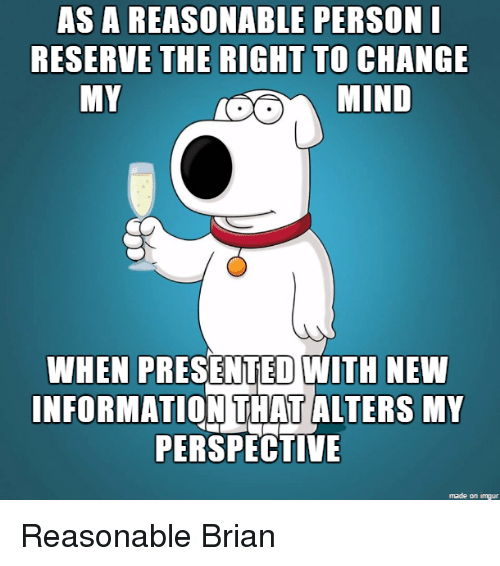
Before we begin Week 5 of my Tiger Law course on “Civil & Criminal Cases” or return to my extended review of Tyler Cowen’s Love Letter to Big Business, I want to take a time out and make a personal observation about the nationwide George Floyd protests and to my friends in the BLM movement generally. Specifically, I want to say this: The slogan “defund the police” is counter-productive. Why? Because we need someone to put violent criminals and sex offenders in jail, and that someone is the police. So, instead of “defunding the police” writ large, let’s defund the war on drugs, or at the very least, let’s return to our nation’s founding principles (#federalism) and leave it to each State to enact or repeal its own drug laws without federal interference. Am I wrong? Change my mind!

Postscript: While we’re at it, let’s defund “electronic license plate” readers (an obscene invasion of privacy) and abolish the pernicious “qualified immunity” doctrine as well!

A Chart That Says the War on Drugs Isn't Working - The Atlantic

Source: Serena Dai (via The Atlantic)

Posted in Uncategorized | 2 Comments

Ok, Boomer (Tyler Cowen edition)

Note: This is the fourth of several blog posts reviewing Tyler Cowen’s book “Big Business: A Love Letter to an American Anti-Hero.”

Let’s proceed into Chapters 3 and 4 of Tyler Cowen’s tome on “Big Business.” Warning: Although I agree with Professor Cowen’s pro-business manifesto in Chapter 1 and with his “corporate natural selection” thesis in Chapter 2, Professor Cowen is going to try to pull a fast one in Chapters 3 and 4 of his book: He is going to applaud the sixfold increase in CEO pay since 1980, and then he is going to turn right around in Chapter 4 and simultaneously defend the stagnation of worker salaries.

Here is how Professor Cowen tries to pull off this huge intellectual heist. First, he is going to draw a direct connection in Chapter 3 (“Are CEOs paid too much?”) between CEO pay and the market value of the business firms they run. Simply put, Cowen’s thesis is (p. 44): “Overall CEO compensation for the top companies rises pretty much in lockstep with the value of those companies on the stock market, largely because of the use of equity holdings and options as part of CEO compensation packages.”

Worse yet, Tyler Cowen attributes the historical rise in the market value of large corporations to CEO skill, not luck, but in fairness to Cowen, I can totally understand his utter neglect of the luck versus skill problem. Any exploration of the role of luck in CEO pay might derail his single-minded defense of the corporate status quo. After all, Chapter 3 is titled “Are CEOs paid too much?,” and Cowen’s contrarian answer is no, they are not; they should be paid even more!

What about worker pay, you might ask, which has remained relatively stagnant during this same period of time? Specifically, why hasn’t worker pay risen along with firm market value as CEO pay has? Alas, Professor Cowen utterly avoids this fundamental question. Instead of asking “Are workers paid too little?,” he changes the subject entirely and asks, “Are workers having fun?” Stated crudely (but accurately), Cowen’s thesis about stagnant worker pay is this: hey, you are lucky just to have a job, and your job is the source of most of your friendships and romantic liaisons, so shut the f*ck up and stop complaining about your pay. My reply consists of two words: Ok, Boomer…

I’ve got to hand it to Tyler Cowen. He is either a Master Troll or the most myopic economist in the world. In any case, sit tight, I will be turning to Week 5 of my “Tiger Law” course in my next few blog posts, but rest assured, I will review the rest of Cowen’s big business book at the end of this week.

CEOs made 287 times more money than their workers in 2018 - Vox

More details here, via Alexia Fernandez Campbell (Vox).

Posted in Uncategorized | 1 Comment

Natural selection in the business world?

Note: This is the third of several blog posts reviewing Tyler Cowen’s book “Big Business: A Love Letter to an American Anti-Hero.”

Let’s proceed into Chapter 2 of Tyler Cowen’s book on “Big Business.” Chapter 2 poses an intriguing question: Are business firms more fraudulent than the rest of us? Strategically speaking, I like Professor Cowen’s bold decision to begin his book (after his opening roadmap chapter) with the problem of corporate corruption and business fraud, especially given all the media attention to big-time business scandals in recent years, like Volkswagen (doctored emissions controls), Theranos (bogus medical devices), and Wells Fargo (phantom accounts).

In brief, Professor Cowen invites us to take a pragmatic view of the problem–not a Puritanical one. I will summarize his argument this way: Given human nature, some amount of fraud is unavoidable, so the question is not whether business fraud is bad. Of course it is. The question is, how pervasive is business fraud? And to answer that question, we must ask: compared to what? So, Cowen concedes up front that business firms often engage in rampant fraud. But instead of trying to explain away such corporate malfeasance, Cowen literally “turns the tables” and points an accusatory finger at the rest of us! His novel defense of business fraud can thus be summed up crudely but accurately in three words: Get over it! Yes, business firms often engage in unscrupulous behavior, but so do most, if not all, people to various degrees. We lie on our resumes and on dating sites; we cheat on our taxes; we download stuff illegally; etc., etc.

But wait; there’s more! Professor Cowen’s has something else up his proverbial sleeve, and this “something else” is even stronger than his “compared to what?” argument. Specifically, the rise of the Internet and of social media platforms has made it much easier than ever before for individual consumers and watchdog groups to call out corporations that engage in fraudulent activities. Furthermore, Cowen points out that the CEOs of business firms care about their companies’ reputations (and about their firms’ potential legal liability, I would add). As a result, these two powerful forces–the Internet and reputation costs–operate as a kind of “corporate natural selection” (my term, not Cowen’s), so to speak. Business firms thus have a strong incentive to minimize their misconduct and level of dishonesty because only the most honest business firms can thrive in such a treacherous environment!

For my part, I find Professor Cowen’s “corporate natural selection” argument far more persuasive than his “compared to what?” argument. After all, who gives a hoot if some 25 year-old lies on a dating site or illegally downloads the latest superhero movie. Cowen is comparing individual apples (e.g. the social cost of people lying on dating sites) to corporate oranges (e.g. the social cost of Theranos’s fraudulent medical devices). The next two chapters of Cowen’s book (Chs. 3 & 4) will address the issue of CEO pay (which has risen astronomically) and worker pay (which has remained stagnant), so we will proceed to Chapters 3 and 4 in our next post …

What Is Natural Selection? — Definition & Importance - Expii

Posted in Uncategorized | Leave a comment

Cowen’s Manifesto

Note: This is the second of several blog posts reviewing Tyler Cowen’s book “Big Business: A Love Letter to an American Anti-Hero.”

Now that we have gotten the appendix out of the way (see my previous post), let’s proceed to Chapter 1 of Tyler Cowen’s beautiful book on Big Business. This first chapter is titled “A new pro-business manifesto,” and to the point, Professor Cowen’s powerful manifesto can be reduced into a single tweet (p. 1): “First, business makes most of the stuff we enjoy and consume. Second, business is what gives most of us jobs.

Indeed, Cowen’s manifesto can be further boiled down into two words: “prosperity” and “opportunity”!

In other words, business firms are largely responsible for our livelihoods and for our material wealth. Let me say, right off the bat, that Professor Cowen’s succinct manifesto captured my imagination and deserves to be shouted from many Ivory Tower rooftops. Why? Because his manifesto explodes a common fallacy committed by progressive college professors and idealistic college students alike–what the late great Robert Nozick once referred to as the-manna-from-heaven fallacy in his classic work Anarchy, State, and Utopia. Although ASU is chock-full of many important ideas (almost all of which we have explored on this blog), to my mind the manna-from-heaven fallacy is Nozick’s single-most important contribution to contemporary debates about income inequality and the role of business in society.

Consider, by way of example, the issue of “affordable housing.” Put aside for the moment the fact that the lack of affordable housing in most U.S. cities is due to unconstitutional zoning regulations and self-serving NIMBYism by existing homeowners. For now, I just want note the loud calls for affordable housing from all quarters. After all, who can be against affordable housing or affordable prescription drugs or affordable whatever? Of course, no one. My point here is to show how calls or demands for more X, where X is housing or health care or whatever, are fallacious. Why are these demands fallacious? Because, before we can figure out the best way of distributing X to the people, someone has to produce that X in the first place.

In other words, progressive academics and statist politicians both commit the same fallacy, the manna-from-heaven fallacy, when they demand free stuff or promise to provide such stuff. The problem is, as Nozick and now Cowen make clear, we cannot simply assume the existence of a sufficiently large economic pie that is worth dividing while simultaneously ignoring the all-important question of incentives for production. Simply put, my dear friends, prosperity and opportunity do not fall from the sky. Goods and services must be produced by someone, and that someone are business firms. Professor Cowen, having thus started off on the right track, deserves our full attention. But does he deserve our assent? We shall proceed to Chapter 2 in my next post.

Exodus 16:1-18, Manna from Heaven | Toward a Sane Faith - Kevin ...

Posted in Uncategorized | 8 Comments

Review of Cowen (2019)

Note: This is the first of several blog posts reviewing Tyler Cowen’s book “Big Business: A Love Letter to an American Anti-Hero” (Picador, 2019).

Since Tyler Cowen has written a contrarian defense of big business, let’s begin my extended review of Professor Cowen’s excellent book in contrarian fashion as well. Let’s begin with the short appendix at the end of the book (pp. 207-211). Why am I starting at the end of the book? Because it was my favorite part of the entire book! Why was it my favorite part? Because Cowen addresses an important theoretical and practical question there: What is a business firm?

Believe it or not, economists still don’t have a good working definition of business firms! As Professor Cowen explains in his appendix, one popular theory in economics is that business firms exist in order to reduce “transaction costs,” i.e. the costs of carrying out a decision. Put in the simplest terms, every commercial activity can be carried out in one of two ways: “make” or “buy.” That is, when a business firm needs something, it can either make that something in house, or it can purchase it from an external supplier. Both of these methods are expensive to carry out, so firms will generally choose that method that is more efficient or cheaper …

Professor Cowen, however, calls bullshit on the transaction cost theory of the firm (p. 208): “Ask yourself a simple question. Let’s say you want to buy a work computer for your desk. Which method involves lower transaction costs: going online with Amazon … or trying to get an order for a new computer through your company’s purchasing department?” By way of example, I teach at a large southeastern university. Before the pandemic, I would travel frequently to attend academic conferences to present my research projects, but getting reimbursed for my travel expenses was an administrative quagmire of Napoleonic proportions. It was such a hassle that I completely gave up trying to get reimbursed for attending conferences and the like. If firms were really about reducing transactions costs, my home institution would find a way of making it easier for me to get reimbursed for my travel expenses, right?

So, in place of the transaction cost theory, Professor Cowen offers an alternative and more realistic theory of business firms. Specifically, he defines business firms in reputational and legal terms. Here, I will focus on the legal liability side of business firms, or in Cowen’s own words, a business firm is “a carrier of contractual and legal responsibility” (p. 210). As a business law professor, Cowen’s definition is music to my ears. Corporations (and now LLCs) exist, first and foremost, to shield their owners from legal liability. Yes, courts may pierce the corporate veil under certain conditions, but the general rule is that it is the corporate entity (not the owners of the entity) that is legally liable for the acts and omissions of the corporation’s officers, employees, and agents.

But, aside from my own personal background in business law, why is Professor Cowen’s legal-centric definition of business firms superior to the transaction cost theory? First off, because both market transactions (“buy”) and in house transactions (“make”) both involve transaction costs, and it is not always obvious which type of activity involves lower transaction costs. But, more importantly, because a firm is supposed to be legally accountable for the actions taken on its behalf. As the late great Thomas Schelling himself pointed out in his classic work on “The Strategy of Conflict,” without this ultimate burden of legal liability, firms would not be able to make credible commitments–either in house or through market transactions. We will proceed to Chapter 1 of “Big Business” in my next blog post …

PPT - Game Theory PowerPoint Presentation, free download - ID:6413799

Image credit: Lance Bruce

Posted in Uncategorized | Leave a comment

F*ck the Feds (Waco edition)

My wife Sydjia and I just finished watching “Waco” on Netflix. If the version of events depicted in this television series is even half true, then the U.S. Government committed a heinous war crime against its own people. Attorney General Janet Reno is now dead, but perhaps President Clinton and the FBI officials at the scene can still be arrested and tried as war criminals in some international tribunal.

Posted in Uncategorized | Leave a comment

NBA versus Coronavirus

The NBA season will resume on July 31, 2020 at Disney World in Orlando, Florida! In the meantime, via ESPN, Romana Shelburne describes some of the behind-the-scenes negotiations that led to this remarkable turn of events. Here is one excerpt from Ms Shelburne’s report (links in the original):

At last week’s owners meeting, for example, [OKC] Thunder owner Clay Bennett made an impassioned speech for all 30 teams to be given a chance to resume their season to avoid going nine months without playing a game and without visibility in their home markets. Charlotte Hornets owner Michael Jordan, on the other hand, made an impassioned plea for the league to invite only the 16 teams currently in the playoff picture and keep as close as possible to the traditional format because of the increased risk of injury to players after such a long layoff, and the increased COVID-19 risk that comes with each additional person invited into the bubble.

So, was the final decision to invite “only” 22 teams the result of a compromise between both extremes? For my part, I am with MJ on this one. No one cares about the regular season anymore. Let’s just go directly into the playoffs!

We're Going to Disney World!. Transportation Flight Cost- $1 ...

Posted in Uncategorized | Leave a comment

Honoring the Harlem Renaissance

Via Jason Kottke: The United States Postal Service recently released a set of four stamps honoring prominent literary figures of the Harlem Renaissance. The stamps feature Nella Larsen, Alain Locke, Arturo Alfonso Schomburg, and Anne Spencer.

The Harlem Renaissance of the 1920s was one of the great artistic and literary movements in American history. As African-American writers and artists pushed the boundaries of their identities and their art, they created a diverse body of work that explored their shared history and experience, embodied the spirit of the times, and let new and distinctive voices be heard.

Posted in Uncategorized | Leave a comment

Creators versus copiers: fair use

Note: This is the last of five blog posts devoted to Week 4/Module 4 of my business law course (Tiger King edition).

Let’s conclude my observations about Week 4 of my business law survey course with the fair use doctrine. To the point, fair use operates as a common law and statutory defense to copyright infringement, and I teach fair use for two reasons. To begin with, I want to impart an important lesson to my students. In brief, the lesson is this: even exclusive property rights are not absolute. To put it in the most stark and dramatic terms: fair use is not only about “fairness”; it is also about finding the optimal level of piracy or copyright theft, i.e. copyright infringement!

Now, before we proceed any further, you might well be asking: How can an illegal act like theft or piracy ever be optimal? To answer this counter-intuitive question, we must first realize that copyrights are not absolute. Instead, courts use the fair use doctrine to balance the interests of creators and copiers, of innovators and imitators, of intellectual owners and intellectual squatters. In other words, creators, innovators, and intellectual owners are not the only ones who are morally worthy or legally deserving of legal protection; so too are copiers, imitators, and intellectual squatters!

The other reason I teach fair use is to spotlight the idea of flexible standards. (You may recall that I introduced the fundamental distinction between bright-line rules and flexible standards in my Sources of Law Module.) Contrary to popular belief, fair use does not consist of a simple, clear-cut, bright-line rule, e.g. you may use up to 10% of another person’s work. Instead, fair use is a flexible standard consisting of four general guidelines (see also the image below):

  • How “transformative” (whatever that means!) is the alleged infringing use?
  • Is the alleged infringer stealing or borrowing (depending on your point of view) material from an original work of fiction (like a play or novel) or from an original work of non-fiction (like a biography), and in either case, has that original work been published yet?
  • How much material is the alleged infringer stealing or borrowing, as the case may be?
  • Does the alleged infringement help to increase or decrease sales of the original work?

What weights should be attached to each factor, i.e. which factor is the most important one? Or, if the factors are to be equally weighted, what happens when two of the factors point in one direction and the other two point in the other direction? Courts refuse to say! So, is this judicial reticence a good or bad thing? Next week, we will review the next-to-last module of my business law survey course, which will be devoted to criminal and civil cases. In the meantime, I will begin reviewing Tyler Cowen’s most recent book on “Big Business.”

5.12 Fair Use: A Visual Reminder: NCDPI OPL Design & Development ...

Posted in Uncategorized | Leave a comment

Life is full of choices

I will be blogging about the fair use doctrine later today, but in the meantime, I just want to mention that my youngest daughter Adys Ann (age 6) and I went to a bookstore today. We both had to make some hard choices: I had to narrow down which book to read next, while my daughter had to decide which LOL doll she wanted as her first grade graduation gift. I chose Tyler Cowen’s book on “Big Business,” which I have been meaning to get around to since it was first published last year; Adys Ann finally chose “Dazzle.”

Posted in Uncategorized | Leave a comment