Act III: The Suppression of Rebellion Act of 1861 and the Enforcement Act of 1871

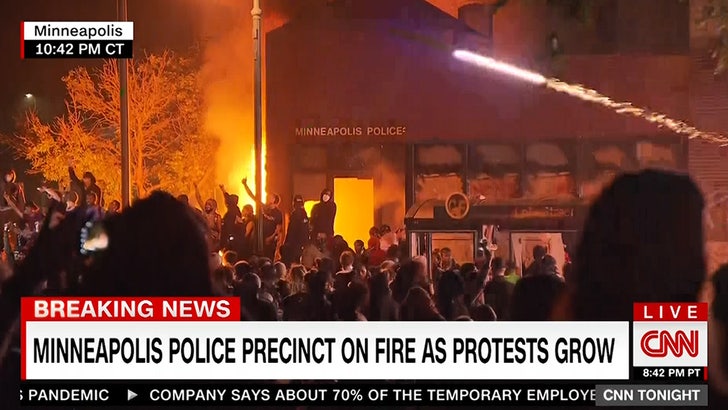
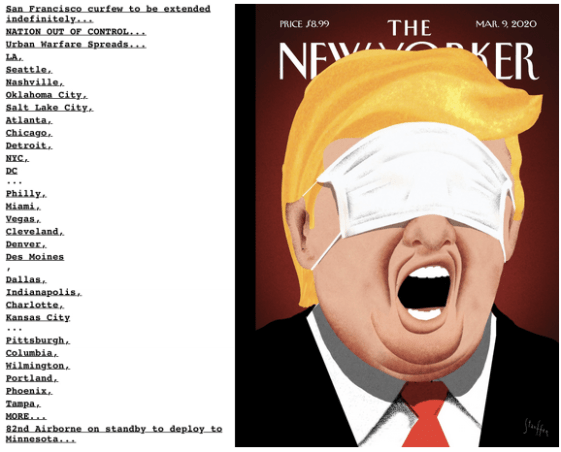
As of today (June 1), we have witnessed six days and six nights of protests, looting, and other civil disturbances in many cities across the U.S. following the extrajudicial police killing of George Floyd in Minneapolis. We assume this unrest will come to an end once all four police officers involved in Mr Floyd’s death are charged by local or federal prosecutors. But what if the unrest continues unabated? At what point does the president order the military into a U.S. city to restore order, and does the president even have this authority in the first place?

It turns out that the president does have this authority under a series of five federal laws enacted by Congress between 1792 and 1871. Thus far, we have reviewed the first three of these historic laws–the Insurrection Act of 1807 as well as the Militia Acts of 1792 and 1795. In this post, we will proceed to the Suppression of Rebellion Act and one of post-Civil War “Enforcement Acts”. The former law was enacted in 1861, just as the “War Between the States” was getting started, while the latter law was enacted in 1871, a few years after the Civil War had ended. Suffice it to say that these two laws further expanded the president’s power to use military force inside the United States.

By the time a rump Congress had enacted The Suppression of Rebellion Act on July 29, 1861, eleven States had already officially left the Union. Ironically, however, President Lincoln did not base his legal authority to conduct the civil war on the 1861 law. Nevertheless, the 1861 law represents a major expansion of the president’s power to use military force inside the U.S.; or in the words of one legal scholar (Stephen Vladeck, 2004, pp. 166-167), “to whatever extent the 1795 Act had removed or changed three important checks on the President’s authority under the 1792 Act, the 1861 Act heavily diluted the major checks that remained.”

Specifically, the 1861 law revised the existing 1795 and 1807 domestic violence laws that we saw in our previous posts by authorizing the president to use military force to respond to “rebellions.” In addition, Section 1 of the 1861 amended and replaced Section 2 of the old 1795 Militia Act and further increased the president’s military power in two ways. First, the new rebellion law replaced the previous obstruction trigger in the 1795 law with a much lower standard. Under the old law, an obstruction had to be “by combinations too powerful to be suppressed by the ordinary course of judicial proceedings”; under the new law, by contrast, the obstruction just had to make it “impracticable” to enforce federal laws. Second, the 1861 law committed to the president’s sole discretion the initial determination of whether or not it was “impracticable” to execute the laws!

Of course, it should come as no surprise that the Congress would vote to expand the president’s power to use military force during one of our nation’s most serious political and military crisis. But the Congress would further expand the president’s panoply of domestic military powers when it enacted a series of three “enforcement acts” in 1870 and 1871 in response to the rise of private militias like Ku Klux Klan following the defeat of the Old Confederacy. (For an excellent overview of the politics and history of these enforcement laws, see Jeffrey A. Jenkins & Justin Peck, Congress and Civil Rights: The Demise of Reconstruction, 1871-1877 (2016), especially pp. 1-22, available here.)

Of particular relevance to our legal saga is the third Enforcement Act, which was enacted by the Congress on April 20, 1871. What makes this particular law noteworthy is that it authorizes the president to use military force to enforce constitutional rights. Previous domestic violence laws enacted by the Congress were designed to give the president the military power to enforce federal laws as well as the military power to protect the territorial integrity of the United States. Section 3 of the 1871 Act, by contrast, authorizes the president to use military force to protect “the rights, privileges, or immunities” of “the people” when one of two conditions are met. First, the president may use military force inside the U.S. to fight an insurrection or an unlawful combination or conspiracy in a State that obstructs or hinders the enforcement of State or federal law, when the “constituted authorities of such State” are unable or refuse to protect the constitutional and civil rights of the people. In the alternative, the 1871 law authorizes the president to use military force “whenever any such insurrection, violence, unlawful combination, or conspiracy shall oppose or obstruct the laws of the United States or the . . . due course of justice under the same.”

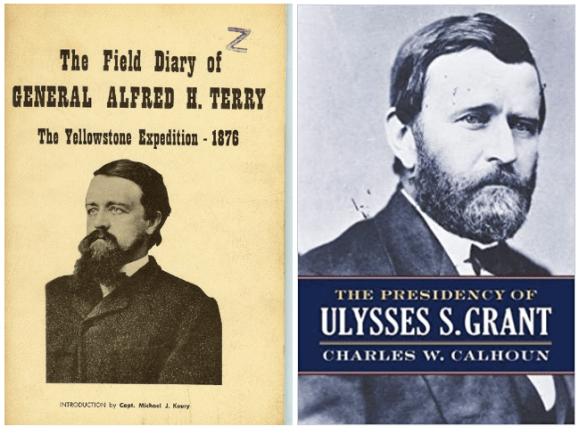
FYI: President Ulysses S. Grant invoked this enforcement legislation in the fall of 1871 when he ordered U.S. Army Major General Alfred H. Terry (pictured below, bottom left) to eradicate the Klan and arrest its members in the northern counties of South Carolina, and Section 3 of the 1871 Act is still in effect to this day, along with the Suppression of Rebellion Act of 1861, the Insurrection Act of 1807, and the amended parts of the Militia Act of 1795. Combined, this remarkable body of law gives the president enormous powers to respond to “domestic violence” (as that term of art is used in Article IV of the Constitution). We will conclude our review of this dangerous body of “domestic violence” law in our next post.
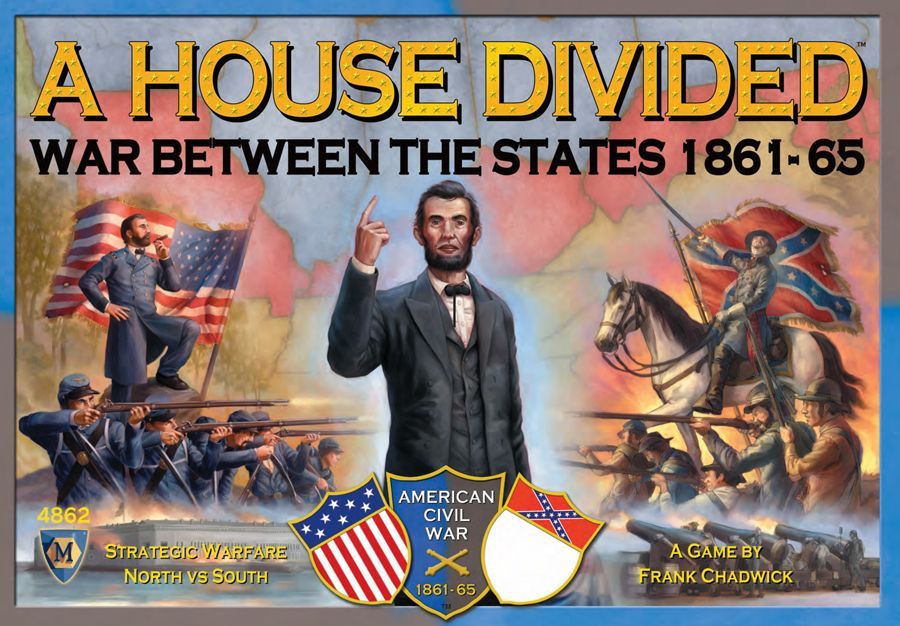
A House Divided: War Between the States 1861-65 | Board Game ...
Screen Shot 2020-06-01 at 4.41.26 AM
Posted in Uncategorized | Leave a comment

Act II: The Insurrection Act of 1807

Let’s proceed with our review of federal “domestic violence” law. When former Vice President Aaron Burr was accused of orchestrating a shadowy conspiracy to create an independent republic in North America in late 1805, President Thomas Jefferson took decisive military and legal actions to apprehend the conspirators and halt Burr’s scheme. (This enigmatic episode in our nation’s history is referred to by historians as The Burr Conspiracy.) From a legal perspective, however, President Jefferson found himself in a constitutional “catch-22” situation. On the one hand, only State militias could be used against domestic insurrections under then-existing law (the Militia Act of 1795, which we reviewed in a previous post). On the other hand, Aaron Burr intended to create an independent republic in Texas, and at that time, Texas was a Spanish dominion, not a U.S. State, so there was no State militia for Jefferson to call!

The solution to this legal catch-22 was federal legislation authorizing the use or regular U.S. Army soldiers as well as local militias to respond to domestic dangers, and the Congress soon thereafter adopted this novel solution when it enacted the Insurrection Act of 1807. This remarkable law consists of a single sentence and is worded as follows:

That in all cases of insurrection, or obstruction to the laws, either of the United States, or of any individual state or territory, where it is lawful for the President of the United States to call forth the militia for the purpose of suppressing such insurrection, or of causing the laws to be duly executed, it shall be lawful for him to employ, for the same purposes, such part of the land or naval force of the United States, as shall be judged necessary, having first observed all the pre-requisites of the law in that respect.

This dangerous law expands the president’s authority to use military force inside the United States in two significant ways. First, the new law applied to “all cases of insurrection, or obstruction to the laws, either of the United States, or of any individual state or territory.” In other words, the president could now use federal military force to enforce both State laws as well as federal laws. But even more importantly, the 1807 law not only authorized the president to “call forth” State or local militias in these two situations (“insurrection” and “obstruction to the laws”); for the first time the 1807 law also authorized the president to activate federal troops. Prior to 1807, the president had to rely on State or local militias to put down rebellions and repel invasions on U.S. soil. Now, beginning with the 1807 law, the president obtained legislative authority from Congress to use regular federal troops in addition to State and local militias to respond to domestic dangers.

In the scheme of things Aaron Burr’s conspiracy was a small blip on the constitutional radar; the greatest threat to the vitality of the Constitution and to the territorial integrity of the United States was yet to come: the Civil War (1861-1865). The Congress further expanded the president’s legal authority to use military force inside the U.S. when it enacted the Suppression of Rebellion Act of 1861 and Enforcement Act of 1871, so we will review those two laws in our next post.

burrconspiracy hashtag on Twitter

Posted in Uncategorized | Leave a comment

Act I: The Militia Acts of 1792 and 1795

When can a president use military force inside the United States? Article I, Section 8 of the Constitution gives to the Congress—not to the president—the power “to raise and support armies” as well as the power “to provide for calling forth the militia.” Nevertheless, the Congress delegated its constitutional calling forth power to the president early in our nation’s history, when it enacted the first Militia Act of 1792, and this was the law that President George Washington invoked when he called forth four State militias in response to the Whiskey Rebellion of 1794. In summary, the 1792 Act law spells out three different procedures the president must follow to call forth a militia, depending on the type of domestic danger he is responding to:

  • Invasion. When there is an invasion or an imminent threat of invasion, the president may act unilaterally to repel the invasion.
  • Insurrection. When there is an internal insurrection within a State, the president’s authority to use military force is subject to a State veto of sorts. Specifically, the president must first request authorization from the State legislature or from the governor of the State, if the legislature cannot be convened in time.
  • Execution of the laws of the union. In order to use military force to enforce federal law, the president must first request a certification from an associate justice of the U.S. Supreme Court or from a federal district judge. Specifically, the associate justice or district judge must certify that the laws of the United States are being obstructed “by combinations too powerful to be suppressed by the ordinary course of judicial proceedings.”

Furthermore, the 1792 law contained two additional checks on a president’s use of domestic constitutional violence. First, it imposed a public proclamation requirement on the president. That is, in any of these three situations—whether it be a foreign invasion, an internal insurrection, or an obstruction of federal law by powerful combinations—the president was required to issue a formal proclamation before using force, or in the words of the 1792 Act: “whenever it may be necessary, in the judgment of the President, to use the military force hereby directed to be called forth, the President shall forthwith, and previous thereto, by proclamation, command such insurgents to disperse, and retire peaceably to their respective abodes, within a limited time.” Next, the 1792 law contained a two-year sunset provision.

At the behest of President Washington, however, the Congress repealed and replaced the 1792 Act with a new domestic violence law, which was enacted in 1795. The new law made three important changes to the old law. First off, the new law removed the cumbersome judicial certification requirement in situations involving obstructions of federal law. Under the old law (from 1792), if the president wanted to call forth the militia to enforce a federal law, he first had to obtain from a federal district judge or an associate justice of the U.S. Supreme Court a certification that the laws of the United States are being obstructed “by combinations too powerful to be suppressed by the ordinary course of judicial proceedings.” Under the new law, by contrast, the president was delegated the unilateral power to decide how serious or severe an obstruction was.

Secondly, the new 1795 law also modified the public proclamation requirement. Under the 1792 law, the president was required to issue a formal proclamation before he used force to respond to an emergency or other domestic danger. The new law, by contrast, deleted the words “and previous thereto.” Third and last, the new law removed the sunset clause. Unlike the 1792 law, which was temporary, the new 1795 replacement law was designed to remain on the books permanently.

But wait; there’s more! The Congress would further expand the president’s power to use military force inside the United States when it enacted the Insurrection Act of 1807. We will explore the details of this dangerous law in our next blog post …

The Whiskey Rebellion - YouTube

Happy 19th Birthday Aritzia!

Posted in Uncategorized | Leave a comment

Does the president have the legal authority to use military force in Minneapolis?

Yes, he does, and he doesn’t have to wait for the Governor of Minnesota to make a formal request for federal help. Beginning in 1792, the Congress enacted five specific laws authorizing the president to use military force within the United States: (1) the first Militia Act of 1792, (2) the Militia Act of 1795, (3) the Insurrection Act of 1807, (4) the Suppression of Rebellion Act of 1861, and (5) the Enforcement Act of 1871. Combined, this remarkable body of law pre-authorizes the president to commit acts of domestic constitutional violence under certain conditions.

As it happens, several scholars have studied the content and historical context of these laws. For an in-depth history of this body of “domestic violence” law, the best place to start is Robert W. Coakley’s beautiful 1988 book “The Role of Federal Military Forces.” Another helpful source is Stephen Vladeck’s excellent 2004 law review article on “Emergency Powers and the Militia Acts,” which was published in Volume 114 of the Yale Law Journal. Lastly, I can also recommend Dominic J. Campisi’s 1975 law review article on “The Civil Disturbance Regulations: Threats Old and New,” which was published in Volume 50 of the Indiana Law Journal.

But wait; there’s more! In addition to these scholarly sources, yours truly also explored this dangerous body of law in my 2019 paper “Domestic Constitutional Violence,” which was published in Volume 41 of the University of Arkansas Law Review. (My paper is available free of charge here, via SSRN.) As a public service, I will further delve into the details of each of these laws in my next few blogs posts.

CNN Reporter Omar Jimenez Arrested in Minneapolis Live On Air

Posted in Uncategorized | 4 Comments

Why hasn’t President Trump addressed the nation yet?

Is Donald Trump the Adam Silver of politics? For someone with such a big mouth, why hasn’t he addressed his fellow citizens yet? Sorry, but tweets and subtweets are no substitute for a live address to the nation.

Update (May 31): Still waiting … Although Trump made some ineffectual remarks about the need for “law and order” at a scheduled speech at the Kennedy Space Center in Cape Canaveral, Florida, he has yet to address the nation from the Oval Office during prime time. What in God’s name is he waiting for?

Update #2 (June 1): Trump addressed the nation today and implied that he might deploy the U.S. military to quell the current unrest. Here is a recap of the relevant laws that allow the president to take military action inside the U.S.

Screen Shot 2020-06-01 at 5.01.00 AM

Posted in Uncategorized | 1 Comment

Arctic Ocean Currents

I have a soft spot for the Arctic Circle (type in the word “Arctic” in this blog’s search box, and you will see why), so I am posting this map of Arctic ocean currents in case I ever have the opportunity to go sailing in the North Pole!

Post image

Hat tip: u/blackjack_oak, via Reddit.

Posted in Uncategorized | Leave a comment

Is UBI politically feasible?

Did you know the 91st Congress (1969 to 1971) almost enacted a guaranteed income bill? The Chapman Law Review has just published a special symposium volume: “A Fifty-Year Retrospective on Major Laws of the 91st Congress.” My contribution, however, was about “the one that got away.” Instead of writing about the many historic (and I would argue, misguided) laws that were enacted by the 91st Congress, I wrote about President Nixon’s proposed guaranteed income bill, which was approved by the House but died in the Senate. I wrote my history of the guaranteed income bill in the form of a three-act legislative morality play and called it “A Chronicle of a Political Death Foretold.” Although my essay is historical in nature, it is nevertheless very timely, for it offers many lessons to both proponents and opponents of contemporary Universal Basic Income proposals.

Is it time to consider universal basic income? - Futurity

Posted in Uncategorized | 11 Comments

Hey Adam Silver, what are you waiting for?

Update (June 5): The NBA season will resume on July 31, 2020 at Disney World in Orlando, Florida!

Below is my original May 29 post (sans gif): “Leadership is a two-way street. Now that the coronavirus has been contained in most places and all 50 States have begun to reopen, when will the NBA playoffs resume? As Zach Lowe writes in this essay for ESPN, ‘The NBA’s cleanest method of resuming its season is to bring the 16 current playoff teams to its designated campus, seed them as they are now — eight East, eight West — and play the NBA’s normal postseason.’ So, what are we waiting for?”

Posted in Uncategorized | 1 Comment

Illicit promises of the rich and famous

Note: This is the last of five blog posts devoted to Module 3 of my business law course (Tiger King edition).

Thus far, we have surveyed the first three parts of my Common Law Module, which are devoted to the domains of Property, Contracts, and Torts. Alas, we are not done yet! Since my business law course is now based on Tiger King, and since Joe Exotic was accused of hiring a hitman to knock off a rival, I have decided to add a bonus section to my common law module. This bonus section addresses the problem of illicit promises, i.e. agreements that are either illegal or immoral or both. Although the idea of an “illicit promise” may sound esoteric, exotic even (pun intended), in reality illicit promises are everywhere. All you have to do is look around you!

By way of example, in addition to the alleged hitman agreement between Joe Exotic and Allen Glover in Tiger King, many high-profile individuals have recently been accused of making illicit promises. Consider the prominent actress Lori Loughlin, one of many wealthy parents who have pled guilty of participating in the college admissions scandal. Although, legally speaking, Ms. Loughlin and dozens of other parents were charged with mail fraud and honest services fraud, their alleged wrongdoing consists of making multiple illicit promises, including bribes and illicit schemes to fraudulently inflate SAT scores. (By the way, in my opinion these parents and their spoiled children should be sentenced to life in prison for gaming the system.) Or consider the pending criminal prosecution of Robert K. Kraft, the horny owner of the New England Patriots football team, who was charged by the State Attorney’s Office of Palm Beach County, Florida with two counts of soliciting prostitution at a massage parlor. Prostitution, sex for hire, and human trafficking are paradigm cases of illicit agreements.

I explore these and many more examples of illicit promises in greater depth in my working paper “Breaking Bad Promises.” Simply put, many forms of wrongdoing often involve immoral promises or illegal agreements, especially given the expansion of federal regulatory crimes as well as our evolving and expanding conceptions of morality, such as animal rights. For now, I just want to ask, What is the legal and moral status of illicit promises? Once again, common law judges have developed a sophisticated body of legal principles to solve a real life problem, a body of common law that in my humble opinion is far more polished and practical than anything academic moral philosophers have ever come up with.

In summary, courts generally classify illicit agreements into two broad categories: (1) those that are inherently wrongful and immoral or mala in se, e.g. murder, rape, kidnapping, etc., and (2) those that are merely illegal or mala prohibita, e.g. regulatory crimes and technical violations of the law. Specifically, promises involving some form of moral turpitude are said to be mala in se and are thus void ab initio, while illicit agreements in violation of a commercial statute or an economic regulation are said to be merely mala prohibita and are treated as “voidable” by the party that stands to benefit from enforcing the illegal agreement. Either way, illicit promises should be of theoretical interest to philosophers and legal theorists because such promises exemplify the uncertain relation between ethics and law, a topic we will return to in Module 6 of my Tiger Law course. But Module 6 of “Tiger Law” is still a long ways off. We still have to explore the “Law of Ideas” (Module 4) and “Criminal & Civil Liability” (Module 5) …

Screen Shot 2020-05-27 at 1.29.52 PM

Illicit promises of the rich and famous!

Posted in Uncategorized | 2 Comments

Beware of the Cow: Tiger King and Cattle Trespass

Note: This is the fourth of five blog posts devoted to Module 3 of my business law course (Tiger King edition).

We have been surveying the Common Law module of my business law course this week, starting with some foundational questions in the Law of Property and the Law of Contracts. (See my previous posts on May 26 and 27.) The next part of my Common Law module is devoted to the Law of Torts, with an emphasis on accidents or unintentional harms. To capture everyone’s attention, I begin this part of the module with a recording of the 911 emergency call Joe Exotic made when one of his employees, Saff, got his arm mauled by a tiger, and then I pose a general but important legal liability question that haunts all business firms, especially now in the age of COVID-19: When is a firm legally liable to its employees or its clients for their accidental injuries?

It turns out that the answer to this all-important question depends on which of the two major theories of tort liability is used by the courts to evaluate the conduct of the firm: Strict Liability or Negligence? Therefore, to illustrate the main differences between these two general theories of legal liability, I next introduce my students to the Florida case of Rockow v. Hendry, a “cattle trespass” case involving a crop farmer and a cattle rancher. The facts of this case are simple: the rancher’s cattle had destroyed some of the farmer’s pepper crops, so the farmer sued the owner of the cattle for money damages–the economic value of his destroyed pepper crops.

Why a cattle trespass case? For two reasons. First off, both rules of legal liability have been applied to the problem of stray cattle, so what better way of illustrating the difference between Strict Liability and Negligence (as well as the interplay between the common law and legislation) than cattle trespass? Historically speaking, for example, cattle trespass was considered a “strict liability” tort by the courts. In practice, this meant that the owner of the cattle was always legally liable for any damages caused by his cattle, no matter how much care the owner used to keep his cattle fenced in. At first glance, this rule makes good common sense. The rancher should be legally liable; after all, they are his cattle.

But hold up! What about car accidents caused by stray cattle? Eventually, the historical rule of strict liability gave way to a negligence standard in some places. How and why did this happen? Some localities in the U.S. began enacting so-called “open range” laws that favored cattle ranchers. Instead of strict liability, these laws required courts to apply a negligence standard to the problem of cattle trespass. Stated as simply as possible, under a negligence standard you are legally liable for the injuries suffered by a stranger only if you owed that stranger a duty of care and only if you failed to exercise due care and that failure on your part is what caused the injury to the stranger. The bottom line is this: if you are plaintiff, you would rather sue under a strict liability theory than a negligence theory because it is generally easier to recover under strict liability.

This temporal rule-switch takes us to the other reason why I have assigned a cattle trespass case to illustrate the law of torts. It turns out that cattle trespass was the same example an English economist (my hero Ronald H. Coase) originally used to illustrate an important point about most legal disputes. Instead of pre-judging the legal liability issue, let’s do what Ronald Coase did and take a deeper look at the cattle trespass problem. At a deeper level, isn’t the farmer just as responsible as the rancher for the problem? How so? Because the problem of stray cattle is foreseeable to both parties, so one could put as much blame on the farmer as the rancher. After all, why didn’t the farmer plant cattle-resistant crops or build a fence to keep the cattle out? Why should it be up to the rancher to fence his cattle in? (To appreciate the originality of Coase’s deep insight, just imagine that the cattle ranch and the crop farm were owned by the same business firm.)

We are not done with the common law just yet. Recall one of the central episodes in Tiger King when Joe Exotic allegedly hired a hitman to knock off a rival? As a result, I added a bonus section to my common law module on illegal agreements, and I will delve into this section in my next blog post …

Beware Of The Cow | Vintage Metal Garden Warning Sign | Keep Out ...

Available on eBay (see here).

Posted in Uncategorized | 1 Comment