Review of Finding Law (part 1)

Is the common law made or found? Are Anglo-American judges legislators or oracles (or both)? In short, when deciding a close case, does a judge make law–the standard positivist view of judging–or does he find law? For anyone who is fascinated by these perennial questions, Professor Stephen A. Sach has written a beautiful, erudite paper “Finding Law” addressing these deep questions.

Here is Professor Sachs’s provocative thesis in a nutshell (p. 10): unwritten law “might be like other normative systems, such as grammar, etiquette, or fashion, which are solidly rooted in social facts without having been formally adopted by anyone.” (All page references are to the version of the paper posted on SSRN.) In other words, unwritten law is a lot like language, fashion, and etiquette because all these disparate domains are governed by general rules and shared norms, and although these behavioral customs are not deliberately made or manufactured by any one entity or organization, they are nevertheless accessible and easy to discover.

Professor Sachs, perhaps unwittingly, thus makes a strong case for the existence of unwritten natural law. Although he rarely uses the old-fashioned words “natural law” in his paper (he prefers the terms “custom” and “customary law” instead), what other type of unwritten law is there? After all, mere customs aren’t binding on judges the same way as natural law purports to be. In any case, whichever terminology we use, Sachs makes a strong case that “law” does not consist purely of holdings or precedents or statutes; “law” (contra legal positivism) can consist of unwritten and (locally) universal set of law-like principles.

But where do these diverse rules and norms come from, and how do we discover them? Let’s address the first question first. According to Professor Sachs, the ultimate source of these social customs is “usage today” (p. 22), the “mass of practice” (p. 23), “widespread practice” (p. 24), “prevailing views” (p. 38), and the like. (You get the picture.) In short, whichever way we formulate the source of unwritten natural law, the general idea is the same: an uncodified custom is “law” when enough people (or legal experts, in the case of law) believe in the existence of said custom. (As an aside, this view of law opens up the peculiar possibility of competing customs or multiple natural laws (!), depending on how many adherents a particular custom or unwritten law may have.)

That leaves open Sachs’s second question: how do we go about discovering these norms? That is to say, it’s one thing to say that unwritten natural law is like language, fashion, and etiquette. How do we then distinguish between rules of law and these other unwritten normative systems? We will address this key question in our next post.
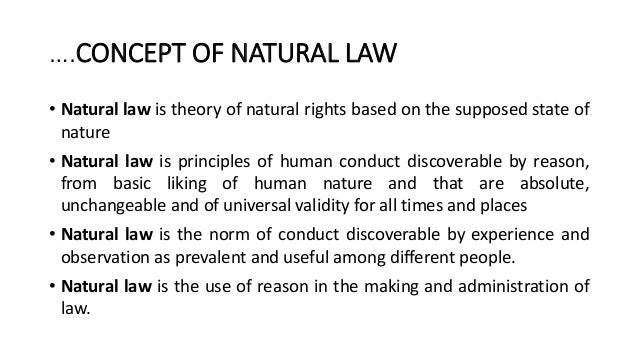
Image result for natural law

Source: Kitime Eluid

Posted in Uncategorized | 3 Comments

Final thoughts on the Wayfair case

As we have pointed out in previous posts (see below), the tax case of South Dakota v. Wayfair, which was decided last month, presents a number of fascinating constitutional, philosophical, and institutional questions. The constitutional issues revolve around the Supreme Court’s convoluted and esoteric dormant commerce clause doctrine. The philosophical questions revolve around the doctrine of stare decisis. Specifically, is this doctrine logically coherent, and under what conditions should a court vote to overturn an outdated precedent? And last but not least, the institutional issues include the Supreme Court’s voting rules. In particular, how many votes should be required to overturn a precedent? A simple majority or a super-majority? These are all hard questions. There is deep disagreement among judges and scholars about how to answer them. For our perspective on these questions, below is a compilation of our previous posts on this case:

  1. Is stare decisis dead? (6/22)
  2. Facts and issues presented (6/29)
  3. A Coasean critique of the Wayfair case (6/29)
  4. SCOTUS and super-majority voting (6/30)
  5. Final thoughts: see above (7/11)
Image result for hard questions

Credit: @gapingvoid

Posted in Uncategorized | Leave a comment

Rosa Parks: law breaker

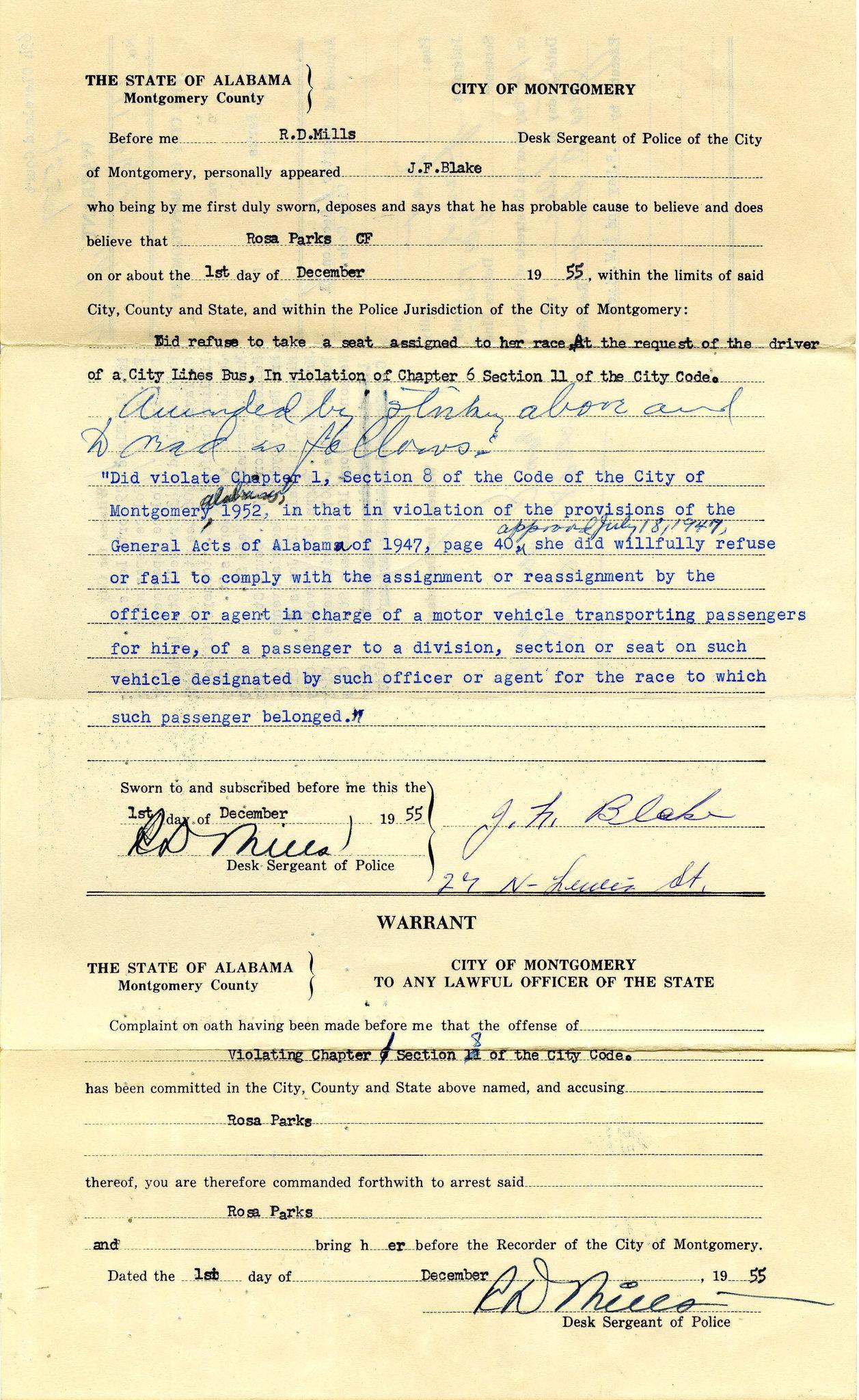
Today, Rosa Parks is revered as “the mother of the civil rights movement.” But in the mid-1950s she was treated as a common criminal by the State of Alabama. (Pictured below is Rosa Parks’s original arrest warrant. As an aside, shout out to Maya A. McKenzie, who discovered a treasure trove of legal documents pertaining to the criminal prosecution of Rosa Parks for refusing to obey a bus driver’s order to give up her seat to a white passenger. Ms. McKenzie discovered these historic documents in 2013 while she was working as an intern at the Montgomery County Courthouse in Montgomery, Alabama.) To us, Rosa Parks’s arrest warrant is a powerful symbol of the vitality of the natural law tradition and of the banality of evil. (Hat tip: Kottke.)

montgomery-documents-4-superJumbo.jpg

Posted in Uncategorized | 2 Comments

Atlas Shrugged: final thoughts

(a) The Good 🙂: This is by far the most entertaining book we’ve ever read explaining the evils of communism and the hypocrisy of most intellectuals. One can choose to dismiss these “big ideas” as adolescent, simplistic, or naive, but as the histories of various revolutions have shown, radical redistribution schemes make everyone poor–everyone, that is, except for those in power. (As a further aside, if intellectuals truly favored equality, why do so few (if any) of them refuse to accept prizes or literary awards? And why are academic intellectuals responsible for perpetuating the most feudal, archaic, and anti-egalitarian domain of the modern economy? Yes, we are referring to Academia!)

(b) The Bad 😦: Although the story is a compelling one, the bad guys in Atlas are uni-dimensional, mere straw men. As a matter of fact, we would love it if someone were to rewrite Atlas–but from the point of view of the looters!

(c) The Ugly 👿: John Galt’s speech is too damn long, and the rescue mission at the end is preposterous.

For the record, below is a complete compilation of our previous posts on Atlas Shrugged:

  1. Intro: Three original ideas in Atlas Shrugged.
  2. Original idea #1: The Logic of Robin Hood.
  3. Original idea #2: Trademarks and Coats of Arms.
  4. Original idea #3: Sex and the Market.
  5. Final thoughts: see items (a), (b), and (c) above.
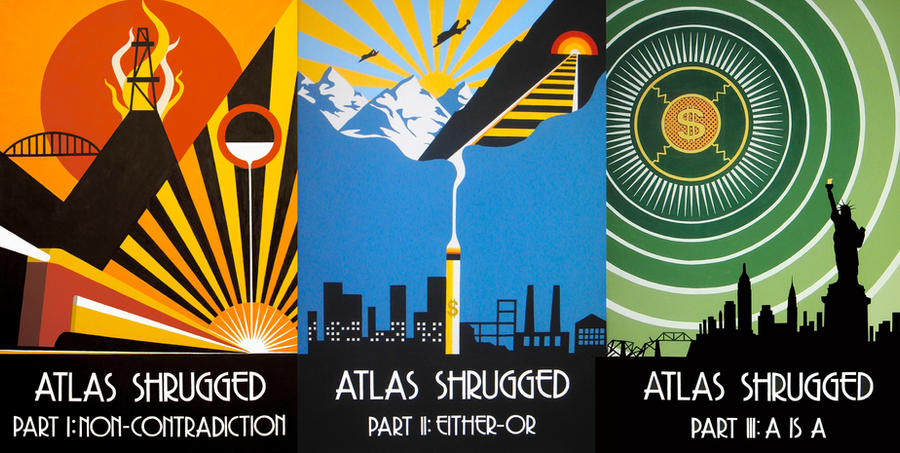
Image result for atlas shrugged

Credit: DecoEchoes.

Posted in Uncategorized | 3 Comments

BK for SCOTUS?

We interrupt our extended review of Atlas Shrugged to say a few preliminary words about Judge Brett Kavanaugh (BK). Although we were rooting for Amy Barrett, we have nothing bad to say about BK. If confirmed by the Senate, will he vote to dismantle the administrative state, overturn gay marriage, or eviscerate abortion rights? Those possible outcomes will depend on his views of precedent. But however he votes, we expect his decisions to be intellectually honest and well reasoned. By way of example, check out BK’s thoughtful essay “Fixing Statutory Interpretation,” which was published in The Harvard Law Review, Vol. 129 (2016), pp. 2118-2163, available here. Below is an extended excerpt (footnotes omitted): Continue reading

Posted in Uncategorized | 5 Comments

Sex and the market (review of Atlas Shrugged, part 3)

We have been exploring the most original ideas and insights contained in Ayn Rand’s cult-classic Atlas Shrugged, such as the depiction of Robin Hood as an anti-hero and the comparison between trademarks and coats of arms. But to us, the single-most original and surprising idea by far in this epic story occurs on pp. 453-455 (Part Two, Ch. 4) of Atlas Shrugged, during a conversation between two of the leading protagonists of the story, the incorruptible North American industrialist Henry “Hank” Rearden and the mysterious Argentinian copper heir Francisco d’Anconia, who both are in love with the same woman, the heroine Dagny Taggart. (As an aside, check out the different Dagny Taggart visualizations below.) During this dramatic meeting in Francisco d’Anconia’s suite in the Wayne-Falkland Hotel–their second careo or face-to-face encounter in the story–, d’Anconia explains to Rearden the close connection between sex and ethics: Continue reading

Posted in Uncategorized | 4 Comments

“The coats of arms of our day …” (review of Atlas Shrugged, part 2)

So much has been written about Ayn Rand’s magnum opus Atlas Shrugged that we have decided to focus on the three most original insights contained in this monumental novel. (Of course, just because an idea is novel or new does not make it true, but when evaluating a work of art, one can value originality for its own sake.) In our previous post, for example, we revisited Ayn Rand’s original, revisionist critique of Robin Hood. Today, we will explore another original idea in Atlas Shrugged, the idea expressed by one of the main characters in the novel (the Argentinian aristocrat and copper heir Francisco d’Anconia) that brands, corporate logos, and trademarks are the modern equivalent of the such bygone heraldic symbols as family crests and coats of arms. The passage in which Francisco d’Anconia makes this novel comparison appears on page 94 of the 35th anniversary edition of Atlas (Part 1, Ch. V), when d’Anconia tells Dagny Taggart, the heroine of the novel: “‘Dagny, I’ll always bow to a coat-of-arms. I’ll always worship the symbols of nobility. Am I not supposed to be an aristocrat? Only I don’t give a damn for moth-eaten turrets and tenth-hand unicorns. The coats-of-arms of our day are to be found on billboards and in the ads of popular magazines.’” Continue reading

Posted in Uncategorized | 2 Comments

The logic of Robin Hood (review of Atlas Shrugged, part 1)

Is Robin Hood a good guy or a bad guy? Our previous post identified three original ideas in Atlas Shrugged. One of these is Ayn Rand’s revisionist critique of Robin Hood, the legendary outlaw who robbed from the rich and gave to the poor. This counter-intuitive critique appears on pp. 532-533 of this monumental tome (all page references are to the 35th anniversary edition of Atlas Shrugged, the one with an Introduction by Leonard Peikoff), or about halfway into the novel, where one of the secondary characters in the novel (the Norwegian pirate Ragnar Danneskjöld) questions the moral ideal of Robin Hood, describing him as “the most immoral and the most contemptible” anti-hero. (By the way, we begin our review of Atlas Shrugged with the Robin Hood passage because the idea expressed in this passage is central to the main thesis of the novel: government regulators are “looters” who use coercion–regulation, fees, taxes, etc.–to extort wealth from the producing class–businessmen, corporations, and self-made tycoons–to entrench their own bureaucratic positions of power.) So, without further ado, here are the words of Ayn Rand’s alter ego Ragnar Danneskjöld: Continue reading

Posted in Uncategorized | 6 Comments

Three original ideas in Atlas Shrugged

We have been reading Ayn Rand’s magnum opus “Atlas Shrugged.” Among many other things, her monumental novel expresses three original ideas:

  1. Robin Hood was a scoundrel, not a hero.
  2. Trademarks and corporate logos (see below) are the modern equivalent of coats of arms.
  3. Who you make love to is an expression of what your values are.

We will elaborate on these three ideas in future blog posts.

Posted in Uncategorized | 2 Comments

What we’ve been reading …

Atlas Shrugged is a massive tome (over 1000 pages) and a cult-classic; we will post a review soon.

Posted in Uncategorized | Leave a comment