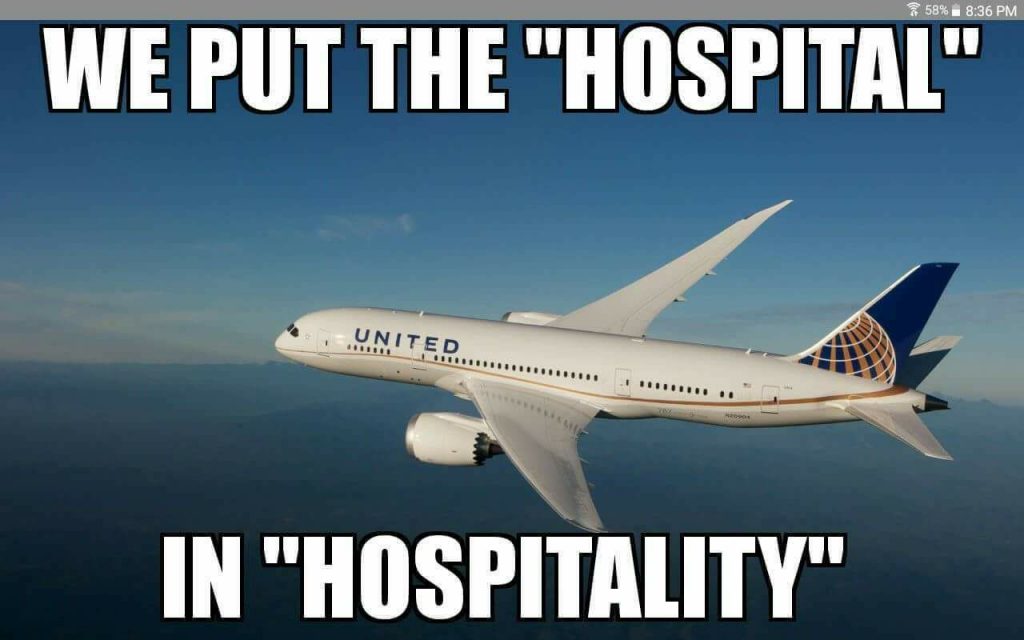
Have you ever been bumped off a flight or received shabby service from a commercial airline carrier? In our next class, we will take a break from “The Social Network” in order to debate United’s fateful decision (see memes below) to bump (or “re-accommodate,” in corporate lingo) several fare-paying passengers–and forcibly remove one of them–off United flight 3411 in order to make room for some United crew members. (By the way, our friend and colleague Eric Rasmusen has prepared an excellent overview of “The United Airlines Forcible Removal Affair”; you can read it here.) This infamous incident will allow us to revisit many of the substantive areas we have studied thus far in this legal and ethical environment of business course, including business ethics (e.g. is it ever unethical to bump a passenger off a flight?), sources of law (such as federal aviation regulations versus state common law), the law of contracts (especially section 25 of United’s contract of carriage), the law of torts (what duties does United owe to its passengers?), the law of agency (how can United be legally liable for the excessive force used by the Chicago Aviation Police?), forum shopping (is the plaintiff better off suing in Kentucky or in Illinois?), and the decision whether to settle or go to trial.
The Empirical Economics Debate
In the 1930s and 1940s, academic economists were engaged in the so-called “socialist calculation debate,” a theoretical quarrel that was not fully resolved until the fall of the Berlin Wall in 1989. (Until then, some economists seriously believed that a command-and-control economy like that of the now-defunct USSR could outperform a free market economy.) Fast forward 80 years. Now, academic economists are squabbling over “empirical economics.” Our friends and colleagues Russ Roberts and John Cochrane, for example, have mounted a powerful attack against empirical economics, arguing that empirical models in economics lack any real predictive power, while on the other side of this empirical debate, fellow economists like Adam Ozimek and Noah Smith have argued with equal passion and vigor that their fancy models are useful. Like the socialist calculation debate of yore, only time will tell who’s right regarding the value of empirical economics, but in the meantime, it’s ironic that Ozimek and Smith’s arguments in defense of empiricism are themselves not empirical-based.
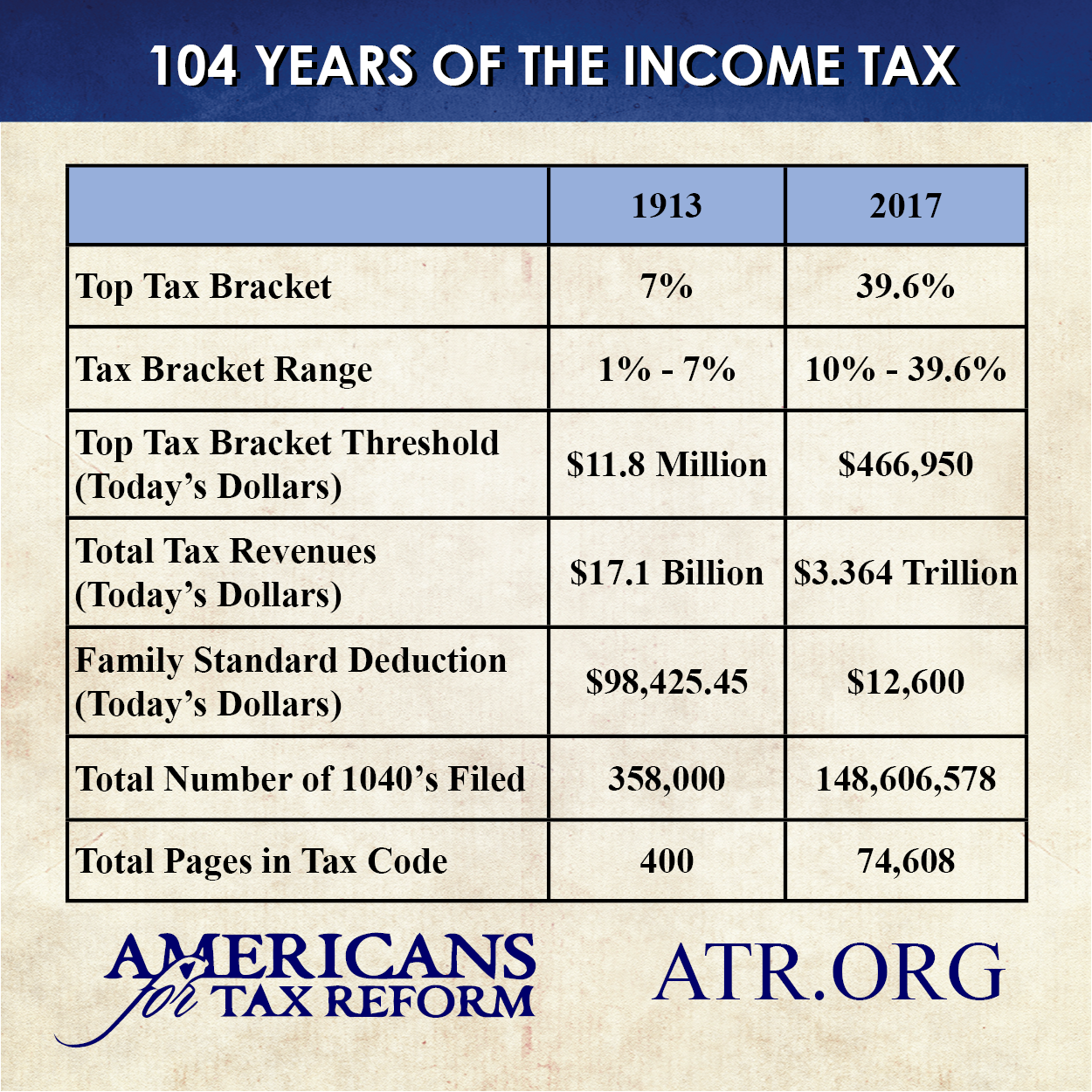
Starve the beast: let’s just repeal the 16th Amendment
Which occupations are “robot-proof”?
Take the quiz here. (Hat tip: the amazing Tyler Cowen.)

Simple Rules (United Airlines edition)
We are big fans of Richard Epstein’s book Simple Rules for a Complex World (Harvard University Press, 1995) for many reasons. Consider aviation. In place of this convoluted academic analysis, we would advocate for the following simple rule: carriers may not remove a passenger once he or she or it has boarded an airplane and taken their assigned seat. Otherwise, without such a simple rule, efficient Coasian bargaining isn’t possible. (If you have 22 minutes to spare, below is a short video of Professor Epstein lecturing on his ideas.)
Public Service Announcement: all chemical weapons are bad
Why are some chemical weapons like Napalm and Agent Orange okay to use (as long as the U.S. military uses them) but others off limits? If we are going to continue acting as the world’s policeman and all-around moral enforcer (with disastrous results), then we should at least stop using chemical weapons ourselves and stop being so sanctimonious and self-righteous.
Bad to worse (regime change edition)
1. 🇨🇺 Cuba: Fulgencio Batista (bad); Fidel Castro (way worse)
2. 🇮🇷 Iran: Mohammad Reza Shah Pahlavi (bad); Grand Ayatollah Ruhollah Khomeini (way worse)
3. 🇻🇪 Venezuela: Rafael Caldera (bad); Hugo Chavez/Nicolas Maduro (way worse)
4. 🇮🇶 Iraq: Saddam Hussein (bad); ISIL (way worse)
5. 🇱🇾 Libya: Muammar al-Qaddafi (bad); ISIL (way worse)
6. 🇸🇾 Syria: you get the picture
Anecdotal evidence does matter (United Airlines edition)
As members of the so-called “rationality community” like to say, the plural of anecdote is not evidence. (In 2016, for example, United Airlines denied boarding to only 3,765 of its more than 86 million passengers on overbooked flights, according to the U.S. Department of Transportation.) But it looks like they are wrong, at least if consumers stop flying on United after their recent public relations disasters. First, United kicked off some little girls from a flight for wearing leggings. Now, United has forcibly removed an elderly paying passenger from his seat to make room for STAFF! (Maybe United needs to rebrand: Greyhound Air.)
Legal memo to United: “possession is nine-tenths of the law.”
Class No. 12 (“You better lawyer up …”)
In our next class, we will study the pleadings in the litigation between Facebook and Eduardo Saverin. In the movie The Social Network, for example, Eduardo confronts his best friend and business partner Mark Zuckerberg when he finally realizes that his original 30% stake in Facebook has been diluted all the way down to “point zero three percent.” (In the most dramatic scene of the movie (pictured below), Eduardo tells Mark: “You better lawyer-up, asshole, ’cause I’m not coming back for my 30 percent, I’m coming back for everything!”) Eduardo thus threatens to sue Mark and Facebook for significant monetary damages. But what evidence will Eduardo need to prove his case, and how will he be able to obtain this evidence? To delve into these key questions, we will review the main stages of litigation, including pleadings, discovery, trial, and appeal. In addition, because litigation has become so costly, we will also consider several methods of “alternative dispute resolution” (ADR), such as mediation and arbitration.