Black History Data Visualization

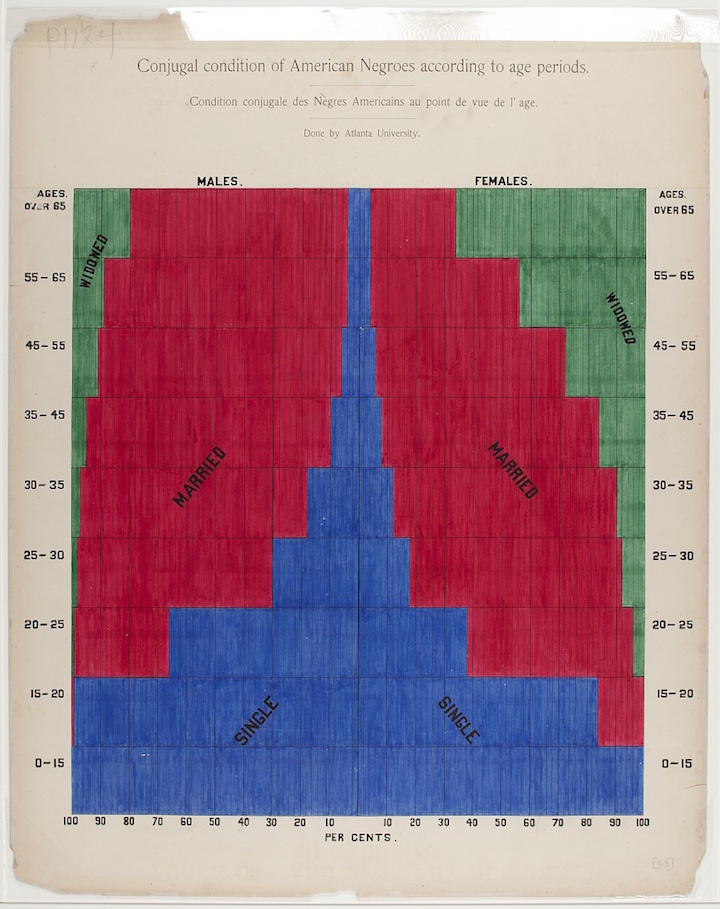
In honor of Black History Month, we are reposting this hand-drawn visualization of demographic data created by W. E. B. Du Bois in the year 1900. You can find more such turn-of-the-century data visualizations here. (Hat tip: digg.)

33915v

Credit: W. E. B. Du Bois

Posted in Culture, Economics, History, Science | 2 Comments

Class No. 5 (Lies and Deception)

When was the last time you were lied to, or when was the last time you told a lie? In our next class, we will study the law and ethics of deception. Generally speaking, it is morally wrong to tell a lie, but when does deceit in our daily interactions or in our business affairs cross the line of legal liability? Specifically, when does deception constitute the tort of deceit or fraudulent misrepresentation? (After all, most business deals and arms-length contract negotiations often involve some level of bluster and bluffing.) For example, in the movie “The Social Network,” does the fictional version of Mark Zuckerberg engage in unfair competition or commit business fraud (i.e. the tort of fraudulent misrepresentation) by pretending to be working on the Harvard Connection website when, in fact, he is really working on his own new facebook website? For what it’s worth, the common law defines the tort of deceit/fraud rather narrowly–see below for a complete listing of all the legal elements a plaintiff must prove in order to establish a case for fraud.

Continue reading

Posted in Ethics, Law | Leave a comment

Visualization of a “design arms race” (soda can edition)

Why do the designs of the Dr Pepper and Squirt soda cans change less frequently (i.e. are more stable over time) than the designs of Pepsi and Coke cans?

Hat tip: Michael Sandberg

Posted in Economics, Game Theory | 3 Comments

Mini maps

Photo credit: F.E. Guerra-Pujol

Posted in Maps | Leave a comment

Skew dice

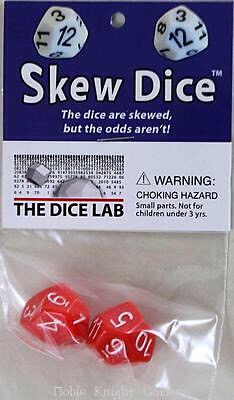
Monday Math Day?! Meet Robert Fathauer and Henry Segerman, authors of the Dice Lab and creators of “skew dice” (pictured below)–strange-looking dice that still generate fair odds. In their words: “When tossed, a fair die yields its various numbers or symbols with equal probability, regardless of details of the surface or the toss. The shapes of dice are based on polyhedra, solids whose faces are polygons. To ensure fairness, each face of the polyhedron should have an identical relationship to the other faces …”

Just in case, here is a short explanation of the mathematics of their skew dice: “Considerable thought went into the numbering of the dice. The starting point was locating the largest number opposite the smallest number (on opposing faces), the next largest opposite the next smallest, etc. This convention is widely followed in dice design. The next priority was to distribute the numbers as uniformly as possible. That was accomplished by balancing the sums of the numbers on each group of faces surrounding a vertex … Note that the average numerical value per face for an n-sided die is (n + 1)/2.” (Hat tip: Cliff Pickover.)

Posted in Uncategorized | Leave a comment

Facebook’s birthday

Facebook was launched from Mark Zuckerberg’s dorm room 13 years ago today (it was called thefacebook back then), yet there is still no DISLIKE button after all these years. But when should the billionaire CEO celebrate Facebook’s birthday: when he first registered the URL for thefacebook.com, when he created the first Facebook profile while the site was in beta, or when Zuckerberg and his fellow cofounders filed the legal paperwork to incorporate their company. (Thanks to Dino Grandoni for pointing out these alternative Facebook birthdays to us.)

Image result for dislike button meme

One out of twelve ain’t bad? (via tumblr)

Posted in Culture, History, Web/Tech | 1 Comment

Keyboard waffle iron

Image result for keyboard waffle iron

Created by Chris Dimino

Posted in Art, Culture, Economics | Leave a comment

Class No. 4 (Contracts and Vampires)

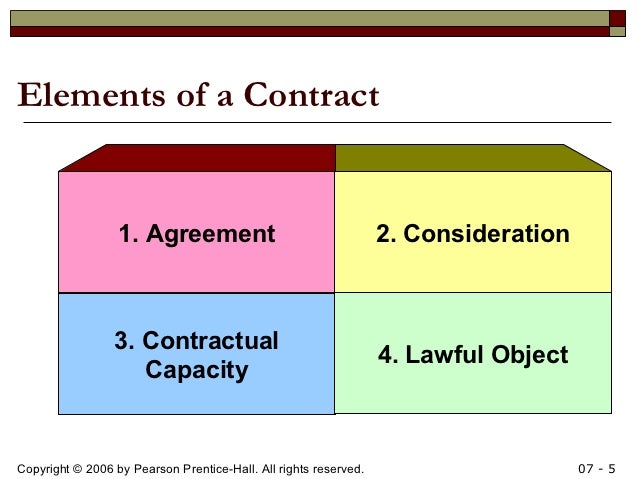
In our next class, we will consider the law and ethics of two separate promises depicted in the movie “The Social Network”–the informal coding agreement between the Winklevoss twins and Mark Zuckerberg as well as the informal partnership between Zuckerberg and his best friend Eduardo Saverin. In summary, the movie “The Social Network” depicts two ill-fated promises. Soon after the Facemash fiasco, the Winklevoss twins and their partner Divya Narendra introduce themselves to their fellow classmate Mark Zuckerberg, and they proceed to pitch him an idea for an online social network/dating website: the Harvard Connection (later renamed ConnectU). In the movie version of these events, Zuck tells them “I’m in” without hesitation, but then, in the very next scene (!), Mark and Eduardo negotiate an informal partnership agreement with the purpose of launching a “clean and simple” social network, a rival website that Mark would eventually christen “thefacebook.” Assuming the veracity of the movie version of these promissory events, the key question is thus this: are either of these oral agreements legally binding? In addition, we will also debate whether humans should be allowed to sell blood to vampires. (FYI: check out this podcast on this esoteric topic.) That is, are there any voluntary and consensual contracts that the law should refuse to enforce as a matter of policy? If so, how should courts draw this legal line?

Image result for elements of a contract

Image Credit: Pearson Education

Posted in Ethics, Law | 2 Comments

Statutes as lemons (critique of Kavanaugh, 2016)

We have just finished reading Brett Kavanaugh’s highly original essay “Fixing Statutory Interpretation” in the Harvard Law Review, vol. 129 (2016), pp. 2118-2163. (Kavanaugh, who we shall now refer to as “K-1”, is a federal appellate judge on the D.C. Circuit of Appeals.) In his thoughtful essay, K-1 reviews the book “Judging Statutes” (Oxford University Press, 2016) written by Robert Katzmann, “K-2”, who is also a federal appellate judge. After critiquing K-2’s willingness to delve into the muddy waters (or is it a swamp?) of legislative history when interpreting a statute, K-1 then proceeds to offer an alternative method of statutory interpretation.

Currently, most judges apply some version of the plain meaning or clear meaning rule when there is a dispute about the actual meaning or application of a statute. That is, if the literal meaning of a statute is clear, courts will generally enforce the statute “as is,” come what may. (We say “generally” because human judges, being the devious creatures that they are (source: Al Roth), can always find clever ways of ignoring the plain meaning rule, especially in cases involving absurd results or legislative mistakes.) If, however, a statute is ambiguous, courts are more willing to use extra-legal sources–i.e., sources external to the statute, such as committee reports, dictionaries, public policy, etc.–in order to figure out the true meaning of the statute. But as K-1 correctly notes, the problem with this time-tested approach to statutory interpretation is that it is not always clear or obvious when a statute is ambiguous, for the concept of ambiguity is itself ambiguous! (This point, by itself, is a novel and useful contribution to the scholarly literature. Moving forward, any halfway decent theory of statutory interpretation will have to find a way of solving–or avoiding–this problem.)

But wait, there’s more! Our friend K-1 also proposes an alternative method of statutory interpretation. In summary, instead of trying to guess whether a statute is clear or ambiguous, K-1 implores judges to figure out the “best reading of the text of the statute” (p. 2144). Say what …? Unfortunately for K-1, his honor is asking judges to substitute one magical wand for another. Why? Because his “best reading” test is totally empty and rudderless and just as utterly indeterminate and unhelpful as the subjective tests judges now use to distinguish between clear and ambiguous statutes, for how would one go about deciding whether the “best reading” of a statute is a narrow or literal reading or a broad/expansive one. His honor does not say. Simply put, K-1 provides no specific guidance as to how one would go about finding the best meaning of a statute. In fact, if K-1’s best reading formulation is the test, judges will just end up falling back on their untestable intuitions or policy preferences when deciding what the best reading is. So, what is to be done? First, we need to realize that most statutes are “lemons,” i.e. bad or defective products. We will say more about “statutes as lemons” in a future post … (Thanks to Paul Caron, via TaxProfBlog, for pointing out K-1’s essay to us.)

Image result for lemons wikimedia

Image Credit: Wikimedia Commons

Posted in Bayesian Reasoning, Game Theory, Language, Law | Leave a comment

Captcha arms race update

Posted in Culture, Game Theory, Web/Tech | Leave a comment