Probabilistic Interpretation, Part 2

That is the title of our most recent work in progress; one of the research projects we were working on while we were on sabbatical. (Part 1 of the paper will be published in the University of LaVerne Law Review this spring and is available here.) Part 2 presents Lon Fuller’s “Case of the Speluncean Explorers,” one of the most famous thought experiments in legal studies. In our paper (part 2), we imagine an alternative system of voting by appellate judges, a bayesian or cardinal voting system in which judges assign a score to their preferred judicial outcome. Appellate courts generally use an ordinal system of voting (i.e. one judge, one vote) to decide cases. By contrast, we propose a simple cardinal voting system for deciding appellate cases, using Fuller’s hypothetical case to illustrate how our simple system of cardinal voting would work in practice.
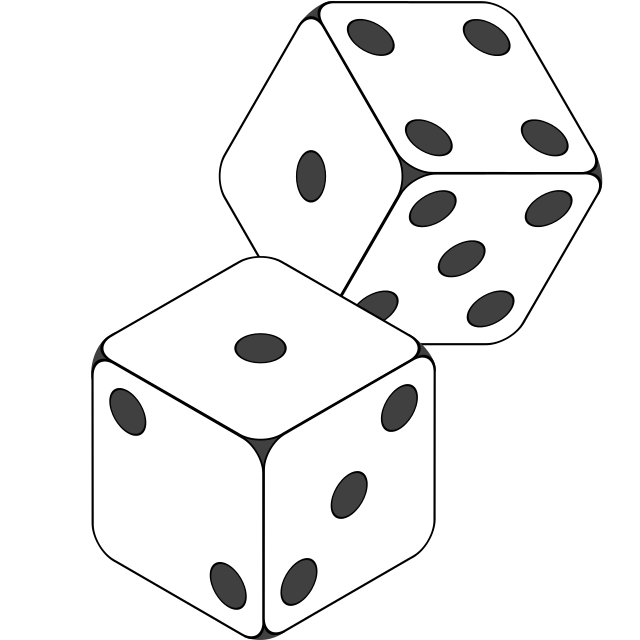
Image credit: Wikimedia Commons

Posted in Uncategorized | 5 Comments

Meta-trolley problem

Via Chris Rodley: “A runaway trolley is about to create five trolley problems. Do you pull the lever and divert it, so it only creates one?”

Posted in Uncategorized | Leave a comment

Top three list

Here’s a listing of our three most popular/most visited blog posts over the last three years:

1. Probabilistic business hours (2016)

2. Consumer surplus: “Print Wikipedia” art edition (2015)

3. Chess piece survival rates (2014)

Image result for happy new year

Happy New Year

Posted in Culture, Time | Leave a comment

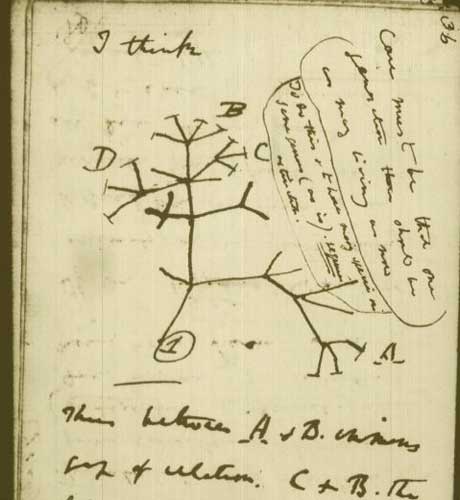
Is the tree of life more like a web?

The great Charles Darwin visualized a tree of life (pictured below) consisting of separate species springing from a distant ancestor, but what if many of these “separate species” still share significant amounts of the same genetic material? Check out, for example, this recent report by Elizabeth Pennisi titled “Shaking up the tree of life” published in the journal Science, vol. 354 (18 Nov 2016), pp. 817-821. Here is one excerpt (p. 818): “Biologists long ago accepted that microbes can swap DNA, and they are now coming to terms with rampant gene flow among more complex creatures [such as interbreeding birds and butterflies]. ‘A large percent of the genome is free to move around,’ notes Chris Jiggins, an evolutionary biologist at the University of Cambridge in the United Kingdom. This ‘really challenges our concept of what a species is.’ As a result, where biologists once envisioned a tree of life, its branches forever distinct, many now see an interconnected web.”

Image result for darwin's tree of life

Darwin’s tree of life.

Posted in Bayesian Reasoning, Uncategorized | Leave a comment

Train Track Art

Posted in Art, Culture | 3 Comments

And the winner is … (computer-screen arms race edition)

Posted in Uncategorized | 1 Comment

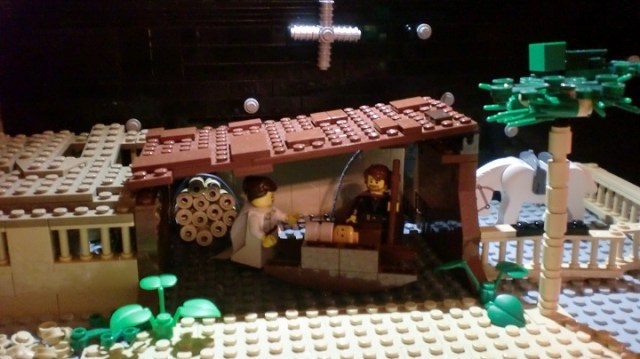
Nochebuena (Christmas eve): Lego edition

image

Feliz Nochebuena; Feliz Navidad

Posted in Uncategorized | 1 Comment

Peace and Love: Happy Chanukah

Image Credit: Romaya Puchman

Posted in Uncategorized | Leave a comment

Merry Christmas: a “Blade Runner” sequel is in the works

We interrupt our sporadic Internet sabbatical with the following update: Forget the overhyped (and totally overrated) Star Wars franchise, because we just discovered that Blade Runner is coming back to the big screen. The “original” Blade Runner is one of our favorite films of all time (we put the word original in scare quotes because there are several different versions of the original movie), so we can’t wait for the sequel.

Posted in Culture, Science Fiction | 1 Comment

In memory of Thomas Schelling, the errant economist

Update (1/22/17): check out this touching tribute to Schelling by Glenn Loury. (Hat tip: Garrett Jones, via Twitter.)

We have been trying to stay away from the Internet during our “Christmas sabbatical” to spend more time with our family, attend to grading duties, and read Roy Sorensen’s beautiful book on thought experiments, but we just discovered that the author of The Strategy of Conflict and self-described “errant economist” Thomas Schelling (pictured below) died a few days ago. Because Professor Schelling had such a great influence on us (he was one of our intellectual heroes), we are interrupting our Internet sabbatical to describe his impact on our approach to law and life. In particular, here is an abridged excerpt (without footnotes) from an essay we published in 2015:  Continue reading

Posted in Academia, Bayesian Reasoning, Cooperation, Economics, Game Theory | 2 Comments