Three lessons from our father

Family first. Work hard. Be loyal.

IMG_20140125_133953

Gracias papa

Posted in Uncategorized | 1 Comment

Visualization of world’s most spoken languages

Proportional Pie Chart of the World’s Most Spoken Languages [2000x3261]

hat tip: unord, via reddit

Posted in Bayesian Reasoning, Culture, Language | 3 Comments

Homicide data by weapon

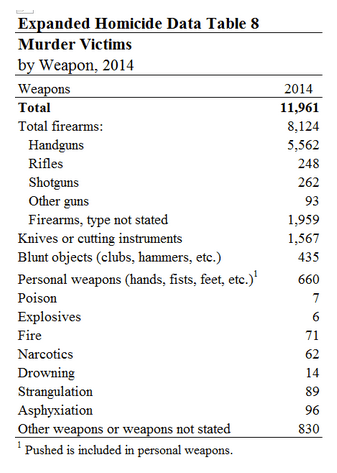
Let’s ban knives, too?  There’s no need for a complicated regression analysis, via Alex Tabarrok (Marginal Revolution), here are the raw data for 2014:

Screenshot 2016-06-17 20.47.06

Source: FBI

Posted in Bayesian Reasoning, Deception, Law | Leave a comment

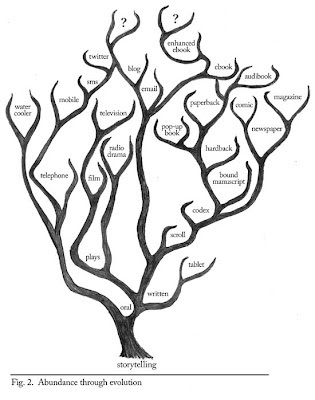
The evolution of storytelling

Image Credit: David Morrison

Posted in Culture, Time | 2 Comments

Is stare decisis a tautology?

Stare decisis, or the principle of binding precedent, means that a decision made by a court is binding on that court itself in future cases and on all inferior courts in the same legal jurisdiction. The rationale for this principle is the idea that judges should treat like cases alike. Moreover, stare decisis not only serves as the foundation of the Anglo-American “common law” system; it is also said that stare decisis promotes the rule of law, since this principle is designed to limit the discretion of judges and thus keep the legal system predictable and stable over time.

But as a matter of logic, the principle of binding precedent neither enhances the rule of law nor limits the discretion of judges because, at the end of the day, it is the judges themselves who decide when two cases are sufficiently alike or unalike. Moreover, stare decisis is based on a tautology: one practical, the other logical. Let’s consider the practical problems with the principle of stare decisis first. It is all well and good to say that judges should treat like cases alike, but who decides when two different cases, let’s call them case A and case B, are sufficiently alike or unalike?  Why, it is the judges themselves who decide this! Thus, from a purely practical perspective, the impotence of the principle of precedent should become apparent to us at once. On the one hand, the main purpose of stare decisis is to limit the discretion of judges, but at the same time, it is these same judges—i.e. the very same officials whose discretion we wish to limit—who decide which precedents are binding!

To make matters worse, the notion of “binding precedent” is itself something of an oxymoron, a logical contradiction. Even when everyone agrees that case A and case B are sufficiently alike for purposes of stare decisis—so that case A controls the outcome of case B—this happy state of affairs now raises a new and more troubling question: on what authority is stare decisis itself based on? Why is this new question so troubling? Because the obvious answer to this question undermines the very moral foundation of our legal system: it is the common-law judges themselves who have established the doctrine of stare decisis on normative grounds—the moral maxim of treating like cases alike—and since it is the judges themselves who have announced that precedents are binding, then by this same logic, these same judges also have the authority to disregard the doctrine that they themselves have created. Of course, one could reply that our argument has no practical import in the real world, since so few judges would ever openly disregard or undo the doctrine of stare decisis

But what about the hard cases?

Image Credit: Missthermo, via Pinterest

This post is based on our previous work: F. E. Guerra-Pujol, “Is stare decisis a sand castle?,” Arizona State Law Journal (Oct. 1, 2012).

Posted in Law, Logical Fallacies, Paradoxes | 3 Comments

Is an immoral promise a “promise”?

We address this paradoxical question in our work-in-progress titled “Immoral Promises.” We consider this question to be a “paradoxical” one because people are generally supposed to keep their promises according to most theories of morality. In short, most philosophers think it is morally wrong to break a promise. But what about an immoral or illegal promise? Here is an excerpt from page 4 of our paper:

“Many theorists define valid promises in such a way as to exclude promises to perform immoral acts. (See, e.g., Shiffrin, 2011, p. 160: ‘I deny that immoral “promises” are true promises.’) On this view of promising, an evil or immoral promise is not morally binding or obligatory because such a promise is not really a promise in the moral sense. In particular, this line of argument focuses on whether a promisor has a moral or legal right to perform the promised act. (Ibid., pp. 159-163.) Simply put, if one does not have a right to perform X (where X is some immoral or wicked act), then a promise to do X is a defective promise. 

“By the same token, David Owens (2006) proposes a similar solution to the problem of immoral promises. First, Owens reframes a promise as a transfer of authority from the promisor to the promisee. That is, according to Owens’s ‘simple theory of promising,’ whenever I make a promise to someone, what I am really doing is giving the promisee (the recipient of my promise) the authority to require me to perform my promise. This reframing thus solves the problem of immoral promises, since promisors lack ex ante the authority to perform immoral actions. In other words, if I lack the authority to do something immoral in the first place, then I also lack the authority or normative power to promise to do that very same immoral act in the future, or in the words of Owens (ibid., p. 72, n. 28): ‘Where the promisor has no authority to do the thing promised (for example, a promise to kill or maim), no grant [of authority] can be made and the promise is nugatory …’

“But is a promise really a transfer of authority (in the case of Owens) or a transfer of rights (in the case of Shiffrin)? If so, how does a promise effectuate such a transfer? We would argue that all such transfer theories of promising, including Owens’s, are unable to circumvent Hume’s famous objection. (See generally Habib, 2014.) In particular, how does the mere recital of a few (magical?) words change anything about the world?

“In any case, let us assume that either Owens’ or Shiffrin’s account of promising is the correct one. We are not out of the woods yet because such transfer theories are vulnerable to two potentially fatal flaws. First, both theories of promising are devoid of any substantive content because they do not provide any criteria for determining whether one has the legal right or the moral authority to do X in the first place. That is, although the validity of a promise under these transfer theories of promising depends on the content of one’s promise, these theories are empty; they provide no criteria for evaluating the goodness or badness of the content of promises. Such criteria are entirely external to the rights theory or authority theory.

“Furthermore, as Charles Fried (1981, pp. 96-97) points out, it is not always obvious what the relevant moral or legal baseline of the parties is. Consider the breaking bad problem anew, [which we discuss on page 2 of our paper]. Despite the best efforts of the police, there exists a thriving black market for crystal meth in New Mexico and beyond. In an ideal world, it would be best if this illegal meth market did not exist, since meth is a highly addicting and dangerous substance, but this market does exist, so if Walt and Jesse don’t meet this demand, other less scrupulous suppliers most likely will. Assuming that no one is coerced into consuming this dangerous drug, can we really say that Walt and Jesse don’t have an ex ante moral right to engage in the meth trade?”

Image Credit: AMC

Bibliography:

Charles Fried, Contract as Promise, Harvard U Press (1981).

F. E. Guerra-Pujol, Immoral Promises, work in progress (2016).

Allen Habib, Promises,” in Edward N. Zalta, editor, The Stanford Encyclopedia of Philosophy (spring 2014 edition).

David Owens, “A simple theory of promising,” Philosophical Review, Vol. 115, No. 1 (2006), pp. 51-77.

Seana Valentine Shiffrin,Immoral, conflicting, and redundant promises,” in R. Jay Wallace, Rahul Kumar, and Samuel Freeman, editors, Reasons and Recognition: Essays on the Philosophy of T.M. Scanlon, Oxford U Press (2011), pp. 155-178.


Posted in Ethics, Law, Paradoxes | Leave a comment

#WeAreOrlando #SomosOrlando

Nunca te olvidaremos. We will never forget you.

Posted in Uncategorized | Leave a comment

Orlando, our city, in our hearts and prayers

Tel Aviv city hall tonight

Tel Aviv City Hall (via reddit)

Posted in Uncategorized | 2 Comments

Light pollution map

Via imgur (h/t glowdirt). Click on the map to enlarge.

Posted in Bayesian Reasoning, Maps | Leave a comment

The law of the law of the law of interpretation?

As we mentioned in our previous blog post, William Baude and Stephen Sach recently posted on SSRN an 85-page magnum opus titled “The Law of Interpretation.” (By the way, on the bottom of each page of their article, there is an obnoxious disclaimer stating “Draft–please use caution before citing or quoting.”) We decided to write up a formal reply to their article, though whether we used sufficient “caution” in quoting from their article, we can’t say. Here is an excerpt from our reply (footnotes omitted):

To their credit, Baude and Sachs eventually anticipate our regress objection toward the end of their [85-page] article. Nevertheless, their last-ditch though no doubt sincere effort to salvage their newborn theory is too little, too late. Although they concede that “there can be uncertainty or disagreement” about their second-order legal system, they then conjure up out of thin air the existence of (third-order?) “closure rules.” According to Baude and Sachs, these meta-magical closure rules can be either procedural or substantive, but alas, their lengthy article does not specify what these “closure rules” consist of or where judges can go to find them. Worse yet, Baude and Sachs end up conceding that their so-called closure rules are themselves contested and open to ambiguity. As a result, they also posit a set of (fourth-order?) “authority rules” for resolving disputes about the closure rules. Yet the existence of meta-meta-magical rules of authority compounds the regress problem with a tautology. Why? Because the rules of authority are simply arbitrary rules that answer the question “who decides?” in the final instance. But telling us who has the last word in matters of interpretation does not solve the problem of interpretation. Again, we are back to where we started …

So, where does this leave us regarding the problem of legal interpretation? Back to the proverbial drawing board, we’re afraid to say.

Posted in Law, Logical Fallacies, Philosophy | Leave a comment