Science stamps

Royal Mail Inventive Britain stamp set
The Royal Mail (U.K.) has launched a special stamp set in honor of British inventors. The stamps pictured above depict a wide variety of British inventions (moving clockwise, from top-left to bottom-left): the World Wide Web, the world’s first digital computer (Colossus), the i-limb prosthetic hand, the cat’s eye retroreflective road safety device, fiber optics, and DNA sequencing. (Hat tip: Cliff Pickover, via Twitter.)
Posted in Art, Science | Leave a comment

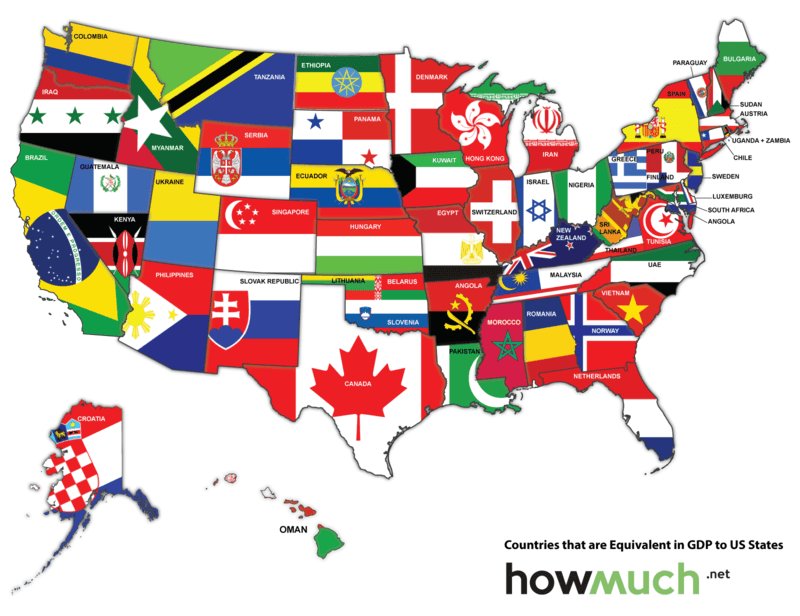
Presidential predictor map

Yeah, the Zetan Greys have taken a keen interest in American politics ever since we got the southwest from Mexico...
Posted in Maps, Politics | 2 Comments

Traffic Jam Paradox

Notice how a single car in the video below creates a chain-reaction leading to a traffic jam. Thus the paradox: given driver behavior, what if building more highways (or expanding existing ones) doesn’t result in reductions of traffic jams? Instead, what if more or wider highways just creates more opportunities for more traffic jams?

Posted in Bayesian Reasoning, Science, Traffic | Leave a comment

QWERTY art

Pictured below is a computer keyboard monument created by artist Anatoly Vyatkin. This massive sculpture was designed to mimic an IBM PC keyboard. It consists of 86 stone blocks, each weighing up to 1,000 pounds, and is located in Yekaterinburg, Russia. (You can find more pictures of this fascinating monument here.)

Hat Tip: Cliff Pickover (via Twitter).

Posted in Art, Culture | Leave a comment

Mi Antonia (mi abuela querida)

On this Mother’s Day, we wish to remember “Abuela Cuca,” our beloved maternal grandmother …

Our beloved grandmother

Posted in Uncategorized | Leave a comment

Why did it take us so long to update our Trump priors?

File this post under “confirmation bias” or “reverse halo effect.” Nate Silver is the world-famous “data scientist” whose claim to fame is his ability to predict elections by aggregating polling data. Last summer (July 20, 2015), Silver explained why Donald Trump had a <5% chance of winning the Republican nomination. Last fall (Nov. 23, 2015), Silver grudgingly conceded that Trump had a <20% chance of being nominated. This week (May 4, 2016), with the campaign all but over, Silver finally recognized that Trump will be the Republican nominee. So, what should we make of this spectacular failure on Silver’s part to predict the outcome of this contest? More importantly, why did it take Nate Silver so long for him to update his priors? (FYI: Via Zero Hedge, Tyler Durden (or Daniel Ivandjiiski) explains in this excellent post why Silver was unable to distinguish between the signal and the noise.)

h/t: mangodebango (via imgur)

Posted in Bayesian Reasoning, Current Affairs, Politics | Leave a comment

A “CV of failures”

What would yours look like?

Posted in Academia, Bayesian Reasoning | 1 Comment

Will this presidential promise be kept?

Earlier this year, we wrote up an in-depth series of blog posts discussing the moral bases of “the presidential pledge,” i.e. the solemn pledge all the Republican presidential candidates made to support the eventual nominee of their party. (Here is very our first post on this topic.) Now that businessman Donald J. Trump — the only candidate on the Republican side who remains in the contest — has unofficially won his party’s nomination, it will be fascinating to see how many of the losing candidates will break their pledge and the reasons given for breaking it.

Happy Anniversary, dearest Sydjia!

Posted in Current Affairs, Deception, Law, Philosophy, Politics | Leave a comment

Best Final Project (Spring 2016)

Congratulations to our students Cassidy Singer and Jacob Triton. This semester, they submitted an innovative final project (see video above) discussing the legal and ethical aspects of their proposed start-up business, ExpressU, an on-campus ride-sharing service. Mr Cassidy presented the project to our undergraduate Law and Ethics class and ended up receiving the most votes for “best presentation” from his fellow students. In addition, props to Sarah Lane for her presentation (Trilogy Coffee) and to Marina Ribeiro and Chris Mitchell for their project (The Socket). You can check out last semester’s winners here.

Posted in Law | Leave a comment

“Read more”

Pop Quiz: With cable television on one end of the learning spectrum (superficial and shallow) and good books on the other end (deep and thoughtful), which end of this spectrum is the Internet closer to?

Photo credit: F.E. Guerra-Pujol

Posted in Culture | Leave a comment