Bargaining and Betrayal in Breaking Bad

Last fall, we posted the abstract to our work-in-progress titled “Breaking Bad and the Natural Law Tradition.” Originally, we were going to write about the conflict between meth kingpin Walter White (alias Heisenberg) and DEA agent Hank Schrader from a natural law perspective, but since then, we re-discovered a bargaining game known as “So Long Sucker” and have thus become captivated by two central themes that permeate every episode of Breaking Bad: the themes of bargaining and betrayal. We have since written up a 7000-word paper exploring these themes in greater detail. (You can read the first draft of our paper on SSRN.) In the meantime, here is our new abstract:

This short paper explores a number of commonalities between the bargaining game “So Long Sucker” and the critically acclaimed TV series Breaking Bad. In brief, “So Long Sucker” has been variously described as “a dog-eat-dog world” (Anatol Rapoport), “vicious” (William Poundstone), “anti-chess” (D. Graham Burnett), and “fiendish” (Peter Tannenbaum). That these dire terms equally describe the meth underworld as depicted in Breaking Bad is no coincidence, for the game “So Long Sucker” and the meth trade in Breaking Bad both share a number of commonalities. In both worlds agreements are unenforceable; double crosses, recurrent; victory, elusive. Moreover, these commonalities raise deeper questions about the nature of morality in a “society of ruffians” (see, e.g., David Hume), questions we explore in the conclusion of this paper.

Posted in Culture, Ethics, Game Theory, Games, Law | 1 Comment

An offer he could not refuse (Lessons 3 & 4)

Because our business law class meets only once per week, we are combining Lessons 3 & 4 into a single lecture. As it happens, both business law lessons have something important in common: contracts. In the film “The Social Network” (the movie version of our assigned book “Accidental Billionaires”), after the Winklevoss twins (pictured below) introduce themselves to fellow classmate Mark Zuckerberg and pitch him their idea for a social network website, Mark tells them “I’m in” without hesitation, and then, in the very next scene(!), we see Mark and his best friend Eduardo Saverin negotiate an informal partnership agreement with the purpose of launching a new rival website (which Mark would eventually christen “thefacebook”). Assuming the veracity of the movie version of these critical events, here is the key question for today’s class: are either of these oral agreements legally binding?

Postscript: In preparation for today’s class (Feb. 1st), we have asked our students to write up a sample contract or “agreement in principle” between Zuckerberg and the Winklevoss twins before coming to class. Our goal in creating this assignment (and in making it due before today’s contracts class), is to put our students in the same position that Mark Zuckerberg, Eduardo Saverin, and the Winklevoss twins found themselves in the fall of 2003.

You don’t say?

Posted in Uncategorized | 1 Comment

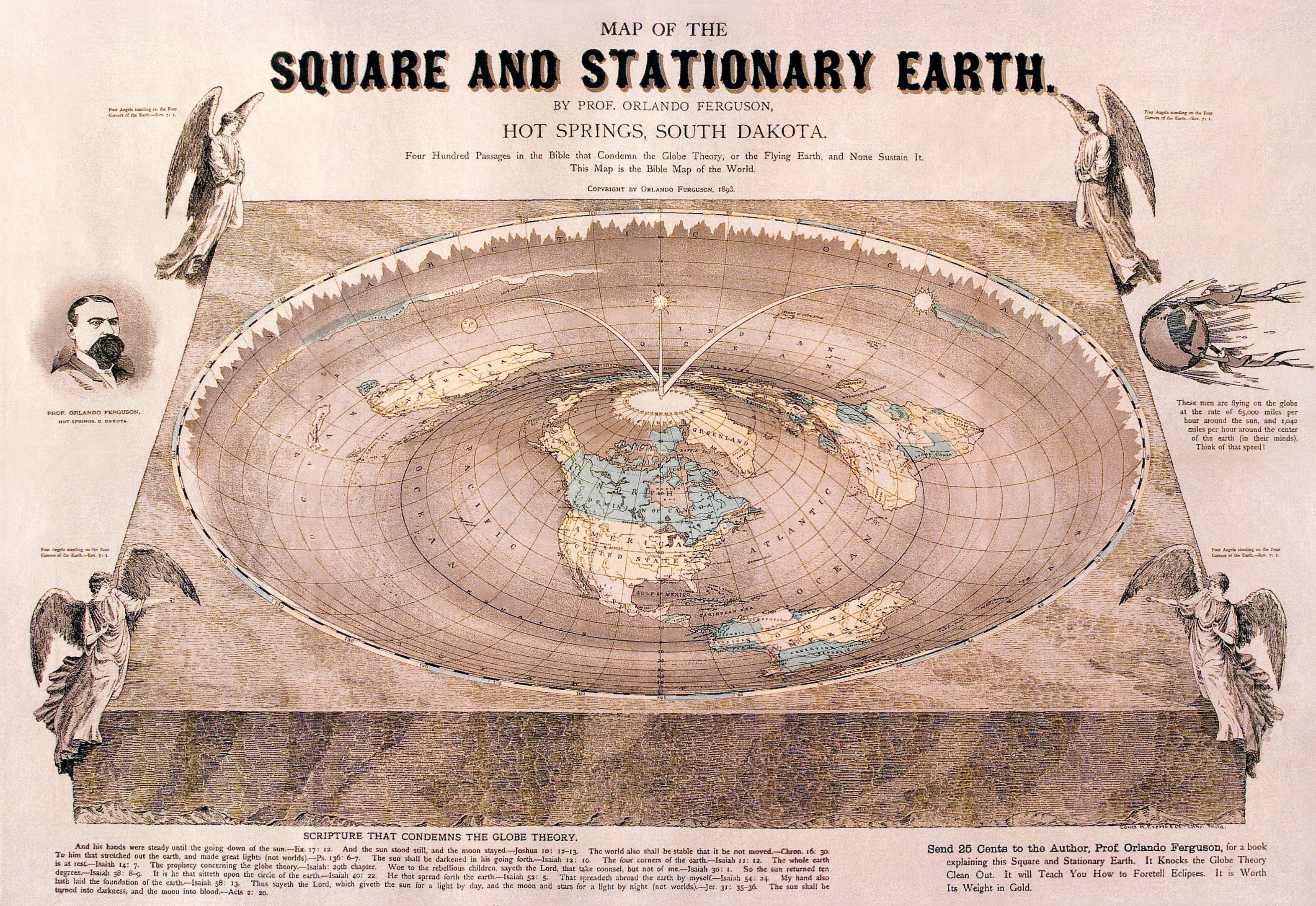
Flat-Earth map (circa 1892)

This is what the one particular flat-Earth paradigm looks like … Any questions?

Posted in Maps | Leave a comment

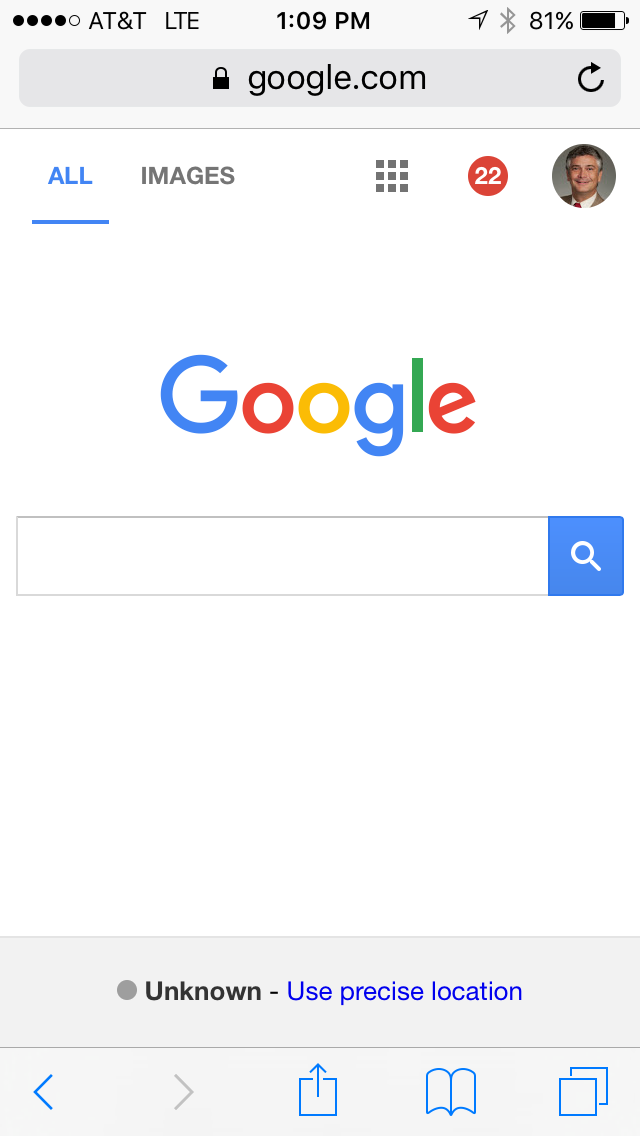
Where did the “I’m feeling lucky” option go?

Can you solve the case of the missing “I’m feeling lucky” feature? For starters, check out this screenshot taken from our iPhone 5 earlier in the day (Jan. 30, 2016):

Did you notice that the “I’m feeling lucky” feature on Google search is gone? Where did it go? More to the point, did you ever–even once–use this option? (We never used it either!)

Posted in Uncategorized | Leave a comment

Theoretical and empirical analysis of airline boarding

We understand why so-called “security” checkpoints at airports are so slow and horribly inefficient? But why are airline boarding procedures (which are implemented by the for-profit private sector) so slow and horribly inefficient? This short video (it’s only two and one-half minutes long) explains why.

Posted in Uncategorized | Leave a comment

Target practice?

Posted in Uncategorized | Leave a comment

Cartoon family resemblance

 Via kottke, check out this crazy table of cartoon characters drawn by artist Jaakko Seppälä. The diagonal from top left to bottom right (shaded gray) portrays a variety of familiar cartoon characters; the rows contain re-interpretations of these characters based on the cartoon styles of the cartoons in the shaded area in each column. Genius!

Posted in Uncategorized | 2 Comments

Edge-matching puzzle with no logical solution

Embedded image permalink

Check out the “edge-matching” puzzle pictured above. The setup of this game consists of seven contiguous hexagons arranged inside a circle. The edge of each hexagon is assigned a number from 1 to 6. The goal of this game is to match the numbers on the various edges of the hexagons without lifting any of the hexagons from the circle (i.e., by rotating the hexagons within the circle). According to this summary of the game by bohus, there is only one solution, and “there’s no rational way to build to an answer. All you can do with [this game] is keep trying to find the fit. There’s no logical solve to find. I even consulted a mathematician. A child has about as much of a chance solving this time-waster.” You can print out your own version of this puzzle here. (Hat tip: the excellent Cliff Pickover, via Twitter.)
Posted in Games | Leave a comment

The facemash fiasco (Lessons 1 & 2)

Because our large business law class meets only once per week (on Mondays), we are going to combine Lessons 1 & 2 into a single lecture. In addition, we are going to re-enact Mark Zuckerberg’s fall 2003 “Ad Board” hearing at Harvard College. (Some background: Before he launched Facebook, Harvard sophomore and computer genius Mark Zuckerburg created a website called Facemash. In brief, Facemash presented the user with two randomly-selected student I.D. photos of women students enrolled in Harvard and then let the user choose which one was “hotter.” Mark’s website quickly went “viral”—in a matter of hours, the site attracted 450 visitors, who had voted on their classmates’ photos at least 22,000 times.) We will thus need several student volunteers for this in-class assignment:

1. Complainant #1 (the role of Leyla Bravo, student and president of Fuerza Latina): Your mission, should you decide to accept it, is to deliver a short “closing argument” to the Ad Board. Specifically, from your (Fuerza Latina’s) perspective, what did the respondent Mark Zuckerberg do wrong?

2. Complainant #2 (the role of Kevin Davis, Director of Residential Computing for Faculty of Arts and Sciences Computer Services): Your mission is to deliver a short “closing argument” to the Ad Board. Specifically, from your (the college’s) perspective, what rules or legal duties may the respondent Mark Zuckerberg have possibly violated or breached?

3. The Respondent (the role Mark Zuckerberg, hacker): Your mission is to deliver a short but compelling “closing argument” to the Ad Board in your defense. Did you do anything wrong, and if so, what type of punishment would be a fair one?

4. The Ad Board: The Class as a whole will play the role of the Harvard Ad Board. At the conclusion of the closing arguments, the class will deliberate in small groups and will vote to determine what punishment, if any, to impose on the respondent, hacker Mark Zuckerberg.

Or is it?


Posted in Ethics, Law, Probability, Voting | Leave a comment

Bud Light for President?

Cheers! This lighthearted beer ad actually teaches an important lesson regarding statutory and constitutional interpretation–a fundamental lesson often lost on naive “originalists” or textualist legal scholars: a word or term of art like “party” (or “speech,” “arms,” “natural born,” etc.) can have multiple meanings.

Posted in Culture, Current Affairs, Language, Law | Leave a comment