
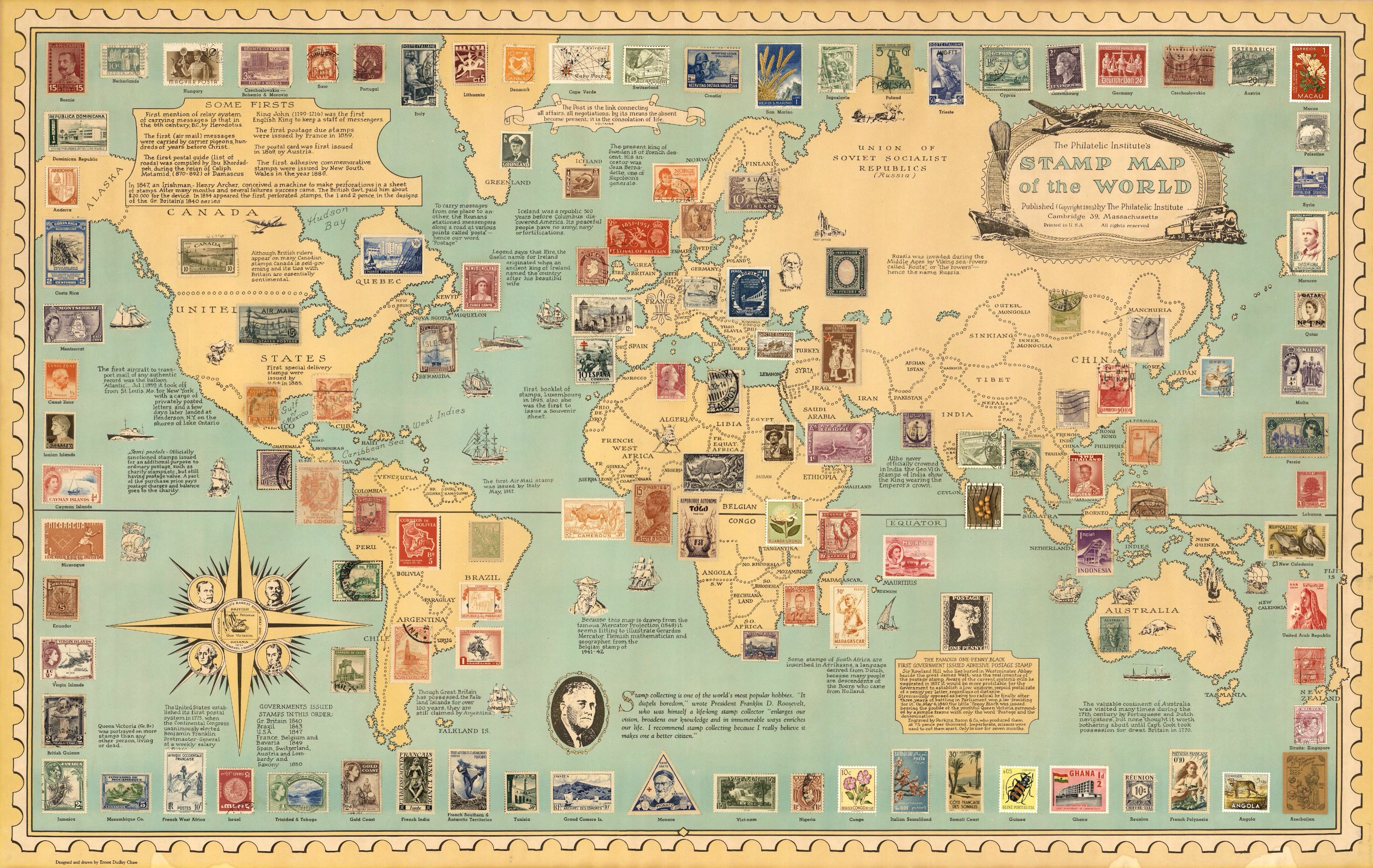
 Click on the map to see a larger version (via David Rumsey Map Collection)
Creative Commons
Blogs I Follow








Click on the map to see a larger version (via David Rumsey Map Collection)
And the nominees are:
(a) Tyler Cowen & Alex Tabarrok (Marginal Revolution)
(b) Robin Hanson (Overcoming Bias)
(c) Jason Kottke (kottke)
(d) Eugene Volokh & Company (Volokh Conspiracy)
These “blog kings” are our favorite individual bloggers. Who else should we add to our list?
 We love how the artist (Lee Vandergrift) took an ordinary object and turned it into an “objet d’art”… Happy Thanksgiving!
That sentence is from Helena Kealey’s insightful essay “Transformation of Godzilla” (via The Telegraph). That’s about one Godzilla film every 21 months or so! So, here is our question of the day: Why do movie studios around the world still make Godzilla films? Isn’t it time to retire this old monster yet?

Independent scholar David Post (via the Volokh Conspiracy) recently brought the following “wild voting paradox” to our attention. In general, appeals at the federal level are decided by a panel consisting of three judges. Now, let’s imagine a case involving two legal issues on appeal, such as standing and immunity. Let’s say judges A and B believe that the original plaintiff has “standing” (i.e. may bring an action against the defendant), while judges B and C think that the original defendant is not immune from legal liability as a matter of law. In other words, only one judge–Judge B–thinks the plaintiff has standing and that the defendant is not immune from liability, so the defendant should win this hypothetical case on appeal, right? Not so fast … The “wild voting paradox” here is that the final outcome in this case depends on which voting rule (or “voting protocol”) the judges use to decide this case. If the judges adopt an “outcome voting” rule, for example, then the defendant will win the appeal, but if the judges follow an “issue voting” rule instead, then the plaintiff will win because one coalition of two judges believes that the plaintiff has standing while another coalition of two judges believes that the defendant does not have immunity from liability. Continue reading
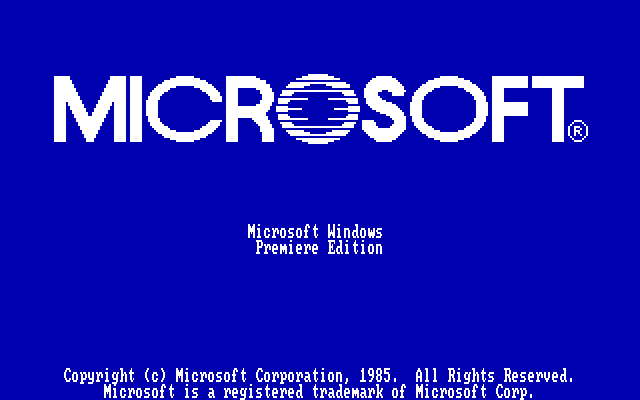
In honor of the 30th anniversary of the launching of Windows 1.0, Tom Warren–a self-described “resident Microsoft expert”–has compiled a complete “visual history” of Microsoft’s popular operating system for personal computers. (Check out Warren’s work here, via The Verge.) This is the first paragraph of the essay portion of Warren’s “visual history” of Windows:
The PC revolution started off life 30 years ago this week. Microsoft launched its first version of Windows on November 20th, 1985, to succeed MS-DOS. It was a huge milestone that paved the way for the modern versions of Windows we use today. While Windows 10 doesn’t look anything like Windows 1.0, it still has many of its original fundamentals like scroll bars, drop-down menus, icons, dialog boxes, and apps like Notepad and MS paint.
Earlier this semester, we published our first two student articles in our capacity as faculty editor of the Undergraduate Research Journal at the University of Central Florida (the UCF URJ), a peer-reviewed journal for student authors. One article explores possible positive outcomes for children when their parents divorce. (See Grant W. Mohi, “Positive Outcomes of Divorce: A Multi-Method Study on the Effects of Parental Divorce on Children,” UCF URJ, vol. 7, no. 2 (Sept. 22, 2015), pp. 49-62.) The other student article surveys the use of feminist pedagogy in a college course on literature. (See Ashley Torres, “‘Teaching Like a Girl’: A Student’s Reflection on the Benefits and Challenges of Feminist Pedagogy,” UCF URJ, vol. 7, no. 2 (Nov. 12, 2015), pp. 63-75.) Both papers make important contributions to their respective academic literatures. Mr Mohi, for example, presents a nuanced and complex picture of the effects of divorce on children, while Ms Torres reviews the theory and practice of various innovative teaching techniques from a student’s perspective. If you have an interest in these topics, check out their papers and share your thoughts with us!

Today is the 212th anniversary of this epic event, the culmination of the Haitian people’s fight for freedom known as the Haitian Revolution of 1791-1804, a historic revolt led by slaves. Haitian rebels decisively defeated the French at the Battle of Vertières (or Batay Vètyè in Creole) on 18 November 1803, leading to Haiti’s formal independence on 1 January 1804. So, what are you willing to fight for?


Hopefully It’s Interesting.
In Conversation with Legal and Moral Philosophers
PhD, Jagiellonian University
Books, papers, and other jurisprudential things
Ramblings of a retiree in France
BY GRACE THROUGH FAITH
Natalia's space
hoping we know we're living the dream
Lover of math. Bad at drawing.
We hike, bike, and discover Central Florida and beyond
Making it big in business after age 40
Reasoning about reasoning, mathematically.
I don't mean to sound critical, but I am; so that's how it comes across
remember the good old days...
"Let me live, love and say it well in good sentences." - Sylvia Plath
a personal view of the theory of computation
Submitted For Your Perusal is a weblog wherein Matt Thomas shares and writes about things he thinks are interesting.
Logic at Columbia University
Just like the Thesis Whisperer - but with more money
the sky is no longer the limit
Technology, Culture, and Ethics
Just like the horse whisperer - but with more pages
Poetry, Other Words, and Cats

 prior probability