The Problem with Pigou

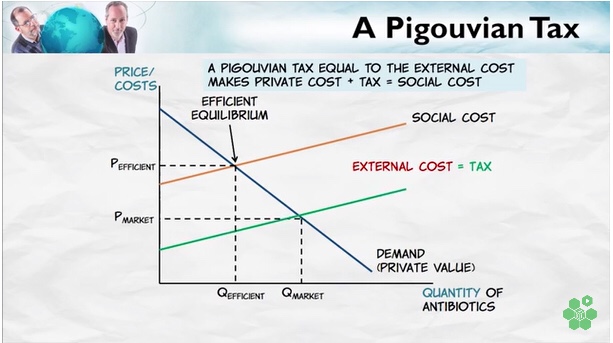
Our friend and colleague John Nye, who teaches economics at George Mason, has published a powerful critique of so many proposals calling for Pigovian taxes, i.e. taxes designed to reduce harmful externalities such as carbon emissions. You can read Professor Nye’s essay here. Below is an excerpt:

Even if we insisted on a Pigovian tax as a precautionary measure, it would make sense only if it replaced all preexisting subsidies, taxes, and regulations rather than being added on top of existing arrangements. Moreover, a truly scientific proposal would also make clear under what circumstances the Pigou tax should be lowered as well as raised.

Posted in Uncategorized | Leave a comment

Doll house crime scenes

Posted in Uncategorized | Leave a comment

The problem of time cost

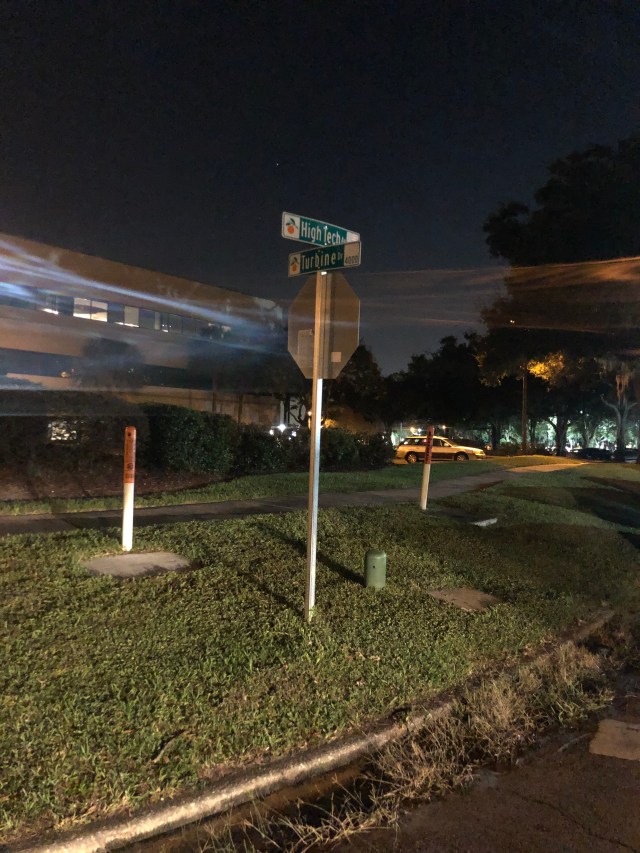
With apologies to the late Ronald Coase. I teach at UCF (Go Knights!) but live across town, too far to bike to campus, so to avoid paying for on-campus parking, here is where I usually park off-campus:

If the weather is nice, I will then walk to campus; otherwise, I will take the #14 shuttle into the university. Either way, this arrangement “wastes” about an hour (roundtrip) of my time!

Posted in Uncategorized | Leave a comment

Solving the breaking bad problem (part 4)

I presented a common law solution to the so-called “breaking bad problem” in my previous post, where I drew a distinction between void and voidable illicit promises, depending on the location of the harm generated by such promises. Here, I shall illustrate my solution by returning to some of my previous examples of illicit promises: a promise to obstruct justice and usurious payday loans.

First, let’s revisit my modified prisoner’s dilemma in which the prisoners have previously promised to each other to obstruct justice in the event they are apprehended by the police or asked to turn State’s evidence. One might be tempted to reason that such a promise constitutes an illegal obstruction of justice and should thus be void ab initio from both a legal and moral perspective. Under my proposed framework, however, this conclusion will not always hold, for whether there is an external harm in this modified prisoner’s dilemma example will depend, at a minimum, on whether the suspects are, in fact, guilty of committing the crimes they are being accused of. For instance, what if the police are corrupt and are trying to frame one or both of the prisoners for a crime he or they did not commit? Accordingly, the moral status of a promise to obstruct justice–i.e. whether such a promise is illicit or “bad” in the moral sense–also depends on the guilt or innocence of the prisoners. If they are innocent, such a promise would be morally binding under my proposed framework. (Instead of creating a harm, the prisoners are trying to avoid harm–i.e., being framed for a crime they did not commit.)

Next, what about the usurious payday loans in Buckeye Check Cashing, Inc. v. Cardegna? Does a borrower have a moral duty to repay loans or cash advances that turn out to be usurious and thus illegal under state law? As I see it, there are two sets of internal harms in the Buckeye case: (i) excessive service fees charged by the lender, which harms the borrower, and (ii) the possibility of default by the borrower, which harms the lender. Moreover, these internal harms appear to “reciprocal in nature”–to borrow the words of one of my intellectual heroes, the late English economist Ronald Coase–for the borrower is harmed to the extent he is being charged usurious interest rates, but at the same time, the lender will be harmed if its borrowers do not repay their advances. But regardless of the reciprocal nature of these harms, the harms are internal, so the borrower’s promise to repay is voidable: the borrower may thus decide whether to repay or rescind the interest or service fee on his loans. On this view, providing a usurious payday loan is like contracting with a minor: the minor may rescind the contract until he or she reaches the age of minority. Also, just as the minor who rescinds a contract is required to return whatever consideration he or she received from the other party, so to would the borrower of a usurious payday loan still be required to repay the principal of the loan, but my larger point is this: when an illicit promise produces an internal harm, the promise is morally voidable–the harmed party may elect whether to keep his promise or not.

To sum up, the main advantage of my common law approach to illicit promises is that we do not need to measure the gravity of the harm or determine whether the harm caused by an illicit promise is malum in se or merely malum prohibitum. What matters is the location of the harm. But we still need to figure out which harms should count as harms. For example, if I order a chicken sandwich at a restaurant, doesn’t my order produce an external harm, i.e. the harm to the chicken that was used to make my sandwich? As such, is my restaurant order an illicit (immoral) one? What about the supply contract between the restaurant chain and the poultry supplier? My tentative reply to the problem of defining harms is this: we must be careful to distinguish between the legality of illicit promises and the morality of such promises. On my theory, a promise that generates an external harm is void from a moral perspective, so even though the poultry supply contract might be legally enforceable as a matter of law, the legal status of such an arrangement does not answer the moral question–whether the killing of animals for food consumption is moral or not. One of the virtues of my approach is that it shows just how ubiquitous illicit promises are. If my approach makes us uncomfortable, if it makes us rethink everyday practices and promises, that is a feature, not a bug.

Image result for eat mor chikin sign


Posted in Uncategorized | Leave a comment

Solving the breaking bad problem (part 3)

Thus far, we have surveyed the work of moral theorists to solve the breaking bad problem, i.e. to figure out what the moral status of an illicit promise is. What if we were to take a different approach, however, one informed by the common law? It turns out the common law has developed quite a sophisticated and nuanced body of principles and doctrines in response to a wide variety of ethical dilemmas and moral puzzles that have occupied the attention of so many moral theorists. Simply put, whether we are in the realm of promises, or in the realm of intentional harms like fraud or deceit, or in the realm of justification, such as the classic defenses of necessity and excuse, one cannot help but notice a significant overlap between moral philosophy and the common law. To put it in colloquial terms, perhaps moral philosophers could learn a thing or two from the common law.

With this broad overlap in mind, let us return to our particular puzzle regarding the moral status of “bad” or illicit promises. Specifically, how could the common law inform our analysis of the breaking bad problem? One possibility is to draw a distinction between void and voidable illicit promises. Generally speaking, a voidable contract can be enforced at the option of one of the parties. Contracts tainted by mistake, duress, or even fraud, for example, are voidable at the option of the innocent party. A void contract, by contrast, does not produce any legal effects. Either way, the key to this distinction is the location of the harm caused by an illicit promise. Where does the harm fall? Consider the law of illegal bargains. Common law courts have developed a sophisticated body of legal principles and judicial doctrines in this area. In brief, courts have generally classified illicit agreements into two broad categories: (i) those that are immoral or mala in se, and (ii) those that are merely illegal or mala prohibita. A promise involving some form of moral turpitude is malum in se and is void, while a promise in violation of a commercial statute or an economic regulation is merely malum prohibitum and is usually treated as “voidable” by the innocent party.

With this common law background in mind, we could thus picture a continuum in which non-morally objectionable promises occupy one end of the moral spectrum, totally immoral or mala in se promises fall on the other end of the moral spectrum, and so-called “voidable” promises fall somewhere in the middle of the spectrum. In other words, just as the common law recognizes different degrees of contract validity by distinguishing between void and voidable illegal bargains, we could similarly allow for different degrees of promissory duties depending on the type of harm caused. Alternatively, we could ask a different question. Instead of trying to quantify the level of harm, we could ask about the location of the harm: who is harmed when an illicit promise is made? On this view, “bad” or illicit promises would fall into one of four general categories: (i) promises that harm the promisor, i.e. the person making the promise; (ii) promises that harm the promisee, i.e. the person receiving the promise; (iii) promises that harm both the promisee and the promissor; and (iv) and promises that harm a third party. The point of this fourfold classification scheme is to help us distinguish between void and voidable illicit promises

Notice that my common law approach to illicit promises does not ask us to quantify the amount of harm to be caused or estimate the probability that the harm will even occur; instead, it only asks us to determine where (on whom) the harm of an illicit promise will fall. We could thus formulate this framework in the form of a question: when someone makes an illicit promise, whom does the promise harm? Here, then, is my common law solution to the breaking bad problem. Promises in which the harm is external, such as any promise to harm a third party, must be considered void ab initio, i.e. promises with no moral standing or moral force. At the same time, promises in which the harm is internal are voidable, i.e. promises in which no third party is harmed but either the promisor or the promisee or both will be harmed. In these cases of purely internal harm, the party to be harmed could exercise a “moral veto” over the illicit promise. In other words, the moral status of the voidable promise should depend on the wishes of the party to be harmed. I will apply this solution to some examples of illicit promises in my next few posts.

Image result for void voidable

Void versus voidable agreements.

Related image

Degrees of harm (image credit: Kenzie Amsden).

Posted in Uncategorized | Leave a comment

Solving the breaking bad problem (part 2)

In my previous post, I described one possible solution to the breaking bad problem: deny that an immoral promise is a promise. I also explained why such a philosophical solution does not work. Why not? Because a promise is a promise, regardless of its content. In this post, I will consider another possible solution. Some moral philosophers, most notably Margaret Gilbert as well as James Altham, are willing to concede that an illicit promise is, in fact, a promise, but they argue that such a promise does not generate a morally binding obligation on the promisor (the person making the illicit promise). Alas, this solution also borders on sophistry. Why? Because a promise, by definition, is something that is supposed to be binding. Philosophers like Altham and Gilbert want to have their cake and eat it too!

In short, the problem with both solutions we have seen thus far boils down to this: there are two competing moral principles in direct conflict with each other whenever someone makes an illegal or immoral promise: (i) the general obligation to keep one’s promises, and (ii) the general moral obligation to avoid harming others. To say that such promises are not morally binding or that “bad” promises are not promises simply begs the question we are trying to answer: Is there any way to reconcile these competing moral claims? Some philosophers would have us weigh the obligation generated by a promise against the obligation to avoid harm. In the words of Vera Peetz, for example, “the obligation to keep a promise may, of course, be over-ruled by some stronger obligation.” But this conclusion begs the question of what makes any given moral obligation stronger or weaker in the first place. After all, the breaking of a promise can be seen as a harmful act; how does one weigh such competing harms?

Is there a solution to the breaking bad problem? If there is, our philosopher friends have yet to find one. What if, however, we were to take a different approach–one informed by the common law? Common law courts have developed a sophisticated body of legal principles and judicial doctrines to deal with the problem of illegal bargains, so I shall turn to the common law tradition in my next few posts.

Image result for sophists
Posted in Uncategorized | Leave a comment

Solving the breaking bad problem (part 1)

In my previous post I explained why illicit promises generate a moral paradox: promises are supposed to be morally binding, but what about a promise to perform an illegal or immoral act? Broadly speaking, moral philosophers have offered two plausible escape routes to this dilemma. One solution is simply to deny that an immoral promise is a promise. The other is to concede that an immoral promise is, in fact, a promise, but not a morally obligatory or binding one. Neither solution, however, really works. Let’s take a look at the first solution first. Some moral theorists have defined valid promises in such a way as to exclude promises to perform immoral or illegal acts. On this view of promising, a wicked or immoral promise is not morally binding or obligatory because such a promise is not really a promise in the moral sense. In particular, this line of argument focuses on whether a promisor has a moral or legal right to perform the promised act. Simply put, if one does not have a right to perform X (where X is some immoral or wicked act), then a promise to do X is a defective promise.
Continue reading

Posted in Uncategorized | Leave a comment

Illicit promises as moral antinomies

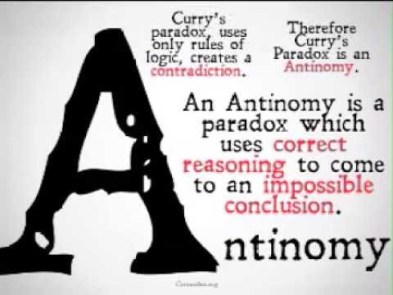
Illicit promises–like a promise to obstruct justice or Shylock’s pound-of-flesh pact in The Merchant of Venice or the usurious loan agreement at the center of the Buckeye Check Cashing case or the other examples in our previous post–pose a contradiction or moral paradox. The paradox is this: If bare promises are morally binding, a position subscribed to by most, but not all, moral philosophers, then an immoral or illegal promise poses a potential “moral antinomy” (see image below): the moral obligation to perform an immoral or illegal action.

The contradiction that occurs in the domain of illicit promises thus consists of the moral dilemma between moral duty D (the general moral obligation to keep one’s promises) and duty D’ (the general moral obligation not to harm others or commit wrongful acts). How do moral philosophers solve this dilemma? We shall see two possible philosophical solutions in my next post. Spoiler alert: both of these philosophical solutions are going to be unsatisfactory.

Image credit: Carneades.org

Posted in Uncategorized | Leave a comment

High-profile illicit promises

Let’s resume our legal and moral analyses of illicit promises, shall we? Why are such promises worth studying? Although the idea of an illicit promise may sound esoteric, exotic even, such promises are not infrequent, especially given the increase in federal and state criminal laws as well as evolving and expanding conceptions of morality. On pp. 3-4 of my work in progress “Breaking Bad Promises” (footnotes omitted), I mention the following recent examples, including the 2019 college admissions scandal, acts of alleged collusion between Donald J. Trump and foreign officials, and Robert Kraft’s massage parlor visits: Continue reading

Posted in Uncategorized | 1 Comment

Preview of Charles Fried’s contracts course

I am interrupting my series of blog posts on “illicit promises” to share with you this short video (see below) featuring Charles Fried, who has taught contract law at Harvard Law School for many years. Professor Fried put together an online version of his contracts course called “Contract Law: From Trust to Promise to Contract.” I highly recommend his eight-week course. Enjoy!

Posted in Uncategorized | Leave a comment