Featured Syllabus: Calling Bullshit in the Age of Big Data

This course is being taught by professors Carl T. Bergstrom and Jevin West. Here is a link to their syllabus, which itself has links to all the assigned readings. (Props to Jason Kottke for the pointer.)

Update (1/26): Here is another promising syllabus–an upper-level seminar in psychology taught by Sanjay Srivastava. His course is titled “Everything is fucked.” (Hat tip: Brian Leiter.)

Related image

Posted in Academia, Bayesian Reasoning | 1 Comment

The Ethics of Facebook Live

What legal or ethical obligations, if any, do social media companies like Facebook owe to the public at large? Last year, for example, at least 57 violent or illegal acts—including shootings, burglaries, and beatings—were transmitted via live-video platforms like Facebook Live. According to Mary Anne Franks, a law professor at the University of Miami, Facebook and other technology companies have an ethical obligation to consider the potential harm their services and products might pose: “We need to have a conversation about what the role is of technologies like live-streaming. How much are [services] like Facebook Live encouraging people to commit these acts?” (See this recent report by Arian Campo-Flores in the Wall Street Journal.) But what about the benefits of Facebook Live? Professor Frank’s facile analysis neglects a fundamental problem: what theory of ethics should a firm like Facebook use when defining its duties to its users? Humean consequentialism or Kantian universal duties? After all, services like Facebook Live can also be used to publicize the daily abuse of power by police against minorities, as in the video below.

Posted in Bayesian Reasoning, Ethics, Law, Web/Tech | Leave a comment

Too big to fail?

US Govt Org Chart

Hat tip: Kottke

Posted in Bayesian Reasoning, Economics, Law | 7 Comments

Why is guac extra at Chipotle?

At some restaurants (like Qdoba), a side of guacamole is included in the price of your burrito, while at other places (Chipotle), the guac is extra. Not surprisingly, the cost of a burrito is about $1 more at Qdoba than at Chipotle, but at the same time, a side of guac at Chipotle costs $1.80. (Check out this Quora on Chipotle’s arguably abusive guacamole pricing policy.) So, from a business or economic perspective, which pricing policy is the optimal one? 

Bonus questions: Why doesn’t Chipotle charge extra for other sides like salsa or sour cream? Also, how “elastic” is the demand for guacamole, and why might the price elasticity of guac explain Chipotle’s pricing policy?

Update (1/28): Our friend and colleague Jonathan Kariv responds as follows: “My first thought (which could well be obviously wrong to people who’ve thought harder about this than I have) is that maybe it’s beneficial to both Chipotle and Qdoba to have different pricing models. Perhaps if they do the same thing, then they’re competing more directly, but if they do different things, then they both get to dominate a different section of the market. This might be extendable to the bonus question of other add ons. Maybe they’re just adapting to the other guys strategy.”

Hat tip: Sydjia Guerra

Posted in Uncategorized | 2 Comments

Real life prisoner’s dilemma (game show edition)

Notice how both contestants solemnly promise to each other not to steal. Notice too how they provide compelling reasons in support of their promises. (Hat tip: Mike Munger.)

Posted in Uncategorized | Leave a comment

Visualizing the syllabus

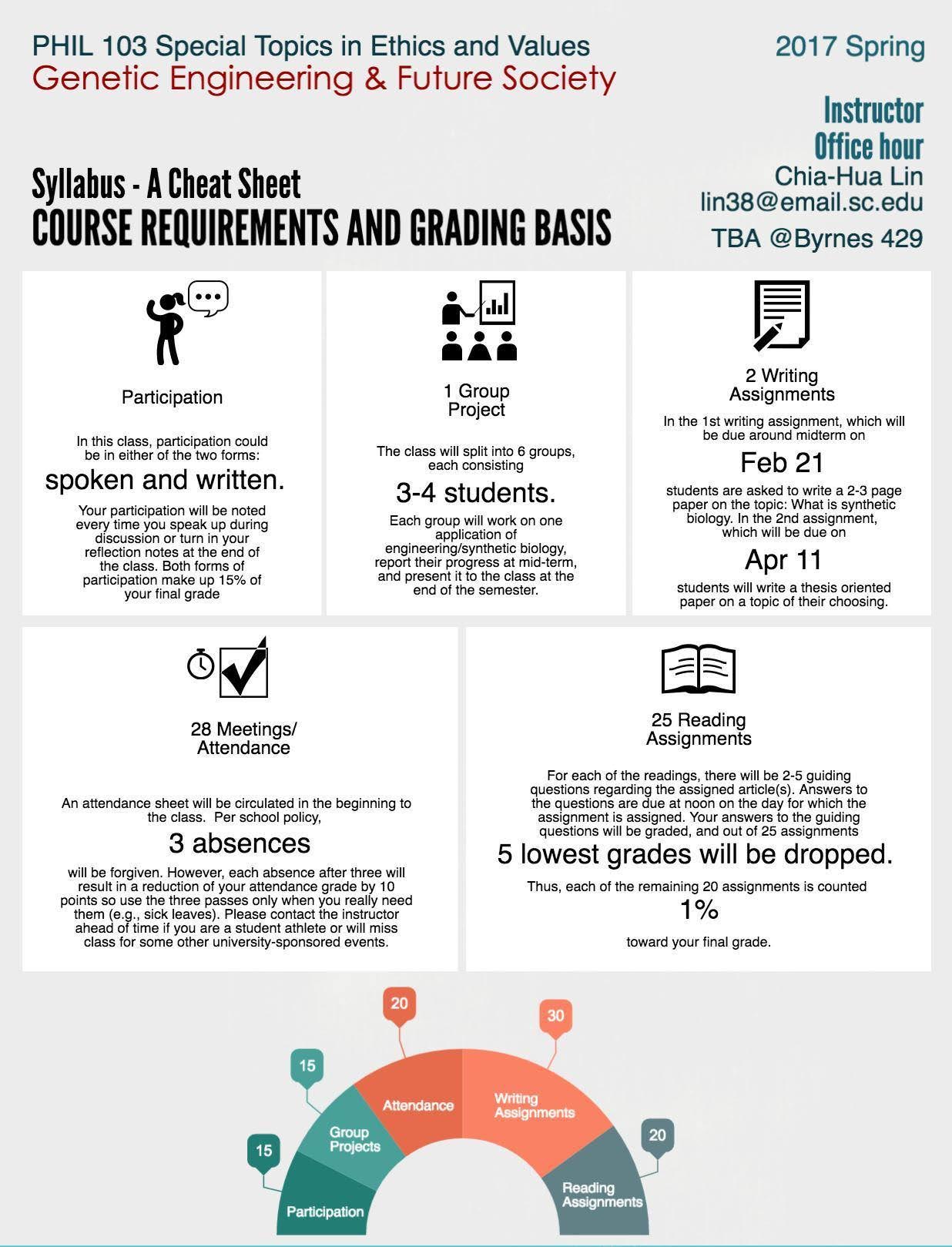
Why are most college syllabi such drab and dreary affairs? By contrast, Chia-Hua Lin, a PhD student in philosophy at the University of South Carolina, has created a beautiful visual syllabus (see below) for her applied ethics course on “Genetic Engineering and Future Society.” Hat tip: Justin Weinberg, via dailynous.com.

Posted in Academia, Philosophy | 3 Comments

Class No. 2 (Sources of Law)

In our first business law class this semester (BUL3130), we introduced our students to the movie “The Social Network” (see preview below) and to the real-life protoganists in our semester-long case study on the origins and growth of Facebook: hacker Mark Zuckerberg and his best friend Eduardo Saverin, their business and social rivals the Winklevoss twins, entrepreneur Sean Parker, and angel investor Peter Thiel. In class #2, we will examine whether Zuckerberg broke any laws or breached any legal duties when he built a website known as Facemash.

Posted in Uncategorized | 1 Comment

What are the most important unsolved problems in law?

Hola! This intriguing post by our blogging colleague and philosophical friend Tyler Cowen (asking about unsolved problems in economics) got us thinking about unsolved problems in the domain of law. But does it make any sense to talk about soluble problems in law, or are disputes about legal norms ultimately normative and thus intractable, like the perennial questions in political philosophy or in aesthetics?

Update (1/18): Economist Arnold King responds to Prof Cowen’s query–and indirectly to our question above as well–this way (emphasis added): “I do not think that problems get ‘solved’ in economics the way that they do in physics. We come up with interpretive frameworks, the way that historians do. Some of our frameworks, like supply and demand in microeconomics, seem pretty robust. Others are flimsier and faddish.”

!Feliz cumpleaños, mama’!

Posted in Academia, Economics, Law, Philosophy | 4 Comments

Zuckerberg for President?

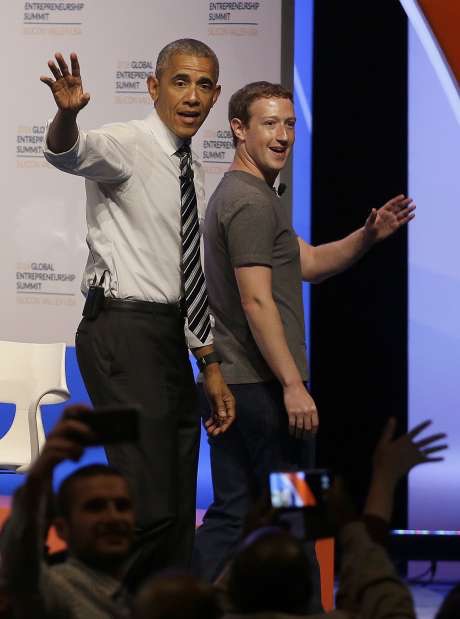
Happy MLK Day! Check out this well-reasoned conjecture by Nick Bilton explaining the origins and logic of Facebook inventor and CEO Mark Zuckerberg’s worldly ambitions. Here is just one excerpt from Mr Bilton’s intriguing essay: “Facebook would not be Zuckerberg’s only contribution to society. ‘He has much bigger plans’ ….”

Update (1/21): Further evidence that Zuckerberg intends to run for higher office can be found in this fascinating report by Sarah Frier: “… it’s fair to wonder whether Zuckerberg wants to run for public office. He isn’t saying, but his online mix of serious business and dad jokes can’t help but feel a little political. For a point of comparison, check out Barack Obama’s social media accounts sometime.”

Update #2 (1/25): Via BuzzFeed, Zuckerberg says he has no plans on running for higher office. Do you believe him?

Photo credit: Jeff Chiu, Associated Press

Posted in Bayesian Reasoning, Politics | 4 Comments

Christmas break reading

This is what we were reading over the holidays:

1. Ernest Hemingway, A moveable feast.

We returned to Hemingway’s Paris memoir. (Overall, this was our third reading of Hemingway’s vignettes of his early years in Paris.) Two details struck us this time around: Hemingway’s risky decision to stop working as a journalist in order to devote himself to his real work, and how little writing he actually did in Paris, for he wrote and rewrote most of his first novel in Austria.

2. Roy Sorenson, Thought experiments.

A book-length response to Thomas Kuhn’s essay “A function for thought experiments.”

3. Daniel & Richard Susskind, Transforming the professions.

This father and son team explain how advanced machines like IBM Watson will soon eliminate lawyers, doctors, and accountants (and other professions too), and why this is a good thing!

4. William Pounstone, Labyrinths of reason.

We stumbled upon a copy of this book at a used bookstore in the Mission District in San Francisco (Poundstone is one of our favorite writers), and this particular book of his could be read together with Sorenson’s, as it covers many of the same thought experiments. (It turns out that many thought experiments are about paradoxes.)

5. James A. Harris, Hume: an intellectual autobiography.

We have been wanting to read this tome since Tyler Cowen recommended it to us last year, but we waited in vain for the paperback edition to be released. We just ordered a used edition and started reading it, so we will provide regular updates in future posts.

Update (2/1): We just completed our reading of Harris’s tome on Hume. We will be blogging about his extraordinary book soon.

Cat not included.

Posted in Uncategorized | Leave a comment