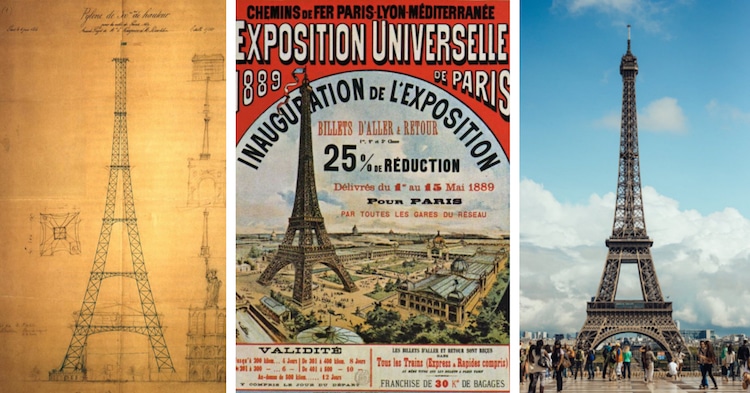
Nous somme Charlie Hebdo


Nous ne sommes pas encore libres?

Posted in Questions Rarely Asked | Tagged | Leave a comment

Disequilibrium?

image

Posted in Uncategorized | Leave a comment

He owned it …

Posted in Culture, Current Affairs, Sports, Truth | Tagged | Leave a comment

Hitler’s judges and the war on drugs

We finally saw the film Judgment at Nuremberg for the first time last night at the annual meeting of the American Association of Law Schools (AALS) in Washington DC. This film depicts the trial of four Nazi judges accused of committing crimes against humanity. These German judges, who were tried by an ad hoc American military tribunal, had used their judicial authority to enforce evil Nazi laws … which brings me to the so-called “war on drugs.” Continue reading

Posted in Law, Questions Rarely Asked | Leave a comment

How many time zones are in our galaxy?

“Oh, man.” (Props to kottke for the pointer.)

Posted in Questions Rarely Asked, Science | Tagged | Leave a comment

Should you take this bet?

Imagine you and 99 other people are randomly assigned a number between 1 and 100. Imagine too that there is a room containing 100 boxes, that each box has also been randomly assigned a number between 1 and 100, and that these numbers are hidden inside each box. Everyone is allowed to check up to 50 boxes to see if one can find one’s assigned number. If all 100 persons correctly find their respective boxes, each person gets $101. If at least one person is unable to find his or her assigned box, then everyone gets nothing. How much should you pay to play this game? The solution is here:

Hat tip to the amazing Ada Swanson for the pointer.

Posted in Probability, Questions Rarely Asked | Leave a comment

“Google’s Philosopher”

That is the title of this intriguing essay by Robert Herritt in the Pacific Standard — our favorite e-mag, by the way — summarizing the “philosophy of information” as well as the original work of Luciano Floridi, an Oxford philosopher who is inventing “entirely new ways of thinking about technology, privacy, the law, ethics, and, indeed, the nature of personhood itself.” Here is an excerpt from Robert Herritt’s Dec. 30th essay (edited by us for clarity):

Floridi is a professor of philosophy and the ethics of information … Driven by the idea that … “philosophy should talk seamlessly to its time,” he has set about developing a new approach to his discipline that he calls the philosophy of information. Floridi has described PI, as it is known, as his attempt to provide “a satisfactory way of dealing with the new ethical challenges posed by information and communication technologies” … Although difficult to summarize, Floridi’s program comes down to this: For anyone who wants to address the problems raised by digital technologies, the best way to understand the world is to look at everything that exists—a country, a corporation, a billboard—as constituted fundamentally by information. By viewing reality in these terms, Floridi believes, one can simultaneously shed light on age-old debates and provide useful answers to contemporary problems.

But is the philosophy of information useful in the real world? Herritt’s essay also describes Google’s recent efforts to comply with a “perplexing ruling” in May 2014 made by the European Union’s Court of Justice in which the court declared that, in accordance with the European “right to be forgotten,” individuals within the E.U. have the right to prohibit Google and other Internet search firms from linking to personal information that is “inaccurate, inadequate, irrelevant, or excessive.” Yet, as Herritt explains in his excellent essay, one of the reasons this legal ruling is so perplexing is that information companies like Google must now figure out how to comply with it. What does the “right to be forgotten” really mean? Continue reading

Posted in Ethics, Law, Philosophy, Property Rights, Questions Rarely Asked | Tagged , , , , , | Leave a comment

2004 Indian Ocean tsunami map

Props to tigranater for the pointer.

Posted in Uncategorized | Tagged , | Leave a comment

A critique of “Naked Statistics” (Or, where is Rev. Bayes?)

We finally got around to reading Charles Wheelan’s 250+ page defense of frequentist methods in his 2013 book “Naked Statistics.” (Curiously, his book was published a year after Nate Silver best-selling tome “The Signal and the Noise,” a book that criticizes many of the statistical methods described in “Naked Statistics.”) Although “Naked Statistics” is “sparkling and intensely readable” (to quote from one of the many positive reviews of his book), our overall verdict is go read Nate Silver’s book instead. Consider this clumsy hypothetical on pp. 127-128 of Wheelan’s book, the case of the missing marathon runners (edited by us for clarity): Continue reading

Posted in Bayesian Reasoning, Probability | Tagged , | 3 Comments

Happy birthday, my dearly beloved!

Siempre serás mi amor … 

SAM_7377


Posted in Uncategorized | 1 Comment