The ethics of flopping

A reader of The New York Times asked Chuck Klosterman (a/k/a “The Ethicist”) the following thought-provoking questions about the ethics of flopping in football: “If (nearly) every player does it, is it wrong to flop? … If flopping is part of the game, as it obviously is, are you not putting your team at a disadvantage by refusing to flop?“

Here is an excerpt from Klosterman’s reply: “Within every sport, there is an undefined ethos dictating what degree of deception is acceptable … Part of what draws people to any sport is the clarity of its conventions. The rules are supposed to be everything: Soccer (or any game) is simply a manifestation of the rules that were designed to govern its existence. Yet even in a constructed world, certain details are open to interpretation (particularly when a game is played by so many disparate cultures). There is, technically, a FIFA rule against diving; a player who attempts to ‘deceive the referee by feigning injury or pretending to have been fouled’ is supposed to be cautioned by the official. But this rule is (clearly) not enforced with any intensity or consistency. Diving is accepted. For whatever reason, there’s a theatrical aspect to soccer that is awkwardly embraced as an element of its richness. What we call ‘flopping’ is part of what international soccer is; it’s not essential, but it’s also not aberrant.”

Is Klosterman’s armchair analysis of the ethics of flopping persuasive? (Compare, for example, Klosterman’s ethical analysis above with Michael Gard’s economic analysis “Why football players feign injury” here. See also our post titled “Faking it.”) In any case, are we asking the wrong question? Shouldn’t we be asking instead: what is the optimal level of deception in any given sport?

Posted in Deception, Ethics, Sports | Tagged , , | Leave a comment

#Say no to racism!

Why are there so many angry faces in this picture? The next time these citizens complain about “illegal aliens” taking over our country, they should ask themselves two simple questions: (1) did your ancestors come to our country legally?; and (2) was our nation’s war of conquest against Mexico in 1848 (and our subsequent acquisition theft of Mexican territory) legal? That’s what we thought!

Posted in Current Affairs, Immigration, Racism | Tagged , , | 2 Comments

What if the colonies had never declared their independence?

Amid today’s Independence Day festivities, let’s reflect … Why don’t we see closer political cooperation among all English-speaking peoples, to borrow Winston Churchill’s beautiful phrase? Suppose, for example, that the 13 North American colonies had never declared their independence from Britain or that the British had actually won the Revolutionary War. [*] Would the United States (and Australia and Canada, for that matter) have become an integral member of the United Kingdom, like Scotland (for now) and Northern Ireland, or would the British Empire have evolved into a loose but more unified federation? Bonus question: Why are hypothetical historical questions like these worth asking? [*] Addendum: Uri Friedman poses this same question in The Atlantic.

Happy 4th of July!

Posted in Uncategorized | Leave a comment

What the world’s urban poor really want …

… relief from traffic congestion! Here is an excerpt from Michael Hobbes’s excellent essay “What I learned from the crippling gridlock in Dhaka, Bangladesh”:

I am in a tiny steel cage attached to a motorcycle, stuttering through traffic in Dhaka, Bangladesh. In the last ten minutes, we have moved forward maybe three feet, inch by inch, the driver wrenching the wheel left and right, wriggling deeper into the wedge between a delivery truck and a rickshaw in front of us.

Up ahead, the traffic is jammed so close together that pedestrians are climbing over pickup trucks and through empty rickshaws to cross the street. Two rows to my left is an ambulance, blue light spinning uselessly. The driver is in the road, smoking a cigarette, standing on his tiptoes, looking ahead for where the traffic clears. Every once in awhile he reaches into the open door to honk his horn.

This is what the streets here look like from seven o’clock in the morning until ten o’clock at night. If you’re rich, you experience it from the back seat of a car, the percussion muffled behind glass. If you’re poor, you’re in a rickshaw, breathing in the exhaust.

Me, I’m sitting in the back of a CNG, a three-wheeled motorcycle shaped like a slice of pie and covered with scrap metal. I’m here working on a human rights project related (inevitably) to the garment factories, but whenever I ask people in Dhaka what their main priority is, what they think international organizations should really be working on, they tell me about the traffic.

Illustration by Sophia Foster-Dimino
Posted in Uncategorized | Leave a comment

Does sex improve athletic performance?

Credit for the diagram goes to David Yanofsky. Read more here: “All of the teams that banned sex at the World Cup have been eliminated … so have a lot of the teams that didn’t ban it. So let’s not draw any inferences.” What would a Bayesian say?

Posted in Uncategorized | Tagged , , | 1 Comment

This isn’t a math test …

Two cheers for Team USA … next time in Russia!

Posted in Uncategorized | Tagged , | Leave a comment

Evidence of match-fixing at the World Cup?

In German: here. In English: here. We blogged about this possibility on 23 June. So, we need to update our priors …

 World Cup match-fixers?

Posted in Uncategorized | Tagged , | 1 Comment

Faking it

We can’t help but cheer for Pepe (although his little headbutt looks fake too!) … Also, you will find a plausible theory explaining why players have an incentive to fake injuries in Michael Gard’s excellent essay Faking it: why football players feign injury. Here is an excerpt:

The first thing to say is that feigning injury in football today has reached truly epidemic proportions. A Wall Street Journal article [mischievously titled “World Cup Flopping Rankings”] reported 132 minutes of “writhing time” in just 32 World Cup games. Of the 302 separate instances of players appearing to be very seriously hurt, 293 of them were up and playing within seconds. Just nine were actually injured.

Don’t all these fakers deserve a post-game red card, starting with Thomas Muller?

Posted in Uncategorized | Tagged , , | 1 Comment

“Bayesian reasoning” postscript

Note: We recently concluded a five-part review of the main points in Howson & Urbach’s important paper “Bayesian reasoning in science” (see our various Bayesian blog posts from 25-28 June). We now wish to present our own thoughts in this postscript. Spoiler alert: we are going to apply the self-reference test to both frequentist and Bayesian methods!

Consider, first, by way of example the “independent samples t-test.” (Frequentists have a huge toolkit full of lots and lots of ad hoc statistical tools for evaluating the results of experiments, but we shall focus on the t-test since it’s one of the most common forms of statistical significance.)

Now, instead of tossing one coin 20 times (see our previous posts from 27 & 28 June), let’s say you toss two coins — coin A and coin B — 20 times each (for a grand total of 40 coin tosses). Further suppose that coin A produced 11 heads in 20 trials, while coin B only produced 8 heads … Are these results atypical or completely random (i.e. noise, not signal), or are they “statistically significant” — i.e. within the range of what you would expect to find anytime you toss a fair coin 20 times?

In other words, we want to know whether the difference in results between the two experiments (e.g. # of heads produced by both coins) is “statistically significant” or not, e.g. whether the difference in results reflects a “real” difference in the type of coin used to generate our experimental data. “t-tests” (collecting independent samples and comparing them) and “statistical significance” are thus standard statistical tools for evaluating the results of experiments. But are they “science”?

We leave the ‘science’ question open, for now. The main problem we have with “t-tests” and standard statistical methods generally are their inability to pass the self-reference test (see, for example, our post from 14 May). For example, returning to our coin-toss example above, let’s say that you have finished conducting your (first-order) t-test experiment (e.g. tossing your coins and counting up the total number of heads generated by each coin) and that you have also finished evaluating the statistical significance of your test results. Now, shouldn’t you also conduct a second-order or higher-level experiment to measure the statistical significance of your statistically significant results?

This is not a frivolous or trivial question. In words, the whole purpose of “statistical significance” is to tell us something important about our first-order data (e.g. the results of our coin-toss experiments), but our statistical analysis will, in turn, generate a new set of second-order data, such as sample size (e.g. the number of coin tosses), the size of the difference between the sample averages (e.g. the number of heads generated by each coin), and the standard deviations of the samples.

So, why can’t we test each one of these second-order data points for statistical significance? That is, why can’t we test the t-test itself?

* * *

The Bayesian approach to truth, by contrast, is not only completely open to self-criticism; it is also able to pass the self-reference with flying colors. Just follow the following two steps:

First, you need to assign some subjective prior probability to the truth of Bayes’s rule itself. Note: it doesn’t matter what your priors are in this regard, since you might be highly skeptical of inverse probabilities or you might be a hardcore Bayesian through-and-through, so long as your priors are not completely dogmatic, i.e. 0 or 1. (For example, if you are not a Bayesian or if you simply distrust Bayesian methods, then assign a low value to this prior (a value less than 0.5 but greater than 0). If you are a Bayesian, then assign your prior a high value (a value greater than 0.5 but less than 1); or if you are a good Bayesian, assign a value of 0.5.)

Next, put Bayes’s rule to the test by using Bayesian methods to make predictions or to measure the truth of certain propositions and then “update” or revise your priors accordingly. If the Bayesian approach gives you good results, then … keep on using Bayesian methods. But if Bayesian methods fail to make good predictions or fail to bring you closer to the truth, you have effectively falsified the Bayesian approach … In that case, it’s time to look somewhere else for answers.

But here’s the rub. That “something else” should in principle be open to self-criticism. It should be subjected to the self-reference test. It should be falsifiable. Bayesian approach has the virtue of meeting these conditions. Are frequentists able to?
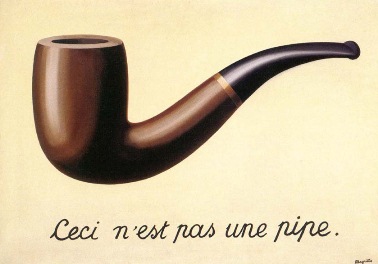
True or false?

Posted in Uncategorized | Tagged , | Leave a comment

Is the offside rule in international football (Law 11) clear or confusing?

FYI: Here are the official guidelines for interpreting Law 11 (the offside rule in international football). Here is a useful Power Point presentation (consisting of 37 slides) explaining Law 11.

Posted in Uncategorized | Tagged , | Leave a comment