Finnis versus Nozick (partial review of Chapter VII)

We now proceed to Chapter VII of “Natural law and natural rights,” the chapter on justice. Alas, Professor Finnis’s beautiful theory of justice is built on theoretical quicksand, for it is premised on his view of the common good, and we have already demolished Prof Finnis’s circular and vacuous theory of the common good in our previous post. To the extent “the objective of justice is … the common good” (p. 174), to quote Finnis’s own words, and to the extent the concept of the common good is just meaningless babble, we don’t have much more to say about Finnis’s conception of justice in Chapter VII. Why beat a dead theoretical horse? That said, there is one part of Chapter VII that I will discuss in more detail in this post: Professor Finnis’s moralistic critique of Robert Nozick’s critique of taxation. Continue reading

Posted in Uncategorized | Leave a comment

Good common goods and bad common goods (review of Chapter VI)

Note: This part of our review of “Natural law and natural rights” (NLNR) was revised on 17 May 2019. (In fairness to Finnis we added an important clarification below the cartoon.)

We now proceed to Chapter VI of NLNR, though, recall from the previous chapter Professor Finnis’s master list of moral criteria–criteria for evaluating the morality of our choices. Among other things, Finnis asserts morality requires that one’s choices must not only be consistent with “the common good of one’s communities” (p. 125), but must also “foster[] and favor[]” this common good. Finnis, however, doesn’t have much to say (only 47 words!) about this common good criterion in Chapter V; instead, he devotes all of Chapter VI to it. Although Finnis makes a number of excellent points in this chapter, here is where Professor Finnis’s natural law theory will begin to unravel. I shall limit myself to pointing out the good, the bad, and the ugly (theoretically-speaking) aspects of this chapter:

1. The Good. The best part of Chapter VI is Finnis’s attempt to define the concepts of “society” and “community”, two notoriously loose and slippery concepts. According to Finnis (p. 152, footnote omitted), it is the “sharing of aim rather than multiplicity of interaction [that] is constitutive of human groups, communities, societies.” In other words, a group can be said to exist when two or more people work, play, plan a heist, or whatever “with a view toward a shared objective” (p. 153). I would only add that groups thus defined might have more than one “shared objective” and that such multiple objectives might conflict with each other.

2. The Bad. Professor Finnis spends most of Chapter VI propounding a master taxonomy of groups. In particular, Finnis identifies four major types of group or community, depending on the group’s shared objectives. Some groups’ purpose is to promote play. Other groups are motivated by business profit. And still other groups are grounded in friendship. But according to Finnis, the most all-encompassing or “complete” group is that of the polis or the political community (see VI.6). Ok, fine, but is it just me, or is there a gaping hole in Finnis’s taxonomy? Where is the family, however defined?

3. The Ugly. Putting aside the problem of groups and polities with multiple and conflicting objectives (cf. James Madison in Federalist #10), we still have the problem of defining what we mean when we talk about the “common good.” This is a huge problem for Finnis because a group’s shared objective might be a nefarious one, like planning a heist or a murder, so we are going to need some additional criterion to distinguish good common goods from bad common goods. But alas, Finnis is unable to provide such an impossible criterion. In the end, Finnis succumbs to the most circular and lame-ass possible definition of the common good (p. 156): “The common good in [my] sense is a frequent or at least a justified meaning of the phrases ‘the general welfare’ or ‘the public interest’.” Have we come all this way–156 pages of the most dense and esoteric moral philosophizing–only to arrive at a circular truism?*

Let’s see whether Finnis can break out of this logical circle when we proceed to Chapter VII of NLNR, the chapter devoted to justice, in our next post …

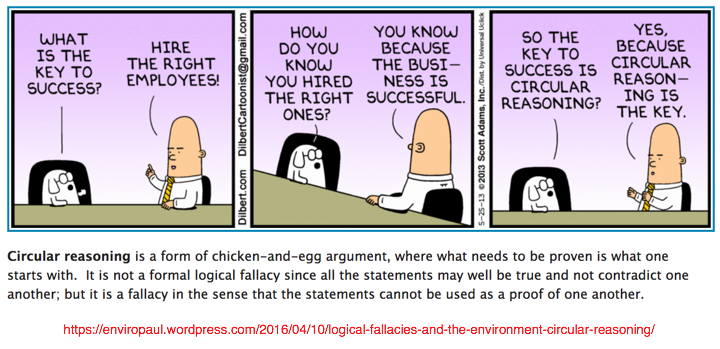
Image result for circular reasoning
*Later (especially in Chs. IX, X, and XI), Finnis will provide a much better and more workable definition of “the common good”; in particular, he will define the common good in terms of our ability to promote human cooperation and solve collective action problems. Still, our third objection (see point #3) above still stands, since men may cooperate in order to pursue selfish or evil ends, so we will still need some higher-level theory to help us distinguish between good common goods and bad common goods, but generally speaking, we agree with Finnis that one of the main purposes of laws and norms is to promote human cooperation and solve collective action problems.
Posted in Uncategorized | 2 Comments

The morality of choice (review of Chapter V, or exercises in mental masturbation)

Let’s now turn to Chapter V of “Natural law and natural rights,” the most important chapter in Professor Finnis’s beautiful book. This chapter is a must-read because Professor Finnis does three big things in this chapter: (1) he presents a powerful critique of consequentialism; (2) he locates the source of morality; and (3) he sets forth specific criteria for deciding when a choice is consistent or not with morality. We shall discuss each one of these themes in turn: Continue reading

Posted in Uncategorized | 2 Comments

Chess Coat Rack

We interrupt our extended review of Finnis (2011) to present this beautiful coat rack made from an old chess board. (The pieces on this board/coat rack are set in the Caro-Kann opening position. More details here. Hat tip: The Amazing Tyler Cowen.)

Happy Anniversary Sydjia (5/5/12)!

Posted in Uncategorized | Leave a comment

Values and anti-values (review of Chapter IV)

After making some preliminary clarifications in Chapter II and setting forth the first of his “underived first principles” (knowledge and truth) in Chapter III, Professor Finnis goes on to catalog his entire collection of “basic values” or “basic goods” in Chapter IV of “Natural law and natural rights”. It turns out there are–by Finnis’s own count at least–no less than seven such basic values or pre-moral axioms. In addition to knowledge and truth, we have life, play, art, friendship, religion, and “practical reasonableness” (whatever that means).

Let’s put off the bullshit term “practical reasonableness” until our next post, since Prof Finnis himself will delve into the details of this fluffy concept in the next chapter (Ch. V). In fact, with the exception of “practical reasonableness,” we have no quarrel with the other axiomatic items in Finnis’s master list of basic goods. At this point in time, I only wish to make the following three micro-observations about some of the “self-evident” items on Finnis’s list: Continue reading

Posted in Uncategorized | 2 Comments

Finnis’s first axiom (review of Chapter III)

Now that we have addressed Chapters II and XII of “Natural Law and Natural Rights,” let’s jump into Chapter III, shall we? (We will thus skip Chapter I for now.) Among other things, we’ve already highlighted Professor Finnis’s preliminary clarifications regarding “underived first principles”: the Kuhnian idea that there are elementary axioms or meta-truths–or implicit paradigms, if you prefer–that are simply assumed to be valid, even in such rigorous fields as mathematics and physics. And if you will recall, we also assumed a skeptical stance toward such untestable axioms, asking in a previous post: What are these “self-evident” or underived propositions, and why should we accept these axioms as true? To his credit, Prof Finnis begins to provide an answer to both of our searching queries in Chapter III. Continue reading

Posted in Uncategorized | Leave a comment

To the Victims of Communism

We interrupt our extended review of “Natural law and natural rights” (we will hit Ch. III tomorrow) to take this opportunity to agree with our friend and colleague Ilya Somin, a law professor at George Mason University, that today (May 1st) should officially be declared Victims of Communism Day. Also, here is a listing of ten films that dramatize the costs of communism. Let us never forget how ambitious and charismatic men inspired by an evil and odious dogma flouted the due process and property rights of their fellow citizens in the name of the greater good. The larger lesson is this: James Madison was right: men are not angels. Checks and balances and a separation of competing powers are essential features of a well-ordered polis.

Image result for may 1 victims of communism dayImage result for victims of communism meme
Posted in Uncategorized | 6 Comments

Is, ought, and Finnis (review of II.5-II.8)

We have thus far reviewed Chapter XII and the first half of Chapter II of John Finnis’s beautiful book “Natural Law and Natural Rights.” (Recall that Professor Finnis’s preface invites us to begin with these chapters.) Chapter II is devoted to “some preliminary clarifications” (p. 24), and to my mind, the most important of these introductory ideas appears in the second half of Chapter II (subsections five, six, seven, and eight), where Prof Finnis grapples head-on with the horns of the is/ought dilemma in moral philosophy. In fact, as our friend and colleague Oliver Curry has pointed out, there are many versions of this dilemma. For his part, Professor Finnis focuses on the motive problem: how can knowledge of right and wrong motivate one to make morally-correct choices; or more simply put, how can reason motivate action?

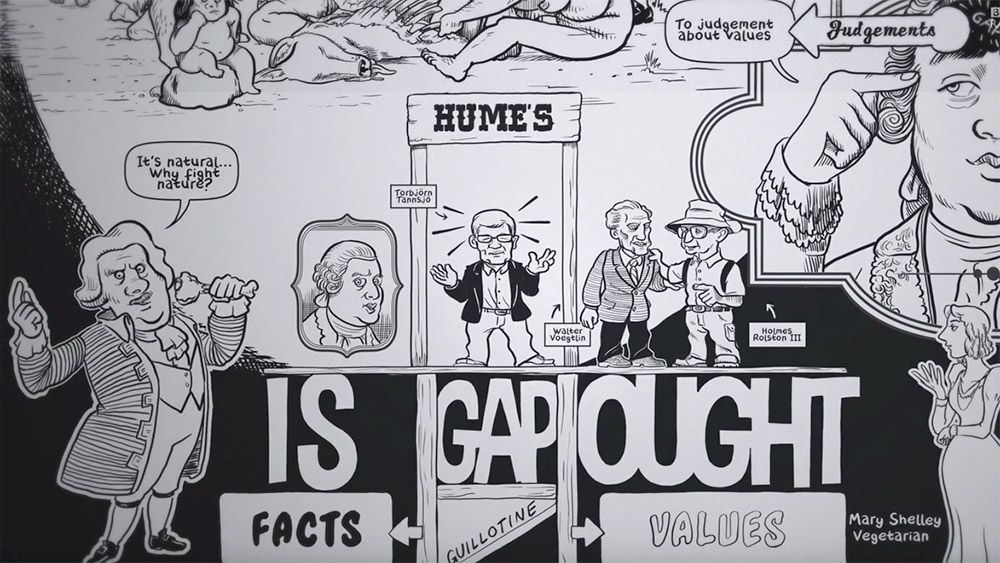
To cut to the chase, here is where Prof Finnis wins us over, where he fully regains our confidence, where he rehabilitates his philosophical and scholarly credentials. For Prof Finnis openly and honestly acknowledges that David Hume was right (!), that there is indeed an unbridgeable logical gap between knowledge and action, between the worlds of “is” and “ought.” Rather than rehash the finer points of this old meta-philosophical problem (see slide below the fold), it suffices to say that this move is a major concession on Professor Finnis’s part, for all previous theories of natural law and human rights (even those of such giants as Thomas Aquinas and Hugo Grotius) end up committing the naturalistic fallacy of deriving a normative “ought” from a factual “is”. To put it bluntly, Professor Finnis is not just pointing out a fundamental flaw of conventional theories of natural law; he is also admitting that all such natural law theories are wrong! So yeah, Finnis has now grabbed our attention!

But how will Professor Finnis’s theory of natural law surmount the is/ought dilemma and address the concerns we have raised in our previous posts? We will proceed to Chapters III and IV in the next day or two …

Image result for hume's guillotine

Continue reading

Posted in Uncategorized | Leave a comment

Finnis, axioms, and truth (review of II.3 & II.4)

Although we have been extremely critical in our previous posts of John Finnis’s flawed and self-defeating reasoning, the learned professor rehabilitates himself in the third and fourth subsections of Chapter II, where he makes yet another preliminary clarification–this time about the role of axioms (or self-evident propositions) in legal theory and in the sciences. In Prof Finnis’s own eloquent words (p. 32):

… a good many of the principles of logic and mathematics employed in natural science … and in historical and archaeolog[y], are such that it would be absurd to say that they either have been proved or are in need of proof. But what is certain is that the natural sciences and in general all theoretical disciplines rest implicitly on epistemic principles, or norms of theoretical rationality, which are undemonstrated, indemonstrable, but self-evident in a manner strongly analogous to the self-evidence ascribed by Aquinas to the basic principles of [natural law].

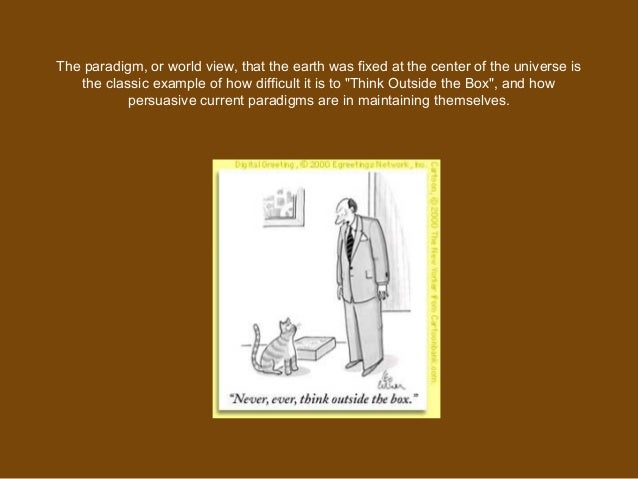
This passage sounds like it could have been written by the philosopher of science Thomas S. Kuhn. In brief, Prof Finnis is pointing out the inevitable and essential role that Kuhnian paradigms play in human reasoning: there are some basic ideas or “underived first principles” that everyone assumes to be true, even in such scientific fields as mathematics and physics. So, why should law be an exception, Finnis is asking? For my part, I would add that paradigms can sometimes lead us astray (see image below). Moreover, what are these “self-evident” or underived propositions in the field of law (consider, for example, the Declaration of Independence of 1776), and why should we accept these propositions as true? We shall press on and continue our review of Finnis to find out …

Image result for kuhn on paradigms

Credit: Kaium Chowdhury

Posted in Uncategorized | 2 Comments

Did Finnis just shoot his own theory in the foot? (review of II.2)

Yes, he did, in the second subsection of Chapter II. Before we explain why, recall that Professor Finnis is devoting this early chapter to make a series of “preliminary clarifications” (p. 24) before delving into the details of his theory of natural law. Alas, he ends up making another potential blunder; in fact, I dare say he shoots his embryonic natural law theory in the proverbial foot (no doubt unwittingly), for he concedes that natural law proper is indeterminate and not self-enforcing.

Let’s back up one step. To his credit, Finnis is attempting clarify the complex relation between natural law and positive law in II.2. Specifically, if Thomas Aquinas (“a paradigm ‘natural law theorist’”) is correct that “positive law derives its validity from natural law” (p. 28), then why do we need man-made law to supplement natural law? Why don’t men dispense with man-made law altogether and agree to be ruled directly by the dictates of natural law? According to Finnis’s reading of Aquinas, there are two reasons why we cannot dispense with positive law. One reason is that natural law is too general to be of any help in the real world. Or to paraphrase Prof Finnis himself (p. 28), the principles of natural law are too general to solve any specific co-ordination problems that an actual community might confront. (In modern parlance, we can call this first problem “the level of generality problem.”)

The other reason we need positive law is that natural law is not self-enforcing. Without man-made law, “the need for compulsion, to force people to act reasonably” (p. 29) would go unmet. (Let’s call this second problem “the incentive problem.”) But these two points now pose another embarrassing problem for Finnis. Aside from being tautological (see our previous post), if natural law principles are also indeterminate and not even self-enforcing, then natural law is at best a redundant legal system or at worst a useless one. So, why not dispense with natural law?! Rest assured, we will return to this troublesome question as we continue our review of Finnis’s theory in our next post …

Image result for shoot yourself in the foot
Posted in Uncategorized | Leave a comment