Why do public officials in D.C. get to run red lights?

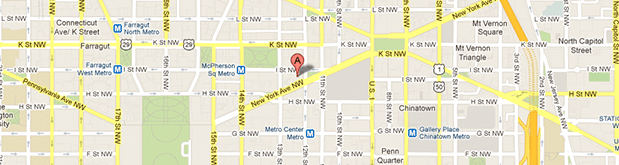
File this entry under Third World America, i.e. a country where our laws don’t apply to the most powerful people in our government. We were walking toward Metro Center in Washington D.C. around 11pm when we witnessed a mini-convoy consisting of two black SUVs and two police SUVs sounding their horns, blaring their lights, and running a red light at the intersection of New York Avenue and 12th Street (pictured below). So, why don’t traffic laws apply to public officials in our nation’s capital? In our opinion, this red-light running behavior is demoralizing and dangerous to our democracy.

Image result for G ave and 12th st dc
Posted in Uncategorized | Leave a comment

Time Out

We won’t be blogging too much during the next few days because we are attending a workshop for law professors in public choice economics at George Mason University.

Fun!

Posted in Uncategorized | 1 Comment

Legal probabilities

In this post, we build on the work of Dixit & McAdams (see our previous two posts) in order to create a general bargaining model of civil litigation. Let’s consider a civil case for our model. Specifically, let’s assume the case has survived the pre-trial stage (i.e. the judge has denied any motions to dismiss or motions for summary judgment); thus the case is scheduled to go to trial. Further assume that the losing side will appeal. There are two possible outcomes for each side:

1. Win at trial and win on appeal. Or lose at trial but win on appeal.
2. Win at trial but lose on appeal. Or lose at trial and lose on appeal.

Next, how do we assign probabilities to these possible outcomes? Should these probabilities be equally weighted, or does the fact that the case has survived the pre-trial stage affect these probabilities in some way? In many respects, this same problem occurs in the political impasse over the Supreme Court that Dixit & McAdams describe in their short HBR paper. In sum, there is a possibility that the parties to a conflict will weigh these probabilities differently. Moreover, all other things being equal, the more optimistic both sides are about winning, the less likely they will settle the case out of court. So the key question in litigation is, what legal or extra-legal factors will most likely lead the parties to be optimistic when they are assessing the relevant probabilities?

Image result for settle or go to trial model

Posted in Economics, Game Theory, Law | 2 Comments

Politics as Nash bargaining

In our previous post, we presented this beautiful essay by Avinash Dixit and David McAdams, who use game theory to analyze the year-long political impasse over the U.S. Supreme Court. We now wish to say a few more words about Dixit and McAdams’s model. In essence, they model the standoff between the President and the Senate as a Nash bargaining game. In the simplest version of this game, there are two players (let’s call them Player 1 and Player 2), and each player requests a portion of some good, such as a fixed amount of money x (or a Supreme Court justice with liberal or conservative political views). If the total amount requested by both players is less than x (or if the proposed Supreme Court justice has political views acceptable to both players), then both players get their request. If, however, their total request is greater than x, neither player gets their request. (As an aside, notice that a bargaining game can also be modelled as an equilibrium selection problem, since many bargaining situations have multiple equilibria with varying payoffs for each player.) So, how much should a player request in this game? x/2? What if you don’t know the value of ahead of time? The answers to these questions depend in large part on the disagreement points or outside options of the players: d1 for Player 1 and d2 for Player 2. In brief, the respective disagreement points of the players are the amounts (i.e. some fraction of x) either player can expect to receive if they are unable to reach an agreement. In the case of Justice Scalia’s replacement, however, the outside options of the parties depend on who wins the election in November (Clinton or Trump) and on whether the Republicans will retain control of the Senate, and these events, in turn, are purely probabilistic ones.

Image result for nash bargaining

What are your outside options?

Posted in Economics, Game Theory, Law, Politics | Leave a comment

Game Theory 101 (Scalia’s replacement edition)

Check out this excellent essay in the Harvard Business Review in which two academic economists, Avinash Dixit and David McAdams, use game theory to analyze the year-long political impasse over the U.S. Supreme Court. Game theory is a branch of mathematics and is used to model conflict situations from the perspective of the contestants involved in the conflict. Thus, in place of normative, legal, or ideological arguments, Professors Dixit and McAdams take a different approach. First, they model the impasse as a strategic game with players and payoffs. One player is President Obama. He wins if he is able to replace the late Justice Scalia with a liberal justice. To do this, however, he needs the cooperation of the other players in this game: the Republican senators who control the U.S. Senate. But they win only if they are able to replace Scalia with a conservative justice.

Next, Dixit and McAdams identify the three most likely outcomes of this contest:

  1. Republicans win: Donald Trump wins the presidency and the Republicans retain control over the Senate.
  2. Status quo: Hillary Clinton wins the presidency, while the Republicans retain control over the Senate.
  3. Democrats win: Hillary Clinton wins the presidency, and the Democrats win control over the Senate.

Lastly, Dixit and McAdams use a standard method game theorists call “backwards induction” to figure out what the most likely outcome of this game will be. At the same time, however, there is an unstated irony in their game-theoretic analysis of this political impasse. Traditional game theory presupposes perfect rationality among the players, but in any given real-world conflict scenario (like this judicial nomination game), the players act in less than rational ways. In this particular game, for example, Dixit and McAdams show how some Republicans are blinded by the “sunk cost” fallacy. They also explain why both players in this game are either over- or under-estimating the probabilities of each possible outcome.

Image result for applying game theory to the supreme court nomination hbr

Credit: Dixit & McAdams

Posted in Bayesian Reasoning, Economics, Game Theory, Law, Politics | 1 Comment

Map of largest publicly-traded company (by stock market capitalization) in each U.S. State

Map of Largest Company by Market Cap in Each State ( 2015) [4000 x 2987]

Hat tip: em_pathetic_soul.

Posted in Economics, Questions Rarely Asked | 1 Comment

Visualization of the most and least talkative Simpsons characters

Simpsons Data

Credit: Todd W. Schneider, via kottke.

Posted in Bayesian Reasoning, Mathematics | 6 Comments

Capitalist Cuba?

File this entry under Paradoxes of Cuban Socialism. Why isn’t access to the Internet free in Socialist Cuba? Via the Associated Press (emphasis by us):

HAVANA (Sep. 21) — The Cuban government says it will make five miles of Havana’s iconic seafront boulevard, the Malecon, into the largest WiFi hotspot [on the Island] … State media said Wednesday that WiFi will be installed along the most popular stretch of the Malecon by the end of the year … Since last year, the government has installed dozens of WiFi spots in public areas, charging $2 an hour

Via Gemma and Craig (Two Scots Abroad), you can find more details regarding Cuba’s restrictive and crony-capitalist Internet policies here: “To gain access to WiFi in Cuba, purchase a card from a ETECSA telecommunications centre or a hotel which has WiFi accessibility. The card should cost 4.50 CUC / $4.50 / £2.93 and gives you one hour of online internet access in Cuba.” Lastly, while we’re on the subject of paradoxes, why doesn’t Fidel have an endorsement deal with Adidas? Or does he?

Image result for fidel adidas

We are all crony capitalists now.

Posted in Bayesian Reasoning, Economics, Paradoxes, Politics, Questions Rarely Asked | Leave a comment

Trump, mercantilist

Lately, Donald Trump has been accusing Hillary Clinton of being “stuck in the past.” This assertion is highly ironic, coming from a mercantilist! Via Tyler Cowen, quoting Donald Trump’s chief economic adviser Peter Navarro, here is the essence of Mr Trump’s economic policy (in 17 words):

Trump proposes eliminating America’s $500 billion trade deficit through a combination of increased exports and reduced imports.

In other words, Mssrs Trump and Navarro are mercantilists. Someone needs to remind them that we’re in the 21st Century now and that mercantilism was soundly discredited by Adam Smith in 1776. Although Professor Navarro received his PhD in economics from Harvard, while Trump has a degree in finance from Wharton, they must have a missed a few of their classes. (FYI, here is a profile of Peter Navarro.)
Image result for mercantilism summary

Credit: T. J. Joseph

Posted in Economics, History, Politics | Leave a comment

Our hearts are broken …

Image result for jose fernandez baseball card

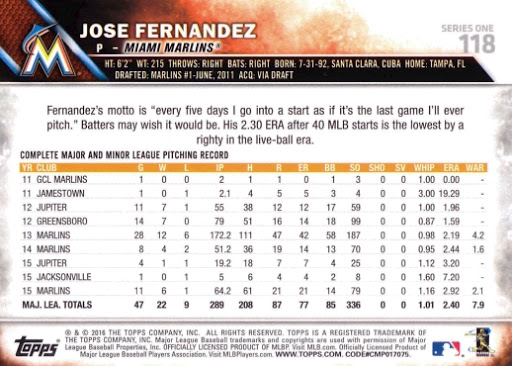
Image result for jose fernandez baseball card back


Read this touching tribute by Ben Lindbergh.

Posted in Uncategorized | Leave a comment