True or False?

Posted in Philosophy, Science, Truth | Leave a comment

“Since 1954, 34 Godzilla films have been made …”

That sentence is from Helena Kealey’s insightful essay “Transformation of Godzilla” (via The Telegraph). That’s about one Godzilla film every 21 months or so! So, here is our question of the day: Why do movie studios around the world still make Godzilla films? Isn’t it time to retire this old monster yet?

Posted in Culture | 2 Comments

Voting paradox (federal courts edition)

Independent scholar David Post (via the Volokh Conspiracy) recently brought the following “wild voting paradox” to our attention. In general, appeals at the federal level are decided by a panel consisting of three judges. Now, let’s imagine a case involving two legal issues on appeal, such as standing and immunity. Let’s say judges A and B believe that the original plaintiff has “standing” (i.e. may bring an action against the defendant), while judges B and C think that the original defendant is not immune from legal liability as a matter of law. In other words, only one judge–Judge B–thinks the plaintiff has standing and that the defendant is not immune from liability, so the defendant should win this hypothetical case on appeal, right? Not so fast … The “wild voting paradox” here is that the final outcome in this case depends on which voting rule (or “voting protocol”) the judges use to decide this case. If the judges adopt an “outcome voting” rule, for example, then the defendant will win the appeal, but if the judges follow an “issue voting” rule instead, then the plaintiff will win because one coalition of two judges believes that the plaintiff has standing while another coalition of two judges believes that the defendant does not have immunity from liability. Continue reading

Posted in Law, Paradoxes | 1 Comment

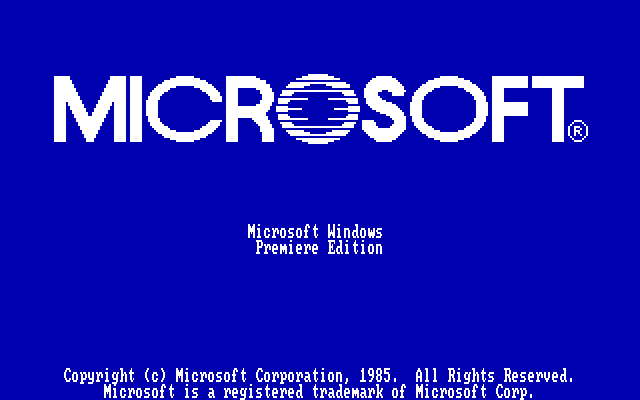
“Windows 1.0”

In honor of the 30th anniversary of the launching of Windows 1.0, Tom Warren–a self-described “resident Microsoft expert”–has compiled a complete “visual history” of Microsoft’s popular operating system for personal computers.  (Check out Warren’s work here, via The Verge.)  This is the first paragraph of the essay portion of Warren’s “visual history” of Windows:

The PC revolution started off life 30 years ago this week. Microsoft launched its first version of Windows on November 20th, 1985, to succeed MS-DOS. It was a huge milestone that paved the way for the modern versions of Windows we use today. While Windows 10 doesn’t look anything like Windows 1.0, it still has many of its original fundamentals like scroll bars, drop-down menus, icons, dialog boxes, and apps like Notepad and MS paint.

Posted in History, Web/Tech | 2 Comments

New Research on Divorce and Feminist Pedagogy

Earlier this semester, we published our first two student articles in our capacity as faculty editor of the Undergraduate Research Journal at the University of Central Florida (the UCF URJ), a peer-reviewed journal for student authors. One article explores possible positive outcomes for children when their parents divorce. (See Grant W. Mohi, “Positive Outcomes of Divorce: A Multi-Method Study on the Effects of Parental Divorce on Children,” UCF URJ, vol. 7, no. 2 (Sept. 22, 2015), pp. 49-62.) The other student article surveys the use of feminist pedagogy in a college course on literature. (See Ashley Torres, “‘Teaching Like a Girl’: A Student’s Reflection on the Benefits and Challenges of Feminist Pedagogy,” UCF URJ, vol. 7, no. 2 (Nov. 12, 2015), pp. 63-75.) Both papers make important contributions to their respective academic literatures. Mr Mohi, for example, presents a nuanced and complex picture of the effects of divorce on children, while Ms Torres reviews the theory and practice of various innovative teaching techniques from a student’s perspective. If you have an interest in these topics, check out their papers and share your thoughts with us!

Posted in Academia | Leave a comment

Batay Vètyè

Today is the 212th anniversary of this epic event, the culmination of the Haitian people’s fight for freedom known as the Haitian Revolution of 1791-1804, a historic revolt led by slaves. Haitian rebels decisively defeated the French at the Battle of Vertières (or Batay Vètyè in Creole) on 18 November 1803, leading to Haiti’s formal independence on 1 January 1804. So, what are you willing to fight for?

Posted in History | Leave a comment

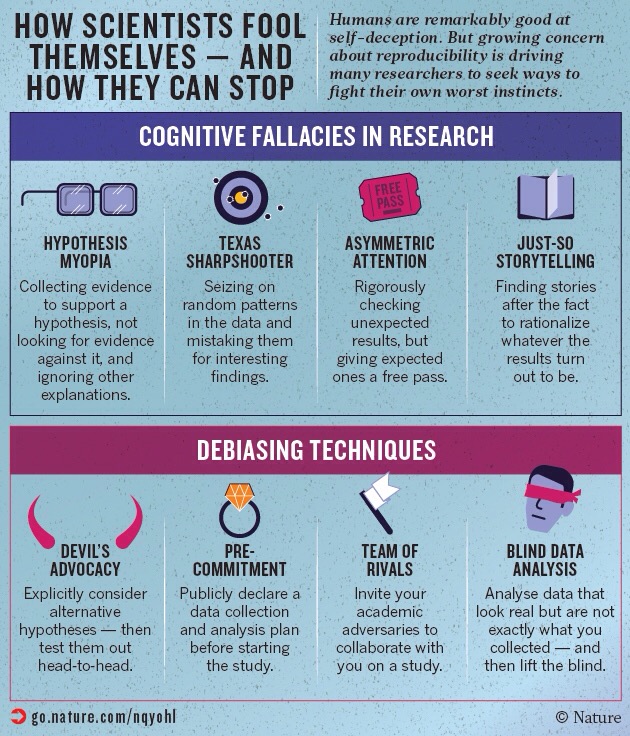
Self-deception primer


Hat tip: Cathy O’Neil (via mathbabe.org)

Posted in Academia, Bayesian Reasoning | Leave a comment

Last Lesson: Settle or Go to Trial?

Business litigation is often like the game of poker. For example, when deciding whether to settle or go to trial, a plaintiff must decide whether to invest more money in his or her case in order to secure a possible payout or risk losing the case altogether. At the same time, many successful companies with “deep pockets” are often tempting legal targets for plaintiffs’ lawyers. Facebook is no exception. Soon after its founding in 2004, Facebook faced multiple lawsuits in State and federal courts, including a federal lawsuit brought by ConnectU (the Winklevoss twins’ competing social network site) as well as several State-law claims brought by one of Facebook’s co-founders, Eduardo Saverin. But as we have seen in several previous lessons, a strong case can be made that Mark Zuckerberg really did create “thefacebook” without stealing anyone’s intellectual property, while Eduardo arguably breached his fiduciary duty to Facebook when he froze the company’s bank account in July of 2004. So, why do you think Facebook eventually decided to settle its legal claims with ConnectU and Eduardo, instead of going to trial?

In the meantime, consider this hypothetical conversation between Mark and “Marylin”–a fictional associate at Facebook’s law firm who specializes in voir dire, or jury selection–an exchange which appears in Aaron Sorkin’s screenplay for “The Social Network,” the movie version of Accidental Billionaires:

MARYLIN

I’ve been licensed to practice law for all of 20 months and I could get a jury to believe you planted the story about Eduardo and the chicken. Watch what else. Why weren’t you at Sean’s sorority party that night?

MARK

You think I’m the one who called the police?

MARYLIN

Doesn’t matter. I asked the question and now everybody’s thinking about it. You’ve lost your jury in the first 10 minutes.

Posted in Uncategorized | Leave a comment

“The logic of terrorism”

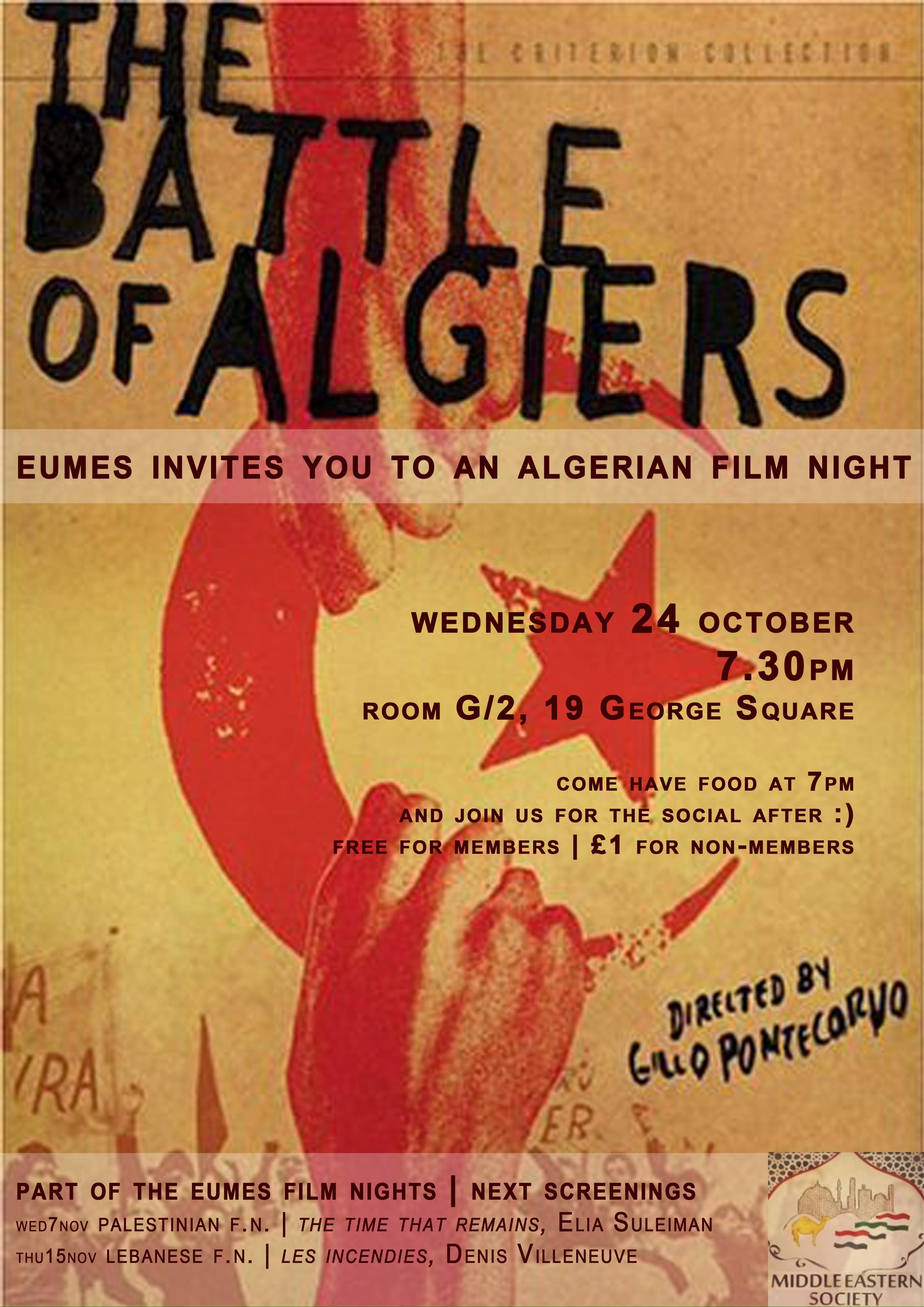
That is the title of our 2012 paper in which we (a) discuss three lessons from the film “The Battle of Algiers” and (b) model conflicts between terrorist groups and counter-insurgent forces as an evolutionary arms race. We will blog more about our approach to conflict in the days ahead.

Posted in Current Affairs, Game Theory | Leave a comment

 Nous sommes tous Parisiens
Posted in Current Affairs | Leave a comment