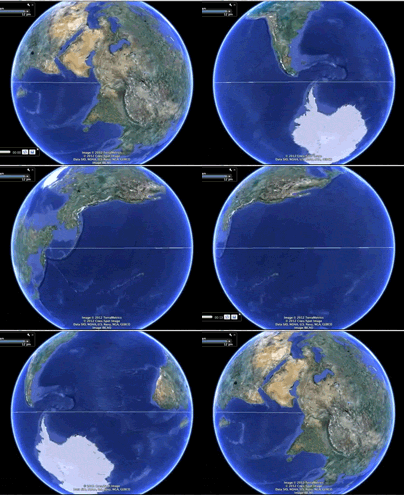
The geometry of airports

Posted in Maps | Tagged | Leave a comment

Is Riggs v. Palmer a “hard case”?

For many legal scholars, the paradigm or textbook example of a “hard case” in law is Riggs v. Palmer, the infamous “murdering heir” case decided in 1889 by the New York Court of Appeals. The facts of this legendary case would make tabloid and cable news headlines today: a wealthy grandfather leaves the majority of his estate in his will to his grandson. Fearing that his grandfather might revoke his will, the grandson kills his grandfather with poison. Here is the legal problem: Does the grandson still have the right to inherit his grandfather’s estate? To us, however, Riggs v. Palmer has always seemed like an easy case … Continue reading →

Posted in Bayesian Reasoning, Law, Probability | Tagged , , | Leave a comment

“Did I adequately answer your condescending question?”

We can’t wait to see blackhat, the new Michael Mann film about computer hackers who take down the international banking system. In the meantime, our favorite film about computers and hackers continues to be “The Social Network.” Above is one of our favorite scenes from this film. What’s yours?

Posted in Law, Web/Tech | Tagged , , | Leave a comment

From Pakistan to the Kamchatka Peninsula

Alternate title: “The longest straight line you can sail.”

Props to Ambamja for the pointer.

Posted in Maps, Questions Rarely Asked | Tagged , | Leave a comment

Foie gras and freedom

Foie gras is a fancy food delicacy, and until a few days ago, it was also an outlaw product in the State of California. A federal judge in Los Angeles–our childhood hometown, by the way–recently issued a judicial order enjoining (i.e. prohibiting) California public officials from enforcing a law criminalizing the sale of foie gras in the Golden State. In summary, since the sale of foie gras is legal under various federal laws, the judge ruled that local laws prohibiting the sale of foie gras are “pre-empted” (i.e. displaced) by such federal laws. But was this the “right” result as a matter of law, or an unauthorized assertion of federal judicial power? Specifically, what is the source of a federal judge’s power to veto a State law? Continue reading →

Posted in Economics, Law | Tagged , , | Leave a comment

Judge Hercules or Judge Bayes?

Here is the abstract of one of our thought experiments, which we have been working on over the holidays:

This paper explores two possible connections between hard cases in law and Newcomb’s Paradox in philosophy. One is that Newcomb’s Problem is like a “hard case” in law–i.e. a choice problem with conflicting and equally logical solutions. The other is that the “superior Being” in Newcomb’s Problem and the mythical Judge Hercules in Ronald Dworkin’s theory of law are the same person. In particular, we claim that Judge Hercules, who we would rechristen Judge Bayes, has the near-perfect ability to predict the outcome of hard cases …

Our paper is about 3000 words. Fear not. We will make a complete draft of our paper–tentatively titled “Hard Cases, Newcomb’s Problem, and the Prediction Theory of Law”–available soon via SSRN. Addendum (1/13): Here is a link to our working paper.

Posted in Law, Philosophy, Probability | Tagged , , | 1 Comment

Publish or perish …

According to our friend Walter Olson at overlawyered.com: “CNN, NYT, AP, NBC, ABC, the BBC, Guardian, Telegraph, and the CBC, will *not* be running Charlie-Hebdo cartoons, though a number of American publications did so, including Daily Beast, Vox, and Bloomberg. No UK paper on Thursday morning runs the cartoons on its cover — though the Berliner-Zeitung in Germany publishes a full spread of them.” Is there a pattern here? New media versus old? Continue reading →

Posted in Current Affairs | Tagged , | Leave a comment

Nous somme Charlie Hebdo


Nous ne sommes pas encore libres?

Posted in Questions Rarely Asked | Tagged | Leave a comment

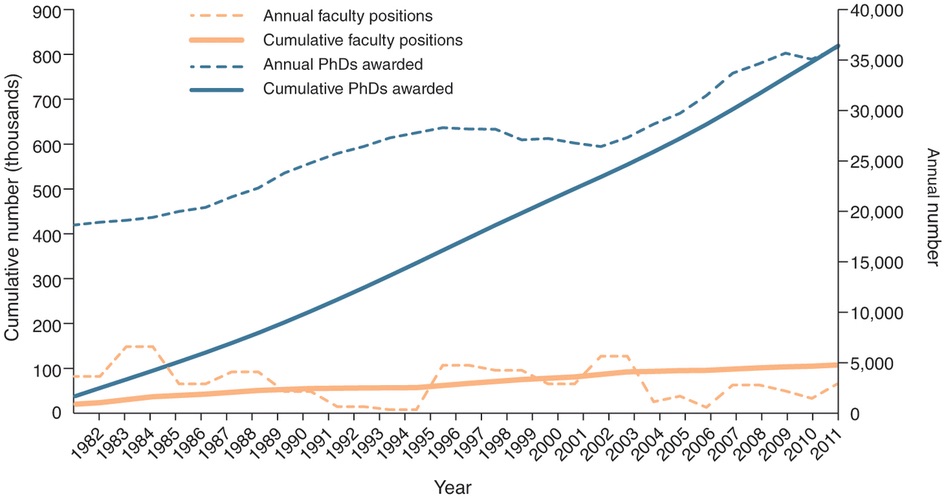
Disequilibrium?

image

Posted in Uncategorized | Leave a comment

He owned it …

Posted in Culture, Current Affairs, Sports, Truth | Tagged | Leave a comment