According to this recent report by Slate staff writer Amanda Hess, a lot of judges (most of whom are male, by the way) apparently seem to think so. But as Ms Hess notes in her report, the dress code for women attorneys has changed over time: “Prior to the 1980s,” for example, “it would have been scandalous for a lady lawyer to approach the bench wearing pants.” More importantly, why are women still being judged in this day and age by the way they dress? Remember, not so long ago, women used to be excluded altogether from learned professions like law. Until the gender imbalance on the bench is remedied, let’s give our mothers, sisters, and daughters a break on this one …
Economists are not scientists
Sorry Professor Mankiw, but economics is not really a science. Economics is politics and normative value judgements all the way down, and you yourself end up admitting as much in your most recent essay in the Sunday Times. So why do you insist on calling economists “scientists”? Just because your colleagues and you continue to repeat the same form of wishful thinking over and over again doesn’t make it true. Please …
NBA “pass probabilities” (San Antonio Spurs edition)
Read Kirk Goldsberry’s excellent report on the growing role of mathematics, statistics, and probability theory in the NBA here.
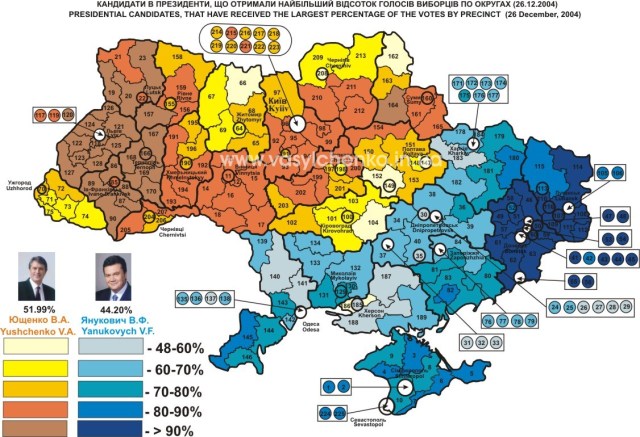
What’s the probability that Russia will annex additional Ukrainian territory?
We think it is high, very high. After all, Russia has already annexed the whole of the Crimean peninsula without a real fight. Why won’t she annex other pro-Russian regions too, especially the eastern oblasts of Ukraine? Like Adolf Hitler after the 1938 Munich Conference (remember “peace in our time”?), Russian president Vladimir Putin now knows he can treat his neighbors with utter impunity, for Ukraine’s fair-weather and feckle allies are not willing to back up their empty rhetoric in defense of Ukraine’s territorial integrity with any military force (not even with the threat of force). In sum, why haven’t we learned the lessons of history? (By the way, isn’t it time for our friend Edward Snowden to man up and speak out against Russia’s aggression? Or is Mr Snowden, in effect, a hostage of President Putin?)

Do infants have preferences or utility functions?
This seemingly intractable question is easy enough to answer if you are an academic economist. All you need do is simply assume your answer is yes. But is this any way to search for truth? Doesn’t the economic approach fail the falsification test?
Image courtesy of baby Adys Ann.
Why isn’t the Crimean peninsula worth defending?

She is certainly worth stealing and taking by force, which is what the Russian Federation appears to be doing as we write up this pithy blog post …
If you were an advisor to Oleksandr Turchynov, the new (and unelected) prime minister of Ukraine, what advice would you give him? Would you counsel him to stand up and go to war over the Crimea or to sit down and negotiate with the Russians? If you favor using military force in defense of the territorial integrity of Ukraine, what is the probability that Ukraine’s armed forces (or NATO’s, for that matter) would be defeated in a direct confrontation with Russian forces? Does this probability inform the advice you would give? Now, imagine you are a close advisor to Russian president Vladimir Putin. Same questions. Also, do these sanctions really scare you?
Hat tip: Adam Taylor of The Washington Post. Note: this post was revised and expanded on the evening of 22 March 2014. For additional game theoretic analyses of the Crimean conflict, see this post by Tyler Cowen (Master of the Internet): Crimea through a game theory lens.
“Something New”
That is the title of this new song in this creative video by Tom Fletcher …
A quick critique of Nate Silver’s new website
The new FiveThirtyEight website, which launched last Monday (17 March 2014), purports to offer data journalism in a wide variety of fields, not just politics (the original focus of the original FiveThirtyEight website), but also economics, science, sports, and (our favorite) “life”.
Although we really like Nate Silver’s Bayesian approach to politics, why is there such a single-minded emphasis on so-called empirical and statistical data in the new version of FiveThirtyEight? After all, as the old and wise saying in academia goes, if you torture your data long enough, they will confess to anything.
More importantly, what happened to the Nate Silver of old, the Nate Silver of Bayesian reasoning? In our view, we don’t need another website with lots of “objective” or data-driven bells and whistles. What we really need is just a plain and simple website that applies Bayesian and probabilistic methods to various events of the world …
Fair or foul? Bayesian reasoning and Flight 370
Note: this post was revised and expanded during the morning of 20 March 2014.
What happened to Malaysia Airlines Flight 370? Specifically, do you have any “priors” about what may have happened, e.g. sabotage, terrorism, pilot error, mechanical failure, an electrical fire, or an Act of God, such as a lightning strike? (In other words, what is your initial guess about what may have happened?) For simplification, let’s assume that all possible guesses fall into one of two broad categories: “fair” or “foul”; further assume equal prior probabilities for both scenarios: fair = foul = 0.5.
(Note #2: the “fair” category refers to the possibility of a non-intentional accident, such as mechanical failure, pilot error, an Act of God, etc., while the “foul” category refers to the possibility of some form of intentional foul play or crime.)
Now, starting with 50/50 fair or foul priors, in what direction would you “update” or revise your priors in light of all the new pieces of evidence that have emerged since the aircraft’s initial disappearance? That is, are you willing to tentatively modify your initial guess towards the “fair” direction or towards “foul”? By way of example, consider this mini-Bayesian chronology of the evidence regarding the fate of Flight 370:
Time T1. On day one (8 March 2014) we learned that Flight 370 did not reach its pre-programmed destination in Beijing. In other words, something went wrong, but what? (This is why we should assume equal prior probabilities for both fair and foul scenarios–both initial guesses are equally likely in the absence of any additional information.)
Time T2. Soon thereafter, we learned that the flight transponders aboard the aircraft were shut down mid-flight. (Fair or foul? That is, given this piece of evidence, in which direction should we update our priors?)
Time T3. Later, we learned that the flight path of the aircraft deviated from its original route. The Boeing 777 made a sharp turn mid-flight towards the Indian Ocean. (Fair or foul?)
Time T4. We then learned that the aircraft may have reached an abnormal altitude of 45,000 feet, a very dangerous altitude, and that the aircraft continued to fly for another four to five hours after it changed course. (Again, fair or foul?)
Time T5. About a week after the plane’s initial disappearance, we learned that the Captain of the doomed flight had a flight simulator in his home. (Same question as above.)
Time T6. Yesterday, we learned that the First Officer’s last words to Air Traffic Control (“All right, good night”) were uttered 12 minutes after the plane had deviated from its original flight path. (Ditto.)
Time T7. And today we learned some computer files were deleted from the Captain’s flight simulator. (Ditto.)
Although this Bayesian chronology contains just a small sub-set of all the evidence in this case, our larger point is this: what were your priors when you started (e.g., were they 50/50?), and more importantly, have you updated or revised your priors in light of all this new information, or are you sticking to your priors, to your initial guess, no matter what?
Stephen Hawking wins theoretical physics bet …
Or has he? Prof. Hawking had bet Neil Turok, the director of the Perimeter Institute in Canada, that gravitational waves from the cosmic big bang would eventually be detected. But according to this report in The Guardian, Dr. Turok refuses to pay up … for now. In the event the disagreement over this physics bet goes unresolved, who has the authority to enforce the terms of the wager or decide who the winner is? Also, what law would apply to this transnational bet–international law, UK law, or Canadian law?