How are big box stores like Wells Fargo?

Lots of big box retailers like Walmart and Home Depot are ramping up their use of self-scanners in order to reduce their labor costs. That is, instead of waiting in a long line to have a cashier ring up your purchases, you can save time by going up to a self scanner and ringing up your purchases yourself. But according to two respected researchers at the University of Leicester (Adrian Beck and Matt Hopkins), self-scanners increase the level of shoplifting by reducing the perception of risk (i.e. the risk of getting caught shoplifting). Professors Beck and Hopkins conducted an extensive consumer survey to measure the incidence of “shrinkage” (i.e. theft) in retailers who employ self-scanners. Surveys, however, are notoriously unreliable, as they are based on self-reports, making it impossible to verify their accuracy. Indeed, our first reaction to their study was: Who would ever admit to stealing? The answer, it turns out, is more people than you might imagine. One-fifth of shoppers in their survey admitted to stealing from self-checkouts, with the majority of those claiming they did so regularly. In other words, self-service checkout technology creates a trade off between convenience and speed on the one hand and higher rates of shrinkage on the other. (You can find a link to the study here. Also, check out this thread on reddit on “Walmart self checkout.”)

Image result for wells fargo cross selling

Credit: Market Realist

Posted in Bayesian Reasoning, Deception, Ethics, Game Theory, Law, Probability, Web/Tech | 5 Comments

1000-piece color puzzle

Australian artist Clemens Habicht has created the beautiful “color puzzle” pictured below, a puzzle containing exactly 1,000 colors cut into a one-thousand piece CMYK color gamut. You can order one here (via Colossal).

Image result for 1000 color puzzle

Hat tip: Cliff Pickover

Posted in Art | 4 Comments

Cheating pays … Just ask Wells Fargo execs

What’s up with Wells Fargo’s CEO? According to the N.Y. Times, “Wells Fargo was flowing with regrets …, taking out ads in nearly a dozen newspapers saying the bank took ‘full responsibility’ for creating sham bank accounts without its customers’ permission. * * * But with its banking regulators, Wells Fargo was not as contrite. The bank agreed to pay $185 million in fines and hire an independent consultant to review its sales practices, but it was able to settle the investigation into the questionable accounts without officially admitting to any of the suspected misconduct.” It gets worse. Adam Davidson wrote up this analysis of the Wells Fargo scandal in The New Yorker. Here is his conclusion: “There is no evidence that John G. Stumpf, the C.E.O. of Wells Fargo, was involved in the scheme to defraud the bank’s customers. [But] If bank regulation were doing its job—if he’d feared a job-threatening fine—he would have had the incentive to find out about it and stop it. What price has Stumpf paid for failing to monitor his bank? Remember: early signs of this scandal were covered in 2011, and then widely revealed in 2013. That year, Stumpf won the Euromoney Banker of the Year award. Last year, Stumpf was named Morningstar’s C.E.O. of the Year, and made nearly twenty million dollars. This year, he was reappointed to the prestigious Federal Advisory Council, a group of twelve bankers who are trusted to give guidance to the Federal Reserve Board of Governors. The Federal Reserve, of course, is the nation’s leading bank regulator.”

Too Big To Jail

Posted in Cheating, Current Affairs, Deception, Ethics, Law | 2 Comments

Wall Art (Continental USA Bookshelf Edition)

The bookshelf pictured below was designed by Andrei Saltykov, a Russian-born architect who lives in London. You can read more about his beautiful creation here. Hat tip: wildeastmofo, via reddit. (By the way, we wonder what a bookshelf of a political map of Europe would look like?)

Photo Credit: Will Pryce

Posted in Art, Culture, Maps | 1 Comment

Taxonomy of univariate distributions

The implemented distributions

Credit: rasmusab, via GitHub. (Hat tip: Cliff Pickover.)


Posted in Mathematics, Probability | 2 Comments

Typology of parliaments

Check out this fascinating review of the book Parliament. (The review is by Margaret Rhodes; the book, by David Mulder van der Vegt and Max Cohen de Lara.) In summary, Mssrs. Mulder van der Vegt and Cohen de Lara studied the spatial layouts of the national legislatures of all 193 member states of the United Nations, and based on their researches, they conclude that all 193 legislative halls fall into one of five layouts (four of which are pictured below): “semicircle,” “horseshoe,” “opposing benches,” “circle,” and “classroom.” What type of layout does your country’s legislature or parliament fall into?

Image result for design of parliaments  Image result for design of parliamentsImage result for design of parliaments  Image result for design of parliaments

Posted in Bayesian Reasoning, Law, Politics, Questions Rarely Asked | Leave a comment

“Sit with Us”

That is the name of a cool new App created by Natalie Hampton, a teenager from Sherman Oaks, California. Her App helps school kids navigate what one blogger (Maddy Myers) calls “the politics of the lunch table.” According to Ms Myers, “kids who use the App can designate themselves as ‘ambassadors’ and then post ‘open lunch’ events at specific tables, where anyone can come and sit down. Kids can also request to join tables through the App rather than getting shunned, ignored, or mocked once they reach the table in person.” Kudos to Ms Hampton! (Hat tip: Tyler Cowen, rock star of the Internet.)

sit-with-us

Posted in Bayesian Reasoning, Ethics, Web/Tech | Leave a comment

Cars kill more people than guns

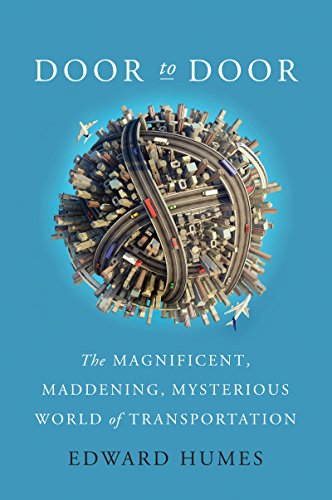
Claudia Dreifus, a writer for the NY Times, recently interviewed Edward Humes, a Pulitzer Prize-winning journalist. The subject of the interview is Humes’s latest book (pictured below) on the deadly dangers of automobiles. The book is titled “Door to Door: The Magnificent, Maddening, Mysterious World of Transportation” (what a terrible title, by the way), and here is one thought-provoking excerpt from the interview (edited by us for clarity):

In terms of public health, the National Safety Council’s data on car crashes showed that in 2015, 38,300 people died and 4.4 million were seriously injured [in the United States alone]. * * * And speeding, we know, is one of the major causes of fatal crashes. A pedestrian struck by a vehicle going 40 miles an hour has a 10 percent chance of surviving, and one struck by a car at 20 m.p.h. has a 90 percent chance. So when we post a 40-mile maximum speed limit on a boulevard where pedestrians walk, we’re saying that in the event of a crash, a 90 percent mortality rate is acceptable. These decisions matter. Each of us, over a lifetime, has a one-in-113 chance of dying in a car. That’s crazy, isn’t it? So we bolt extra safety devices onto our vehicles, seatbelts and airbags. Those are all great, but they don’t get to the fundamental problem: We drive way too fast to survive collisions. The bottom line is that speeding is one of the major causes of fatal crashes.

In other words, cars currently kill 3,000 people in the U.S. every month, and speeding is the main cause of most of these fatalities. Here is a review of Humes’s book.

Image result for The Magnificent, Maddening, Mysterious World of Transportation

Posted in Bayesian Reasoning, Ethics, Law, Probability | 4 Comments

Simple Explanation of the Monty Hall Problem

This is the simplest and fastest explanation of the Monty Hall Problem we have ever seen.

Posted in Bayesian Reasoning, Games, Probability | 4 Comments

Tweets as novels

Abridged Classics

Credit: John Atkinson (hat tip: kottke)

Posted in Uncategorized | 4 Comments