Is postseason day baseball dead?

Why aren’t any of the postseason games at Wrigley Field day games? Because the suits at Major League Baseball and the TV networks are greedy bastards. In the words of sportswriter Ryan Fagan:

… it’s known start times are heavily influenced (OK, controlled) by TV networks, and TV networks love prime-time contests. But they’re missing a wonderful opportunity to give a nod toward nostalgia, and how great of a hook would this be? They could sell this, folks.

Saturday’s Game 4 would have been the perfect fit. It’s a weekend, which means the typical 9-to-5 routines of the work week don’t apply to most would-be viewers. And the way the primary competition for sports eyeballs — college football on Saturday — is set up, with flexible start times, most of the best games are in the evening anyway. 

As Fagan notes, the Cubs didn’t play their first night game at the Friendly Confines until August 6, 1988. By way of comparison, the White Sox, the other baseball team in Chicago, installed lights at the original Comiskey Park in 1939.

Welcome to the Friendly Confines.

Posted in Uncategorized | 3 Comments

Presidential Meta-Poll (updated)

1. Will the results of this year’s presidential election confirm or disprove the median voter theorem?

2. Further questions:

(a) How do we determine who the “median voter” is in the real world, and along which policy dimension do we measure his or her political preferences?

(b) How does the act of not voting (i.e. “none of the above”) relate to the median voter model? Specifically, do median voters abstain more frequently than voters closer to the extremes?

(c) Are presidential politics to complex to be amenable to formal mathematical models?

Posted in Bayesian Reasoning, Economics, Mathematics, Politics | 6 Comments

Is price-gouging immoral?

Gregory Mankiw, an economics professor at Harvard, wrote this ringing economic defense of ticket scalping and price-gouging generally. In his essay, Prof Mankiw revisits the laws of supply and demand from his Econ 101 course to explain why he was more than happy to pay $5,000 (or maybe even $7,500) for two (or three) tickets to see the hit Broadway musical “Hamilton.” (Although the original title of his essay in print is “$2,500: a fair price for ‘Hamilton’,” Prof. Mankiw himself clarifies in the seventh paragraph of his piece that he paid “$2,500 a ticket,” so we assume that he also bought a ticket for his wife and maybe even for his teenage son, who were with him during his recent Columbus Day weekend visit to NYC.) In reply, Michael Hiltzik, a columnist for the L.A. Times, wrote this moralizing rebuttal to Prof Mankiw, arguing that price-gouging of non-luxury, essential products (like bottled water after a storm has hit) is immoral. (But who decides what is “essential”?) For our part, we agree with the likes of Mankiw that the price of something is just the product of supply and demand forces, but we agree with Hiltzik that $7,500 for three tickets for a Broadway musical is an obscene and offensive price. Prof Mankiw must have other significant sources of income (from private consulting work or textbook royalties, for example), in addition to his university professor salary.

Image result for hamilton

Supply and demand.

Posted in Economics, Law, Philosophy | 4 Comments

Conway’s Cosmogram

More math art here, by Bronna A. Butler. (Hat tip: Cliff Pickover.)

Posted in Art, Mathematics | 1 Comment

10 x 10 = 100 (time scarcity edition)

Tim Urban, who blogs at waitbutwhy.com, wrote up this short but thought-provoking blog post on time scarcity. In brief, he estimates that most people sleep about seven or eight hours a night, which leaves 16 to 17 awake hours each day, or about 1,000 minutes per day on average. Next, instead of dividing the day into hours (or 60-minute increments), Mr Urban divides those 1,000 minutes into 100 separate ten-minute blocks, and he asks us to imagine these blocks laid out on a 10 by 10 grid (pictured below). Mr Urban then asks the following question: “What if you had to label each [ten-minute block of time] with a purpose?” He goes on to explain:

“You’d have to think about everything you might spend your time doing in the context of its worth in blocks. Cooking dinner requires three blocks, while ordering in requires zero—is cooking dinner worth three blocks to you? Is 10 minutes of meditation a day important enough to dedicate a block to it? Reading 20 minutes a night allows you to read 15 additional books a year—is that worth two blocks? If your favorite recreation is playing video games, you’d have to consider the value you place on fun before deciding how many blocks it warrants. Getting a drink with a friend after work takes up about 10 blocks. How often do you want to use 10 blocks for that purpose, and on which friends? Which blocks should be treated as non-negotiable in their labeled purpose and which should be more flexible? Which blocks should be left blank, with no assigned purpose at all?”

Mr Urban concludes his post with the following thought-experiment: “Now imagine a similar grid, but one where each block is labeled exactly how you spent it yesterday. The question to ask is: How are the two grids different from each other, and why?

There is one potential practical pitfall with Mr Urban’s method, however. The problem is that it would take us several 10-minute blocks just to label all 100 time blocks!

Image result for 100 blocks

Credit: Tim Urban

Posted in Bayesian Reasoning, Time | 2 Comments

All politics is local (Electoral College reform edition)

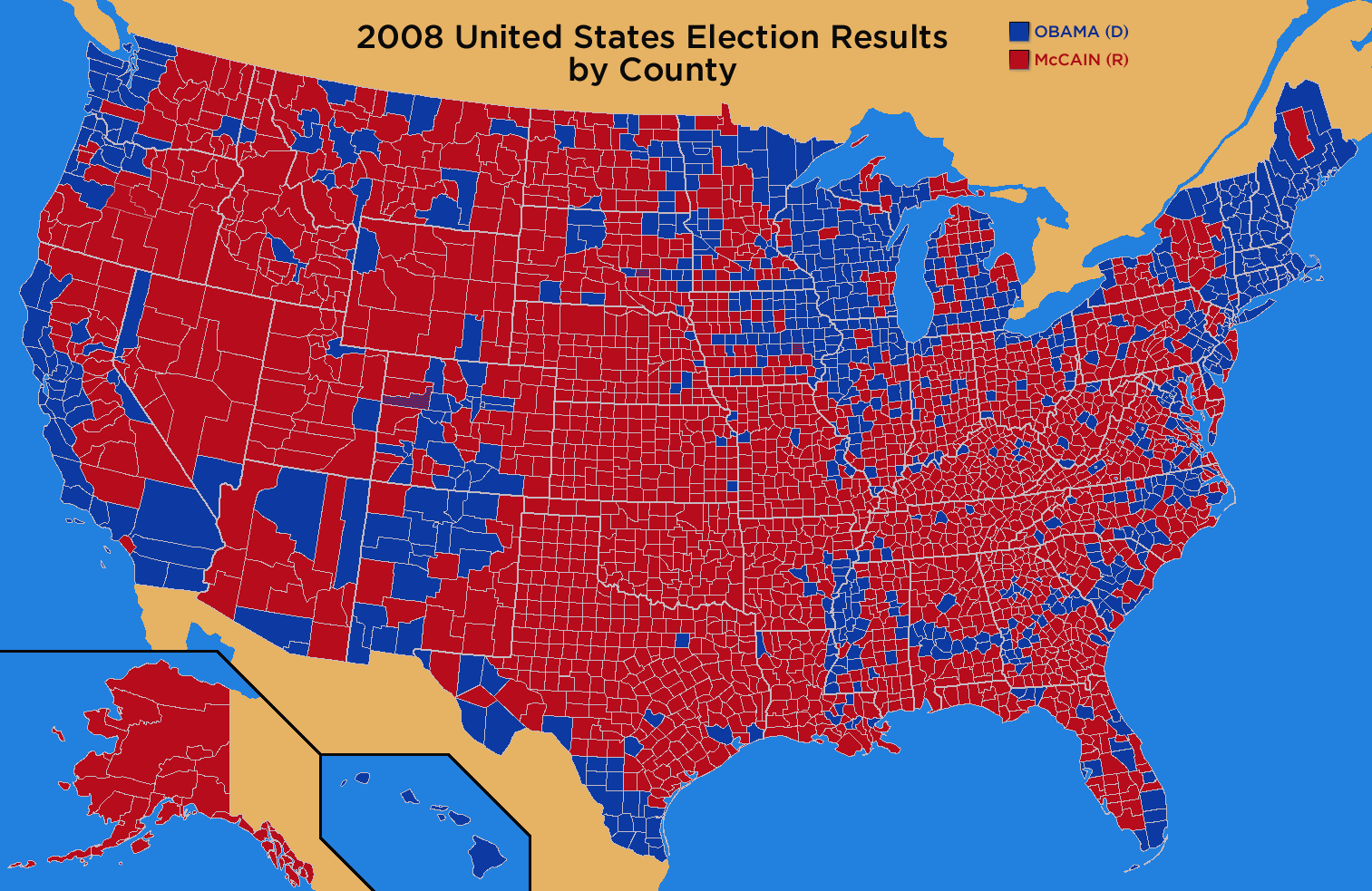
Instead of wasting time with term limits, codes of ethics, or campaign finance reform laws, what if we redesigned the federal electoral process by allocating electoral college votes by county, with one county = one electoral college vote? In the alternative, what if congressional districts for the U.S. House of Representatives were based on the existing map of counties within each State, with one member of Congress per county? One problem with our proposal, however, is practical: the House would have to increase in size from 435 members to over 3000! According to Wikipedia, for example, there are 3007 counties, 64 parishes, 19 organized boroughs, 11 census areas, 41 independent cities, and the District of Columbia, for a total of 3,143 counties and county-equivalents in the U.S. We would thus need to build a bigger Congress or find another way to house so many congressmen.

Unit of selection?

Posted in Uncategorized | 8 Comments

Why doesn’t Starbucks recycle?

Shout out to Elizabeth Drivas, a student in my undergraduate business law class at the University of Central Florida, who posed this provocative question to me during office hours on 21 October. In other words, when a successful firm like Starbucks touts its commitment to “reducing waste” and “reusable cups” (see this press release, for example) how much of this shameless self-promotion is just a marketing ploy to attract high-end customers, i.e. the type of customers who are willing to pay $3, $4, or even $5 for a cup of coffee? After some preliminary research (check out this helpful article by Adam Minter on Bloomberg View), it turns out that recycling is not yet cost-effective for Starbucks. Why not? Because those paper cups aren’t just made of paper; those cups have a plastic lining that complicate the recycling process. But isn’t ethics about doing the right thing, regardless of cost? Not necessarily! In my business law class, for example, I take time to compare and contrast various theories of normative ethics (e.g. Kantian ethics, Rawls’s theory of justice, and various theories of pragmatism and consequentialism) to illuminate contemporary debates about sustainability, corporate citizenship, and corporate social responsibility. Bonus questions: If you were Howard M. Schultz, CEO of Starbucks, how much of your firm’s resources would you invest in creating a non-plastic lined cup? In the alternative, what cost-effective steps could you take to reduce the use of paper cups in your coffee shops? Is this even a problem worth solving, given the small fraction of trash Starbucks generates relative to other firms? These are hard questions. If you have any thoughts, we would be happy to pass them along to Mr Schultz.

Posted in Bayesian Reasoning, Current Affairs, Economics, Law, Questions Rarely Asked | 4 Comments

Greer on Thucydides (part 1)

Via Tyler Cowen (once again), we discovered this beautiful introduction to the work of Thucydides (written up by T. Greer, who blogs at zenpundit.com). Here is an excerpt:

Thucydides earned a place at my “internal council” table. A spot has been saved for him near the doorway, between the seats given to Xunzi and Ibn Khaldun. One day he might sit opposite to Tocqueville; the next he will debate with Madison. In all cases I will be glad to hear his voice. But Thucydides is a wily one, and I am not quite ready to let him in yet. I have too many questions that must first be answered. So I invite him instead (or, at least, so I imagine) to a cozy side room, warmed by a great fire place and graced with two old armchairs. I ask him to sit down and bear kindly the interrogation that is to follow.
“How should I read your book?”

“Should it be understood as a work of what we call history, or literature, or social science?”

“How can I distinguish between your narrative of events and the events themselves?”

“Could your explanations be wrong? How would I know?”

“And why, for heaven’s sake, did you not tell us when and how the Athenians passed the sanctions on Megara?”

Thucydides smiles, pulls out his manuscript, and begins his reply. I listen carefully, questioning here, prodding there, occasionally crying out, “You rascal, you almost fooled me!” and then arguing furiously against what I hear. I know these questions will not all be resolved in one sitting. It will go on for weeks, I think, and even then some queries will remain unanswered. But by then the old Hellene will be ready to take his seat place at my table. I, in turn, will have learned a great deal about the world and its workings that I’d never considered before.

How should we read this book?

Posted in Uncategorized | Leave a comment

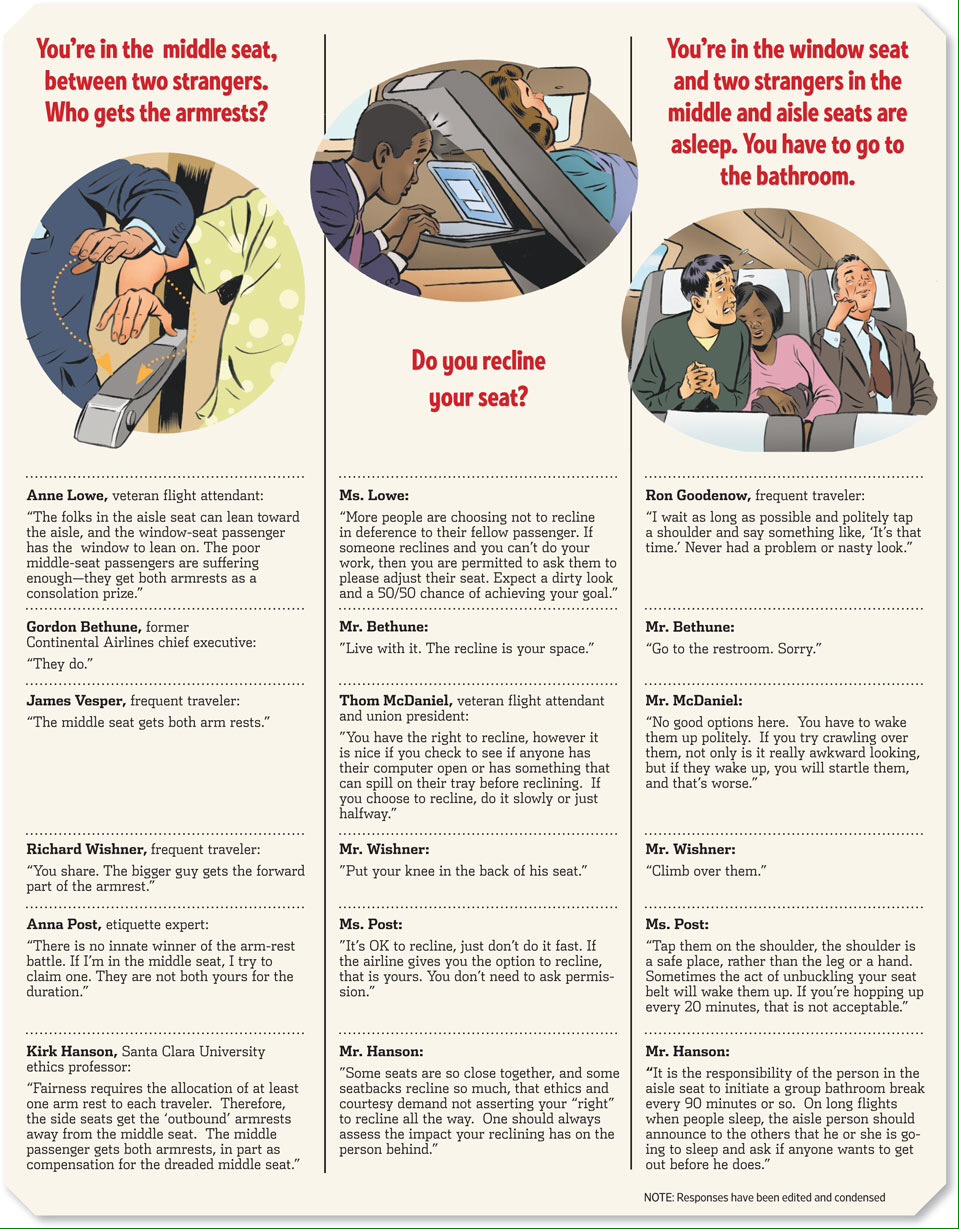
Rules of ethics or rules of etiquette?

Image Credit: The Wall Street Journal

Posted in Uncategorized | Leave a comment

Tail wags dog (airport noise edition)

Here is the full report, via the hyper-productive Tyler Cowen. So, should airports have the right to make noise, or should residential neighbors have the right to silence?

Posted in Bayesian Reasoning, Economics, Game Theory, Law, Politics, Property Rights, Questions Rarely Asked | 3 Comments