Review of Stigler (2016)

We just finished reading Stephen Stigler’s latest book The Seven Pillars of Statistical Wisdom (Harvard, 2016), pictured below. (Spoiler alert: Professor Stigler, a historian of statistics at the University of Chicago, summarizes the seven most revolutionary and counter-intuitive ideas in the history of statistics: such as the root-n rule, e.g. the idea that the second set of n observations is not as informative as the first set of n observations, and the concept of likelihood, i.e. the use of probability to measure the strength of an inference.) Here’s what we liked most about Stigler’s book (the good): his use of historical examples to explain the origins of each fundamental idea, such as an ancient Sumerian example of what today we would call “data visualization” (pp. 27-28) and “the trial of the Pyx” (pp. 47-50), a medieval test conducted by the London Mint to measure the accuracy of the weights of British coins. Here’s what we liked the least (the bad): Stephen Stigler is no Richard Dawkins or Nate Silver. That is, Stigler’s explanation of each statistical idea is hard to follow, and he makes no genuine effort to explain these important ideas to readers with no prior knowledge of statistics. Lastly, here’s the ugly: Stigler does not bother to cite the work on error statistics by Professor Deborah Mayo, even in his chapter on experimental design (Ch. 6).
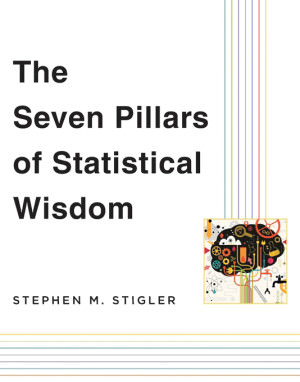
Image result for seven pillars of statistical wisdom

Not suitable for Statistics 101.

Posted in History, Probability | 1 Comment

A tax on rudeness

Have you noticed how more and more cafes and bakeries are employing the strategy pictured below? But who is acting more rudely? The customer or the business owner? After all, isn’t it just as rude to charge higher prices to people who are either themselves rude or just in a hurry or distracted?

File under: incentives matter

Posted in Uncategorized | 2 Comments

The football coach who never punts …

Hat tip: Tyler Cowen, via Marginal Revolution. Addendum (18 Oct 2016): R.J. Lipton and K.W. Regan, who blog at Godel’s Lost Letter and P=NP, discuss the following theorem:

Theorem 1 (Fundamental Theorem of Football?) The optimal strategy is initially always to go for two. If after some number {2t-1} of tries you have succeeded {t} times, so that you are ahead of what kicking would have brought, switch over to kicking.

Posted in Bayesian Reasoning, Probability, Questions Rarely Asked, Sports | 4 Comments

We miss Vin

Vin, don’t go … Did the suits at the front office of the Dodgers force you to retire? If so, shame on them. Whatever the case may be, the great Vin Scully announced his final game on 2 October 2016. Here are his concluding remarks after the last out of the last inning:

You and I have been friends for a long time, but I know in my heart that I’ve always needed you more than you’ve ever needed me, and I’ll miss our time together more than I can say. But you know what? There will be a new day and eventually a new year. And when the upcoming winter gives way to spring, rest assured, once again it will be “time for Dodger baseball.” So this is Vin Scully wishing you a very pleasant good afternoon, wherever you may be.

Posted in Culture, History, Sports | Leave a comment

Blade Runner as film noir

Thanks to our colleague and friend Daniel Nina, we saw the movie Blade Runner for the first time in the spring of 2006 (Prof Nina had organized an open-air screening of the film at the Eugenio Maria de Hostos Law School in Mayaguez, P.R. that year), and we were so impressed with the movie that we wrote an essay (in Spanish) on the role of the “Immortal Game” in the movie and the relevance of this chess match to law and legal strategy. Now, thanks to Jason Kottke, we discovered this beautiful “film noir” trailer or preview for the movie, a trailer created by Chet Desmond. In the words of Kottke: “Blade Runner was made by Ridley Scott partly as an homage to classic film noir movies like The Maltese Falcon, The Big Sleep, and The Woman in the Window. This trailer turns the noir factor up to 11; aside from a shot or two here and there, it portrays a film that could have been made in the 40s.”

Posted in Art, Culture, Science Fiction | Leave a comment

We owe Tom Brady an apology …

When news of #DeflateGate broke after the AFC Championship Game in January 2015, we were among the first bloggers to condemn quarterback Tom Brady and the New England Patriots for breaking NFL rules. After all, the Patriots have cheated before, and the circumstantial evidence against them appeared to be strong in this case too. According to the NFL, the air pressure of all eleven of the Patriots’ footballs were reported to be under-inflated, while the air pressure of four footballs used by the Colts were within the rules. What the NFL did not tell us, however, is that two different types of gauges may have been used when the referees measured the air pressure of the footballs. Worse yet, the experts hired by attorney Ted Wells, the hack lawyer the NFL hired to investigate Tom Brady, railroaded Tom Brady from the very start of their investigation. These hired guns used only one type of gauge when they conducted their rigged experiments, and they either were grossly incompetent or engaged in outright fraud when they prepared their “expert” report. See the image below for a clear example of their gross incompetence or outright fraud. Do you detect their misconduct? If not, this legal brief by professor Robert Blecker explains the misconduct of these so-called experts and makes a larger point: the idea of a level playing field applies not only to our athletes on the field but also to the NFL when it investigates misconduct (or hires outside parties to conduct investigations). In other words, Tom Brady shouldn’t be above the rules, and neither should the Commissioner or his cronies be.

Image result for fraud deflategate

Fraud or incompetence?

Posted in Bayesian Reasoning, Culture, Current Affairs, Games, Law, Sports | Leave a comment

Why do public officials in D.C. get to run red lights?

File this entry under Third World America, i.e. a country where our laws don’t apply to the most powerful people in our government. We were walking toward Metro Center in Washington D.C. around 11pm when we witnessed a mini-convoy consisting of two black SUVs and two police SUVs sounding their horns, blaring their lights, and running a red light at the intersection of New York Avenue and 12th Street (pictured below). So, why don’t traffic laws apply to public officials in our nation’s capital? In our opinion, this red-light running behavior is demoralizing and dangerous to our democracy.

Image result for G ave and 12th st dc
Posted in Uncategorized | Leave a comment

Time Out

We won’t be blogging too much during the next few days because we are attending a workshop for law professors in public choice economics at George Mason University.

Fun!

Posted in Uncategorized | 1 Comment

Legal probabilities

In this post, we build on the work of Dixit & McAdams (see our previous two posts) in order to create a general bargaining model of civil litigation. Let’s consider a civil case for our model. Specifically, let’s assume the case has survived the pre-trial stage (i.e. the judge has denied any motions to dismiss or motions for summary judgment); thus the case is scheduled to go to trial. Further assume that the losing side will appeal. There are two possible outcomes for each side:

1. Win at trial and win on appeal. Or lose at trial but win on appeal.
2. Win at trial but lose on appeal. Or lose at trial and lose on appeal.

Next, how do we assign probabilities to these possible outcomes? Should these probabilities be equally weighted, or does the fact that the case has survived the pre-trial stage affect these probabilities in some way? In many respects, this same problem occurs in the political impasse over the Supreme Court that Dixit & McAdams describe in their short HBR paper. In sum, there is a possibility that the parties to a conflict will weigh these probabilities differently. Moreover, all other things being equal, the more optimistic both sides are about winning, the less likely they will settle the case out of court. So the key question in litigation is, what legal or extra-legal factors will most likely lead the parties to be optimistic when they are assessing the relevant probabilities?

Image result for settle or go to trial model

Posted in Economics, Game Theory, Law | 2 Comments

Politics as Nash bargaining

In our previous post, we presented this beautiful essay by Avinash Dixit and David McAdams, who use game theory to analyze the year-long political impasse over the U.S. Supreme Court. We now wish to say a few more words about Dixit and McAdams’s model. In essence, they model the standoff between the President and the Senate as a Nash bargaining game. In the simplest version of this game, there are two players (let’s call them Player 1 and Player 2), and each player requests a portion of some good, such as a fixed amount of money x (or a Supreme Court justice with liberal or conservative political views). If the total amount requested by both players is less than x (or if the proposed Supreme Court justice has political views acceptable to both players), then both players get their request. If, however, their total request is greater than x, neither player gets their request. (As an aside, notice that a bargaining game can also be modelled as an equilibrium selection problem, since many bargaining situations have multiple equilibria with varying payoffs for each player.) So, how much should a player request in this game? x/2? What if you don’t know the value of ahead of time? The answers to these questions depend in large part on the disagreement points or outside options of the players: d1 for Player 1 and d2 for Player 2. In brief, the respective disagreement points of the players are the amounts (i.e. some fraction of x) either player can expect to receive if they are unable to reach an agreement. In the case of Justice Scalia’s replacement, however, the outside options of the parties depend on who wins the election in November (Clinton or Trump) and on whether the Republicans will retain control of the Senate, and these events, in turn, are purely probabilistic ones.

Image result for nash bargaining

What are your outside options?

Posted in Economics, Game Theory, Law, Politics | Leave a comment

