Shout out to Elizabeth Drivas, a student in my undergraduate business law class at the University of Central Florida, who posed this provocative question to me during office hours on 21 October. In other words, when a successful firm like Starbucks touts its commitment to “reducing waste” and “reusable cups” (see this press release, for example) how much of this shameless self-promotion is just a marketing ploy to attract high-end customers, i.e. the type of customers who are willing to pay $3, $4, or even $5 for a cup of coffee? After some preliminary research (check out this helpful article by Adam Minter on Bloomberg View), it turns out that recycling is not yet cost-effective for Starbucks. Why not? Because those paper cups aren’t just made of paper; those cups have a plastic lining that complicate the recycling process. But isn’t ethics about doing the right thing, regardless of cost? Not necessarily! In my business law class, for example, I take time to compare and contrast various theories of normative ethics (e.g. Kantian ethics, Rawls’s theory of justice, and various theories of pragmatism and consequentialism) to illuminate contemporary debates about sustainability, corporate citizenship, and corporate social responsibility. Bonus questions: If you were Howard M. Schultz, CEO of Starbucks, how much of your firm’s resources would you invest in creating a non-plastic lined cup? In the alternative, what cost-effective steps could you take to reduce the use of paper cups in your coffee shops? Is this even a problem worth solving, given the small fraction of trash Starbucks generates relative to other firms? These are hard questions. If you have any thoughts, we would be happy to pass them along to Mr Schultz.
Greer on Thucydides (part 1)
Via Tyler Cowen (once again), we discovered this beautiful introduction to the work of Thucydides (written up by T. Greer, who blogs at zenpundit.com). Here is an excerpt:
Thucydides earned a place at my “internal council” table. A spot has been saved for him near the doorway, between the seats given to Xunzi and Ibn Khaldun. One day he might sit opposite to Tocqueville; the next he will debate with Madison. In all cases I will be glad to hear his voice. But Thucydides is a wily one, and I am not quite ready to let him in yet. I have too many questions that must first be answered. So I invite him instead (or, at least, so I imagine) to a cozy side room, warmed by a great fire place and graced with two old armchairs. I ask him to sit down and bear kindly the interrogation that is to follow.
“How should I read your book?”“Should it be understood as a work of what we call history, or literature, or social science?”
“How can I distinguish between your narrative of events and the events themselves?”
“Could your explanations be wrong? How would I know?”
“And why, for heaven’s sake, did you not tell us when and how the Athenians passed the sanctions on Megara?”
Thucydides smiles, pulls out his manuscript, and begins his reply. I listen carefully, questioning here, prodding there, occasionally crying out, “You rascal, you almost fooled me!” and then arguing furiously against what I hear. I know these questions will not all be resolved in one sitting. It will go on for weeks, I think, and even then some queries will remain unanswered. But by then the old Hellene will be ready to take his seat place at my table. I, in turn, will have learned a great deal about the world and its workings that I’d never considered before.
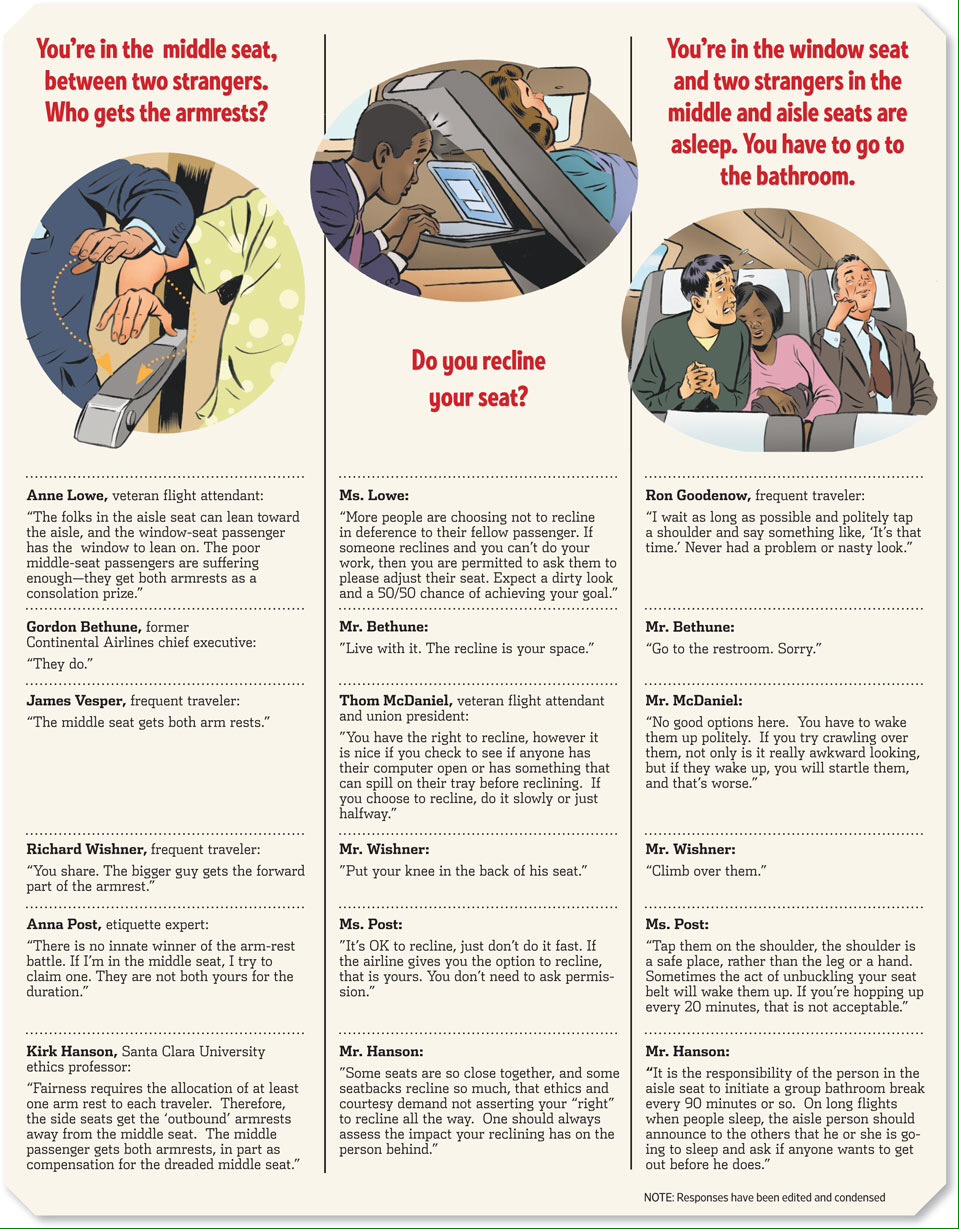
Tail wags dog (airport noise edition)

Here is the full report, via the hyper-productive Tyler Cowen. So, should airports have the right to make noise, or should residential neighbors have the right to silence?
Review of Stigler (2016)
We just finished reading Stephen Stigler’s latest book The Seven Pillars of Statistical Wisdom (Harvard, 2016), pictured below. (Spoiler alert: Professor Stigler, a historian of statistics at the University of Chicago, summarizes the seven most revolutionary and counter-intuitive ideas in the history of statistics: such as the root-n rule, e.g. the idea that the second set of n observations is not as informative as the first set of n observations, and the concept of likelihood, i.e. the use of probability to measure the strength of an inference.) Here’s what we liked most about Stigler’s book (the good): his use of historical examples to explain the origins of each fundamental idea, such as an ancient Sumerian example of what today we would call “data visualization” (pp. 27-28) and “the trial of the Pyx” (pp. 47-50), a medieval test conducted by the London Mint to measure the accuracy of the weights of British coins. Here’s what we liked the least (the bad): Stephen Stigler is no Richard Dawkins or Nate Silver. That is, Stigler’s explanation of each statistical idea is hard to follow, and he makes no genuine effort to explain these important ideas to readers with no prior knowledge of statistics. Lastly, here’s the ugly: Stigler does not bother to cite the work on error statistics by Professor Deborah Mayo, even in his chapter on experimental design (Ch. 6).

Not suitable for Statistics 101.
A tax on rudeness
Have you noticed how more and more cafes and bakeries are employing the strategy pictured below? But who is acting more rudely? The customer or the business owner? After all, isn’t it just as rude to charge higher prices to people who are either themselves rude or just in a hurry or distracted?
The football coach who never punts …
Hat tip: Tyler Cowen, via Marginal Revolution. Addendum (18 Oct 2016): R.J. Lipton and K.W. Regan, who blog at Godel’s Lost Letter and P=NP, discuss the following theorem:
Theorem 1 (Fundamental Theorem of Football?) The optimal strategy is initially always to go for two. If after some number
of tries you have succeeded
times, so that you are ahead of what kicking would have brought, switch over to kicking.
We miss Vin
Vin, don’t go … Did the suits at the front office of the Dodgers force you to retire? If so, shame on them. Whatever the case may be, the great Vin Scully announced his final game on 2 October 2016. Here are his concluding remarks after the last out of the last inning:
You and I have been friends for a long time, but I know in my heart that I’ve always needed you more than you’ve ever needed me, and I’ll miss our time together more than I can say. But you know what? There will be a new day and eventually a new year. And when the upcoming winter gives way to spring, rest assured, once again it will be “time for Dodger baseball.” So this is Vin Scully wishing you a very pleasant good afternoon, wherever you may be.
Blade Runner as film noir
Thanks to our colleague and friend Daniel Nina, we saw the movie Blade Runner for the first time in the spring of 2006 (Prof Nina had organized an open-air screening of the film at the Eugenio Maria de Hostos Law School in Mayaguez, P.R. that year), and we were so impressed with the movie that we wrote an essay (in Spanish) on the role of the “Immortal Game” in the movie and the relevance of this chess match to law and legal strategy. Now, thanks to Jason Kottke, we discovered this beautiful “film noir” trailer or preview for the movie, a trailer created by Chet Desmond. In the words of Kottke: “Blade Runner was made by Ridley Scott partly as an homage to classic film noir movies like The Maltese Falcon, The Big Sleep, and The Woman in the Window. This trailer turns the noir factor up to 11; aside from a shot or two here and there, it portrays a film that could have been made in the 40s.”
We owe Tom Brady an apology …
When news of #DeflateGate broke after the AFC Championship Game in January 2015, we were among the first bloggers to condemn quarterback Tom Brady and the New England Patriots for breaking NFL rules. After all, the Patriots have cheated before, and the circumstantial evidence against them appeared to be strong in this case too. According to the NFL, the air pressure of all eleven of the Patriots’ footballs were reported to be under-inflated, while the air pressure of four footballs used by the Colts were within the rules. What the NFL did not tell us, however, is that two different types of gauges may have been used when the referees measured the air pressure of the footballs. Worse yet, the experts hired by attorney Ted Wells, the hack lawyer the NFL hired to investigate Tom Brady, railroaded Tom Brady from the very start of their investigation. These hired guns used only one type of gauge when they conducted their rigged experiments, and they either were grossly incompetent or engaged in outright fraud when they prepared their “expert” report. See the image below for a clear example of their gross incompetence or outright fraud. Do you detect their misconduct? If not, this legal brief by professor Robert Blecker explains the misconduct of these so-called experts and makes a larger point: the idea of a level playing field applies not only to our athletes on the field but also to the NFL when it investigates misconduct (or hires outside parties to conduct investigations). In other words, Tom Brady shouldn’t be above the rules, and neither should the Commissioner or his cronies be.

Fraud or incompetence?