Which side is winning the propaganda war?

Does the ceasefire also apply to the propaganda war?

Posted in Politics, Propaganda, Truth | Tagged , , | Leave a comment

Map-Art

Check out this book of maps edited by Hans Ulrich Obrist and Tom McCarthy: “Mapping it Out: An Alternative Atlas of Contemporary Cartography.” Here are some samples from the book. Here is one of our favorites:

map

Michael Craig-Martin, “Globalisation” (2011)

Posted in Art, Maps | Tagged , | Leave a comment

Laboratory Life, B. Latour & S. Woolgar (1979)

We are reblogging this review of Bruno Latour’s classic book about science mainly for the question posed in the next to last paragraph of this post–namely, why do scientists (and scholars generally, we might add) care so much about priority and about getting credit for their work (e.g. citations, awards, etc.)? Is it simply another example of human vanity, or is it about something else?

afinetheorem's avatarA Fine Theorem

Let’s do one more post on the economics of science; if you haven’t heard of Latour and the book that made him famous, all I can say is that it is 30% completely crazy (the author is a French philosopher, after all!), 70% incredibly insightful, and overall a must read for anyone trying to understand how science proceeds or how scientists are motivated.

Latour is best known for two ideas: that facts are socially constructed (and hence science really isn’t that different from other human pursuits) and that objects/ideas/networks have agency. He rose to prominence with Laboratory Life, which followed two years observing a lab, that of future Nobel Winner Roger Guillemin at the Salk Institute at UCSD.

What he notes is that science is really strange if you observe it proceeding without any priors. Basically, a big group of people use a bunch of animals and chemicals and technical…

View original post 603 more words

Posted in Science | Tagged , | Leave a comment

“Crimes Against Logic”

That is the title of this fun little book by Jamie Whyte. (Thanks to Steven Landsburg for the pointer.) By the way, many of the logical fallacies exposed by Whyte are especially relevant to law and judging, such as his critique of “chaotic verbiage” (page 66). Consider, for example, legal words like “reasonableness” or “probable cause” that are not testable and do not really promote any clarity. We especially liked Whyte’s point about how persons in authority often will “don a simple robe” in order to substitute “sanctimony for evidence” (p. 32). We strongly recommend Whyte’s little book.

While we are on the subject of logical fallacies, Alex Tabarrok just wrote up this excellent post explaining why “legislative intent” in the field of statutory interpretation is nonsense … yet many judges, lawyers, and law professors still take the idea of “legislative intent” seriously, as if that were a coherent or meaningful concept.

Read at your own risk.

Posted in Law, Logical Fallacies | Tagged , , | Leave a comment

The science of aircraft boarding

Posted in Economics, Ethics, Game Theory, Justice | Tagged , , | 2 Comments

Why Mayor Bloomberg flew to Israel

Former New York City mayor Michael R. Bloomberg explains in this essay press release why he flew to Ben-Gurion International Airport in Tel Aviv, the capital of Israel. Here is the gist of his argument:

Just hours after the U.S. Federal Aviation Administration prohibited domestic airlines from flying to Israel this week, I boarded an El Al flight from John F. Kennedy International Airport in New York City to Ben-Gurion International Airport in Tel Aviv to express solidarity with the Israeli people and show the world that Israel’s airports remain open and safe …

Hamas would like nothing more than to close down Ben-Gurion, isolating Israel from the international community and seriously damaging its economy. By prohibiting U.S. carriers from flying into Ben-Gurion, the FAA handed Hamas a significant victory — one that the group will undoubtedly attempt to repeat. The FAA has, regretfully, succeeded only in emboldening Hamas. In times of crisis, acting out of an abundance of caution can be prudent. But closing down access to major infrastructure networks in the face of terrorist threats can be self-defeating.

For the record, we are with Mayor Bloomberg on this one. (Addendum: FAA ends its stupid and pusillanimous travel ban to Israel.)

Who are the bad guys here?

Posted in Current Affairs | Tagged , | Leave a comment

“Dallas Killers Club”

That is the title of Nicholson Baker’s excellent review of the conspiracy-theory literature on JFK’s assassination. Here is an excerpt from the opening of Baker’s essay:

There were three horrible public executions in 1963. The first came in February, when the prime minister of Iraq, Abdul Karim Qassem, was shot by members of the Ba’ath party, to which the United States had furnished money and training …

The second execution came in early November 1963: the president of Vietnam, Ngo Dinh Diem, was shot in the back of the head and stabbed with a bayonet, in a coup that was encouraged and monitored by the United States …

The third execution came, of course, later that month, on November 22 …

To the extent the United States government was responsible (either in a legal or moral sense) for the assassinations of Prime Minister Qassem and President Diem, didn’t JFK get a taste of his own medicine?

Posted in History, Politics | Tagged , , | Leave a comment

The Ethics and Economics of Vampire Re-ensoulment

Hey, what’s up? We are reblogging this analysis of “vampire re-ensoulment” for our vampire friends. The last paragraph below poses an interesting question: “Isn’t it problematic that vampires drink blood …?” Tell us how you would answer this question; then compare our own answer, which appears in the last sentence of the blog post below and here.

Glen Whitman's avatarEconomics of the Undead

(cross-posted at the Volokh Conspiracy)

io9 contributor Greta Christina, after re-watching the second season of Buffy the Vampire Slayer, raises serious questions about the ethics of vampire-slaying.  SPOILER:  At the end of Season 2, Buffy’s friend Willow casts a spell that successfully “re-ensouls” the vampire Angel, thereby rendering him no longer dangerous to humanity.  Christina wonders whether vampire-slaying is still ethically acceptable when another means of stopping vampires is available.  As she puts it, “Why don’t they just keep doing the re-ensoulment spell — on all vampires? Or at least, on all the vampires that they can?”

In the course of defending her position that re-ensoulment is morally superior to vampire slaying, Christina responds to an ecological concern:  “Vampires are immortal: they can be killed, but if they’re not staked or decapitated or exposed to sunlight, they seem to live forever. So if every vampire on the planet were re-ensouled…

View original post 731 more words

Posted in Ethics, Law, Uncategorized | Tagged , , | Leave a comment

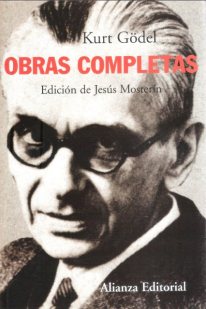
“Professor Gödel”

That is the title of our latest paper, still an ugly work-in-progress, about the revocation of Kurt Gödel’s lectureship by the University of Vienna in 1939. Here is our abstract:

Before Kurt Gödel joined the Institute for Advanced Study in Princeton, New Jersey, he was an unpaid “private lecturer” at the School of Philosophy of the University of Vienna. He held this position from March 1933 until the spring of 1939, when his lectureship was revoked. By all accounts, Gödel was outraged at this violation of his vested rights, but what deeper lessons might he have learned from this shabby academic affair? This paper is organized as follows: Part 1 surveys Gödel’s brief career at the University of Vienna, explaining how Gödel obtained his lectureship in 1933 and why it was revoked in 1939. Part 2 examines some possible lessons Gödel may have learned from the arbitrary and unjust revocation of his lectureship, while Part 3 considers the possible relation between the revocation of his lectureship and Gödel’s reported discovery of a contradiction in the U.S. Constitution some years later.

Posted in Rules | Tagged , | Leave a comment

Twitter poem

Sifting through my digital detritus
some rare moments of light
while others
speak only
of the weight
I wish to escape

Poem courtesy of Cheri Lucas Rowlands

Posted in Literature | Tagged | Leave a comment