Happy fourth anniversary, Retraction Watch

Hey, kids, can you guess the frequency level of fraud, deceit, and general bullshit in science and academia generally? Thanks to the excellent work of our friends at “Retraction Watch” we now know by name who some of the worst academic offenders are. (Social psychologists are an especially pathetic bunch.) Happy Birthday “Retraction Watch”!

Ivan Oransky's avatarRetraction Watch

logoYesterday was our fourth birthday. We published our first post, “Why write a blog about retractions?” on August 3, 2010, and the anniversary seems as good a time as any to review where we’ve been.

Here were some highlights of the past twelve months:

View original post 228 more words

Posted in Academia, Science, Truth | Tagged , | Leave a comment

Why doesn’t the Coase Theorem work in Gaza?

The “Coase Theorem” is a beautiful prediction or simple model from the world of academic economics that does not always hold up in the real world. (Look it up.) (Bonus link: check out our related research on this topic “Does the Prisoner’s Dilemma refute the Coase Theorem?” Spoiler alert: yes.) In theory, for example, the Coase Theorem should apply to the ongoing conflict in Palestine, since “transaction costs” between the leaders of Israel and the leaders of the Hamas movement in the Gaza Strip are low (after all, there are only two major parties to the negotiation), and since both parties would benefit from a peaceful resolution of their differences. Yet, there is war, and even negotiating a humanitarian cease-fire has proven elusive. In any case, isn’t this a problem of a reciprocal nature, to borrow the late Ronald Coase’s apt phrase? Or in the words of Israeli prime minister Benjamin Netanyahu, as quoted by Jonah Goldberg in this excellent essay, “Here’s the difference between us (the IDF and Hamas). “We’re using missile defense to protect our civilians, and they’re using their civilians to protect their missiles.”

Posted in Current Affairs, Economics, Game Theory | Tagged , , | 1 Comment

Will LeBron win another NBA championship?

Put another way, if you had to wager your money on this question, would you bet on the Cleveland Cavaliers, or would you bet the field? (Yeah, that’s what we thought.) By the way, while we’re on the subject of #23, what’s up with his crazy no-carb diet? After all, aren’t low-carb diets terrible for athletes?

Posted in Bayesian Reasoning, Science, Sports | Tagged | Leave a comment

Women against feminism …

Check out this funny and controversial Women Against Feminism tumblr where women of all ages and races post selfies explaining why they reject feminism. Is this a sign of progress, or a step backwards?

What would Rosie say?

Posted in Bayesian Reasoning, Current Affairs, Politics | Tagged , | Leave a comment

Should the NFL stop suspending players?

Harry Cheadle makes the case in this essay for ending the NFL Commissioner’s unilateral and arbitrary power to suspend players for “off-field behavior”:

Announce that no one is going to be suspended or fined by the league for any off-field behavior and let the teams take charge of discipline. Say, “It’s not our business what athletes put in their bodies or do when they’re off the clock. We just want to make sure the games are entertaining for the fans and safe for the players. We trust that individual franchises will be able to deal with any serious problems like addiction or anger management issues, but other than that? It’s not our business.”

What’s wrong with Mr Cheadle’s argument? Isn’t it that the individual teams themselves have no real incentive to punish their own players’ bad behavior, especially the off-the-field behavior of their best athletes?

Posted in Game Theory, Sports | Tagged , | Leave a comment

Why can’t Tom Brady get a high-five?

hat tip: tim carmody

Posted in Sports | Tagged , | 1 Comment

The logic of collective action: why airline tickets are non-transferable

Christopher Elliott wrote up this report exploring the reasons why airline tickets are non-transferable. Here’s fake reason #1:

Airlines don’t allow name changes for two reasons, according to Victoria Day, a spokeswoman for Airlines for America, an industry trade group. The first is airline policy. An airline needs to know who the customer is so it can “provide quality service,” she says …

Ha! Very funny … Ms Day has a real sense of humor! Now, here’s fake reason #2:

The second reason is security, or ensuring that the ticketed passenger is the same person going through the TSA checkpoint and getting screened.

Really? Enough of this nonsense … here’s the real reason why:

Warren Lieberman, an airline pricing expert and president at Veritec Solutions, says the more true part involves an airline’s ability to make money. If name changes were allowed, then passengers could resell their tickets anytime, subverting an airline’s ability to raise ticket prices as the flight becomes full.

Notice the logic of collective action in this case. Airline passengers are too diffuse as a group and have too little at stake per flight, so we don’t take the time to join forces in order to put an end to this exploitation. The airlines, by contrast, are few in number, well-organized, and have a lot to gain from this ridiculous and outlandish policy.

Posted in Economics, Law | Tagged | Leave a comment

Our peace plan for Palestine

How about a “one-state” solution? That is, what if the Government of Israel were to annex the Gaza Strip outright; (ii) extend full Israeli citizenship as well as voting rights to every person living in Gaza, (iii) allow all political parties incorporated in Gaza (including Hamas) to have proportional representation in the Knesset; (iv) create a universal education fund for all Palestinian children; and (v) establish a special tribunal with the authority to award monetary compensation to all Palestinian families and firms for all physical injuries and lost profits caused by the Israeli Defense Forces (IDF)? The money for items iv and v could come from the IDF’s budget and from other sources, such as U.S. foreign aid and private charities (Bill Gates, are you listening?). We know, we know … our five-point plan is pretty naive, but isn’t it much better than the ugly status quo?

Posted in Current Affairs, Game Theory, Justice, Politics | Tagged , , | Leave a comment

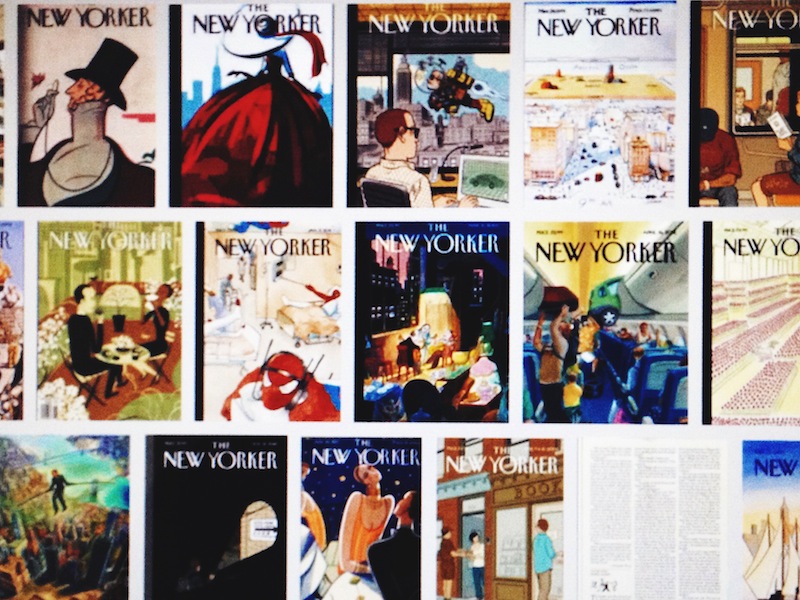
Reading The New Yorker

From the editors of The New Yorker (our favorite English-language periodical): “Beginning this week, absolutely everything new that we publish—the work in the print magazine and the work published online only—will be unlocked. All of it, for everyone.” Fine, but what about the old stuff in the archives? Can we get the old stuff free too? After all, isn’t the marginal cost to The New Yorker zero?

Jie Yi See's avatarBook of words

The New Yorker folks have been sharing some love with its readers recently, particularly so if you do enjoy reading longer pieces like myself. This summer, the American weekly magazine will overhaul the design of its online site, meanwhile temporarily removing its paywall. For all non-subscribers, this essentially entails access to its trove of archival materials since 2007. [Read the Editor’s Note HERE]

This is great news because the New Yorker is long been known for its well-researched pieces and to open their doors before launching its metered paywall similar to the system the New York Times currently adopts is a great move to let readers sample their work, in hope of bringing in even more future subscribers.

Below are some of the pieces I had read and enjoyed. Do tell me in the comment box below what are some other New Yorker articles that I should be reading.

View original post 237 more words

Posted in Economics, Uncategorized | Tagged , | Leave a comment

Public service announcement: merge rudely*

* Especially in dense, slow-moving traffic! (hat tip: tyler cowen)

Posted in Game Theory, Traffic | Tagged , | Leave a comment